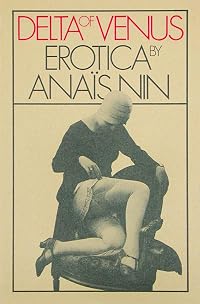
Delta of Venus
by Anaïs Nin
On This Page
Description
From influential feminist artist and essayist Anais Nin, Delta of Venus is one of the most important works of modern female erotica and "a joyous display of the erotic imagination" (The New York Times Book Review).In this story collection, Anais Nin pens a lush, magical world where the characters of her imagination possess the most universal of desires and exceptional of talents. Among these provocative stories, a Hungarian adventurer seduces wealthy women then vanishes with their money; a show more veiled woman selects strangers from a chic restaurant for private trysts; and a Parisian hatmaker named Mathilde leaves her husband for the opium dens of Peru. This is an extraordinarily rich and exotic collection from a master of erotic writing."Inventive, sophisticated . . . highly elegant naughtiness."??—??Cosmopolitan. show less
Tags
Recommendations



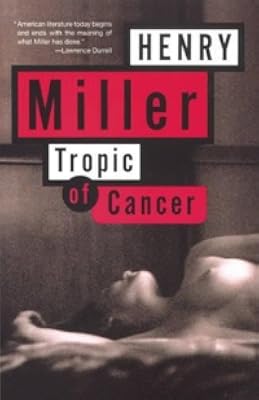
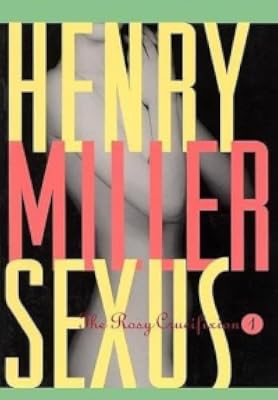
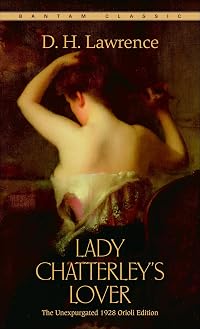
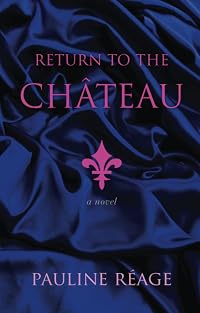



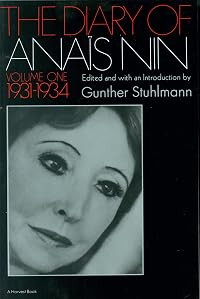
Member Recommendations
anonymous user Sexually adventurous people go on an outing, taking a big dog with them.
Member Reviews
A rather uneven collection of stories whose faults lie in the fact that Nin was trying to write both for herself and for a patron (for money), one who wanted more pornography and less poetry from her.
At its best, this integrated collection of erotic encounters is evocative and it occasionally kicks off the deeper unconscious into reverie but at its worst it is risible - an orgy can be sex by numbers and dull as dishwater or as erotic as 'Eyes Wide Shut' in her hands.
The text is regarded as a classic but I suggest this is only because of its sociological importance as proof-positive that a woman can write well within the classic French erotic tradition and introduce a definite feminine perspective.
That is valuable in itself and so earns show more its status but I wish that she had written this on her own terms and not for cash. Catherine Millet and even Pauline de Reage sometimes appear more authentic and it is true that it was a secret text for many years so the claim of innovation is a little 'after the fact' when conditions permitted.
When she writes within the French erotic tradition for the patron, the material is often frankly second rate. When she is liberated to think of the sexual from a women's perspective and escapes the tradition, it is masterful (or should I say, mistressful).
However, at no time could I say honestly that I was truly sexually aroused and I hear differing reports from women friends about its effect on them. What I did feel at times (though rare) was a sense of the magical-erotic, a dream-like state beyond the brute. Part of the pleasure lay then in communing with a feminine vision as one shared.
The first story and the final four - shorter pieces - are the best. The longeurs are in the longer almost novella central items. There is a lesson in this - the erotic is more momentary than other sentiments and is best experienced in relatively short bursts.
The view of men is also quintessentially feminine - little bravado here, just men with some weakness, often fetishistic, that inspires tenderness even when it is brutal. The worship of the phallus is always under the surface. There is a definite 'Belle de Jour' moment.
I cannot recommend or not recommend the book to a woman - it will be a matter of personal aethetic - but I would recommend it to any man with a curiosity about how women, certainly women with some sexual spark about them even if hidden, may 'see' sex.
Nothing is explicitly informative in this regard but the whole feels intuitively right as the view from the other side. Paradoxically, it shows men that women can be more sexual than they may believe but just how contingent on particular conditions that sexual expression will be.
Reading the book will not provide clues to the seduction of women (if anything it should counsel private despair that any man is truly in control of his situation) but it will allow a man to enjoy what he can obtain more readily and understand a little better how it will end.
The book was written in exile after the French intellectual class either escaped to the US (as Nin was able to do) or was forced into the deadly business of complicity or resistance to occupation. The sense of loss is well expressed in two paragraphs near the end.
"Why do women never tell men this? Why do women make such a secret and mystery of it all? They think it destroys their mystery, but it is not true. And here you come out and say just what you felt. It is wonderful."
"I believe in saying it. There are enough mysteries, and these do not help our enjoyment of each other. Now the war is here and many people will die, knowing nothing because they are tongue-tied about sex. It’s ridiculous"
There is an entire philosophy of sexuality in these words which eventually make the book worthwhile. Nin rebels against an entire culture (alive today especially in Britain) of non-communication about desire but especially non-communication by women. Many Northern Europeans and Americans still find sex vaguely disturbing and creepy.
The defensive and learned feminine secret of mystery is presented as a fact perhaps but not lauded here. Though a man speaks, Nin also speaks. The male wants to hear of female desire and some women, like Nin, wish to speak of it. It is in the interests of both that they should loosen up a little and become less defensive.
The second paragraph uses war as a metaphor for death in general (and perhaps for aging which comes up as a theme more than once in the cracks of the text). To have died ignorant of sex and the erotic is to die without having lived, she seems to say. I suspect she is right. show less
At its best, this integrated collection of erotic encounters is evocative and it occasionally kicks off the deeper unconscious into reverie but at its worst it is risible - an orgy can be sex by numbers and dull as dishwater or as erotic as 'Eyes Wide Shut' in her hands.
The text is regarded as a classic but I suggest this is only because of its sociological importance as proof-positive that a woman can write well within the classic French erotic tradition and introduce a definite feminine perspective.
That is valuable in itself and so earns show more its status but I wish that she had written this on her own terms and not for cash. Catherine Millet and even Pauline de Reage sometimes appear more authentic and it is true that it was a secret text for many years so the claim of innovation is a little 'after the fact' when conditions permitted.
When she writes within the French erotic tradition for the patron, the material is often frankly second rate. When she is liberated to think of the sexual from a women's perspective and escapes the tradition, it is masterful (or should I say, mistressful).
However, at no time could I say honestly that I was truly sexually aroused and I hear differing reports from women friends about its effect on them. What I did feel at times (though rare) was a sense of the magical-erotic, a dream-like state beyond the brute. Part of the pleasure lay then in communing with a feminine vision as one shared.
The first story and the final four - shorter pieces - are the best. The longeurs are in the longer almost novella central items. There is a lesson in this - the erotic is more momentary than other sentiments and is best experienced in relatively short bursts.
The view of men is also quintessentially feminine - little bravado here, just men with some weakness, often fetishistic, that inspires tenderness even when it is brutal. The worship of the phallus is always under the surface. There is a definite 'Belle de Jour' moment.
I cannot recommend or not recommend the book to a woman - it will be a matter of personal aethetic - but I would recommend it to any man with a curiosity about how women, certainly women with some sexual spark about them even if hidden, may 'see' sex.
Nothing is explicitly informative in this regard but the whole feels intuitively right as the view from the other side. Paradoxically, it shows men that women can be more sexual than they may believe but just how contingent on particular conditions that sexual expression will be.
Reading the book will not provide clues to the seduction of women (if anything it should counsel private despair that any man is truly in control of his situation) but it will allow a man to enjoy what he can obtain more readily and understand a little better how it will end.
The book was written in exile after the French intellectual class either escaped to the US (as Nin was able to do) or was forced into the deadly business of complicity or resistance to occupation. The sense of loss is well expressed in two paragraphs near the end.
"Why do women never tell men this? Why do women make such a secret and mystery of it all? They think it destroys their mystery, but it is not true. And here you come out and say just what you felt. It is wonderful."
"I believe in saying it. There are enough mysteries, and these do not help our enjoyment of each other. Now the war is here and many people will die, knowing nothing because they are tongue-tied about sex. It’s ridiculous"
There is an entire philosophy of sexuality in these words which eventually make the book worthwhile. Nin rebels against an entire culture (alive today especially in Britain) of non-communication about desire but especially non-communication by women. Many Northern Europeans and Americans still find sex vaguely disturbing and creepy.
The defensive and learned feminine secret of mystery is presented as a fact perhaps but not lauded here. Though a man speaks, Nin also speaks. The male wants to hear of female desire and some women, like Nin, wish to speak of it. It is in the interests of both that they should loosen up a little and become less defensive.
The second paragraph uses war as a metaphor for death in general (and perhaps for aging which comes up as a theme more than once in the cracks of the text). To have died ignorant of sex and the erotic is to die without having lived, she seems to say. I suspect she is right. show less
A primeira metade do livro é mediana, mas a partir do conto Elena o mesmo se torna uma obra prima de erotização desenfreada, você encontra de tudo aqui em termos de gostos sexuais, de necrofilia à bestialismo, de sadomasoquismo à voyerismo, afinal, Nin não foi assistente e amante de Otto Rank por nada.
It's a difficult one to rate this and for a couple of reasons.
The writing is beautifully lyrical and I know some of the character portraits will stay with me (the keeper of Balzac's house, a distant mummified woman guarding a distant mummified place, deserves her own novel). But the stories were written first and foremost as titillation for an undemanding client, so the stories and characters, with the odd exception, feel nebulous and unformed – tossed off, if you'll forgive the phrase.
Reading endless descriptions of sex is also, ultimately, quite boring. No one got Playboy for the articles.
The other reason I'm finding it difficult to rate goes a bit deeper.
The book's a good reminder that sex wasn't invented in the 1960s and whatever show more you've got up to, your grandparents probably did it before you (soz). But that doesn't mean it wasn't written in a time when open discussion of sexual acts was less acceptable, and I've never better understood the saying "when nothing is permissible, everything is".
Much of the business described is more or less conventional – at least by modern standards – but there's also a great deal that is most definitely not, and most definitely not OK. Just as you're getting into the rhythm of sex-positive feminist writing, you'll suddenly be hit with descriptions of rape or child abuse or bestiality or necrophilia – all described in the same register as consenting adult sex. And that is, to say the least, off-putting.
So while much of Nin's writing is very fine, a lot of what she describes is actually pretty horrible and described in a manner apparently intended to forgive or romanticise it. And so I don't really feel I can give it any sort of rating. For the capability of the writer, the score should be very high; for the use to which she puts it, it should be less than zero. show less
The writing is beautifully lyrical and I know some of the character portraits will stay with me (the keeper of Balzac's house, a distant mummified woman guarding a distant mummified place, deserves her own novel). But the stories were written first and foremost as titillation for an undemanding client, so the stories and characters, with the odd exception, feel nebulous and unformed – tossed off, if you'll forgive the phrase.
Reading endless descriptions of sex is also, ultimately, quite boring. No one got Playboy for the articles.
The other reason I'm finding it difficult to rate goes a bit deeper.
The book's a good reminder that sex wasn't invented in the 1960s and whatever show more you've got up to, your grandparents probably did it before you (soz). But that doesn't mean it wasn't written in a time when open discussion of sexual acts was less acceptable, and I've never better understood the saying "when nothing is permissible, everything is".
Much of the business described is more or less conventional – at least by modern standards – but there's also a great deal that is most definitely not, and most definitely not OK. Just as you're getting into the rhythm of sex-positive feminist writing, you'll suddenly be hit with descriptions of rape or child abuse or bestiality or necrophilia – all described in the same register as consenting adult sex. And that is, to say the least, off-putting.
So while much of Nin's writing is very fine, a lot of what she describes is actually pretty horrible and described in a manner apparently intended to forgive or romanticise it. And so I don't really feel I can give it any sort of rating. For the capability of the writer, the score should be very high; for the use to which she puts it, it should be less than zero. show less
i had a really hard time with this, in spite of the introduction where she says that she was directed to write things that, more or less, were intended to be this weird masculine idea of desire rather than mutual enjoyment focused, it was so over the top ick. there was so much violence and rape (and incest) masquerading as desire, and i hated that conflation. so in general, the stories were offensive, poorly written, and dangerous. i'd be interested in knowing more of what she wrote for herself, when she was able to, but this sort of thing is awful.
Wow.
I mean, I had never heard of this until recently when I had been dared to read it, and yes, I knew that I was getting into heavy erotica, but I hadn't expected it to be so damn good.
Seriously. I'm not ashamed to admit that I was almost completely unable to stand up during most of the read, and because I was using text-t0-speech, that mean being rather unpleasantly surprised as I was up and about during my day.
I wanted to scream out, "Oh, come on!" or "This isn't Fair!" at random people as I was reading.
And then, at various moments, I pondered the great mystery of why so many men don't read this kind of romance. It's very easy, my dear women. In fact's extremely hard to hide the fact. Forget about all the scoffing and the hems and show more the haws and all the condescending humor that jerky men use to explain why they don't read this stuff. It's all baloney.
This book is full of really good stuff.
Extremely good stuff: from the pure writing, the interweaving themes and characters and the way that the individual stories make up a much grander story of sexuality, right down the purely expert and sensual eroticism of the sex acts themselves. I've never read better, but I'll admit that most of what I've read has really been quite horrible.
Even so, I'm amazed at how sensual she can turn all these kinds of turns, or even the direction she takes them. So many of my own sensibilities were shocked and disturbed as I read a few particularly difficult scenes, but as a whole, the entire book was truly amazing. Perhaps all that illicit and taboo material functions fantastically as the spice that tips us in and out of our complacency and into the deeper animal parts of us that love to be shocked, allowing us to enjoy the rest of the tales like we're getting away with something even more absolutely naughty than it really might be.
Seriously, if every erotic writer or if ANY writer including a sex scene might take a page out of her book, so many of the greatest crimes against sex might be rectified.
Seriously, people, this is Literature, plain and simple, with a freedom applied to women's sensuality that is really quite brilliant. It should be studied, applauded, and copied. Alas.
I hope her writing is always remembered. :) show less
I mean, I had never heard of this until recently when I had been dared to read it, and yes, I knew that I was getting into heavy erotica, but I hadn't expected it to be so damn good.
Seriously. I'm not ashamed to admit that I was almost completely unable to stand up during most of the read, and because I was using text-t0-speech, that mean being rather unpleasantly surprised as I was up and about during my day.
I wanted to scream out, "Oh, come on!" or "This isn't Fair!" at random people as I was reading.
And then, at various moments, I pondered the great mystery of why so many men don't read this kind of romance. It's very easy, my dear women. In fact's extremely hard to hide the fact. Forget about all the scoffing and the hems and show more the haws and all the condescending humor that jerky men use to explain why they don't read this stuff. It's all baloney.
This book is full of really good stuff.
Extremely good stuff: from the pure writing, the interweaving themes and characters and the way that the individual stories make up a much grander story of sexuality, right down the purely expert and sensual eroticism of the sex acts themselves. I've never read better, but I'll admit that most of what I've read has really been quite horrible.
Even so, I'm amazed at how sensual she can turn all these kinds of turns, or even the direction she takes them. So many of my own sensibilities were shocked and disturbed as I read a few particularly difficult scenes, but as a whole, the entire book was truly amazing. Perhaps all that illicit and taboo material functions fantastically as the spice that tips us in and out of our complacency and into the deeper animal parts of us that love to be shocked, allowing us to enjoy the rest of the tales like we're getting away with something even more absolutely naughty than it really might be.
Seriously, if every erotic writer or if ANY writer including a sex scene might take a page out of her book, so many of the greatest crimes against sex might be rectified.
Seriously, people, this is Literature, plain and simple, with a freedom applied to women's sensuality that is really quite brilliant. It should be studied, applauded, and copied. Alas.
I hope her writing is always remembered. :) show less
This collection is varied and erotic... (Well, duh, and it hardly needs another damn review, but I'll persist...) Many of the stories are a bit veiled and tantalizing and weird, without being directly gauche (in my opinion). I read it first years ago and have gone back a few times to dip into some stories, mainly for style. Nin's work, including this book, was a huge influence over my own sensual writing, especially my earlier novels and shorts. Nin basically dismisses the stories as lesser output done purely for money, but in doing so I think she underestimates both the powers of her own muse and her own dedication to quality.
Let's get one thing straight. This is erotica. Erotica erotica erotica erotica erotica. You know that phenomenon when you say something so many times that it temporarily loses its meaning? Firstly, it's a psychological phenomenon known as semantic satiation. Secondly, that's what I'm trying to do here with the word 'erotica'. Erotica erotica erotica erotica erotica. Run through that a few more times if you haven't sufficiently stripped yourself of assumptions, contextual peripheries, and all other sorts of ideological clutter. Also, don't even think of the word 'porn'. This isn't one-two-hup-hup-hup gratification on the simplest level of human biological stimulation. This is literature.
Feeling free of all that? Good. Because the theme show more that I'm working through in this review is this: erotica is a genre of wasted potential.
You heard me. Wasted potential. Just look at its current representative in the popular media. Not only is it a ripoff of a fanfiction of Twilight, a book that is an advocate of both poor writing and abusive relationships, it manages to compound both of those qualities to even more horrendous levels. Thanks to that book, the misconceptions regarding the more eclectic sexual activities have never been more horrible or widespread. I'm not even going to try to discuss the writing.
Now, let's return to the book at hand. Delta of Venus was published in 1977, thirty-four years before 50SoG. Had the erotica genre been taken seriously at any time since then, it could have been a game changer. Perhaps not for the quality of writing, which comes nowhere close to the masters, but not only does it cover a wide variety of sexual situations in unflinching physical detail without the slightest hint of judgment, it also touches on a huge number of issues that are present in how society treats sexual matters today (Yes, once again I am deconstructing societal issues. If you don't like it, shoo. You have the rest of the Internet. This place is mine.)
These issues include: varieties of sexuality, sociocultural gender constraints, patriarchal oppression, proper conductance of BDSM, fetishes ranging from pedophilia to necrophilia to gerontophilia to myriad objects, scents, textures, you name it, Nin's probably mentioned it. While her writing isn't the most prettily poetic thing under the sun, what it does accomplish is show exactly what is running through the participants' minds without once fetishizing abusive or bigoted aspects of sexuality, as well as get the reader comfortable with parts of the anatomy that society for whatever reason has an attitude both puritanical and childish towards. When you can't use the word 'vagina' when discussing abortion issues in governmental procedures, you know something's extremely wrong with the world.
I know there is literature out there that deals with the more uneasy aspects of sexual issues, even some like Lolita that are widely praised by the literary community. That doesn't change the fact that the genre of erotica is largely met with titters and contempt when it isn't banned outright, and the majority of its literature is filled with connotations of unrealistic sexual dynamics, borderline abusive situations, and frankly just a lot of bad writing.
When it comes to sociocultural progress, I see no catalyst more powerful than that of literature, especially literature that survives and thrives for centuries well into present times. Out of every genre of literature, the least likely to be taught in classrooms is that of erotica. Maybe you'll get a book that involves rape, or one that hints at homosexual liaisons, or perhaps relationships deemed illicit by reason of race, class, or culture. It is highly unlikely that a book that details sexual relations both healthy and unrestricted by stereotypes will ever make its way into the classroom without being met by childish behavior by both the students and their parents. Not while sexual education ignores the ramifications of rape culture, the realities of relationships fluid in both gender and sexual preferences, and the harmful effects of the ideologically constraining concepts of masculinity and femininity. No representation in classrooms leads to infantile reactions to it in reality leads to barely any incentive for writers to try their hand at it. It's a vicious cycle.
So, next time you see someone with 50SoG, inform them that there is a much better book out there called Delta of Venus that is not only erotica, but classic erotica. They probably won't blindly enjoy it as much as the former, but one hopes it will get them thinking. A much better end result, in my mind. show less
Feeling free of all that? Good. Because the theme show more that I'm working through in this review is this: erotica is a genre of wasted potential.
You heard me. Wasted potential. Just look at its current representative in the popular media. Not only is it a ripoff of a fanfiction of Twilight, a book that is an advocate of both poor writing and abusive relationships, it manages to compound both of those qualities to even more horrendous levels. Thanks to that book, the misconceptions regarding the more eclectic sexual activities have never been more horrible or widespread. I'm not even going to try to discuss the writing.
Now, let's return to the book at hand. Delta of Venus was published in 1977, thirty-four years before 50SoG. Had the erotica genre been taken seriously at any time since then, it could have been a game changer. Perhaps not for the quality of writing, which comes nowhere close to the masters, but not only does it cover a wide variety of sexual situations in unflinching physical detail without the slightest hint of judgment, it also touches on a huge number of issues that are present in how society treats sexual matters today (Yes, once again I am deconstructing societal issues. If you don't like it, shoo. You have the rest of the Internet. This place is mine.)
These issues include: varieties of sexuality, sociocultural gender constraints, patriarchal oppression, proper conductance of BDSM, fetishes ranging from pedophilia to necrophilia to gerontophilia to myriad objects, scents, textures, you name it, Nin's probably mentioned it. While her writing isn't the most prettily poetic thing under the sun, what it does accomplish is show exactly what is running through the participants' minds without once fetishizing abusive or bigoted aspects of sexuality, as well as get the reader comfortable with parts of the anatomy that society for whatever reason has an attitude both puritanical and childish towards. When you can't use the word 'vagina' when discussing abortion issues in governmental procedures, you know something's extremely wrong with the world.
I know there is literature out there that deals with the more uneasy aspects of sexual issues, even some like Lolita that are widely praised by the literary community. That doesn't change the fact that the genre of erotica is largely met with titters and contempt when it isn't banned outright, and the majority of its literature is filled with connotations of unrealistic sexual dynamics, borderline abusive situations, and frankly just a lot of bad writing.
When it comes to sociocultural progress, I see no catalyst more powerful than that of literature, especially literature that survives and thrives for centuries well into present times. Out of every genre of literature, the least likely to be taught in classrooms is that of erotica. Maybe you'll get a book that involves rape, or one that hints at homosexual liaisons, or perhaps relationships deemed illicit by reason of race, class, or culture. It is highly unlikely that a book that details sexual relations both healthy and unrestricted by stereotypes will ever make its way into the classroom without being met by childish behavior by both the students and their parents. Not while sexual education ignores the ramifications of rape culture, the realities of relationships fluid in both gender and sexual preferences, and the harmful effects of the ideologically constraining concepts of masculinity and femininity. No representation in classrooms leads to infantile reactions to it in reality leads to barely any incentive for writers to try their hand at it. It's a vicious cycle.
So, next time you see someone with 50SoG, inform them that there is a much better book out there called Delta of Venus that is not only erotica, but classic erotica. They probably won't blindly enjoy it as much as the former, but one hopes it will get them thinking. A much better end result, in my mind. show less
Members
- Recently Added By
Lists

1001 Books You Must Read Before You Die
1,448 works; 1,134 members

The Guardian's 1000 Novels Everyone Must Read
1,005 works; 550 members
20th Century Literature
1,161 works; 55 members

Female Author
1,234 works; 67 members

Best of French Literature
138 works; 27 members

1970s
657 works; 23 members

Weird and Weirder Fiction
270 works; 35 members

Short Story Collections and Anthologies
261 works; 42 members

1,001 BYMRBYD Concensus
723 works; 27 members

Blue Pyramid 1,276 Best Books of All Time
1,248 works; 32 members

Erotic Fiction
53 works; 5 members

Publisher's Weekly Bestsellers - Part II - 1940 - 1979
355 works; 5 members

Books Read in 2020
4,379 works; 124 members
The Complete Rory Gilmore Reading List
506 works; 5 members

Read in 2010
48 works; 1 member

Sex in the past
26 works; 4 members

Books Read in 2010
631 works; 11 members

Page Turners
185 works; 11 members

Swinging Seventies
255 works; 18 members

Guilty Pleasures
223 works; 86 members
Author Information

239+ Works 24,765 Members
Anaïs Nin 1903-1977 Writer and diarist Anaïs Nin was born February 21, 1903 in Neuilly, France to a Catalan father and a Danish mother. She spent many of her childhood years with her Cuban relatives. Later, she became a naturalized American citizen. Nin is best known for her journals,"The Diary of Anais Nin, Vols. I-VII" and her erotic fiction. show more In fact, Nin was one of the raliest writers of erotica for women. She also wrote the book Henry and June, which was made into a movie of the same name in 1990. In 1973 Anaïs Nin received an honorary doctorate from the Philadelphia College of Art. She was elected to the United States National Institute of Arts and Letters in 1974. She died of cancer in Los Angeles, California, on January 14, 1977. (Bowker Author Biography) show less
Some Editions
Awards and Honors
Distinctions
Notable Lists
Greatest Books algorithm (1171)
Series
Belongs to Publisher Series
Work Relationships
Is abridged in
Common Knowledge
- Canonical title
- Delta of Venus
- Original title
- Delta of Venus
- Original publication date
- 1977
- People/Characters
- The Baron; Anita; Mathilde; Dalvedo; Martinez; Antonio, a prizefighter (show all 55); Father Dobo; The blond boy; The watchman; Maria; Maria's younger brother; Millard; Louise; Mafouka; Brown; Mollie; Ethel; Millard's wife; Lilith; Billy; Mabel; Marianne; Fred; George; The neatly dressed man; Elena; Madame Kazamir; Pierre; Miguel; Donald; Kay; Leila; Mary; Jean; Bijou; Madeleine; The floorwalker; Maman; Viviane; The French governess; Pierre's mother; Mary Ann; Sylvia; John; Martha; Linda; André; Michel; The priest; Marcel; Gustavo; Gisele; Roger; Fatima; Yvonne
- Important places
- Rome, Italy; New York, New York, USA; Paris, France; Lima, Peru; Mallorca; Caux, Switzerland
- Related movies
- Delta of Venus (1995 | IMDb)
- First words
- There was a Hungarian adventurer who had astonishing beauty, infallible charm, grace, the powers of a trained actor, culture, knowledge of many tongues, aristocratic manners.
- Last words
- (Click to show. Warning: May contain spoilers.)"I think everybody knew it would be the last drop of pleasure."
- Original language
- English
- Canonical DDC/MDS
- 813.52
- Canonical LCC
- PS3527
- Disambiguation notice
- Do not add/combine if Little Birds is included.
Classifications
Statistics
- Members
- 5,358
- Popularity
- 2,528
- Reviews
- 69
- Rating
- (3.48)
- Languages
- 16 — Catalan, Danish, Dutch, English, Estonian, French, German, Greek, Hungarian, Italian, Norwegian (Bokmål), Romanian, Russian, Spanish, Swedish, Portuguese (Brazil)
- Media
- Paper, Audiobook, Ebook
- ISBNs
- 95
- UPCs
- 3
- ASINs
- 54