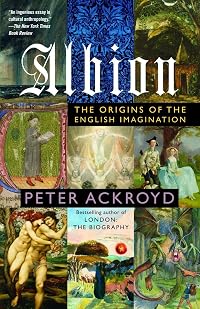
Albion: The Origins of the English Imagination
by Peter Ackroyd
On This Page
Description
With his characteristic enthusiasm and erudition, Peter Ackroyd follows his acclaimed London: A Biography with an inspired look into the heart and the history of the English imagination. To tell the story of its evolution, Ackroyd ranges across literature and painting, philosophy and science, architecture and music, from Anglo-Saxon times to the twentieth-century. Considering what is most English about artists as diverse as Chaucer, William Hogarth, Benjamin Britten and Viriginia Woolf, show more Ackroyd identifies a host of sometimes contradictory elements: pragmatism and whimsy, blood and gore, a passion for the past, a delight in eccentricity, and much more. A brilliant, engaging and often surprising narrative, Albion reveals the manifold nature of English genius. show lessTags
Recommendations

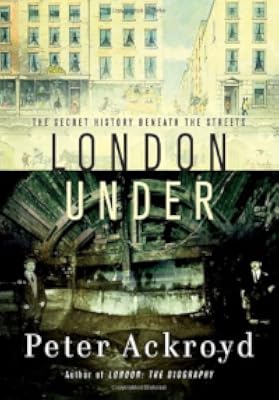

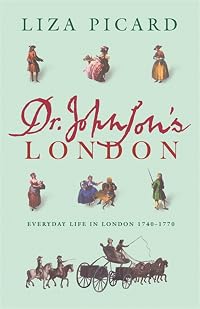
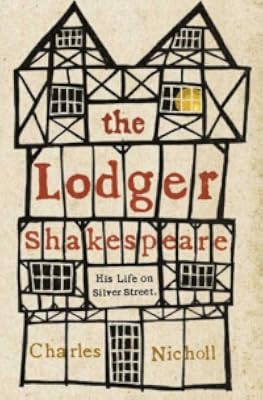
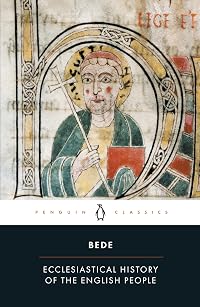




Member Recommendations
Member Reviews
'Albion' is a tricky text. It purports to be an account of something called the 'English imagination' (mostly literary but also nodding to the artistic, theatrical and musical) but it is equally a partial mythologisation of its subject matter. Is this really what it is (or was) to be English?
It is certainly plausible but plausibility is not something to be confused with the truth. The book, however, still represents a truth of the matter if not necessarily being the full truth of the matter. Once this accepted, then the book can be enjoyed as highly intelligent, suggestive and indeed creative.
What is striking is that this English imagination is positioned well within an Anglo-Saxon origin story and a Catholic medieval past which are show more seen as providing very strong continuities, at least compared to literary histories that have privileged the half a millennium from Shakespeare onwards.
The book devotes nearly half its length to the world before Shakespeare and then peters out somewhere around the mid-Victorian era. This is the Matter of Literary England presented in a new way as something that it is not hard to see as having been lost even by 2002 (date of publication).
Not that Ackroyd says any such thing. He not making any judgements here that are 'contemporary' or polemical. He just embeds himself in the mythos and gives us well over 50 finely tuned essays on different facets of the English imagination that he weaves around a framework of shared ideas.
Summarising that framework here would be pedestrian and not very helpful. The journey through the book has to be made in good faith by the reader. The investigation of Ackroyd's judgements has to be an impressionistic one where, by the end, you feel that you think you understand.
Still, the individual essay-chapters can be fascinating in themselves. The anger of the classic female novelists, the continuity of gardening in English culture, forgery as at the base of English romanticism, English literature as a literature of appropriation and borrowing from outside ...
Each chapter represents an interpretative truth of the matter but is one persuaded by the whole? Less so perhaps. The late chapter in praise of the fraudulent Macpherson (not English at all) and Chatterton gives us a clue. This is a book of fact where facts build up to a useful and noble fiction.
With that caution, the book remains a strong recommendation precisely because the specific interpretations constantly open the mind to new possibilities and angles about a distinctive tradition, exposing a past far deeper than the usual Chaucer, Milton, Shakespeare origin story.
There is no chapter that is not useful, educational and/or thought-provoking. The thought is left that, twenty years later, this mythos is already looking as if it is entirely located in the past and no longer represents the present, that this book is (without that being the intention) a cultural swan song.
This review is written after a week in which an African-origin leader of the 'conservative' party announced 'reforms' that her party briefings (though not her directly) suggested would end support for degrees in certain subjects with the performing arts and English high on the list.
Not that English studies in the age of intersectional and anti-colonial studies has had very much to do with the approach to the English imagination evidenced in this book. She may be right. Maybe the pass on cultural Englishness was sold a long time ago in a 'trahison des clercs'. So be it!
Perhaps the English imagination always was a bit of a forgery as Celtic and all other nationalisms are ultimately forgeries. Perhaps it always was the imagination of cosmopolitan appropriative elites trickling down the products of their leisure time to the great unwashed for a livelihood.
Perhaps this educated Englishness - a shared literary culture - only exists now in past texts and that this particular text is merely preservative of what it once was to be English and educated. Perhaps a future civilisation will study English as the English once studied the Classics - as the honoured dead. show less
It is certainly plausible but plausibility is not something to be confused with the truth. The book, however, still represents a truth of the matter if not necessarily being the full truth of the matter. Once this accepted, then the book can be enjoyed as highly intelligent, suggestive and indeed creative.
What is striking is that this English imagination is positioned well within an Anglo-Saxon origin story and a Catholic medieval past which are show more seen as providing very strong continuities, at least compared to literary histories that have privileged the half a millennium from Shakespeare onwards.
The book devotes nearly half its length to the world before Shakespeare and then peters out somewhere around the mid-Victorian era. This is the Matter of Literary England presented in a new way as something that it is not hard to see as having been lost even by 2002 (date of publication).
Not that Ackroyd says any such thing. He not making any judgements here that are 'contemporary' or polemical. He just embeds himself in the mythos and gives us well over 50 finely tuned essays on different facets of the English imagination that he weaves around a framework of shared ideas.
Summarising that framework here would be pedestrian and not very helpful. The journey through the book has to be made in good faith by the reader. The investigation of Ackroyd's judgements has to be an impressionistic one where, by the end, you feel that you think you understand.
Still, the individual essay-chapters can be fascinating in themselves. The anger of the classic female novelists, the continuity of gardening in English culture, forgery as at the base of English romanticism, English literature as a literature of appropriation and borrowing from outside ...
Each chapter represents an interpretative truth of the matter but is one persuaded by the whole? Less so perhaps. The late chapter in praise of the fraudulent Macpherson (not English at all) and Chatterton gives us a clue. This is a book of fact where facts build up to a useful and noble fiction.
With that caution, the book remains a strong recommendation precisely because the specific interpretations constantly open the mind to new possibilities and angles about a distinctive tradition, exposing a past far deeper than the usual Chaucer, Milton, Shakespeare origin story.
There is no chapter that is not useful, educational and/or thought-provoking. The thought is left that, twenty years later, this mythos is already looking as if it is entirely located in the past and no longer represents the present, that this book is (without that being the intention) a cultural swan song.
This review is written after a week in which an African-origin leader of the 'conservative' party announced 'reforms' that her party briefings (though not her directly) suggested would end support for degrees in certain subjects with the performing arts and English high on the list.
Not that English studies in the age of intersectional and anti-colonial studies has had very much to do with the approach to the English imagination evidenced in this book. She may be right. Maybe the pass on cultural Englishness was sold a long time ago in a 'trahison des clercs'. So be it!
Perhaps the English imagination always was a bit of a forgery as Celtic and all other nationalisms are ultimately forgeries. Perhaps it always was the imagination of cosmopolitan appropriative elites trickling down the products of their leisure time to the great unwashed for a livelihood.
Perhaps this educated Englishness - a shared literary culture - only exists now in past texts and that this particular text is merely preservative of what it once was to be English and educated. Perhaps a future civilisation will study English as the English once studied the Classics - as the honoured dead. show less
Albion traces ideas, images and patterns across the centuries to consider what it means to be English. Any Anglophile will enjoy the many and varied cultural references linked within Ackroyd's dense but fascinating text. Beginning and ending with Englishmen I admire (historian the Venerable Bede (d. 735) and composer Ralph Vaughan Williams (d. 1958)), these two disparate personalities were brought together in one memorable statement: "The embrace of present and past time, in which English antiquarianism becomes a form of alchemy, engenders a strange timelessness. It is as if the little bird which flew through the Anglo-Saxon banqueting hall, in Bede's Historia Ecclesiastica Gentis Anglorum, gained the outer air and became the lark show more ascending in Vaughan Williams's orchestral setting. The unbroken chain is that of English music itself." To me, reading this book was like examining the contents of an ancient attic trunk, ruminating on the people, places, and things that made you who you are. When you come to the end of your literary pilgrimage, you're better for having experienced it. show less
I got this book for christmas in 2002 and have only just gotten around to reading it. Eleven house moves I've carried it around and now I finally read it only to find that its not really worth it! As a cultural history of English art its ok, but really its central premise is basically flawed. There is nothing unique about English culture, and all cultures transmit in the same way. It's not magic or in the blood or better or worse then anywhere else, and whilst he avoids being outrightly nationalistic there are hints of the mystical powers of the english countryside transmitting the magic through the soil... All of the things that he claims are English are not uniquely so, like cultural assimilation, melancholy, alliteration etc. But its show more well researched, I learned some stuff I didn;t know, and maybe 20 years ago I would have been simple enough that I believed the nonsense! show less
With his characteristic enthusiasm and erudition, Peter Ackroyd follows his acclaimed London: A Biography with an inspired look into the heart and the history of the English imagination. To tell the story of its evolution, Ackroyd ranges across literature and painting, philosophy and science, architecture and music, from Anglo-Saxon times to the twentieth-century. Considering what is most English about artists as diverse as Chaucer, William Hogarth, Benjamin Britten and Viriginia Woolf, Ackroyd identifies a host of sometimes contradictory elements: pragmatism and whimsy, blood and gore, a passion for the past, a delight in eccentricity, and much more. A brilliant, engaging and often surprising narrative, Albionreveals the manifold show more nature of English genius. show less
The major failing of Albion is its falling between two structual stools. It's loosely chronological and loosely thematic, so that in the early Anglo-Saxon chapters we're frequently yo-yoed far into the future, following the breadcrumb trail of some governing English trait. This is fine, but the same referents then appear again later on, when the chronological narrative has caught up, and we're in turn catapulted back into the mists of the middle ages to check back in with Langland or Julian of Norwich. So everything shows up at least twice. I'm sure this was Ackroyd's design, and it certainly reinforces his thesis that English art and thought is cyclical and there's nothing new under the sun, but I found it pretty irritating.
Another show more irritant is the extent to which Ackroyd's past studies dominate the book. Chatterton, Blake and Dickens are lavishly treated, but there are only passing mentions for less famous but arguably more English writers like Clare, Crabbe and Cowper. There is a chapter on "English Music" which is really just about Vaughan-Williams - Purcell and Elgar are mentioned once or twice in passing. Of course it's inevitable that a subject of such massive scope will result in an uneven book, but one has the impression that much of Albion is cobbled together out of notes and clippings left over from Ackroyd's previous research efforts. See also London, which gets a very good chapter to itself but without any explanation of how the capital has influenced the national imagination, as opposed to expressing its own.
Some excellent mini-essays that could stand alone: ghosts and the gothic, the English Bible, Samuel Johnson.
Ackroyd identifies all the big themes, albeit none of them are new - melancholy, pragmatism, the pastoral, etc etc., and as a miscellany there will be something here for everyone - but as a unified thesis it doesn't hang together. Still a fun read, though. show less
Another show more irritant is the extent to which Ackroyd's past studies dominate the book. Chatterton, Blake and Dickens are lavishly treated, but there are only passing mentions for less famous but arguably more English writers like Clare, Crabbe and Cowper. There is a chapter on "English Music" which is really just about Vaughan-Williams - Purcell and Elgar are mentioned once or twice in passing. Of course it's inevitable that a subject of such massive scope will result in an uneven book, but one has the impression that much of Albion is cobbled together out of notes and clippings left over from Ackroyd's previous research efforts. See also London, which gets a very good chapter to itself but without any explanation of how the capital has influenced the national imagination, as opposed to expressing its own.
Some excellent mini-essays that could stand alone: ghosts and the gothic, the English Bible, Samuel Johnson.
Ackroyd identifies all the big themes, albeit none of them are new - melancholy, pragmatism, the pastoral, etc etc., and as a miscellany there will be something here for everyone - but as a unified thesis it doesn't hang together. Still a fun read, though. show less
I must confess, I'm finding this rather heavy going in the section on the Anglo-Saxons. I can't help but wonder, though, how much of the elements in "Englishness" that Ackroyd suggests, such as a love of the marvellous, of surface decoration, and of intricate oratory, and a rootedness in place, are general characteristics of "European-ness" or even just "human-ness".
Now that Ackroyd has given examples of how English authors adapted continental models, I can see better what he's getting at. I still think, though, that what he picks out as essentially English traits such as the adoption and adaptation of past and foreign models, and a love for the past are general human traits rather than specifically English.
Having read the whole thing show more now, I can see the recurring themes better. There are definitely resonances with Kate Fox's "Watching the English". show less
Now that Ackroyd has given examples of how English authors adapted continental models, I can see better what he's getting at. I still think, though, that what he picks out as essentially English traits such as the adoption and adaptation of past and foreign models, and a love for the past are general human traits rather than specifically English.
Having read the whole thing show more now, I can see the recurring themes better. There are definitely resonances with Kate Fox's "Watching the English". show less
Quicker (and infinitely more enjoyable) to read Christopher Hitchens' review of this book in The Atlantic, rather than the book itself.
Three problems, admirably summarised by Hitchens:
1. "Ackroyd's unresolved difficulty [...] is his frequent inability to identify as "English" anything that could not be attributed as well to other nations."
2. "To say, as Ackroyd airily does, that this cosmopolitanism "corresponds to the English archetype" is to say too much and prove too little."
3. "His own Albion [...] overlooks the way in which Englishness was imposed upon others [...] and in general reviews the pageant while omitting the elements of tragedy."
To compound this, the book is not particularly well written. It's full of Pseud's Corner show more type stuff, which - when you are straining for credulity at the point Ackroyd is trying to make (ref point 2 above) - makes for very irritating reading. show less
Three problems, admirably summarised by Hitchens:
1. "Ackroyd's unresolved difficulty [...] is his frequent inability to identify as "English" anything that could not be attributed as well to other nations."
2. "To say, as Ackroyd airily does, that this cosmopolitanism "corresponds to the English archetype" is to say too much and prove too little."
3. "His own Albion [...] overlooks the way in which Englishness was imposed upon others [...] and in general reviews the pageant while omitting the elements of tragedy."
To compound this, the book is not particularly well written. It's full of Pseud's Corner show more type stuff, which - when you are straining for credulity at the point Ackroyd is trying to make (ref point 2 above) - makes for very irritating reading. show less
Members
- Recently Added By
Published Reviews
ThingScore 42
Ackroyd's argumentative method is ... circular, and he too relies on such eternal returns to hold together a series of short and unconsecutive chapters.
added by yarb
What's modern about the Anglo-Saxons doesn't concern him; what's Anglo-Saxon about the moderns does.
added by yarb
As with so much of his recent output, one is continually charmed and instructed, while suspecting that the whole amounts to slightly less than the sum of its parts.
added by John_Vaughan — edited by yarb
Lists

All Things Great Britain
67 works; 1 member
Author Information

90+ Works 31,852 Members
Peter Ackroyd was born in London in 1949. He graduated from Cambridge University and was a Fellow at Yale (1971-1973). A critically acclaimed and versatile writer, Ackroyd began his career while at Yale, publishing two volumes of poetry. He continued writing poetry until he began delving into historical fiction with The Great Fire of London show more (1982). A constant theme in Ackroyd's work is the blending of past, present, and future, often paralleling the two in his biographies and novels. Much of Ackroyd's work explores the lives of celebrated authors such as Dickens, Milton, Eliot, Blake, and More. Ackroyd's approach is unusual, injecting imagined material into traditional biographies. In The Last Testament of Oscar Wilde (1983), his work takes on an autobiographical form in his account of Wilde's final years. He was widely praised for his believable imitation of Wilde's style. He was awarded the British Whitbread Award for biography in 1984 of T.S. Eliot, and the Whitbread Award for fiction in 1985 for his novel Hawksmoor. Ackroyd currently lives in London and publishes one or two books a year. He still considers poetry to be his first love, seeing his novels as an extension of earlier poetic work. (Bowker Author Biography) Peter Ackroyd is the award-winning author of four biographies, most recently the national bestseller "The Life of Thomas More", as well as ten novels, including "Chatterton" & "Hawksmoor". He lives in London, where he is at work on his next book, "London: The Biography. (Publisher Provided) Peter Ackroyd is a bestselling writer of both fiction and nonfiction. He lives in London. (Publisher Provided) show less
Common Knowledge
- Original title
- Albion: The Origins of the English Imagination
- Original publication date
- 2002 (UK edition: Chatto & Windus, London) (UK edition: Chatto & Windus, London)
- Important places
- England, UK; Albion
- Dedication
- For Murrough O'Brien
- First words
- Of the English imagination there is no certain description.
- Last words
- (Click to show. Warning: May contain spoilers.)It is Albion.
- Original language
- English
Classifications
Statistics
- Members
- 1,241
- Popularity
- 19,934
- Reviews
- 14
- Rating
- (3.75)
- Languages
- Czech, English, French
- Media
- Paper, Ebook
- ISBNs
- 7
- ASINs
- 10