On This Page
Description
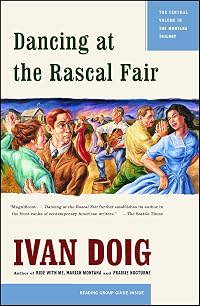
Dancing at the Rascal Fair by National Book Award nominee Ivan Doig captures the passion and tenacity of turn-of-the-century immigrants struggling to build new lives amidst Montana's windswept Rockies. The tale unfolds into a contest of the heart between Anna Ramsay and Angus McCaskill-kept apart by obligations-as they and their stormy kin vie to tame the brutal land.Tags
Recommendations





Member Reviews
This is the story of two friends from Nethermuir, Scotland, who decided to take a chance on a new life in America in 1889. Rob Barclay was the most enthusiastic, and he had a prosperous relative already established in Montana who sent money home every Christmas---surely he'd be able to give two eager young men a grand start. Angus McCaskill was slightly more cautious, but ultimately took the plunge into steerage along with Rob. Their adventures with homesteading, sheep ranching, schoolrooms and matrimony make marvelous reading, as usual with Doig. This one I found a little more heart-wrenching than others of his; there is sadness, loss, bitterness and regret along with loyalty, duty, dancing and love at work here, and its realism is show more remarkable. I subtracted a star for the fact that I could see several plot developments coming in the last third of the book, and then put half of it back because it was all done so darned well, and because when all was said and done, our Angus realized what was critically important to him and clung to it. . show less
There's Everything to love about this ENGLISH CREEK backstory, form Ivan Doig's vivid and compelling descriptions
of The Two Medicine land and its ever-changing weather to the engaging and honest characters.
Where it slips, and loses a half star, is allowing Adair to insistently refer to herself in the third person,
As well, there is no explanation at all why good old Anna did not prepare Angus by simply writing to him from her
new summer of lust with Isaac. That alone should have made him let go of his eternal Anna obsession.
From the opening death of the beautiful horse Ginger to many character's deaths,
none was less necessary to the plot than my favorite character, Lucas Barclay.
Many readers may still be singing along with "DANCING AT show more THE RASCAL FAIR"! show less
of The Two Medicine land and its ever-changing weather to the engaging and honest characters.
Where it slips, and loses a half star, is allowing Adair to insistently refer to herself in the third person,
As well, there is no explanation at all why good old Anna did not prepare Angus by simply writing to him from her
new summer of lust with Isaac. That alone should have made him let go of his eternal Anna obsession.
From the opening death of the beautiful horse Ginger to many character's deaths,
none was less necessary to the plot than my favorite character, Lucas Barclay.
Many readers may still be singing along with "DANCING AT show more THE RASCAL FAIR"! show less
3.5 stars
Rob Barclay and Angus McCaskill leave Scotland for Montana, where Rob’s uncle Lucas is “a miner.” But what they don’t know is that Lucas’s mine, aptly named the Great Maybe, is no more. In fact, Lucas lost his hands in the explosion and is now a saloonkeeper in a small town, Gros Ventre, with a Native American “housekeeper,” Nancy.
Once they find him, though, nothing will keep the boys from trying to make their fortunes along with Lucas. And he helps stake them. They homestead and begin life as sheep ranchers.
Angus narrates the story, taking us from 1889 to 1919. His love for fellow schoolteacher Anna Ramsey is a central theme, although Anna breaks his heart and Angus eventually marries Rob’s younger sister show more Adair. She is a good partner for him, if not the passionate love he’s envisioned.
There is some absolutely beautiful writing, and Doig gives us all the emotions of life – laughter, love, grief, despair, anger, jealousy, and happiness.
One thing that did put me off a bit was Angus’s pining over Anna for so long. It reminded me of Scarlett O’Hara mooning over Ashley Wilkes beyond all reason, and without any encouragement. I’d have given the book a full four stars but for that.
I think I’ll read more of his work. I know that my husband would like this book. I think that my brother might appreciate it as well. show less
Rob Barclay and Angus McCaskill leave Scotland for Montana, where Rob’s uncle Lucas is “a miner.” But what they don’t know is that Lucas’s mine, aptly named the Great Maybe, is no more. In fact, Lucas lost his hands in the explosion and is now a saloonkeeper in a small town, Gros Ventre, with a Native American “housekeeper,” Nancy.
Once they find him, though, nothing will keep the boys from trying to make their fortunes along with Lucas. And he helps stake them. They homestead and begin life as sheep ranchers.
Angus narrates the story, taking us from 1889 to 1919. His love for fellow schoolteacher Anna Ramsey is a central theme, although Anna breaks his heart and Angus eventually marries Rob’s younger sister show more Adair. She is a good partner for him, if not the passionate love he’s envisioned.
There is some absolutely beautiful writing, and Doig gives us all the emotions of life – laughter, love, grief, despair, anger, jealousy, and happiness.
One thing that did put me off a bit was Angus’s pining over Anna for so long. It reminded me of Scarlett O’Hara mooning over Ashley Wilkes beyond all reason, and without any encouragement. I’d have given the book a full four stars but for that.
I think I’ll read more of his work. I know that my husband would like this book. I think that my brother might appreciate it as well. show less
An historical fiction which takes place for the most part in Gros Ventre, Montana, this saga follows the fortunes of two young men fresh to America from Scotland in the 1800's. It details the joys and hardships of pioneering in that state with poignancy and heartfelt joy. Angus and Rob have their share of both, although the story is told only from Angus' view.
I enjoyed reading this, although it took me a long time to do so. The words and word pictures are a luxury for a reader. It invites you to stop and ponder, consider and think about the situations and the people. Doig never makes any of his characters too perfect for their own good. He presents them as real people, who grow, stumble and persevere. Sometimes this is painful, you want show more to shake them by the shoulders; but it is honest and in the end you love them in spite of themselves. Speaking as a person who had pioneering relatives in this era, and knew them as a young girl, it is easy to imagine that this book represents them well. show less
I enjoyed reading this, although it took me a long time to do so. The words and word pictures are a luxury for a reader. It invites you to stop and ponder, consider and think about the situations and the people. Doig never makes any of his characters too perfect for their own good. He presents them as real people, who grow, stumble and persevere. Sometimes this is painful, you want show more to shake them by the shoulders; but it is honest and in the end you love them in spite of themselves. Speaking as a person who had pioneering relatives in this era, and knew them as a young girl, it is easy to imagine that this book represents them well. show less
This story is like a great river: long and wide and deep. The prose flows beautifully and carries every thought and action with graceful power; you can't help but be swept along. Ready to ditch the river metaphor? Me, too.
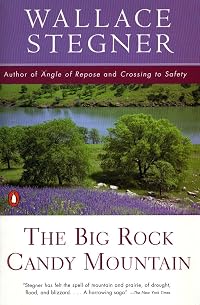
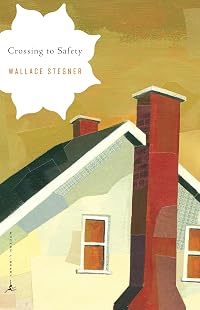
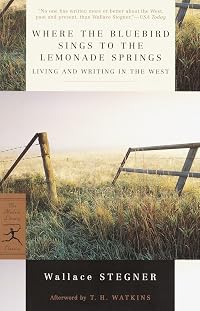
If you like Wallace Stegner, you like Doig. If you haven't read either, you're missing out. Theirs are novels that open up a corner of the world, wrap it in music and place it in your hand. Dancing at the Rascal Fair is one of my favorite books.
If you like Wallace Stegner, you like Doig. If you haven't read either, you're missing out. Theirs are novels that open up a corner of the world, wrap it in music and place it in your hand. Dancing at the Rascal Fair is one of my favorite books.
English Creek is quite good - good enough that I went right out and got the second book in the trilogy (Dancing at the Rascal Fair). The action in Dancing actually takes place before that of its predecessor, and I enjoyed it much more. It was oddly satisfying to read about people when you already know much of their outcome. The second book also explains the history and populating of the "two medicine country", which adds a lot of depth to the series (in many ways, the land is the subject of the book, more so than the people). I just picked up the third book - full report to come on that next month.
Ivan Doig’s “Dancing at the Rascal Fair” did not win me over until I had read the first third of the book. I found the account of two young Scotsme. Angus McCaskill and Rob Barclay, emigrating to America in 1889, traveling to Montana, locating Rob’s enterprising uncle, Lucas Barclay, and establishing homesteads in high country just east of the Continental Divide mildly interesting. Reading about the people of the region and their ways of living was useful. Doig’s dialogue is crisp and unique to each character. He is visually expressive. His phraseology of thought and emotion is excellent. His characters are the antithesis of being stereotype.
Here are examples of Doig’s expressive skills.
About the news of the death of Rob show more Barclay’s father received in a letter: “As much sadness as paper can absorb was in that letter.”
About Angus’s wife’s reluctance to learn how to saddle a horse: “Beside the big gingerbread-colored horse, Adair was a small pillar of reluctance.”
About Angus and Adair’s unhappy marriage: “When a marriage begins to come apart, the stain spreads into whatever it can find.”
Doig is indeed an excellent writer. What seemed lacking initially was story excitement, compelling conflict, too much introspection by the novel’s first person narrator, Angus. But when Angus meets Anna Ramsay and falls instantly in love with her, causing the first major rift in Angus and Rob’s friendship, my attitude changed.
Angus and Rob’s deteriorating relationship is the backbone of the novel. Rob is ambitious, optimistic, socially engaging, and persuasive. Angus, ambitious enough, is educated, practical, rather cautious, and cognizant of other people’s feelings. Rob has a selfish side. Angus is introspective and principled. Angus explains three-fourths of the way through the novel how he and Rob are broadly different. “He sees life as something you put in your pocket as you please. I never find it fits that easily.” Rob wants to decide things for both of them and expects to have his way. Angus resents being manipulated. Being friends, they are able early on to banter away most of the friction this produces. Rob invests heavily in raising and grazing sheep. Angus does on a much smaller scale, and he becomes the school master of the local creek-land homestead children.
On the other side of a butte and beside a different creek is another school house. Angus makes a courtesy call on the school house and meets its school mistress, Anna Ramsay. He is entirely smitten by her. She is attracted to him. Soon they make love. He proposes. She delays her answer until the end of summer. She and her family, needing money, are to accompany Isaac Reese (a neighbor) to build railroad crossings and plow fireguard strips along the Great Northern Railway. Not long after the Ramsay family’s departure, Rob persuades Angus to ride with him by wagon to the nearest railroad station to pick up a Montgomery Ward cream separator that Rob has supposedly ordered. The separator turns out to be Adair Barclay, Rob’s 19 year old sister, whom Rob has brought from Scotland to Montana for Angus to marry. Angus is incensed. Rob has interfered in his personal life and he has placed his sister in an extremely awkward, vulnerable position. Angus has to tell Adair that he is engaged. At the end of the summer Anna tells him that she intends to marry Isaac Reese. Angus is emotionally destroyed. A month later he marries Adair. He is convinced he cannot live any longer by himself. He is also afraid that his desire for Anna will stay with him the rest of his life. Adair knows she is second-best and that Anna will always be in his thoughts.
Adair has great difficulty adapting to the bigness, harshness, and loneliness of Montana life. She resists its challenges. She miscarries twice. She tells Angus that she wants to go back to Scotland to “visit.” Angus recognizes her purpose. He narrates: “By invoking Scotland, Adair was saying that our marriage need not be a lasting barrier keeping me from Anna.” Angus has treated her with great consideration. He wants her to stay, all the while wanting Anna more. But then Adair becomes pregnant again and gives birth to a son, Varick. This event keeps her from leaving.
Years pass. The breech in Angus’s friendship with Rob widens. Rob complains to Angus about his obsession with Anna. Angus tells him not to interfere. Rob pressures Angus to join him in a “land locator” partnership. For a fee they would lead prospective settlers to dry land (the only land still available) and mark the boundaries of their future homesteads knowing all the while how foolish these settlers would be to file claims. Adair tells Angus that she “doesn’t know if she can stay, after Varick is grown and gone.” Believing he must finance his, Adair’s, and Varick’s separate futures, Angus agrees to the partnership. After two summers of land locator work, his conscience bearing heavily on him, weary of the resentment his clients direct at him, Angus quits. To make up for the lost income, he agrees to partner with Rob in raising more sheep, which will graze and be sheered on Indian reservation land.
Angus drives their combined sheep herds onto the reservation land and sets up a sheering camp. Anna and her two children pass through the camp headed north. Her husband, Isaac Reese, is building roads for the national park, and she and the children are going to visit him. Angus persuades Anna to spend the night in the camp. He then persuades her to join him to witness alone the arrival of dawn. She does so. Rob arrives late to camp, learns that Angus and she were alone together and assumes incorrectly that the two had made love. Rob accuses Angus. Angus tells him, “Rob, don’t ever give me any more guff about something that’s none of your business.” Rob tells Varick about Angus and Anna’s supposed intercourse. Varick, in his late teens, rejects his father and moves into the nearby town. Angus beats Rob to within an inch of his life.
104 pages of the book remain. Angus and Rob’s relationship deteriorates further and Angus’s relationships with Adair and Varick evolve. Enough said.
How does the ambitious, risk-taking person deal with disappointment and defeat? Is such a person able to accept less so as not to be destroyed? What separates the person who can and the person who cannot? Can such a person adapt and experience happiness? Ivan Doig has Lucas Barclay, Rob Barclay, Angus McCaskill, and Adair Barclay McCaskill answer these questions. This book was not an easy read but definitely worthwhile. Although I very much wanted to, I could not quite rate this novel five stars. show less
Here are examples of Doig’s expressive skills.
About the news of the death of Rob show more Barclay’s father received in a letter: “As much sadness as paper can absorb was in that letter.”
About Angus’s wife’s reluctance to learn how to saddle a horse: “Beside the big gingerbread-colored horse, Adair was a small pillar of reluctance.”
About Angus and Adair’s unhappy marriage: “When a marriage begins to come apart, the stain spreads into whatever it can find.”
Doig is indeed an excellent writer. What seemed lacking initially was story excitement, compelling conflict, too much introspection by the novel’s first person narrator, Angus. But when Angus meets Anna Ramsay and falls instantly in love with her, causing the first major rift in Angus and Rob’s friendship, my attitude changed.
Angus and Rob’s deteriorating relationship is the backbone of the novel. Rob is ambitious, optimistic, socially engaging, and persuasive. Angus, ambitious enough, is educated, practical, rather cautious, and cognizant of other people’s feelings. Rob has a selfish side. Angus is introspective and principled. Angus explains three-fourths of the way through the novel how he and Rob are broadly different. “He sees life as something you put in your pocket as you please. I never find it fits that easily.” Rob wants to decide things for both of them and expects to have his way. Angus resents being manipulated. Being friends, they are able early on to banter away most of the friction this produces. Rob invests heavily in raising and grazing sheep. Angus does on a much smaller scale, and he becomes the school master of the local creek-land homestead children.
On the other side of a butte and beside a different creek is another school house. Angus makes a courtesy call on the school house and meets its school mistress, Anna Ramsay. He is entirely smitten by her. She is attracted to him. Soon they make love. He proposes. She delays her answer until the end of summer. She and her family, needing money, are to accompany Isaac Reese (a neighbor) to build railroad crossings and plow fireguard strips along the Great Northern Railway. Not long after the Ramsay family’s departure, Rob persuades Angus to ride with him by wagon to the nearest railroad station to pick up a Montgomery Ward cream separator that Rob has supposedly ordered. The separator turns out to be Adair Barclay, Rob’s 19 year old sister, whom Rob has brought from Scotland to Montana for Angus to marry. Angus is incensed. Rob has interfered in his personal life and he has placed his sister in an extremely awkward, vulnerable position. Angus has to tell Adair that he is engaged. At the end of the summer Anna tells him that she intends to marry Isaac Reese. Angus is emotionally destroyed. A month later he marries Adair. He is convinced he cannot live any longer by himself. He is also afraid that his desire for Anna will stay with him the rest of his life. Adair knows she is second-best and that Anna will always be in his thoughts.
Adair has great difficulty adapting to the bigness, harshness, and loneliness of Montana life. She resists its challenges. She miscarries twice. She tells Angus that she wants to go back to Scotland to “visit.” Angus recognizes her purpose. He narrates: “By invoking Scotland, Adair was saying that our marriage need not be a lasting barrier keeping me from Anna.” Angus has treated her with great consideration. He wants her to stay, all the while wanting Anna more. But then Adair becomes pregnant again and gives birth to a son, Varick. This event keeps her from leaving.
Years pass. The breech in Angus’s friendship with Rob widens. Rob complains to Angus about his obsession with Anna. Angus tells him not to interfere. Rob pressures Angus to join him in a “land locator” partnership. For a fee they would lead prospective settlers to dry land (the only land still available) and mark the boundaries of their future homesteads knowing all the while how foolish these settlers would be to file claims. Adair tells Angus that she “doesn’t know if she can stay, after Varick is grown and gone.” Believing he must finance his, Adair’s, and Varick’s separate futures, Angus agrees to the partnership. After two summers of land locator work, his conscience bearing heavily on him, weary of the resentment his clients direct at him, Angus quits. To make up for the lost income, he agrees to partner with Rob in raising more sheep, which will graze and be sheered on Indian reservation land.
Angus drives their combined sheep herds onto the reservation land and sets up a sheering camp. Anna and her two children pass through the camp headed north. Her husband, Isaac Reese, is building roads for the national park, and she and the children are going to visit him. Angus persuades Anna to spend the night in the camp. He then persuades her to join him to witness alone the arrival of dawn. She does so. Rob arrives late to camp, learns that Angus and she were alone together and assumes incorrectly that the two had made love. Rob accuses Angus. Angus tells him, “Rob, don’t ever give me any more guff about something that’s none of your business.” Rob tells Varick about Angus and Anna’s supposed intercourse. Varick, in his late teens, rejects his father and moves into the nearby town. Angus beats Rob to within an inch of his life.
104 pages of the book remain. Angus and Rob’s relationship deteriorates further and Angus’s relationships with Adair and Varick evolve. Enough said.
How does the ambitious, risk-taking person deal with disappointment and defeat? Is such a person able to accept less so as not to be destroyed? What separates the person who can and the person who cannot? Can such a person adapt and experience happiness? Ivan Doig has Lucas Barclay, Rob Barclay, Angus McCaskill, and Adair Barclay McCaskill answer these questions. This book was not an easy read but definitely worthwhile. Although I very much wanted to, I could not quite rate this novel five stars. show less
Members
- Recently Added By
Lists

Favorite Books by Mid-List Authors
25 works; 8 members

Blue Pyramid 1,276 Best Books of All Time
1,248 works; 32 members

Books Featured on Readers' Review of the Diane Rehm Show
161 works; 8 members
Author Information

27+ Works 10,121 Members
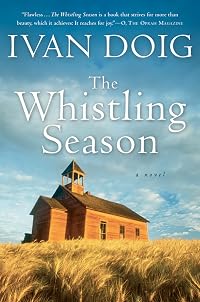
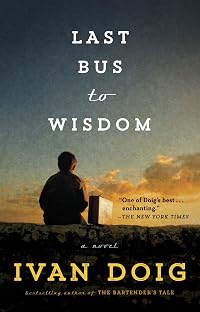
Ivan Doig was born in White Sulphur Springs, Montana in 1939. He received bachelor's and master's degrees in journalism from Northwestern University and a Ph.D. in history from University of Washington. Before becoming an author, he worked as a ranch hand and a journalist. His non-fiction works include This House of Sky, Winter Brothers, and Heart show more Earth. His fiction titles include English Creek, Dancing at the Rascal Fair, Bucking the Sun, The Whistling Season, The Bartender's Tale, and Last Bus to Wisdom. He received several awards including the Western Literature Association's Lifetime Distinguished Achievement Award and the Wallace Stegner Award in 2007. He died of multiple myeloma on April 8, 2015 at the age of 75. (Bowker Author Biography) show less
Awards and Honors
Series

Work Relationships
Common Knowledge
- People/Characters
- Angus McCaskil; Rob Barclay
- Epigraph
- Scotchmen and coyotes was the only ones that could live in the Basin, and pretty damn soom the coyotes starved out. -Charles Campbell Doig (1901-71)
- Dedication
- For Vernon Cattensen, who saw the patterns on the land
- First words
- To say the truth, it was not how I expected -- stepping off toward America past a drowned horse.
- Quotations
- ...she had a mind like a magic needle. It penetrated every book I managed to find for her, and of my bunch in that schoolroom Karen was the one spellbound, as I had been at her age, by those word rainbows called poems.
I was told once I am a great one for yesterdays, and I said back that they have brought us to where we are. - Last words
- (Click to show. Warning: May contain spoilers.)Tell me, tell me that, whoever can.
Classifications
Statistics
- Members
- 972
- Popularity
- 27,108
- Reviews
- 27
- Rating
- (4.18)
- Languages
- English, Russian
- Media
- Paper, Audiobook, Ebook
- ISBNs
- 16
- ASINs
- 15