On This Page
Description
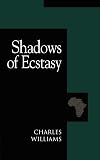
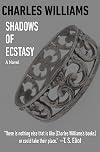
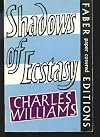
An occultist invades Europe at the head of an African army. His goal--the conquest of death itself. No one knows quite what to make of Nigel Considine. He calls himself "the High Executive", and he has inspired the entire continent of Africa to revolt and make war upon Europe. Is Considine a magician, a charismatic politician, a divinely annointed prophet, or the antichrist? A small circle of London friends all seem to disagree, even as Considine's influence is tearing England Shadows of show more Ecstasy is Charles Williams' most confounding novel--chilling, intriguing, ambiguous, and exciting. Along with C. S. Lewis and J. R. R. Tolkien, Williams was a member of the Inklings, a society of writers in Oxford, England, who changed the world with their mythopoetic vision. show lessTags
Recommendations

















Member Reviews
This isn't as emotionally involving a novel as [b:All Hallows' Eve|143225|All Hallows' Eve|Charles Walter Stansby Williams|http://photo.goodreads.com/books/1172150891s/143225.jpg|138160], but it's unusual and memorable. In a subdued style that reads a little like an homage to H.G. Wells, Williams depicts a military and magical attack on Europe (and Western civilization and rational thought in general) led by a character who, as far as I know, has rarely appeared in fantasy novels: a secular humanist fascist pagan superman Messiah, who is the smartest and most honest person in the world. Williams gives equal weight to the possibilities that this person is the Antichrist, or that he's closer to the truth than anyone else, or both. In show more spite of its eerie timing (1933), people looking for political analogies in this story will become very confused.
Threads that are in most of Williams's novels, but particularly apparent in this one, are a strong and deliberate empathy that includes the villains; a constant deflection of conflict so that the opposed forces are often diplomatically hanging out in the same room; and a sense that mystical craziness and transformation are, if not necessarily good, still to be taken seriously. [a:Clive Barker|10366|Clive Barker|http://photo.goodreads.com/authors/1200469782p2/10366.jpg] in his later fantasy writing and [a:James Blaylock|86475|James P. Blaylock|http://www.goodreads.com/images/nophoto/nophoto-M-50x66.jpg] both carry on this tradition in very different styles. show less
Threads that are in most of Williams's novels, but particularly apparent in this one, are a strong and deliberate empathy that includes the villains; a constant deflection of conflict so that the opposed forces are often diplomatically hanging out in the same room; and a sense that mystical craziness and transformation are, if not necessarily good, still to be taken seriously. [a:Clive Barker|10366|Clive Barker|http://photo.goodreads.com/authors/1200469782p2/10366.jpg] in his later fantasy writing and [a:James Blaylock|86475|James P. Blaylock|http://www.goodreads.com/images/nophoto/nophoto-M-50x66.jpg] both carry on this tradition in very different styles. show less
Given that it as written in 1933, this is a quite remarkable book, about a successful (briefly) African invasion of London. my favorite part is before the invasion, when the African government which has overthrown the colonial powers announces (in very complimentary terms) the martyrdom of the Christian missionaries, and in the parliamentary debate the archbishop of Canterbury entirely agrees that martyrdom is the duty of Christians and the mssionaries should not be avenged. One marvellousvcharacter is a very intelligent and philosophical Zulu king who ultmately sides with the rebels, who are let by a European mystic,not a native African.
I enjoy a Charles Williams on occasion, and this is one of his better books. In it a man achieves the status of the Anti-Christ by using central African rituals. Somewhat racist and fully creepy. Fortunately, in Williams' world there is a God, who's on the job.
I understand the book was copyright 1925.
I understand the book was copyright 1925.
This is a second copy of Shadows of Ecstasy, the same editiin a the first copy already cataloged
Ratings
Members
- Recently Added By
Author Information

74+ Works 6,938 Members
Charles Williams (1886-1945) joined, in 1908, the staff of the Oxford University Press, the publishing house in which he worked for the rest of his life. Throughout these years, poetry, novels, plays, biographies, history, literary criticism, and theology poured from his pen. At the beginning of the Second World War the publishing house was show more evacuated to Oxford where, in addition to his own writing and his editorial work for the Press, he taught in the University. show less
Some Editions
Series

Belongs to Publisher Series
Work Relationships
Is contained in
Charles Williams Omnibus: War in Heaven / Many Dimensions / The Place of the Lion / Shadows of Ecstasy / The Greater Trumps / Descent into Hell / All Hallows' Eve / Et in Sempiternum Pereant by Charles Williams
Война в небесах. Ч. 1 [Война в небесах. Иные миры]. Ч. 2 [Место льва. Старшие Арканы. Тени восторга]. Ч. 3 [Сошествие в Ад. Канун дня всех святых. Стихи] by Charles Williams
Common Knowledge
- Original publication date
- 1933
- First words
- Roger Ingram's peroration broke over the silent dining hall:"He and such as he are one with the great conquerors, the great scientists, the great poets; they have all of them cried of the unknown: I will encounter darkness as... (show all) a bride And hug it in mine arms."
- Last words
- (Click to show. Warning: May contain spoilers.)If now, while the world shouted over the defeat of his allies and subjects, while it drove its terror back into its own unmapped jungles, and subdued its fiercer desires to an alien government of sterile sayings, if now he came once more to threaten and deliver it. If---beyond belief!---but if he returned. . . .
Classifications
- Genres
- Fiction and Literature, General Fiction, Fantasy, Christian Fiction, Horror
- DDC/MDS
- 823.912 — Literature & rhetoric English & Old English literatures English fiction 1900- 1901-1999 1901-1945
- LCC
- PZ3 .W67144 .S — Language and Literature Fiction and juvenile belles lettres Fiction and juvenile belles lettres Fiction in English
- BISAC
Statistics
- Members
- 397
- Popularity
- 78,861
- Reviews
- 4
- Rating
- (3.43)
- Languages
- English
- Media
- Paper, Audiobook, Ebook
- ISBNs
- 15
- ASINs
- 18