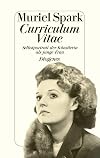
Curriculum Vitae: A Volume of Autobiography
by Muriel Spark
On This Page
Description
Scottish novelist Muriel Spark recounts her life and the people and places that inspired her work.Tags
Recommendations




















Member Reviews
Spark writes engagingly and concisely about her childhood in Edinburgh, her disastrous flit to Southern Rhodesia (Zimbabwe) to marry (and subsequently divorce) an imperfectly-vetted fiancé, her work for MI6 in the closing stages of the war, and her literary career in the London of the forties and fifties, up to the publication of her first novel The Comforters. She says that her main motivation in writing this memoir was to correct false information about her in other people's books, but, especially in the early chapters, the book reads as though she must have had a lot of fun putting it together, chasing up old acquaintances who could confirm or correct her distant memories. And of course it's a great pleasure to us to share in her show more rediscovery of the delights of growing up in the Edinburgh of the 20s and 30s, especially since it also involves meeting "the real Miss Jean Brodie" - as we might have guessed, Spark is at pains to assure us that the teacher who was the source for many of Brodie's eccentricities and verbal mannerisms was nothing like the manipulative monster she turned into in the novel, but someone remembered with love and affection by her old pupils. But she did call them the "crème de la crème".
In Southern Rhodesia, her caustic observations of the European settlers have a lot in common with what Doris Lessing says about them, but of course she would have read Lessing's books by the time she wrote this. One of Spark's lasting regrets (and one of the great literary might-have-beens) is that the two future novelists, both young mothers going through similar marital difficulties, didn't meet until much later, after they'd both left Africa.
After the war, Spark's reminiscences become a bit sketchier, probably because so many of the people concerned were still around and capable of taking offence, but she does slip in a few hard hits here and there when she gets the chance. I was amused to read her version of her brief spell as General Secretary of the Poetry Society, which ended in acrimony after she managed to offend a significant number of the committee dinosaurs who were used to running things their own way - they thought a docile young woman would be a safe choice, but found her to have a mind of her own and a fierce desire to drag Poetry Review kicking and screaming into the 20th century. A familiar kind of story to anyone who's ever been involved in running any kind of voluntary organisation!
Something that hadn't occurred to me before, which Spark talks about here, is the overlap between The Comforters and Evelyn Waugh's The ordeal of Gilbert Pinfold, written shortly after Spark's novel but before it was published. Both were based on frightening hallucinatory experiences that later turned out to be side-effects of prescription drugs the authors were taking (combined with under-eating in Spark's case) - Waugh must have been annoyed by the unfortunate coincidence, but despite that reviewed Spark's book very favourably and said he wished he'd thought of the typewriter device she uses to convey the effect of the hallucinations.
I only knew vaguely about Spark's background as a poet and her training as a commercial writer (she studied what we would now call "business English" at Herriot-Watt), but it makes perfect sense that she attributes her success as a novelist to these factors. Both are disciplines that force you to pay close attention to efficient and precise use of words, and that's exactly where Spark's novels - and this memoir - really score. show less
In Southern Rhodesia, her caustic observations of the European settlers have a lot in common with what Doris Lessing says about them, but of course she would have read Lessing's books by the time she wrote this. One of Spark's lasting regrets (and one of the great literary might-have-beens) is that the two future novelists, both young mothers going through similar marital difficulties, didn't meet until much later, after they'd both left Africa.
After the war, Spark's reminiscences become a bit sketchier, probably because so many of the people concerned were still around and capable of taking offence, but she does slip in a few hard hits here and there when she gets the chance. I was amused to read her version of her brief spell as General Secretary of the Poetry Society, which ended in acrimony after she managed to offend a significant number of the committee dinosaurs who were used to running things their own way - they thought a docile young woman would be a safe choice, but found her to have a mind of her own and a fierce desire to drag Poetry Review kicking and screaming into the 20th century. A familiar kind of story to anyone who's ever been involved in running any kind of voluntary organisation!
Something that hadn't occurred to me before, which Spark talks about here, is the overlap between The Comforters and Evelyn Waugh's The ordeal of Gilbert Pinfold, written shortly after Spark's novel but before it was published. Both were based on frightening hallucinatory experiences that later turned out to be side-effects of prescription drugs the authors were taking (combined with under-eating in Spark's case) - Waugh must have been annoyed by the unfortunate coincidence, but despite that reviewed Spark's book very favourably and said he wished he'd thought of the typewriter device she uses to convey the effect of the hallucinations.
I only knew vaguely about Spark's background as a poet and her training as a commercial writer (she studied what we would now call "business English" at Herriot-Watt), but it makes perfect sense that she attributes her success as a novelist to these factors. Both are disciplines that force you to pay close attention to efficient and precise use of words, and that's exactly where Spark's novels - and this memoir - really score. show less
Such a precise and concise writer in this, her autobiography, and in her novels too; the result of doing a course of commercial writing at Heriot-Watt, her poetry and her acute observation
Muriel Spark is at pains to set the story straight about her life. She maintains she has almost all the correspondence at hand to verify her life's story and thus to refute falsifications about her in other published materiel.
Her early life in Edinburgh is a wonderful evocation of the twenties in that city. The loving family life, the schooling and the street life are remembered vividly and are the most endearing part of her story.
The later struggles in Rhodesia, her wartime work in black propaganda and later in publishing and editing are not so show more lavishly explored, but that is no fault.
Nonetheless, her silence about the development of her son, Robin, in the care of her parents, cannot help but be noticed, especially if one recalls the acrimony that developed between mother and son later.
Muriel Spark may well have all the documentation at hand to refute the distortions about her that have come with the fame her novels brought her. All the same, more reference to the record might reveal a fuller story.
Whatever the case, she was a fabulous edgy writer. show less
Muriel Spark is at pains to set the story straight about her life. She maintains she has almost all the correspondence at hand to verify her life's story and thus to refute falsifications about her in other published materiel.
Her early life in Edinburgh is a wonderful evocation of the twenties in that city. The loving family life, the schooling and the street life are remembered vividly and are the most endearing part of her story.
The later struggles in Rhodesia, her wartime work in black propaganda and later in publishing and editing are not so show more lavishly explored, but that is no fault.
Nonetheless, her silence about the development of her son, Robin, in the care of her parents, cannot help but be noticed, especially if one recalls the acrimony that developed between mother and son later.
Muriel Spark may well have all the documentation at hand to refute the distortions about her that have come with the fame her novels brought her. All the same, more reference to the record might reveal a fuller story.
Whatever the case, she was a fabulous edgy writer. show less
This book made me wish I'd grown up in Scotland, only their food is so disgusting. There's no scandal here. Strictly Muriel Spark talking about her wonderful childhood in Scotland, very little about her husband and son, and how she became a writer. I really enjoyed this book because her style is so mesmerizing but it isn't for anyone who looks for lurid details in a biography, which I sometimes do. Hey, Maria Riva fan up in here!
I liked this, but started reading it at a bad time. I got about 1/3 of the way through before the library started breathing down my back and I had to return it (after several renewal attempts!). However, that said, I will get back to this. I really enjoyed what I did accomplish, but it's a relatively directionless memoir, so there wasn't anything enticing enough to pull me through it despite distractions.
2519 Curriculum Vitae: Autobiography by Muriel Spark (read 17 Jul 1993) Spark was born in 1918 and this is an account of her life from then to 1954 or so. The first part--of her childhood in Edinburgh--was not enthralling, but I found the account of her education, her trip to South Africa where she married an English teacher named Spark, had a son--she was actually in what is now Zimbabwe,--divorced her husband, and returned to England in wartime, and her years to her conversion to Catholicism in 1954, were easy to read and held my interest. The result is, even though I was not too impressed by her novel The Mandelbaum Gate, this book tempts me to read other novels of hers
Entertaining biography of Mrs. Sparks to her first major fiction novel, which was written to fend off rumors of her past by former associates.
Ratings
Members
- Recently Added By
Author Information

102+ Works 22,826 Members
Muriel Spark has been called "our most chillingly comic writer since Evelyn Waugh" by the London Spectator, and the New Yorker praised her novel Memento Mori ri (1959) as "flawless." Her fiction is marked by its remarkable diversity, wit, and craftsmanship. "She happens to be, by some rare concatenation of grace and talent, an artist, a show more serious---and most accomplished---writer, a moralist engaged with the human predicament, wildly entertaining, and a joy to read" (SRSR). She became widely known in the United States when the New Yorker devoted almost an entire issue to The Prime of Miss Jean Brodie (1961). Set in Edinburgh in the 1930s, this is the story of a schoolteacher, her unorthodox approach to life, and its effect on her select group of adolescent girls. Though their idol turns out to have feet of clay, she leaves an indelible mark on their lives. The Girls of Slender Means (1963), also warmly praised, is a sardonic look at the vivacity of youth and the anxieties of young womanhood. Reviewing The Mandelbaum Gate (1965) for the New Republic, Honor Tracy wrote: "There is an abundance here of invention, humor, poetry, wit, perception, that all but takes the breath away. . . . The story, in fact, is pure adventure, with the suspense as artfully maintained as anywhere by Graham Greene, but this is only one ingredient. There are memorable descriptions of the Holy Land, fascinating insights into the jumble of intrigue and piety surrounding the Holy Places, and penetrating studies of Arabs. . . . In each of [Spark's] novels heretofore one of her qualities has tended to predominate over the others. Here for the first time they are all impressively marshaled side by side, resulting in her best work so far." The daughter of an Englishwoman and a Scottish-Jewish father, Spark was born and educated in Edinburgh. After her marriage in 1938, she lived for some years in Central Africa, a period rarely reflected in her work. During World War II, she returned to Britain, where she worked in the Political Intelligence Department of the Foreign Office after the breakup of her marriage. She has been a magazine editor and written poetry and literary criticism. Spark has lived in London's Camberwell section, the setting of The Ballad of Peckham Rye (1960), but now makes her home in New York. Her novels reflect her conversion to Roman Catholicism. (Bowker Author Biography) Writer Muriel Spark was born in Edinburgh on February 1, 1918. In 1934-1935 she took a course in commercial correspondence and précis writing at Heriot-Watt College. After her marriage in 1937, she lived for some years in Central Africa. During World War II, she returned to Britain, where she worked in the Political Intelligence Department of the Foreign Office after the breakup of her marriage. After the war, she began her literary career. She became General Secretary of the Poetry Society, worked as an editor and wrote studies of Mary Shelley, John Masefield and the Brontë sisters. Her first book of poetry, The Fanfarlo and Other Verse, was published in 1952 and her first novel, The Comforters, was published in 1957. She wrote over twenty books including The Prime of Miss Jean Brodie and The Finishing School. She won numerous awards and honors including the 1965 James Tait Black Memorial Prize for The Mandelbaum Gate, the 1992 U. S. Ingersoll Foundation T. S. Eliot Award, the 1997 David Cohen British Literature Prize for Lifetime Achievement, and in 1993 she became Dame Commander of the Order of the British Empire in recognition of her services to literature. The Scottish Arts Council created the Muriel Spark International Fellowship in 2004. She died on April 13, 2006. (Bowker Author Biography) show less
Some Editions
Common Knowledge
- Canonical title*
- Curriculum Vitae
- Original title
- Curriculum Vitae: a volume of autobiography
- Alternate titles*
- Curriculum Vitae. Selbstportrait der Künstlerin als junge Frau
- Original publication date
- 1992
- People/Characters
- Muriel Spark
- Important places
- Edinburgh, Scotland, UK; London, England, UK; Africa
- Blurbers
- Boylan, Clare
*Some information comes from Common Knowledge in other languages. Click "Edit" for more information.
Classifications
Statistics
- Members
- 296
- Popularity
- 109,040
- Reviews
- 6
- Rating
- (3.77)
- Languages
- English, French, German
- Media
- Paper, Audiobook, Ebook
- ISBNs
- 13
- UPCs
- 1
- ASINs
- 5