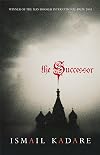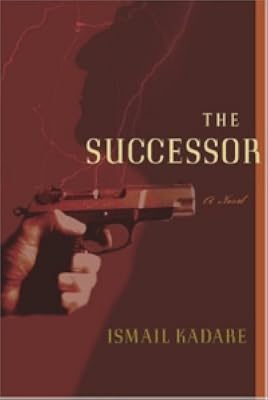
The Successor
by Ismaïl Kadaré
On This Page
Description
A powerful political novel based on the sudden, mysterious death of the man who had been handpicked to succeed the hated Albanian dictator Enver Hoxha. Did he commit suicide or was he murdered? That is the burning question. The man who died by his own hand, or another's, was Mehmet Shehu, the presumed heir to the ailing dictator. So sure was the world that he was next in line, he was known as The Successor. And then, shortly before Shehu was to assume power, he was found dead. The Successor show more is simultaneously a mystery novel, a historical novel-based on actual events and buttressed by the author's private conversations with the son of the real-life Mehmet Shehu, and a psychological novel. How do you live when nothing is sure? show lessTags
Recommendations
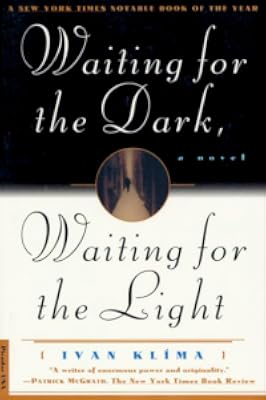
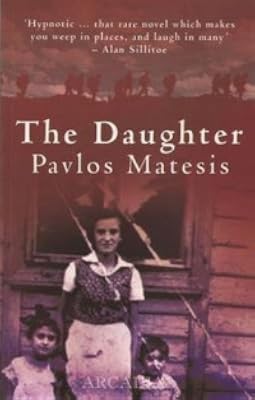
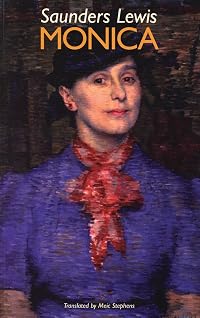
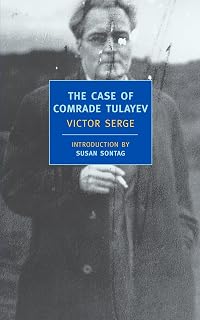










Member Recommendations
Member Reviews
This is a re-read of this novel by the great Albanian writer, who passed away in 2024. It is a political novel, being a fictionalised version of the probable murder or enforced suicide of the Albanian no 2 leader Mehmet Shehu (the Successor) in 1981, almost certainly at the instigation of the dictator Enver Hoxha (the Guide). It is also though a psychological novel about the essential nature of pathological mistrust, blind loyalty and suspicion, the hallmarks of extreme totalitarian regimes such as the Albanian communist one. It is a very good piece of literature, though I got a little lost in places with some of the imagery.
The Designated Successor was found dead in his bedroom at dawn on December 14. From this starting point, Kadare moves both backwards and forwards in time, looking dispassionately at the event from multiple perspectives, including that of the Successor's family, the Guide (Albania's aging, blind dictator), the new heir apparent, the architect in charge of the recent renovations of the Successor's house, and various unnamed foreign intelligence agencies. Did the Successor commit suicide, or was he murdered? If he was murdered, who killed him, and who will be blamed? (These are not necessarily the same person.) Is it possible to discover the true facts about the death? What are the implications for the future? It's a fascinating show more psychological study of Albanian politics in the Cold War era, perhaps best summed up by the anonymous intelligence agency analysts: The only way you can get a grip on a place overcome by paranoia is by becoming a little paranoid yourself. show less
I thoroughly enjoyed this book, the first novel I have read by this author. I realized part way through that I should have read Agamemnon's daughter first. I am reading it now and my copy has a very interesting preface from the translator and the publisher about the writing of this and several other works and the methods used by Kadare to smuggle them out of Albania and in to France, sometimes a few pages at a time.
The language and tone of the Successor immediately brought Kafka to mind. It felt like reading The Trial for the first time. There is a certain deadpan aspect of the language but underlying absurdity, irony and actual humour. The story is an interesting one and based on a real historical event in 1981 in Albania, a murder of show more the 'successor' to the then dictator of the communist regime in power in Albania. The book doesn't solve the mystery and the book is fiction, not history, but it is a fascinating glimpse of life in a totalitarian regime. The event is pondered from many points of view, that of the successor's family, his political rivals, the ordinary population, and foreign intelligence agencies. show less
The language and tone of the Successor immediately brought Kafka to mind. It felt like reading The Trial for the first time. There is a certain deadpan aspect of the language but underlying absurdity, irony and actual humour. The story is an interesting one and based on a real historical event in 1981 in Albania, a murder of show more the 'successor' to the then dictator of the communist regime in power in Albania. The book doesn't solve the mystery and the book is fiction, not history, but it is a fascinating glimpse of life in a totalitarian regime. The event is pondered from many points of view, that of the successor's family, his political rivals, the ordinary population, and foreign intelligence agencies. show less
The Successor is one of those rare books that can be read with equal pleasure by lovers of psychological or analytical writings, and by readers looking for “action.” Written in the form of a thriller, the novel manages in some miraculous way to go to the essence not only of Communism, but of all dictatorships, revealing with unusual psychological finesse how throughout history there are some archetypal dramas that keep repeating themselves, from Greek myths to Macbeth to the history of the Balkans. Here too, Kadare’s most powerful gift resides in inserting a “regional” story within a universal model, in finding mythological equivalents to contemporary events, and in reading the signification of one through the other.
The show more novel’s plot, a fictionalized version of a political crime that happened in 1981 in Albania, is simple: on the night of December 13 the designated Successor of Communist dictator Enver Hoxha is mysteriously shot dead. From the beginning to the end of the novel, Kadare crafts a successful drama, in which the answer to the questions “Was it suicide or murder? And if it was murder, who was the killer?” shifts—as the genre of the murder mystery demands—from one chapter to the next. But unlike the usual mystery novel, The Successor doesn’t have a “shocking ending.” In fact, the narrator tells the facts as if even he didn’t know the answer. Moreover, the dictator himself, referred to as “the Guide”—an appellative shared by most Communist leaders—doesn’t seem to possess the key to the entire story either, although he obviously is the gray eminence behind the crime.
Kadare’s skill in creating an ambiguous situation that triggers the reader’s curiosity to the maximum matches his genius in going straight to the essence of things, particularly in the scenes involving the Guide before and after the Successor’s death, which reveal the mechanism of power in Communist dictatorships. To begin with, when the Guide summons to his office the Successor’s successor—Hasobeu—he never pronounces the words “Kill him!” though this is what he is getting at. What he says is so vague and ambiguous—he orders Hasobeu to go to the Successor’s house and do “what is to be done,” and, in spite of his confusion, Hasobeu doesn’t dare ask “What?”—that Hasobeu goes twice to the house, wandering around and trying to interpret the Guide’s words. The game of interpreting is present throughout the book whenever the Guide appears, revealing a system in which everything is a sign demanding to be interpreted correctly if one wants to keep his head. But the absurdity is that there are no rules one could follow in order to properly decipher the signs, and any head could fall at any time. Because of the system’s total arbitrariness it seems at times that the Guide himself, although theoretically the one who makes and changes the rules, doesn’t know everything, as if Power secreted itself like a mythological monster mortals cannot touch, but can only surrender to. Thus, Kadare’s numerous comparisons of the Communist regime to a religion aren’t simply metaphors, but deep insights into its power structure. He compares the ties of comradeship forged at the beginning of Communism between those who spilled blood to come to power, with
"the ties of clan and family, because it too was a tie of blood—but with a difference. It wasn’t based on inner blood, the blood in your veins, identical to the blood of your family going back a thousand years, according to genetics, but on the other kind, on outer blood. That’s to say, on the blood of others, blood they had drunkenly spilled in the name of Doctrine."
Trying to decipher the mystery of the Successor’s death, Hasobeu keeps asking himself what did the Guide actually believe?
"Perhaps, like half the population of Tirana, the Guide took him for the killer. Or did he suspect that his minister [i.e., Hasobeu:] had intended to commit murder, but hadn’t managed to do so, seeing as someone else got his bullet in first? Or that the Successor has beaten both his assassins to the wire by pulling the trigger on himself?”
After leading us to believe that Hasobeu is the killer, Kadare implies that in fact he isn’t. But he also tells us that the Guide himself is engulfed in his own guessing game and deciphering of the signs, as if he didn’t know either who the killer was. Indeed, a few pages further we are told that the Guide “didn’t know and never had known, what had really happened at the Successor’s residence on that night of December 13. And since he didn’t know, it could take a thousand years for anyone else to find out.”
At this point, what we have suspected so far is confirmed: no one knows who the killer is. But immediately after this revelation we are led to another possible suspect: we are told that, apart from Hasobeu, the only other individual that seemed to have been implicated is the Architect of the Successor’s house. And then the story suddenly takes a turn, but the move is so subtle that the reader might still believe he is reading a murder mystery, when in fact the novel has become a reflection on art and the condition of the artist.
We know that the Architect had had his own reasons to hate the Successor for having been once publicly humiliated by him. We know that he had thought of punishing him, but when asked by the Successor to remodel his residence, the desire of punishing him by building something ugly is immediately replaced by a much stronger impulse: that of building something of unsurpassed beauty. In a Communist country where almost all buildings were state property and of a monotonous, uniform gray, the Architect has the rare chance of realizing his artistic vocation by building something unique. Indeed, once finished, his work is so beautiful that at the Successor’s party where the Guide himself is present, the gasps of admiration let out by the guests are indirectly saying the unsayable: the Successor’s house is more beautiful even than the Guide’s house!
Kadare’s psychological analysis of the oldest and most common reason for committing a crime—envy—is doubled by another legend, this time a Hungarian one, which narrates a monarch’s revenge on a vassal who not only had the cheek to have a castle built that was finer than his, but he had invited him to the inauguration party. Now, it appears that the Guide had been, after all, the one who had ordered the Successor’s death, because he was jealous of his house. But this hypothesis is, again, undermined in the last chapter written in the voice of the Successor, who speaks from beyond the grave, and we are back to the idea that the enigma remains unsolved. Even the opening of the secret archives after the fall of Communism hasn’t managed to uncover the secret, says the Successor. And if he tried to explain it, there is only one person who could understand him, Lin Biao, who had once been the Successor of Mao Tse-Tung, and whose life ended in circumstances similar to those of the Albanian Successor. No one will ever know what really happened on the night of December 13. Although, right before the end of the novel, the Successor seems to remember how that night, as he was dozing off, he saw his wife—whom the Guide called “Comrade Clytemnestra” after her husband’s death—point a gun at him... But did he really see her or was it just the vision of a man who was falling asleep? show less
The show more novel’s plot, a fictionalized version of a political crime that happened in 1981 in Albania, is simple: on the night of December 13 the designated Successor of Communist dictator Enver Hoxha is mysteriously shot dead. From the beginning to the end of the novel, Kadare crafts a successful drama, in which the answer to the questions “Was it suicide or murder? And if it was murder, who was the killer?” shifts—as the genre of the murder mystery demands—from one chapter to the next. But unlike the usual mystery novel, The Successor doesn’t have a “shocking ending.” In fact, the narrator tells the facts as if even he didn’t know the answer. Moreover, the dictator himself, referred to as “the Guide”—an appellative shared by most Communist leaders—doesn’t seem to possess the key to the entire story either, although he obviously is the gray eminence behind the crime.
Kadare’s skill in creating an ambiguous situation that triggers the reader’s curiosity to the maximum matches his genius in going straight to the essence of things, particularly in the scenes involving the Guide before and after the Successor’s death, which reveal the mechanism of power in Communist dictatorships. To begin with, when the Guide summons to his office the Successor’s successor—Hasobeu—he never pronounces the words “Kill him!” though this is what he is getting at. What he says is so vague and ambiguous—he orders Hasobeu to go to the Successor’s house and do “what is to be done,” and, in spite of his confusion, Hasobeu doesn’t dare ask “What?”—that Hasobeu goes twice to the house, wandering around and trying to interpret the Guide’s words. The game of interpreting is present throughout the book whenever the Guide appears, revealing a system in which everything is a sign demanding to be interpreted correctly if one wants to keep his head. But the absurdity is that there are no rules one could follow in order to properly decipher the signs, and any head could fall at any time. Because of the system’s total arbitrariness it seems at times that the Guide himself, although theoretically the one who makes and changes the rules, doesn’t know everything, as if Power secreted itself like a mythological monster mortals cannot touch, but can only surrender to. Thus, Kadare’s numerous comparisons of the Communist regime to a religion aren’t simply metaphors, but deep insights into its power structure. He compares the ties of comradeship forged at the beginning of Communism between those who spilled blood to come to power, with
"the ties of clan and family, because it too was a tie of blood—but with a difference. It wasn’t based on inner blood, the blood in your veins, identical to the blood of your family going back a thousand years, according to genetics, but on the other kind, on outer blood. That’s to say, on the blood of others, blood they had drunkenly spilled in the name of Doctrine."
Trying to decipher the mystery of the Successor’s death, Hasobeu keeps asking himself what did the Guide actually believe?
"Perhaps, like half the population of Tirana, the Guide took him for the killer. Or did he suspect that his minister [i.e., Hasobeu:] had intended to commit murder, but hadn’t managed to do so, seeing as someone else got his bullet in first? Or that the Successor has beaten both his assassins to the wire by pulling the trigger on himself?”
After leading us to believe that Hasobeu is the killer, Kadare implies that in fact he isn’t. But he also tells us that the Guide himself is engulfed in his own guessing game and deciphering of the signs, as if he didn’t know either who the killer was. Indeed, a few pages further we are told that the Guide “didn’t know and never had known, what had really happened at the Successor’s residence on that night of December 13. And since he didn’t know, it could take a thousand years for anyone else to find out.”
At this point, what we have suspected so far is confirmed: no one knows who the killer is. But immediately after this revelation we are led to another possible suspect: we are told that, apart from Hasobeu, the only other individual that seemed to have been implicated is the Architect of the Successor’s house. And then the story suddenly takes a turn, but the move is so subtle that the reader might still believe he is reading a murder mystery, when in fact the novel has become a reflection on art and the condition of the artist.
We know that the Architect had had his own reasons to hate the Successor for having been once publicly humiliated by him. We know that he had thought of punishing him, but when asked by the Successor to remodel his residence, the desire of punishing him by building something ugly is immediately replaced by a much stronger impulse: that of building something of unsurpassed beauty. In a Communist country where almost all buildings were state property and of a monotonous, uniform gray, the Architect has the rare chance of realizing his artistic vocation by building something unique. Indeed, once finished, his work is so beautiful that at the Successor’s party where the Guide himself is present, the gasps of admiration let out by the guests are indirectly saying the unsayable: the Successor’s house is more beautiful even than the Guide’s house!
Kadare’s psychological analysis of the oldest and most common reason for committing a crime—envy—is doubled by another legend, this time a Hungarian one, which narrates a monarch’s revenge on a vassal who not only had the cheek to have a castle built that was finer than his, but he had invited him to the inauguration party. Now, it appears that the Guide had been, after all, the one who had ordered the Successor’s death, because he was jealous of his house. But this hypothesis is, again, undermined in the last chapter written in the voice of the Successor, who speaks from beyond the grave, and we are back to the idea that the enigma remains unsolved. Even the opening of the secret archives after the fall of Communism hasn’t managed to uncover the secret, says the Successor. And if he tried to explain it, there is only one person who could understand him, Lin Biao, who had once been the Successor of Mao Tse-Tung, and whose life ended in circumstances similar to those of the Albanian Successor. No one will ever know what really happened on the night of December 13. Although, right before the end of the novel, the Successor seems to remember how that night, as he was dozing off, he saw his wife—whom the Guide called “Comrade Clytemnestra” after her husband’s death—point a gun at him... But did he really see her or was it just the vision of a man who was falling asleep? show less
Scarily brilliant. A well thought out descent into despair, experienced from the earliest sense of disquiet as a river narrows, through the pell mell of the rapids, to the edge of the waterfall... to the nothingness beyond.
http://nhw.livejournal.com/898698.html
A short but really gripping novel exploring the death of the designated Successor to Albania's Communist ruler (referred to as the Guide); did he shoot himself, or was he murdered? The event referred to is clearly the mysterious death of Mehmet Shehu in December 1981, though Kadarë has changed or invented a lot of the details - it was Shehu's son, not his daughter, who had entered a politically unwise engagement; the date of death was the 17th not the 14th; the party session at which he was denounced was the previous month not the previous day. This is beside the point anyway; Kadarë's point is about the damage the regime did to itself and to its people, and he tells the story from several points show more of view, including the foreign intelligence analysts trying to understand what had happened, the Successor's daughter (a particularly good passage), the architect who designed his building, and the interior minister suspected of the crime, if crime there was. There is also a fantasy element, of ghosts and mediums, which adds to the sense of layers of reality. A fascinating book. show less
A short but really gripping novel exploring the death of the designated Successor to Albania's Communist ruler (referred to as the Guide); did he shoot himself, or was he murdered? The event referred to is clearly the mysterious death of Mehmet Shehu in December 1981, though Kadarë has changed or invented a lot of the details - it was Shehu's son, not his daughter, who had entered a politically unwise engagement; the date of death was the 17th not the 14th; the party session at which he was denounced was the previous month not the previous day. This is beside the point anyway; Kadarë's point is about the damage the regime did to itself and to its people, and he tells the story from several points show more of view, including the foreign intelligence analysts trying to understand what had happened, the Successor's daughter (a particularly good passage), the architect who designed his building, and the interior minister suspected of the crime, if crime there was. There is also a fantasy element, of ghosts and mediums, which adds to the sense of layers of reality. A fascinating book. show less
Less detailed and less ambitious than other of Kadare’s books that I have read this is, nonetheless, a chilling description of the sheer pitilessness of an authoritarian, communist regime of which I would highlight two characteristics: one is the absolute power of the leader, in this novel the Guide, who dispenses life and death as his whims and paranoia dictate such that everyone in his inner circle lives in an atmosphere of, at best, suspended terror , knowing that even a favourite can fall out of favour and out of life in a heartbeat; the second is the pernicious, generational effect of class definitions such that an individual can be condemned as untrustworthy (and by implication any and all who have any dealings with him) because show more his family, at some time, may have had some “bourgeois” style or connections or otherwise could be classified as “class enemies” and that, of course, is an entirely malleable definition. Kadare’s descriptions of the psychology of the regime and its effects on people is insightful and equally chilling.
The novel deals with the death of the Successor to the Guide, a man who has had to confess his transgressions in terms of Party loyalty, but who, it seems, will be reinstated in good graces, but who is then murdered/commits suicide the night before the fateful meeting of the inner circle(this is based on an actual event in Albanian history). And so Kadare sets up the central mystery that weaves throughout the novel: was the Successor murdered and if so, by whom? Various people seem likely candidates at one time or another and the plausibility and obscurity of each reflects the opaque world of communist politics where nothing is what it seems. Nor is the Successor’s death the end of the affair…his family cannot escape the taint of mistrust and must pay; and others are sucked into the weird world of paranoia and power where no one knows the rules because the rules constantly change.
Kadare portrays a society where change itself is feared because no one knows how it will received, and because the parameters change and change again; he describes the handling of a previous member of the Politburo who committed suicide and whose body is moved several times back and forth from the Cemetery of Martyrs to a pauper’s grave, depending on the prevailing political winds. Kadare describes well how exhausting it must have been to live constantly on a knife’s edge of political correctness when the smallest “deviation” could lead not just to loss of position and prestige, but death, always death because how else to ensure that a fallen person would not become a locus for opposition.
In the end, underlying all of the madness and constrictions and dangers of the political regime are the trials and tribulations, the hopes and fears, the loves and hates of people just living life, or at least trying to, with their own prejudices and often within old frameworks of tribal loyalties and hatreds and old beliefs. In the end, not to spoil the plot, Kadare muses, through the voice of the Successor in hell, that the motive may in fact have been one as old as the hills, one that transcends every and all political systems. But this is only speculation….. show less
The novel deals with the death of the Successor to the Guide, a man who has had to confess his transgressions in terms of Party loyalty, but who, it seems, will be reinstated in good graces, but who is then murdered/commits suicide the night before the fateful meeting of the inner circle(this is based on an actual event in Albanian history). And so Kadare sets up the central mystery that weaves throughout the novel: was the Successor murdered and if so, by whom? Various people seem likely candidates at one time or another and the plausibility and obscurity of each reflects the opaque world of communist politics where nothing is what it seems. Nor is the Successor’s death the end of the affair…his family cannot escape the taint of mistrust and must pay; and others are sucked into the weird world of paranoia and power where no one knows the rules because the rules constantly change.
Kadare portrays a society where change itself is feared because no one knows how it will received, and because the parameters change and change again; he describes the handling of a previous member of the Politburo who committed suicide and whose body is moved several times back and forth from the Cemetery of Martyrs to a pauper’s grave, depending on the prevailing political winds. Kadare describes well how exhausting it must have been to live constantly on a knife’s edge of political correctness when the smallest “deviation” could lead not just to loss of position and prestige, but death, always death because how else to ensure that a fallen person would not become a locus for opposition.
In the end, underlying all of the madness and constrictions and dangers of the political regime are the trials and tribulations, the hopes and fears, the loves and hates of people just living life, or at least trying to, with their own prejudices and often within old frameworks of tribal loyalties and hatreds and old beliefs. In the end, not to spoil the plot, Kadare muses, through the voice of the Successor in hell, that the motive may in fact have been one as old as the hills, one that transcends every and all political systems. But this is only speculation….. show less
Members
- Recently Added By
Lists

1001 Books You Must Read Before You Die
1,448 works; 1,134 members

A Novel Cure
742 works; 23 members
Author Information

180+ Works 7,868 Members
Ismail Kadare is the most prominent of contemporary Albanian writers. He has written poetry, short stories, literary criticism, and seven novels. His works have been translated and published in more than two dozen countries. An internationally known figure, he has visited and lectured in many countries. He was also a representative to Albania's show more People's Assembly. In 1990 Kadare left Albania for Paris where he became openly dissident. (Bowker Author Biography) show less
Some Editions
Awards and Honors
Notable Lists
Series
Belongs to Publisher Series
Work Relationships
Is contained in
Has the (non-series) prequel
Common Knowledge
- Canonical title
- The Successor
- Original title
- Pasardhësi
- Original publication date
- 2003
- People/Characters
- the Successor; the Guide; Adrian Hasobeu; Suzana; the architect
- Important places
- Tirana, Albania; Albania
- First words
- The Designated Successor was found dead in his bedroom at dawn on December 14.
- Quotations
- He took the view that crimes moved house with people, until they found walls within which they could hide.
The nature of such a bond was presumably still little understood, because it was too new. Unlike religious allegiances, it was in competition with the ties of clan and family, because it too was a tie of blood - but with a d... (show all)ifference. It wasn't based on inner blood, the blood in your veins, identical to the blood of your family going back a thousand years, according to genetics, but on the other kind, on outer blood. That's to say, on the blood of others, blood they had drunkenly spilled in the name of Doctrine.
Where, as on some station platform or in an airport arrivals hall, the dead by the thousands stand around in little groups waiting for their nearest and dearest. Some are overwhelmed with longing to clasp in their arms those... (show all) from whom they have been separated, but there are others who with sombre and resentful visage display their wounds, waiting for an explanation.
In past times, nobody ever felt certain of anything. You thought you were as white as snow, and then, without even knowing what you had done, you found you had been subjected to foreign influences. Or that you had been cont... (show all)aminated despite yourself by the wind of liberalism. It wasn't by chance they called them winds of ill fortune - you could get caught out by a diabolical draught anywhere you stood. - Last words
- (Click to show. Warning: May contain spoilers.)Otherwise, like those assassins who turn off their path to visit their first home, we might also make a detour and, pitiless and unrepentant, masked and bloodstained as we always were and always will be, we might return to bring you new misfortunes, sans amen.
- Original language
- Albanian
Classifications
- Genres
- Fiction and Literature, General Fiction, Mystery
- DDC/MDS
- 891.9913 — Literature & rhetoric Literatures of other languages East Indo-European and Celtic literatures Baltic and other Indo-European languages Other Indo-European languages Albanian Albanian fiction
- LCC
- PG9621 .K3 .P3713 — Language and Literature Slavic languages and literatures. Baltic languages. Albanian language Slavic. Baltic. Albanian Albanian
- BISAC
Statistics
- Members
- 476
- Popularity
- 63,991
- Reviews
- 25
- Rating
- (3.58)
- Languages
- 9 — Albanian, Danish, Dutch, English, Finnish, French, German, Hebrew, Italian
- Media
- Paper, Audiobook, Ebook
- ISBNs
- 25
- ASINs
- 8