
David Bellos (1945–2025)
Author of Is That a Fish in Your Ear?: Translation and the Meaning of Everything
Works by David Bellos
Is That a Fish in Your Ear?: Translation and the Meaning of Everything (2011) 947 copies, 34 reviews
The Novel of the Century: The Extraordinary Adventure of Les Misérables (2017) 145 copies, 7 reviews
The Review of Contemporary Fiction: Georges Perec Issue: Spring 2009 (The Review of Contemporary Fiction) (2009) 20 copies
Associated Works
The Universal History of Numbers: From Prehistory to the Invention of the Computer (1981) — Translator, some editions — 868 copies, 10 reviews
The Plague, The Fall, Exile and the Kingdom, and Selected Essays (Everyman's Library) (2004) — Introduction, some editions — 781 copies, 4 reviews
Things: A Story of the Sixties / A Man Asleep (1965) — Translator, some editions — 404 copies, 5 reviews
The File on H. (1981) — Translator, some editions; Translator, some editions — 367 copies, 13 reviews
Portrait of a Man Known as Il Condottiere (1960) — Translator, some editions — 156 copies, 7 reviews
Agamemnon's Daughter: A Novella and Stories (2006) — Translator, some editions — 146 copies, 6 reviews
In Translation: Translators on Their Work and What It Means (2013) — Contributor — 55 copies, 7 reviews
Tagged
Common Knowledge
- Birthdate
- 1945-06-25
- Date of death
- 2025-10-26
- Gender
- male
- Education
- University of Oxford (BA Hons - Medieval and Modern Languages, MA DPhil)
- Occupations
- translator
biographer
professor (French Literature)
professor (Comparative Literature)
novelist - Organizations
- Princeton University
International Association of Professional Translators and Interpreters
University of Manchester
University of Southampton
University of Edinburgh - Awards and honors
- Officier de l'Ordre national des Arts et des Lettres (2015)
- Nationality
- UK
- Birthplace
- Rochford, England, UK
- Map Location
- England, UK
Members
Reviews
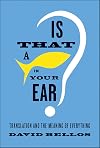
My whole life, I've had an ongoing love affair with language! I love to explore the boundaries of what it can do, all the ways to subvert and break and leverage the "rules". Translation, in particular, has been something that fascinates me. I'm monolingual and have very little skill in acquiring new languages - but I want so much to know what other languages can do! What thoughts they can think that English can't! I depend on good translations to discover the literature, culture, and ideas show more of other language groups.
I'm one of those people who tries to get multiple English translations of the same work, just to compare and contrast them, to see if that can help me to isolate the essence of the original.
So when I heard about a book that explores the nature of translation, with a title that references The Hitchhiker's Guide to the Galaxy, of course I had to read it!
This book wasn't what I expected. The pre-reviews I'd read and the book trailer I'd seen led me to expect something along the line of Arika Okrent's In the Land of Invented Languages, with a similar populism and quirky sense of humor.
Is That a Fish in Your Ear? turned out to be a much more academic and scholarly work than the reviews led me to believe.
Trust me - this isn't a bad thing.
David Bellos brings a very unique perspective to the subject. He obviously understands and is thoroughly educated in the history and theory of translation, but he also knows how to approach issues (both theoretical and practical) from the perspective of someone who does translation, day-in and day-out. This isn't just an intellectual debate for him - there are real-world implications, and real-world solutions, regardless of what the prevailing theories may say. This book is a wonderful marriage of those two perspectives.
It does mean that the book can be a bit abstruse. He does well at avoiding too much specialized vocabulary, and the more esoteric phrases he does use he defines clearly in layman's terms. But, like with all intellectual disciplines, there are ways of thinking - paradigms, structures of logic, patterns of thought and argument - that aren't always easily comprehended by someone not educated in the discipline, no matter how well the author writes it all in common vocabulary.
However, for anyone who has more than a passing interest in language and translation, I don't think there's anything in this book that can't be mastered. And it is a marvelous overview of the nature of the act of translation, and, indeed, the nature of language itself!
My only real complaint is this - I read the iBooks version and there are links throughout the book to other sections where he discusses similar concepts and issues: "See" and "See Also" references made into clickable links. I love that ebooks can do this! The problem is the text they used for these links - for example, the phrase, "previously discussed see here of this book" is just plain awkward. This type of link text formulation appears throughout. Somebody really needs to go through the e-version and redo them. show less
I'm one of those people who tries to get multiple English translations of the same work, just to compare and contrast them, to see if that can help me to isolate the essence of the original.
So when I heard about a book that explores the nature of translation, with a title that references The Hitchhiker's Guide to the Galaxy, of course I had to read it!
This book wasn't what I expected. The pre-reviews I'd read and the book trailer I'd seen led me to expect something along the line of Arika Okrent's In the Land of Invented Languages, with a similar populism and quirky sense of humor.
Is That a Fish in Your Ear? turned out to be a much more academic and scholarly work than the reviews led me to believe.
Trust me - this isn't a bad thing.
David Bellos brings a very unique perspective to the subject. He obviously understands and is thoroughly educated in the history and theory of translation, but he also knows how to approach issues (both theoretical and practical) from the perspective of someone who does translation, day-in and day-out. This isn't just an intellectual debate for him - there are real-world implications, and real-world solutions, regardless of what the prevailing theories may say. This book is a wonderful marriage of those two perspectives.
It does mean that the book can be a bit abstruse. He does well at avoiding too much specialized vocabulary, and the more esoteric phrases he does use he defines clearly in layman's terms. But, like with all intellectual disciplines, there are ways of thinking - paradigms, structures of logic, patterns of thought and argument - that aren't always easily comprehended by someone not educated in the discipline, no matter how well the author writes it all in common vocabulary.
However, for anyone who has more than a passing interest in language and translation, I don't think there's anything in this book that can't be mastered. And it is a marvelous overview of the nature of the act of translation, and, indeed, the nature of language itself!
My only real complaint is this - I read the iBooks version and there are links throughout the book to other sections where he discusses similar concepts and issues: "See" and "See Also" references made into clickable links. I love that ebooks can do this! The problem is the text they used for these links - for example, the phrase, "previously discussed see here of this book" is just plain awkward. This type of link text formulation appears throughout. Somebody really needs to go through the e-version and redo them. show less

We use translations all the time in our ordinary lives and seem to take their usefulness and value for granted — even the most xenophobic American is likely to read from a translation at least once a week without ever reflecting on the fact that it is a translation — yet translators, if Bellos is anything to go by, seem to have the idea that nobody loves them. Admittedly, we do toss around clichés like "never as good as the original" and "poetry is what gets lost in translation". Many show more of us are prepared to read books in languages we understand imperfectly rather than trusting someone else to clarify them for us. We love to share pictures of hilariously mistranslated notices found in Asian hotels. And theorists of language have shown convincingly that it is impossible to translate meaning from one language into another anyway, and generally rejected the validity of the whole idea of translation.
In this loosely-linked collection of essays on the history and practice of translation, Bellos sets out to demolish those philosophical windmills and show us that his craft is possible, useful and necessary. He does so wittily and engagingly, but doesn't always quite manage to quell our suspicion that they were only windmills in the first place. The core of his argument, really, is that translation isn't about transferring exact semantic content, but about creating likeness, transferring the functional effect of a text. The reader of a translated instruction manual must be able to perform the task being instructed; the reader of a treaty must know what's been agreed; the reader of a novel must be entertained, informed and moved in ways that are sufficiently like the ways the original operates.
There's also a lot of very interesting information here about the things we translate and don't translate, the use of widely-understood "vehicle" languages like English and French, the difference between translations into languages with large numbers of powerful speakers and into those spoken by small groups of relatively powerless people, the (dying?) black art of simultaneous interpretation in conferences, the mysterious appearance of a pisang tree in a Bible translation, the curiously low status literary translation has in the English-speaking world, and lots of other fascinating topics.
Judging by the other reviews of this book, this is an area where linguists have deeply entrenched positions, and Bellos hasn't convinced many of them, but for non-combatants it's an entertaining and informative look into a world we normally only see through the material it produces.
(I also loved the way Bellos doesn't bother to explain the Douglas Adams allusion in his title until nearly 300 pages into the book: anyone who hasn't grown up knowing about such things clearly has no business reading a book like this!) show less
In this loosely-linked collection of essays on the history and practice of translation, Bellos sets out to demolish those philosophical windmills and show us that his craft is possible, useful and necessary. He does so wittily and engagingly, but doesn't always quite manage to quell our suspicion that they were only windmills in the first place. The core of his argument, really, is that translation isn't about transferring exact semantic content, but about creating likeness, transferring the functional effect of a text. The reader of a translated instruction manual must be able to perform the task being instructed; the reader of a treaty must know what's been agreed; the reader of a novel must be entertained, informed and moved in ways that are sufficiently like the ways the original operates.
There's also a lot of very interesting information here about the things we translate and don't translate, the use of widely-understood "vehicle" languages like English and French, the difference between translations into languages with large numbers of powerful speakers and into those spoken by small groups of relatively powerless people, the (dying?) black art of simultaneous interpretation in conferences, the mysterious appearance of a pisang tree in a Bible translation, the curiously low status literary translation has in the English-speaking world, and lots of other fascinating topics.
Judging by the other reviews of this book, this is an area where linguists have deeply entrenched positions, and Bellos hasn't convinced many of them, but for non-combatants it's an entertaining and informative look into a world we normally only see through the material it produces.
(I also loved the way Bellos doesn't bother to explain the Douglas Adams allusion in his title until nearly 300 pages into the book: anyone who hasn't grown up knowing about such things clearly has no business reading a book like this!) show less
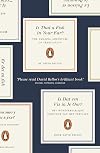
The 'Hitch-Hiker's Guide' reference in the title suggests a jocular approach to the science and art of inter-Language translation, and Bellos maintains this light-hearted style as he tunnels deeply and extensively into its subject which proves to be one in which even the question of accuracy, and even of the possibility of translation itself are shown to depend on what we mean by accuracy and translation. Bellos' approach is both rigorous and firmly founded in the history of human show more communication, in all of its forms and intents, and it is entertaining. More than that, I feel it makes necessary reading for any who value the riches of language, and not just for the pedants who find the ability to share thoughts with precision. I should make it clear that I am no professional in language, merely an intrigued amateur, but for me, Bellos' progress towards his aims and objectives stands proudly alongside the books of the great Steven Pinker. I found but one unturned stone in his analysis, that of the translation of musical lyrics, particularly in the classical sphere, where source and destination texts may involve a biblical commonality that further complicates the prime requirement that the words must mellifluously fit the notes. A specialist probably deserving of a fleeting mention, certainly, and Bellos is easily forgiven its omission. An excellent book. show less
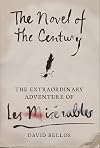
This was an absolutely fascinating read; it’s basically the biography of a book (Les Miserables), and I loved it and didn’t realize that this type of book is so my jam. There’s so much cool info about Victor Hugo and the history of France during the 19th century; I loved hearing about the editing, copying, and printing process all while Hugo was self-exiled in the Channel Islands. I might also be interested in rereading the novel which is a beast to tackle, but I loved that Bellos show more notes it’s literally broken into 365 chapters so could be done in a year (I’ll probably check out the sixty plus hour audiobook). show less
Lists
Awards


You May Also Like


Associated Authors
Statistics
- Works
- 14
- Also by
- 29
- Members
- 1,558
- Popularity
- #16,545
- Rating
- 3.8
- Reviews
- 46
- ISBNs
- 54
- Languages
- 4