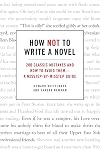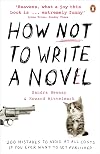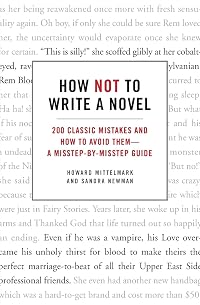
How Not to Write a Novel: 200 Classic Mistakes and How to Avoid Them - A Misstep-by-Misstep Guide
by Howard Mittelmark, Sandra Newman
On This Page
Description
"What do you think of my fiction book writing?" the aspiring novelist extorted. "Darn," the editor hectored, in turn. "I can not publish your novel! It is full of what we in the business call 'really awful writing.'" "But how shall I absolve this dilemma? I have already read every tome available on how to write well and get published!" The writer tossed his head about, wildly. "It might help," opined the blonde editor, helpfully, "to ponder how NOT to write a novel, so you might avoid the show more very thing!" Many writing books offer sound advice on how to write well. This is not one of those books. On the contrary, this is a collection of terrible, awkward, and laughably unreadable excerpts that will teach you what to avoid-at all costs-if you ever want your novel published. In How Not to Write a Novel, authors Howard Mittelmark and Sandra Newman distill their 30 years combined experience in teaching, editing, writing, and reviewing fiction to bring you real advice from the other side of the query letter. Rather than telling you how or what to write, they identify the 200 most common mistakes unconsciously made by writers and teach you to recognize, avoid, and amend them. With hilarious "mis-examples" to demonstrate each manuscript-mangling error, they'll help you troubleshoot your beginnings and endings, bad guys, love interests, style, jokes, perspective, voice, and more. As funny as it is useful, this essential how-NOT-to guide will help you get your manuscript out of the slush pile and into the bookstore. show lessTags
Recommendations


Member Recommendations

Member Reviews
An uproarious, clever, and helpful book, How Not to Write a Novel tackles the most common mistakes people make when sitting down to compose their magnum opus. With a deft humor, the authors caricature the most offensive mistakes in fake excerpts before explaining where it all went so wrong.
As a writing tutor, I often find myself wishing I could pull this book out to teach my students what not to do!
Any writer, be they an aspiring novelist or mere hobbyist, will appreciate this book and find it hilarious as well as helpful.
As a writing tutor, I often find myself wishing I could pull this book out to teach my students what not to do!
Any writer, be they an aspiring novelist or mere hobbyist, will appreciate this book and find it hilarious as well as helpful.
Not only is this the funniest writing advice book I've ever read (the authors must be very gifted writers to write so hilariously badly) but it is also, I think, going to be one of the most useful. As it says in the afterword, if you follow all the advice on what not to do, "You could hold both Harper and Collins hostage without a chance of their employees ever agreeing to print a book on which your name appears. If Mr. Random were desperate to sleep with you, Mr. House would still step in to make sure he did not publish your novel."
The authors, both of them very familiar with the publishing industry, go over dozens of common problems in amateur fiction, why they should not be done, and how to do otherwise. All in all, a winner.
The authors, both of them very familiar with the publishing industry, go over dozens of common problems in amateur fiction, why they should not be done, and how to do otherwise. All in all, a winner.
We all know that the best way to teach is to engage and entertain with the material – this book does it in spades; I couldn’t put it down!
Rather than write another how-to book, Mittelmark and Newman have produced a book in a format which will be familiar to TV Tropes readers, naming, describing and creating their own hand-crafted, hysterical examples of many of the mistakes that unpublished authors make in spec manuscripts (though I have certainly seen many of these in published books, too!)
Ask yourself, are you guilty of:
“The Overture: Wherein the prologue is a brief guide to the meaning of life”
“The Puffer Fish: Wherein the author flaunts his vocabulary”
“The Joan Rivers Pre-Novel Special: In which clothing is given too show more much prominence?”
“The Vacation Slideshow: In which the author substitutes location for story?”
“Gibberish for Art’s Sake: Wherein indecipherable lyricism baffles the reader”
““But, Captain…!”: Where characters tell each other things they both already know”
“Hamlet at the Deli: Wherein the character’s thoughts are transcribed to no purpose”
“Goodbye cruel reader! In which an inconvenient character is conveniently disposed of?”
“The Underpants Gnomes Where crucial steps are omitted?”
and does your novel end with
“Now with 20% More Homily! Where the author tells us what he’s just spent 300 pages telling us”
If you find yourself haunted by some of the examples (and if you are even slightly honest with yourself, you will) and if you find yourself trying to justify your particular use of them, then they are probably the things you most need to fix!
Laugh out loud, shriek out loud, funny, this book will teach you more than many similar books which take you a show less
Rather than write another how-to book, Mittelmark and Newman have produced a book in a format which will be familiar to TV Tropes readers, naming, describing and creating their own hand-crafted, hysterical examples of many of the mistakes that unpublished authors make in spec manuscripts (though I have certainly seen many of these in published books, too!)
Ask yourself, are you guilty of:
“The Overture: Wherein the prologue is a brief guide to the meaning of life”
“The Puffer Fish: Wherein the author flaunts his vocabulary”
“The Joan Rivers Pre-Novel Special: In which clothing is given too show more much prominence?”
“The Vacation Slideshow: In which the author substitutes location for story?”
“Gibberish for Art’s Sake: Wherein indecipherable lyricism baffles the reader”
““But, Captain…!”: Where characters tell each other things they both already know”
“Hamlet at the Deli: Wherein the character’s thoughts are transcribed to no purpose”
“Goodbye cruel reader! In which an inconvenient character is conveniently disposed of?”
“The Underpants Gnomes Where crucial steps are omitted?”
and does your novel end with
“Now with 20% More Homily! Where the author tells us what he’s just spent 300 pages telling us”
If you find yourself haunted by some of the examples (and if you are even slightly honest with yourself, you will) and if you find yourself trying to justify your particular use of them, then they are probably the things you most need to fix!
Laugh out loud, shriek out loud, funny, this book will teach you more than many similar books which take you a show less
How Not To Write A Novel, by Sandra Newman and Howard Mittelmark, reads like several novels in one, crossed with a late-night comedy show. Short neat sections detail each of its “200 mistakes to avoid” if you want to get published. And short neat, over-the-top examples (from those several pseudo-novels) illustrate the points. Okay, so most aspiring novelists don’t write quite that badly, but the errors are bold and clear, and seeing them, watching them humorously deconstructed and analyzed by the authors, makes it easier for readers to spot the similar errors in their own writing. I certainly plan on using this book with our local writers’ group. And I shall use things I’ve learned from it to help me choose which scenes and show more characters to delete from my next novel.
Disclosure: I found a copy and couldn’t resist buying it. show less
Disclosure: I found a copy and couldn’t resist buying it. show less
So I'm reading along, nodding because yep, did that, seen that, DNF'd that...
At 23% the authors wrote: "Protagonists should only be as nice as everyday people are in real life. Making them nicer than the average reader will earn the reader’s loathing, or make her laugh in disbelief."
I laughed, because wow, that's a ...take. Nicer than average exists, or the average would be meaner; that's how averages work. Good thing this isn't a math book. By that point I was skimming or skipping the examples entirely because they're the same joke. Helpful if you're new, probably. I'm jaded. This was an entertaining read and new writers really ought to read it because yes, wow, readers will thank you. But we are only ready for the lessons we're show more ready for, so.
CW: curse words, one or two gross references, discussion of sex scenes. show less
At 23% the authors wrote: "Protagonists should only be as nice as everyday people are in real life. Making them nicer than the average reader will earn the reader’s loathing, or make her laugh in disbelief."
I laughed, because wow, that's a ...take. Nicer than average exists, or the average would be meaner; that's how averages work. Good thing this isn't a math book. By that point I was skimming or skipping the examples entirely because they're the same joke. Helpful if you're new, probably. I'm jaded. This was an entertaining read and new writers really ought to read it because yes, wow, readers will thank you. But we are only ready for the lessons we're show more ready for, so.
CW: curse words, one or two gross references, discussion of sex scenes. show less
Sharp, concise, and hard to argue with. Kudos to the authors for opening with an explanation of purpose that outlines how they intend to suggest and advise, not insist on immutable laws. My only reservation about the book is that I chuckled at most of the anti-examples without recognizing my own writing in them, so perhaps the bar is a bit low here, and perhaps I could use a sequel that goes into a few more plagues of written fiction.
Having trouble writing your novel? Are you drowning in rejection notices from agents and publishers? Maybe the book you should have written is How Not to Write a Novel. Too late now. Howard Mittelmark and Sandra Newman beat you to it.
Endless books and classes tout strategies and exercises to help writers with everything from developing plots to curing writer’s block. But these authors and instructors don’t realize it can sometimes be just as useful to know what not to do. Mittelmark and Newman have blessed the writing world with just such a tool. Culling tips from their own experiences as both writer and editor, they offer 200 ”observations” that, if heeded, will guarantee your manuscript never sees the inside of a bookstore show more (unless you smuggle it in while browsing for real books).
No element is left out of How Not to Write a Novel. Plot, character, style, setting, and theme all get the unroyal treatment. Although little attention is paid to how writers can remedy the missteps discussed, the authors graciously offer examples (which they seem to have taken great pleasure in writing) to illustrate their points. These excerpts provide humorous running stories throughout the book, and the reader can only hope the authors have greatly exaggerated any material that might actually have crossed their desks.
This book is a must-read for both writers and book editors. Writers may recognize some of their own earnest, yet misguided, attempts at novel writing. Book editors will give a knowing chuckle, while kicking themselves for not writing this book first. show less
Endless books and classes tout strategies and exercises to help writers with everything from developing plots to curing writer’s block. But these authors and instructors don’t realize it can sometimes be just as useful to know what not to do. Mittelmark and Newman have blessed the writing world with just such a tool. Culling tips from their own experiences as both writer and editor, they offer 200 ”observations” that, if heeded, will guarantee your manuscript never sees the inside of a bookstore show more (unless you smuggle it in while browsing for real books).
No element is left out of How Not to Write a Novel. Plot, character, style, setting, and theme all get the unroyal treatment. Although little attention is paid to how writers can remedy the missteps discussed, the authors graciously offer examples (which they seem to have taken great pleasure in writing) to illustrate their points. These excerpts provide humorous running stories throughout the book, and the reader can only hope the authors have greatly exaggerated any material that might actually have crossed their desks.
This book is a must-read for both writers and book editors. Writers may recognize some of their own earnest, yet misguided, attempts at novel writing. Book editors will give a knowing chuckle, while kicking themselves for not writing this book first. show less
Members
- Recently Added By
Lists

Overdue Podcast
806 works; 9 members
Author Information

8+ Works 1,025 Members

10+ Works 2,892 Members
Common Knowledge
- Canonical title
- How Not to Write a Novel: 200 Classic Mistakes and How to Avoid Them - A Misstep-by-Misstep Guide
- Original publication date
- 2008
- First words
- Unpublished authors often cite the case of John Kennedy Toole, who, unable to find a publisher for his novel, A Confederacy of Dunces, took his own life.
- Last words
- (Click to show. Warning: May contain spoilers.)Or, as our parents said to us as they sent us off to college, "We are sorry to inform you that your manuscript does not suit our needs at the present time."
- Original language
- English
Classifications
Statistics
- Members
- 685
- Popularity
- 41,785
- Reviews
- 30
- Rating
- (4.01)
- Languages
- Chinese, English, Italian, Spanish
- Media
- Paper, Ebook
- ISBNs
- 8
- UPCs
- 1
- ASINs
- 5