
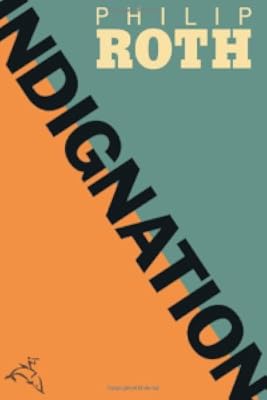
Indignation
by Philip Roth
On This Page
Description
What impact can American history have on the life of the vulnerable individual? It is 1951 in America, the second year of the Korean War. A studious, law-abiding, intense youngster from Newark, New Jersey, Marcus Messner, is beginning his sophomore year on the pastoral, conservative campus of Ohio's Winesburg College. And why is he there and not at the local college in Newark where he originally enrolled? Because his father, the sturdy, hard-working neighborhood butcher, seems to have gone show more mad--mad with fear and apprehension of the dangers of adult life, the dangers of the world, the dangers he sees in every corner for his beloved boy. As the long-suffering, desperately harassed mother tells her son, the father's fear arises from love and pride. Perhaps, but it produces too much anger in Marcus for him to endure living with his parents any longer. He leaves them and, far from Newark, in the midwestern college, has to find his way amid the customs and constrictions of another American world.--From publisher's description. show lessTags
Recommendations















Member Recommendations
Member Reviews
Well, this is just brilliant. On the surface a first-person Bildungsroman, this is a multi-faceted novel with the Korean War as a backdrop. Don't be duped, this is not about war, but about human weakness and how the minutiae of our lives can have far-reaching consequences. Heart-wrenching at times, this novella takes you down what seems a well-trodden road, until it reaches a denouement that leaves you reassessing all that's been, possibly even your attitude to life.
Its climactic twist ranks alongside the memorable conclusions to Schlink's The Reader, McEwan's Atonement, Barnes' The Sense of an Ending. All short poignant novels which sow impressions that only grow on you.
Its climactic twist ranks alongside the memorable conclusions to Schlink's The Reader, McEwan's Atonement, Barnes' The Sense of an Ending. All short poignant novels which sow impressions that only grow on you.
As do so many of Philip Roth's novels, [Indignation] begins in Newark, NJ, where Marcus Messner, a 19-year-old freshman at Robert Treat College, is a straight-A student. He's struggling to be focused on his studies in the face of his father's suddenly overbearing, incessant concern about his activities and his whereabouts. He harangues Marcus about the perils of leaving college for any reason. It is 1951, and the US military is mired in Korea, fighting North Korean and Chinese Communist troops. Leave school, get drafted, and, his father warns, Marcus will die in Korea.
So the nice Jewish atheist from Newark transfers to Winesburg College in Winesburg, Ohio (Roth's hat tip to the small town invented by Sherwood Anderson). He's assigned show more to a room with three other Jewish students. One becomes intolerable, and Marcus finds a room with just one other student, "decidedly non-Jewish." After he proves intolerable, Marcus finds shelter in the attic of the dorm. All by himself. Working weekends as a waiter in a bar in town, he's surreptitiously mocked by college boys who slur the words, "Hey you, over here," to make them, "Hey Jew, over here." Socially inept, he nevertheless asks a girl in his history class for a date. After dinner, Marcus drives Olivia in a borrowed car to a secluded spot. She aggressively French kisses him, then stuns him by administering a blowjob. Back in his room, he's baffled by the event and simultaneously repelled by and attracted to Olivia. Later, she tells him, "I did that because I liked you so much." Later still, she tells him she's been through rehab for alcoholism. Oh, and that scar on her wrist? Failed suicide attempt. But still, Marcus gets only A's.
Not to worry. There's more.
Marcus is invited to make an appointment with the Dean of Men, Hawes D. Caudwell. Suspicious, thus wary, Marcus tells the dean that everything is going fine, that his straightforward goal is to study and earn nothing but A's. Naturally, the dean bullies him into argument, to the point that Marcus struggles to avoid being forced into benign Winesburgian conformity, to defend his Jewishness but also his atheism, to not be driven off his path. Needless to say, Marcus' trajectory plummets from here on. He gets appendicitis, his mother vows she's divorcing his father, Olivia visits him every day he's in the hospital, then disappears when he returns to campus. And then… And then...
Did I love this weird story; why of course I did. Philip Roth is a favorite author. I like his characters and the choler they often display, the situations they forge (or just blunder) into. show less
So the nice Jewish atheist from Newark transfers to Winesburg College in Winesburg, Ohio (Roth's hat tip to the small town invented by Sherwood Anderson). He's assigned show more to a room with three other Jewish students. One becomes intolerable, and Marcus finds a room with just one other student, "decidedly non-Jewish." After he proves intolerable, Marcus finds shelter in the attic of the dorm. All by himself. Working weekends as a waiter in a bar in town, he's surreptitiously mocked by college boys who slur the words, "Hey you, over here," to make them, "Hey Jew, over here." Socially inept, he nevertheless asks a girl in his history class for a date. After dinner, Marcus drives Olivia in a borrowed car to a secluded spot. She aggressively French kisses him, then stuns him by administering a blowjob. Back in his room, he's baffled by the event and simultaneously repelled by and attracted to Olivia. Later, she tells him, "I did that because I liked you so much." Later still, she tells him she's been through rehab for alcoholism. Oh, and that scar on her wrist? Failed suicide attempt. But still, Marcus gets only A's.
Not to worry. There's more.
Marcus is invited to make an appointment with the Dean of Men, Hawes D. Caudwell. Suspicious, thus wary, Marcus tells the dean that everything is going fine, that his straightforward goal is to study and earn nothing but A's. Naturally, the dean bullies him into argument, to the point that Marcus struggles to avoid being forced into benign Winesburgian conformity, to defend his Jewishness but also his atheism, to not be driven off his path. Needless to say, Marcus' trajectory plummets from here on. He gets appendicitis, his mother vows she's divorcing his father, Olivia visits him every day he's in the hospital, then disappears when he returns to campus. And then… And then...
Did I love this weird story; why of course I did. Philip Roth is a favorite author. I like his characters and the choler they often display, the situations they forge (or just blunder) into. show less
I have read between one third and one half of Philip Roth's novels and Indignation rates among the best of them.
Roth is at his best when his obligatory web of lust, Newark, onanism, beautiful Goyim, and half-hearted resistance to WASP culture is constrained by broader and deeper purposes rather than when it is allowed to roam free.
Indignation is an instance where Roth has properly constrained his old standards and worked them into something of a backdoor homage to the stoicism of earlier generations of Americans.
Roth's Marcus Messner is hoisted by his own petard in large part because he is unwilling to take the lessons of the butcher shop (where he grew up working) out into the Goyish world as such.
The even-keeled, studious, show more well-mannered A student can disembowel a chicken without a second thought but is unable to sit through compulsory chapel service at his mildly stuffy midwestern college.
Righteous anger overwhelms Marcus Messner and Roth gives us every reason to empathize with him...but Roth's genius move here is that he leaves us little time to wallow with Marcus in the warm bath of the conscious victim of wrongdoing. Instead, we come to see that Marcus's anger is not only exaggerated but a threat to his own well being. To respond to every injustice one suffers by summoning an army is to take on an insufferable existence. Thus, it's better to choose the important battles and learn to live with a certain amount of injustice in one's life. Purity is overrated, especially when the quest for purity leads, as it ever-so-often does, to oblivion.
In large part the lesson of Roth's novel is not new, but it's one that must be hammered home again and again and who better than Roth, certainly no poster-child for restraint, to do so?
I also think there is a subtle but no less burning sense of anger operative in these pages . Roth occupies that generation too young to have fought in WWII but too old to have been involved in the 1960s. He has, in many, instances, presented the legacy of the 1960s in a less than positive light. Part of the Faustian bargain of the 1950s was conformity for security; doing and behaving as one must rather than as one wishes. This is was the exchange Marcus Messner was unwilling to make and one that Roth has always been ambivalent about. But never down right negative. Roth's is an internal critique of mid-century American society. He accepts most of its major premises but also sees the absurdities for what they are; by pointing to them he hopes to improve upon the vision, to add a greater degree of internal coherence to a particular vision of American society. He is angry here because he participated in the Faustian exchange only to have the protest movements, the external critiques, the singular destructiveness of the baby out with the bath water mindset of the boomers effectively eviscerate the society he attempted to grudgingly conform to. show less
Roth is at his best when his obligatory web of lust, Newark, onanism, beautiful Goyim, and half-hearted resistance to WASP culture is constrained by broader and deeper purposes rather than when it is allowed to roam free.
Indignation is an instance where Roth has properly constrained his old standards and worked them into something of a backdoor homage to the stoicism of earlier generations of Americans.
Roth's Marcus Messner is hoisted by his own petard in large part because he is unwilling to take the lessons of the butcher shop (where he grew up working) out into the Goyish world as such.
The even-keeled, studious, show more well-mannered A student can disembowel a chicken without a second thought but is unable to sit through compulsory chapel service at his mildly stuffy midwestern college.
Righteous anger overwhelms Marcus Messner and Roth gives us every reason to empathize with him...but Roth's genius move here is that he leaves us little time to wallow with Marcus in the warm bath of the conscious victim of wrongdoing. Instead, we come to see that Marcus's anger is not only exaggerated but a threat to his own well being. To respond to every injustice one suffers by summoning an army is to take on an insufferable existence. Thus, it's better to choose the important battles and learn to live with a certain amount of injustice in one's life. Purity is overrated, especially when the quest for purity leads, as it ever-so-often does, to oblivion.
In large part the lesson of Roth's novel is not new, but it's one that must be hammered home again and again and who better than Roth, certainly no poster-child for restraint, to do so?
I also think there is a subtle but no less burning sense of anger operative in these pages . Roth occupies that generation too young to have fought in WWII but too old to have been involved in the 1960s. He has, in many, instances, presented the legacy of the 1960s in a less than positive light. Part of the Faustian bargain of the 1950s was conformity for security; doing and behaving as one must rather than as one wishes. This is was the exchange Marcus Messner was unwilling to make and one that Roth has always been ambivalent about. But never down right negative. Roth's is an internal critique of mid-century American society. He accepts most of its major premises but also sees the absurdities for what they are; by pointing to them he hopes to improve upon the vision, to add a greater degree of internal coherence to a particular vision of American society. He is angry here because he participated in the Faustian exchange only to have the protest movements, the external critiques, the singular destructiveness of the baby out with the bath water mindset of the boomers effectively eviscerate the society he attempted to grudgingly conform to. show less
The story arc was well-paced, with a couple nice twists, but the message was muddled for me. Was Roth trying to point out the futility of "indignation," through a character who essentially bounced from one offending situation to another, never to really find peace (both figurative and literal)? If so, was his message then to keep quiet and accept life as it comes? It seems that way when you look at the protagonist alone, but there was such a strong focus on the mistreatment of women and biases toward homosexuals or others who didn't fit the school's WASP-ish expectations, that how could Roth be saying it's better to shut up and put up than to stand up? I certainly don't think he is, but taking into consideration the ending, the message show more lacked clarity, and therefore "umph" at the end. Maybe he was trying to use the protagonist as an example of someone who should quit whining and put things behind him, when there are actual injustices going on.
It is a book that will make you think long after you finish it, asking yourself such questions, if you tend to be that type. It is dark, uncomfortable, and bleak. Not a warm fuzzies book.
Currently available in the Kindle Lending Library if you have a Amazon Prime account (I find that decent literature is rare there, so this was "a good one.") show less
It is a book that will make you think long after you finish it, asking yourself such questions, if you tend to be that type. It is dark, uncomfortable, and bleak. Not a warm fuzzies book.
Currently available in the Kindle Lending Library if you have a Amazon Prime account (I find that decent literature is rare there, so this was "a good one.") show less
Philip Roth's late innings have been about as productive as any writer you could name, but you can't hit a home run every time you step to the plate. To keep that analogy going, let's call "Indignation" a clean single. It's by no means a bad novel, just a familiar one, a decidedly minor novel that's shorter and slighter than one of Roth's many blockbusters. Roth puts us back in mid-century New Jersey again, where Marcus Messner, the son of a kosher butcher, is simultaneously trying to escape the tightening grip of his father's authority and fit in to a college filled with socially conservative gentiles. Roth is usually a deliciously Dostoevskian storyteller, allowing the reader to listen in as a couple of old friends, perhaps lubricated show more by a couple of drinks, recount events long past. In "Indignation," he changes up this tried-and-true formula, employing a curious narrative device, which I won't reveal here, to tell his story back-to-front. This novel framing device doesn't prove particularly successful. The problem isn't that the reader learns the fate of the novel's protagonist just a few pages in. Who, after all, reads Roth for the suspense? The problem is that "Indignation's" odd set-up robs Roth's writing of a great deal of the causal, tossed-off detail that usually make it such a pleasure to read. The lack of a traditional "audience" for Roth's narrator also seems to rob "Indignation" of the sense of warm familiarity that many Roth's habitual readers have come to expect from his work. No-one could accuse "Indignation" of sloppiness or faulty construction, but it's a hard book to love, and one gets the feeling Roth could have written it in its sleep. It's feels wrong to criticize a great writer for a book that's merely okay, but I'm hoping that Phil swings for the fences his next time at bat. show less
Lots of indignation here, but not from me. Roth's protagonist, Marcus Messner, is filled with enough of his own youthful and idealistic indignation to justify the book's title. But the title word could just as easily apply to Marcus's butcher father, to the Winesburg college dean and president and a number of other minor characters, as well as to the Chinese Communist hordes swarming down through North Korea in that frigid and often nearly forgotten conflict of the fifties, which forms an ominous and omnipresent background to the story. Indignation, which is a surprisingly slight book, nearly a novella, marks a return to the kind of stories that made Roth famous over forty-some years ago. Like Good-Bye Columbus, it looks at college life show more and all the excitement, mysteries and sexual frustrations that accompany it. Winesburg College is, of course, an obvious nod (or perhaps eye-rolling shaking of the head) to Sherwood Anderson's classic collection of interconnected stories, Winesburg, Ohio - a book which I first read in my own college days in the sixties. I was reading Anderson, in fact, around the same time I first discovered Philip Roth, in his then-bestselling and then-scandalous novel, Portnoy's Complaint. A novel which finally put the sin of Onan right out there in the open. I thought it was about time too, as I nodded and chuckled my way through Alex's adventures with milk bottles, a slab of liver, and, finally, the Monkey. In fact, I was naive and stupid enough to adopt that book as required reading in one of the first Lit classes I taught in 1970. And I actually got away with it. I have read many other Roth books since then. My favorite is one of Roth's earliest novels, Letting Go, which I have re-read several times and would highly recommend. More recently, The Human Stain is, I think, one of Roth's best realized works, and its film version, with Sir Anthony Hopkins, is equally good. (Which makes me remember Richard Benjamin and Ali McGraw in the classic film, Good-Bye Columbus. Benjamin also brought Alex Portnoy to life on screen, an effort which was less successful.) Indignation, with its showers of semen high into the air, stained socks and the unstable but beautiful "Olivia the Expert" does indeed mark a kind of restrained return to the Portnoy days, albeit under a shadow of war and imminent death. I read this book in just two sittings. It's funny, it's disturbing, and it's immediate, despite its setting of over fifty years ago. A real page-turner, entertaining and real. show less
A bombshell.
I must admit, i was scared. I bought this book years ago and it stayed on my "to be read" list because i didn't like at all Deception by the same author. How wrong was i? Terribly wrong. This book, Indignation is like a high speed train rushing through your veins. Roth describes the coming of age of Marcus Messner, son of a Jewish butcher and trying to get independant, trying to do university in a catholic small town, while he comes from the already more open New York atmosphere.
The backdrop of the terrible Korean war, the "indignation" on injustice, the low self esteem combined with the high intellectual powers, the mistrust, the .... everything an 18 year old sholar goes through: girls, sex, humiliation,.... it all show more culminates in a few furious last months.
I have seldom ever read a book at the speed i did with this one, it's vivacious, it's a rush and it seems to me like one big dealing with the past. Is Roth dealing with his own past? Probably. The engagement is too high to be purely fictional.
I only see now, googling on Roth's life that this book has been transformed into a movie only recently. The book is anti-religious with some beautiful quotes and statements, so that is already a little shock even in the USA of today. But the movie will need to be very hard boiled to reach the adrenaline level of the book. Let's see.
A passionate and repetitive writing style make this book a top notch read. Do it. show less
I must admit, i was scared. I bought this book years ago and it stayed on my "to be read" list because i didn't like at all Deception by the same author. How wrong was i? Terribly wrong. This book, Indignation is like a high speed train rushing through your veins. Roth describes the coming of age of Marcus Messner, son of a Jewish butcher and trying to get independant, trying to do university in a catholic small town, while he comes from the already more open New York atmosphere.
The backdrop of the terrible Korean war, the "indignation" on injustice, the low self esteem combined with the high intellectual powers, the mistrust, the .... everything an 18 year old sholar goes through: girls, sex, humiliation,.... it all show more culminates in a few furious last months.
I have seldom ever read a book at the speed i did with this one, it's vivacious, it's a rush and it seems to me like one big dealing with the past. Is Roth dealing with his own past? Probably. The engagement is too high to be purely fictional.
I only see now, googling on Roth's life that this book has been transformed into a movie only recently. The book is anti-religious with some beautiful quotes and statements, so that is already a little shock even in the USA of today. But the movie will need to be very hard boiled to reach the adrenaline level of the book. Let's see.
A passionate and repetitive writing style make this book a top notch read. Do it. show less
Members
- Recently Added By
Published Reviews
ThingScore 100
In his famous essay "Writing American Fiction," written back in 1960, Roth spoke about the difficulty of writing credibly about the time we live in. "It stupefies, it sickens, it infuriates, and finally it is even a kind of embarrassment to one's meager imagination." As his new book and his many other novels show, it can be done by a master.
added by jburlinson
Lists

Jewish Books
367 works; 24 members

Llibres que he llegit el 2010
35 works; 1 member

Books worth rereading
21 works; 1 member

Books Read in 2018
4,360 works; 110 members
Author Information

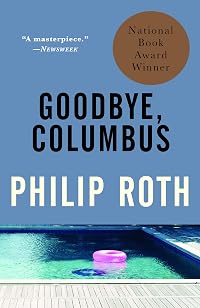
Philip Milton Roth was born in Newark, New Jersey on March 19, 1933. He attended Rutgers University for one year before transferring to Bucknell University where he completed a B.A. in English with highest honors in 1954. He received an M.A. from the University of Chicago in 1955. His first book, Goodbye, Columbus, received the National Book Award show more in 1960. His other books include Letting Go, When She Was Good, Portnoy's Complaint, My Life as a Man, The Ghostwriter, Zuckerman Unbound, I Married a Communist, The Plot Against America, The Facts, The Anatomy Lesson, Exit Ghost, Deception, Nemesis, Everyman, Indignation, and The Humbling. He won the National Book Critic Circle Awards in 1987 for his novel The Counterlife and in 1992 for his memoir Patrimony: A True Story. He won the PEN/Faulkner Award for Fiction in 1993 for Operation Shylock: A Confession and in 2001 for The Human Stain, the National Book Award in 1995 for Sabbath's Theater, and the Pulitzer Prize in 1998 for American Pastoral. He stopped writing in 2010. He died from congestive heart failure on May 22, 2018 at the age of 85. (Bowker Author Biography) show less
Some Editions
Awards and Honors
Awards
Distinctions
Notable Lists
Series
Belongs to Publisher Series
Work Relationships
Common Knowledge
- Canonical title
- Indignation
- Original title
- Indignation
- Original publication date
- 2008 (1e édition originale américaine (1e é | dition originale amé | ricaine); 2010-09-17 (1e traduction et édition française, Du monde entier, Gallimard) (1e traduction et é | dition franç | aise, Du monde entier, Gallimard)
- People/Characters
- Marcus Messner; Olivia Hutton; Sonny Cottler; Dean Caudwell
- Important places
- Newark, New Jersey, USA; Winesburg, Ohio, USA
- Important events
- Korean War
- Related movies
- Indignation (2016 | IMDb)
- Epigraph*
- Olaf (sur des genoux qui n'en sont plus) répète sans jamais se lasser « il est des merdes qu'on ne me fera pas bouffer ».
E. E. CUMMINGS, « Je chante Olaf le gai le grand » - Dedication*
- Für K. W.
- First words*
- Ungefähr zweieinhalb Monate nachdem die gutausgebildeten, von den Sowjets und den chinesischen Kommunisten mit Waffen ausgerüsteten Divisionen Nordkoreas am 25. Juni 1950 über den 38. Breitengrad vorgedrungen waren und mit... (show all) dem Einmarsch in Südkorea das große Leid des Koreakriegs begonnen hatte, kam ich auf Robert Treat, ein kleines College in Newark, benannt nach dem Mann, der die Stadt im siebzehnten Jahrhundert gegründet hatte.
- Last words*
- (Click to show. Warning: May contain spoilers.)Inderdaad ja, het goeie ouwe uitdagende 'sodemieter op', en daarmee was het uit voor de slagerszoon, drie maanden voor zijn twintigste verjaardag dood - Marcus Messner, 1932-1952, de enige van zijn jaargenoten die het ongeluk had te sneuvelen in de Koreaanse oorlog, waaraan op 27 juli 1953 een eind kwam met de ondertekening van een wapenstilstand, elf maanden voordat Marcus, zo hij in staat was geweest de kerk te slikken en zijn kop te houden, zijn studie aan Winesburg College zou hebben voltooid - met aan zekerheid grenzende waarschijnlijheid als beste van zijn jaar - en dus voorlopig nog niet te weten had hoeven komen wat zijn onontwikkelde vader hem al die tijd met zoveel moeite had proberen bij te brengen: via welke verschirikkelijke, onbegrijpelijke wegen iemands meest alledaagse, onbeduidende, zelfs komische keuzes tot het meest buitenproportionele resultaat leiden.
- Original language*
- Anglais (Etats-Unis) (Etats-Unis)
*Some information comes from Common Knowledge in other languages. Click "Edit" for more information.
Classifications
Statistics
- Members
- 2,130
- Popularity
- 9,594
- Reviews
- 77
- Rating
- (3.70)
- Languages
- 19 — Catalan, Czech, Danish, Dutch, English, Finnish, French, German, Greek, Italian, Korean, Norwegian (Bokmål), Polish, Portuguese, Romanian, Slovenian, Spanish, Swedish, Turkish
- Media
- Paper, Audiobook, Ebook
- ISBNs
- 79
- ASINs
- 23