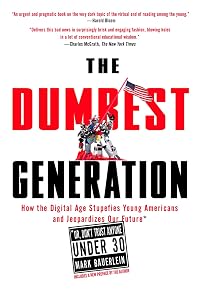
The Dumbest Generation: How the Digital Age Stupefies Young Americans and Jeopardizes Our Future(Or, Don't Trust Anyone Under 30)
by Mark Bauerlein
On This Page
Description
Let's take stock of young America. Compared to previous generations, American youth have more schooling (college enrollments have never been higher); more money ($100 a week in disposable income); more leisure time (five hours a day); and more news and information (Internet, The Daily Show, RSS feeds).What do they do with all that time and money? They download, upload, IM, post, chat, and network. (Nine of their top ten sites are for social networking.) They watch television and play video show more games (2 to 4 hours per day).And here is what they don't do: They don't read, even online (two thirds aren't proficient in reading); they don't follow politics (most can't name their mayor, governor, or senator); they don't maintain a brisk work ethic (just ask employers); and they don't vote regularly (45 percent can't comprehend a ballot).They are the dumbest generation. They enjoy all the advantages of a prosperous, high-tech society. Digital technology has fabulously empowered them, loosened the hold of elders. Yet adolescents use these tools to wrap themselves in a generational cocoon filled with puerile banter and coarse images. The founts of knowledge are everywhere, but the rising generation camps in the desert, exchanging stories, pictures, tunes, and texts, savoring the thrill of peer attention. If they don't change, they will be remembered as fortunate ones who were unworthy of the privileges they inherited. They may even be the generation that lost that great American heritage, forever. show lessTags
Recommendations




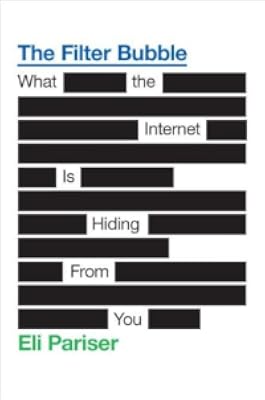
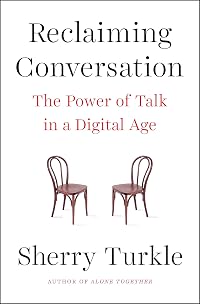
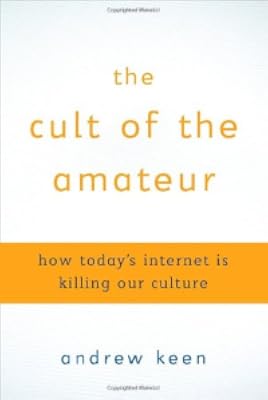
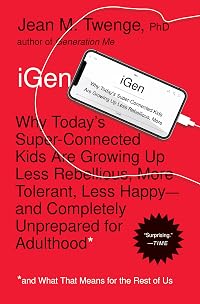





Member Recommendations
Member Reviews
Honestly, I don’t know why I’m even writing this. As someone born after 1980, I’m scarcely qualified to breathe on my own.
This, at least, is the case according to Mark Bauerlein, author of “The Dumbest Generation.” That’s not the full name of the book, but I got bored 15 percent of the way through (seriously, 20 words in the title). Apparently, we’re the dullest things since the bread-slicers they used to make sliced bread after the first hundred loaves or so.
(Don’t worry, I had someone much older write that joke for me.) Naturally, as a card-carrying member of the targeted generation I feel somewhat compelled to defend it. Unfortunately, there are two problems with me doing so. First, any argument I make will show more automatically be viewed as biased. Second, as a complete incompetent, who’s going to trust my interpretation of facts?
I will say that Bauerlein’s statistics seem somewhat … selective. As many people do when they try to assert positions that are difficult (if not impossible) to prove, he tries to drown the reader in numbers. Using the National Assessment of Educational Progress test, he cites from a variety of different versions and decades.
To wit: he mentions the 2005 science exam has scores three points lower than 1996, with an average score of 147. Then he mentions twelfth-graders haven’t improved upon their scores even though the number of them taking calculus tripled from 1978 to 1994.
Of course, these numbers mean almost nothing. The science exam scores dropped literally two percent in nine years, and the “shocking” truth is that math scores have stayed exactly the same.
Hardly a harbinger of hare-brains.
This is not a wholesale discounting of his claims. Lord knows there are plenty of stupid young people, many of whom attend WSU. I’ve edited enough columns, research papers and hate-filled e-mails (sent to me, not by me) to unequivocally state that. Indeed, he makes some good points regarding how utterly our educational system fails some students.
The problem stems from Bauerlein’s dichotomous approach – either this generation is smarter than the previous ones, or dumber. There isn’t any middle ground. If his argument was that our educational system needs to be reformed, I’m all for it. If he’s arguing that we need to have higher minimum standards, I’m in.
But that’s not what he’s saying. I suspect Bauerlein may be a bit of an old fogey. He doesn’t restrict himself solely to questioning the intelligence of the youth, but also harps on entertainment choices and cultural aesthetics. In the first chapter, he says the youth “refuse the cultural and civil inheritance” that created America. In his eyes, we’ve swapped intellectual possessions for material ones and trade in “pop styles and techno skills.” Bauerlein’s trouble with digesting a new society is his rigid approach to what “knowledge” is. Yes, there are a depressing number of teenagers out there who don’t know what the three branches of government are (chocolate, vanilla and strawberry) or who could recite the names of the Supreme Court Justices (John, Paul, Ringo and Diana Ross).
But in addition to an increasingly specialized approach to knowledge, the resources available to people are far greater than ever before. I can’t really picture the situation that would arise where an instant command of the Monroe Doctrine is required (save for policy analysts or history professors), but if you could call up a complete dissection of it within 10 seconds on Wikipedia, how is that any different than remembering it?
Detailed and nuanced analysis would be impossible to concoct in such a situation, but how often are you called upon to create one in 10 seconds? Lengthy explorations of topics often require lengthy amounts of research to prepare. Whether you’re recalling information on the computer or out of your brain, isn’t the important part that you know how to do so?
Frankly, I don’t really have a preference between the physician who knows how to research across the entire spectrum of medical knowledge or the old country doctor who relies on his accumulated wisdom. If anything, I’d lean toward the former’s breadth rather than the latter’s experience, but both are simply different kinds of knowledge.
In an age where adaptability and resourcefulness are valued far above rote memorization, it’s difficult to fathom preferring to stick with old models of knowledge that have no relevance.
But then, what do I know? show less
This, at least, is the case according to Mark Bauerlein, author of “The Dumbest Generation.” That’s not the full name of the book, but I got bored 15 percent of the way through (seriously, 20 words in the title). Apparently, we’re the dullest things since the bread-slicers they used to make sliced bread after the first hundred loaves or so.
(Don’t worry, I had someone much older write that joke for me.) Naturally, as a card-carrying member of the targeted generation I feel somewhat compelled to defend it. Unfortunately, there are two problems with me doing so. First, any argument I make will show more automatically be viewed as biased. Second, as a complete incompetent, who’s going to trust my interpretation of facts?
I will say that Bauerlein’s statistics seem somewhat … selective. As many people do when they try to assert positions that are difficult (if not impossible) to prove, he tries to drown the reader in numbers. Using the National Assessment of Educational Progress test, he cites from a variety of different versions and decades.
To wit: he mentions the 2005 science exam has scores three points lower than 1996, with an average score of 147. Then he mentions twelfth-graders haven’t improved upon their scores even though the number of them taking calculus tripled from 1978 to 1994.
Of course, these numbers mean almost nothing. The science exam scores dropped literally two percent in nine years, and the “shocking” truth is that math scores have stayed exactly the same.
Hardly a harbinger of hare-brains.
This is not a wholesale discounting of his claims. Lord knows there are plenty of stupid young people, many of whom attend WSU. I’ve edited enough columns, research papers and hate-filled e-mails (sent to me, not by me) to unequivocally state that. Indeed, he makes some good points regarding how utterly our educational system fails some students.
The problem stems from Bauerlein’s dichotomous approach – either this generation is smarter than the previous ones, or dumber. There isn’t any middle ground. If his argument was that our educational system needs to be reformed, I’m all for it. If he’s arguing that we need to have higher minimum standards, I’m in.
But that’s not what he’s saying. I suspect Bauerlein may be a bit of an old fogey. He doesn’t restrict himself solely to questioning the intelligence of the youth, but also harps on entertainment choices and cultural aesthetics. In the first chapter, he says the youth “refuse the cultural and civil inheritance” that created America. In his eyes, we’ve swapped intellectual possessions for material ones and trade in “pop styles and techno skills.” Bauerlein’s trouble with digesting a new society is his rigid approach to what “knowledge” is. Yes, there are a depressing number of teenagers out there who don’t know what the three branches of government are (chocolate, vanilla and strawberry) or who could recite the names of the Supreme Court Justices (John, Paul, Ringo and Diana Ross).
But in addition to an increasingly specialized approach to knowledge, the resources available to people are far greater than ever before. I can’t really picture the situation that would arise where an instant command of the Monroe Doctrine is required (save for policy analysts or history professors), but if you could call up a complete dissection of it within 10 seconds on Wikipedia, how is that any different than remembering it?
Detailed and nuanced analysis would be impossible to concoct in such a situation, but how often are you called upon to create one in 10 seconds? Lengthy explorations of topics often require lengthy amounts of research to prepare. Whether you’re recalling information on the computer or out of your brain, isn’t the important part that you know how to do so?
Frankly, I don’t really have a preference between the physician who knows how to research across the entire spectrum of medical knowledge or the old country doctor who relies on his accumulated wisdom. If anything, I’d lean toward the former’s breadth rather than the latter’s experience, but both are simply different kinds of knowledge.
In an age where adaptability and resourcefulness are valued far above rote memorization, it’s difficult to fathom preferring to stick with old models of knowledge that have no relevance.
But then, what do I know? show less
The book is a bit dated as it was published in 2008 and mentions social media like MySpace. But the message is still relevant and, in fact, more so now with *everyone* (except me) having a smartphone, since ~2011, and everyone using Instagram, Twitter, and Snapchat (a program designed for message deletion so parents can't supervise).
I know. I'm raising teenagers. So I have a front-row seat to the phenomenon. Like their peers, they're obsessed with social media, but they are fortunate because they also love to read books. Even my teens complain that their friends don't read and can't spell. When the teachers assign books, they provide a link to the audiobook. What's that about? That topic is covered in the chapter "The Betrayal of the show more Mentors." The teachers ensure that all lessons are easy and fun, but that's not preparing them for adult life, which is not always easy and fun.
Much of the book is dry with many statistics woven into the prose. I would have preferred the data laid out in a chart. Some of the text required patience but, in the end, the message was worth it.
Also recommended: "The Shallows: What the Internet Is Doing to Our Brains," by Nicolas Carr, published in 2011. Don't get me wrong -- I love the Internet. But we are all subject to brain changes as we use the Web. So, here's the test -- can you still read a book in hand for hours at a time? I can, and that's good news.
Our brain changes may depend on how we use the Web. Slowly and methodically? Or jumping from one page to the next till our brain can no longer focus on one topic at a time, or one page, or one classroom teacher.
I don't blame this generation. I blame the creators of the addictive, mobile technology and the adults that are sleeping on the job, or perhaps too distracted by their own screens.
I look forward to more books on this topic to bring us up to date with the latest in brain science. So we can enjoy the amazing Internet without losing our minds. show less
I know. I'm raising teenagers. So I have a front-row seat to the phenomenon. Like their peers, they're obsessed with social media, but they are fortunate because they also love to read books. Even my teens complain that their friends don't read and can't spell. When the teachers assign books, they provide a link to the audiobook. What's that about? That topic is covered in the chapter "The Betrayal of the show more Mentors." The teachers ensure that all lessons are easy and fun, but that's not preparing them for adult life, which is not always easy and fun.
Much of the book is dry with many statistics woven into the prose. I would have preferred the data laid out in a chart. Some of the text required patience but, in the end, the message was worth it.
Also recommended: "The Shallows: What the Internet Is Doing to Our Brains," by Nicolas Carr, published in 2011. Don't get me wrong -- I love the Internet. But we are all subject to brain changes as we use the Web. So, here's the test -- can you still read a book in hand for hours at a time? I can, and that's good news.
Our brain changes may depend on how we use the Web. Slowly and methodically? Or jumping from one page to the next till our brain can no longer focus on one topic at a time, or one page, or one classroom teacher.
I don't blame this generation. I blame the creators of the addictive, mobile technology and the adults that are sleeping on the job, or perhaps too distracted by their own screens.
I look forward to more books on this topic to bring us up to date with the latest in brain science. So we can enjoy the amazing Internet without losing our minds. show less
The dumbing-down of America continues at an astounding pace and an Emory University English professor believes that he knows why it is happening. Mark Bauerlein has written a book that will likely irritate as many people as there will be people who will praise it for its insights, starting with the very title of the book: The Dumbest Generation – How the Digital Age Stupefies Young Americans and Jeopardizes Our Future. Labeling any generation “the dumbest generation” is guaranteed to draw the wrath of most of those falling into that age group. Unfortunately for them, Bauerlein builds a strong case that the title of his book is entirely accurate.
But make no mistake. Bauerlein is not calling this generation stupid; he is saying that show more their ignorance is largely the result of the technology they have grown up with, technology that keeps them tied to their peers practically 24 hours a day, thus ensuring that they can completely insulate themselves from the rest of the world and whatever responsibilities and challenges they might be asked to face. Their worlds are so local and so superficial that they can completely cut off circumstances beyond their immediate circle of friends. If the subject does not involve “friends, work, clothes, cars, pop music, sitcoms (and) Facebook,” they are not much interested.
According to Bauerlein, and the numerous studies he cites throughout The Dumbest Generation, the main culprit in this sad story is the computer, the very tool that was supposed to give this generation an advantage over all that preceded it. But instead of using computers and the internet to their advantage, members of “the dumbest generation” have turned them into little more than combination telephone/television contraptions through which they can seamlessly socialize with their friends and peers.
A related problem is that these young people have grown up in a “disposable society,” one in which it is cheaper, easier, and much more fun to replace broken consumer items with new ones than it is to repair the old ones. It has become the norm for Americans to throw out old consumer electronics items and the like because, frankly, it is cheaper to buy new ones than to get the old ones repaired. Unfortunately, in the “cut and paste” society in which these young people live, knowledge has become just as disposable as any consumer electronic product. Students have convinced themselves that there is no point to retaining knowledge on any subject because that information can be found on the internet within seconds when, and if, they need it. So they “cut and paste” the information they need, often from dubious internet sources, and make almost no effort to retain any of it. Why bother, they think, when I know where to find it if I ever need it again?
Bauerlein builds a strong case that the failure of this generation to assimilate the history and culture of the society in which it lives is a dangerous thing, a breakdown that threatens the democratic system under which this country has thrived for more than two centuries. These young people, as a whole, do not read books; they do not study history, foreign affairs, civics, the arts or much else. If it happened before 1990, they are not interested. Bauerlein wonders where the next generation of “strong military leaders and wise political leaders, dedicated journalists and demanding teachers, judges and muckrakers, scholars and critics and artists” will come from and he hopes that his book will finally open the eyes of teachers, parents and reporters in time to save this generation – and our country’s future.
Of course there are exceptional members of “the dumbest generation,” young people who are as determined to learn and prosper as any who preceded. But they seem to be as much the exception as they are exceptional, and that is scary.
As Bauerlein puts it, “The youth of America occupy a point in history like every other generation did and will, and their time will end. But the effects of their habits will outlast them, and if things do not change they will be remembered as the fortunate ones who were unworthy of the privileges they inherited. They may even be recalled as the generation that lost that great American heritage, forever.”
Agree with it or not, this book will make you think. It might irritate you or it might upset you, largely depending on which generation you are a member of, I suspect. Read it with an open mind and decide for yourself.
Rated at: 4.0 show less
But make no mistake. Bauerlein is not calling this generation stupid; he is saying that show more their ignorance is largely the result of the technology they have grown up with, technology that keeps them tied to their peers practically 24 hours a day, thus ensuring that they can completely insulate themselves from the rest of the world and whatever responsibilities and challenges they might be asked to face. Their worlds are so local and so superficial that they can completely cut off circumstances beyond their immediate circle of friends. If the subject does not involve “friends, work, clothes, cars, pop music, sitcoms (and) Facebook,” they are not much interested.
According to Bauerlein, and the numerous studies he cites throughout The Dumbest Generation, the main culprit in this sad story is the computer, the very tool that was supposed to give this generation an advantage over all that preceded it. But instead of using computers and the internet to their advantage, members of “the dumbest generation” have turned them into little more than combination telephone/television contraptions through which they can seamlessly socialize with their friends and peers.
A related problem is that these young people have grown up in a “disposable society,” one in which it is cheaper, easier, and much more fun to replace broken consumer items with new ones than it is to repair the old ones. It has become the norm for Americans to throw out old consumer electronics items and the like because, frankly, it is cheaper to buy new ones than to get the old ones repaired. Unfortunately, in the “cut and paste” society in which these young people live, knowledge has become just as disposable as any consumer electronic product. Students have convinced themselves that there is no point to retaining knowledge on any subject because that information can be found on the internet within seconds when, and if, they need it. So they “cut and paste” the information they need, often from dubious internet sources, and make almost no effort to retain any of it. Why bother, they think, when I know where to find it if I ever need it again?
Bauerlein builds a strong case that the failure of this generation to assimilate the history and culture of the society in which it lives is a dangerous thing, a breakdown that threatens the democratic system under which this country has thrived for more than two centuries. These young people, as a whole, do not read books; they do not study history, foreign affairs, civics, the arts or much else. If it happened before 1990, they are not interested. Bauerlein wonders where the next generation of “strong military leaders and wise political leaders, dedicated journalists and demanding teachers, judges and muckrakers, scholars and critics and artists” will come from and he hopes that his book will finally open the eyes of teachers, parents and reporters in time to save this generation – and our country’s future.
Of course there are exceptional members of “the dumbest generation,” young people who are as determined to learn and prosper as any who preceded. But they seem to be as much the exception as they are exceptional, and that is scary.
As Bauerlein puts it, “The youth of America occupy a point in history like every other generation did and will, and their time will end. But the effects of their habits will outlast them, and if things do not change they will be remembered as the fortunate ones who were unworthy of the privileges they inherited. They may even be recalled as the generation that lost that great American heritage, forever.”
Agree with it or not, this book will make you think. It might irritate you or it might upset you, largely depending on which generation you are a member of, I suspect. Read it with an open mind and decide for yourself.
Rated at: 4.0 show less
I am so tired of sensationalist, chicken little, sky is falling books like this.
According to the author,Mark Bauerlein, the internet is making young people ignorant about just about anything, and destroying their ability to read. As a society, we are apparently doomed.
I would be worried, but at 55 years of age I have heard it all before.
When I was a kid it was television that was turning children away from books. Before that it was crime and horror comics (remember "The Seduction of the Innocent"?). And before that it was radio.
In 1955 "Why Johnny Can't Read" was the eighth best selling non-fiction book of the year. It was a "shocking" expose of how the suburbs were failing our children, and how suburban schools were churning out kids show more who didn't know how to read.
That was 54 years ago, for the love of heaven.
And in spite of the claims of Bauerlein and his many predecessors more books are being printed and sold (and presumably read) than ever before.
In his book Bauerlein points out that many high school graduates today do not have the basic reading and writing skills that are needed to succeed in university and, later, in life.
That is true, and it's a concern. I am frequently stunned by the poor quality of the resumes that potential job seekers submit to my office.
But it is not, as Bauerlein wants us to believe,a new problem that has arisen since, and because of, the birth of the internet.
In my first year of university well over half of the first year students were sent to remedial reading and writing classes. That was 37 years ago, in 1972 (this review is really starting to make me feel old).
Another point that the author of The Dumbest Generation tries to make is that young people do not "read" the internet in the same way that older people read books. Instead, they quickly scan a web page and, if nothing catches their interest, move on. They also bounce back and forth from site to site,instead of focusing on one at a time.
From this and similar data the author jumps to the conclusion that young people are losing the ability to focus and, therefore, are losing the ability to read books.
Well, I'm 55 years old and read web pages in pretty much exactly the same way that the author complains that the internet generation does. That hasn't stopped me from reading the better part of 100 books each year.
There have always been kids who love to read, and kids who hate it. My brother has probably read less than 20 novels in his life, but he still managed to obtain a degree in engineering and is extraordinarily bright.
He has three sons. They all grew up with the internet, love computer games, and text constantly.
The 17 year old is a strong reader. The 15 year old doesn't read a lot of books, but he devours the daily newspaper. And the best word to describe the 12 year old's reading habits is "voracious". He always has his nose in a book.
My clerk's 8 year old daughter also loves to read. Her birthday is approaching, and she gave her parents a list of 10 books that she wants.
In my job I regularly deal with a lot of young people, and my personal experience after 30 years is that they are no different today than they were when I started. Most are great, some are rotten. Some are brilliant, most are bright, and some are "intellectually challenged".
The Dumbest Generation is yet another book that relies on scare tactics and slanted research to rack up sales and make money for the author. I never felt that Bauerlein actually believed what he was writing- he's just out to make a fast buck.
He is, by the way, a professor who is paid to teach the dumbest generation. Must be a real joy to be one of his students show less
According to the author,Mark Bauerlein, the internet is making young people ignorant about just about anything, and destroying their ability to read. As a society, we are apparently doomed.
I would be worried, but at 55 years of age I have heard it all before.
When I was a kid it was television that was turning children away from books. Before that it was crime and horror comics (remember "The Seduction of the Innocent"?). And before that it was radio.
In 1955 "Why Johnny Can't Read" was the eighth best selling non-fiction book of the year. It was a "shocking" expose of how the suburbs were failing our children, and how suburban schools were churning out kids show more who didn't know how to read.
That was 54 years ago, for the love of heaven.
And in spite of the claims of Bauerlein and his many predecessors more books are being printed and sold (and presumably read) than ever before.
In his book Bauerlein points out that many high school graduates today do not have the basic reading and writing skills that are needed to succeed in university and, later, in life.
That is true, and it's a concern. I am frequently stunned by the poor quality of the resumes that potential job seekers submit to my office.
But it is not, as Bauerlein wants us to believe,a new problem that has arisen since, and because of, the birth of the internet.
In my first year of university well over half of the first year students were sent to remedial reading and writing classes. That was 37 years ago, in 1972 (this review is really starting to make me feel old).
Another point that the author of The Dumbest Generation tries to make is that young people do not "read" the internet in the same way that older people read books. Instead, they quickly scan a web page and, if nothing catches their interest, move on. They also bounce back and forth from site to site,instead of focusing on one at a time.
From this and similar data the author jumps to the conclusion that young people are losing the ability to focus and, therefore, are losing the ability to read books.
Well, I'm 55 years old and read web pages in pretty much exactly the same way that the author complains that the internet generation does. That hasn't stopped me from reading the better part of 100 books each year.
There have always been kids who love to read, and kids who hate it. My brother has probably read less than 20 novels in his life, but he still managed to obtain a degree in engineering and is extraordinarily bright.
He has three sons. They all grew up with the internet, love computer games, and text constantly.
The 17 year old is a strong reader. The 15 year old doesn't read a lot of books, but he devours the daily newspaper. And the best word to describe the 12 year old's reading habits is "voracious". He always has his nose in a book.
My clerk's 8 year old daughter also loves to read. Her birthday is approaching, and she gave her parents a list of 10 books that she wants.
In my job I regularly deal with a lot of young people, and my personal experience after 30 years is that they are no different today than they were when I started. Most are great, some are rotten. Some are brilliant, most are bright, and some are "intellectually challenged".
The Dumbest Generation is yet another book that relies on scare tactics and slanted research to rack up sales and make money for the author. I never felt that Bauerlein actually believed what he was writing- he's just out to make a fast buck.
He is, by the way, a professor who is paid to teach the dumbest generation. Must be a real joy to be one of his students show less
Sure not to be a popular thesis in a world that rushes to enhance the self-esteem of American youth, the author points out that the current generation is not actually smarter than previous generations, and that many of the things that are being done in education and parenting now may threaten to dumb-down society to a dangerous level. An interesting thesis, and well written. The authoer has a very readable style.
One major problem with this book is that the author immediately refutes his own claim. He isn't saying the under-30s are the "dumbest" generation, just that they aren't as brilliant as he thinks all their techno-toys should make them. So what?
It's not a great argument and reading the book is a lot more like listening to someone rant than reading to a well-constructed thesis. A lot of facts are thrown out that might support his ideas, and just as easily might not.
It's not a great argument and reading the book is a lot more like listening to someone rant than reading to a well-constructed thesis. A lot of facts are thrown out that might support his ideas, and just as easily might not.
The optimist in me sure didn't want to believe many of the clas in this book, but the realist in me did. Unfortunately for my children it provided me with reasons to continue limiting screen time and being an old fogey.
Members
- Recently Added By
Author Information

12+ Works 992 Members
Mark Bauerlein lives in Atlanta and teaches at Emory University.
Classifications
- Genres
- Sociology, Technology, Nonfiction, General Nonfiction
- DDC/MDS
- 302.231 — Society, government, & culture Social sciences, sociology & anthropology Mass Communication & Media Communication Media (Means of communication) Digital media
- LCC
- HQ799.7 .B38 — Social sciences The family. Marriage, Women and Sexuality The Family. Marriage. Women The family. Marriage. Home Young men and women
- BISAC
Statistics
- Members
- 658
- Popularity
- 44,025
- Reviews
- 18
- Rating
- (3.17)
- Languages
- English
- Media
- Paper, Audiobook, Ebook
- ISBNs
- 8
- ASINs
- 7