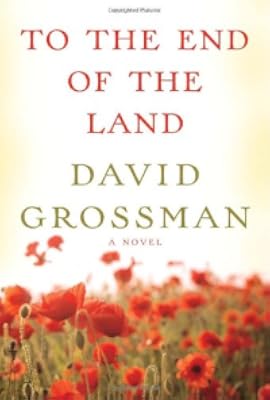
To the End of the Land
by David Grossman
On This Page
Description
Ora, a middle-aged Israeli mother, is on the verge of celebrating her son Ofer's release from army service when he returns to the front for a major offensive. she sets out for a hike in the Galilee, leaving no forwarding information for the "notifiers" who might darken her door with the worst possible news. Recently estranged from her husband, Ilan, she drags along their former best friend and her former lover Avram. Avram served in the army alongside Ilan when they were young. Avram was show more sent into Egypt and the Yom Kippur War, where he was brutally tortured as POW. In the aftermath, a virtual hermit, he refused to keep in touch with the family and has never met the boy. Ora supplies the whole story of her motherhood, a retelling that keeps Ofer very much alive and opens Avram to human bonds undreamed of in his broken world. show lessTags
Recommendations
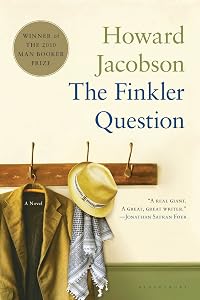
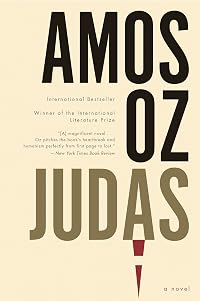
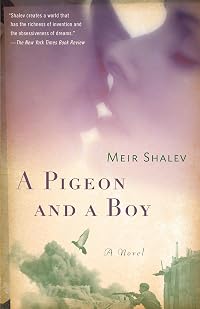
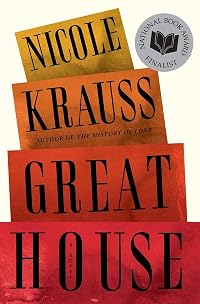











Member Recommendations

Member Reviews
I keep taking deep breaths trying to figure out how to say and what to say about this book. It is heavy throughout, without any comic relief or lifts; it is wrenching, soul-searching, life-affirming. It hurts so much sometimes that I needed to set it aside and take breathers and remind myself that this was not happening to me, although when this happens in the world it happens to us all. It is unimaginable and yet 100% possible and real. I walked every mile of this journey in Ora's shoes.
My lovely friend, Elyse, recommended this book through a review, and along with recommending reading it, she recommended NOT reading anything about it before hand. I agree with her whole-heartedly. I came at it without reading even the blurbs on the show more book jacket and I was very glad I did. I will not spoil it for anyone else by even hinting at the subject matter, but I will say that it is a microcosm of the human experience, all the difficult things we face, all the lovely moments we cherish as we build our all too fragile lives, all the interconnections that make us more than individuals and part of something so much grander and all the inner-workings that make us uniquely ourselves and therefore perpetually lonely and alone in life.
My mind will not let go of this story, and might not do so for quite some time. I do not think I will ever forget it. To David Grossman I would say, as difficult as this book must have been to write, you have done a service to mankind in writing it. God bless you. show less
My lovely friend, Elyse, recommended this book through a review, and along with recommending reading it, she recommended NOT reading anything about it before hand. I agree with her whole-heartedly. I came at it without reading even the blurbs on the show more book jacket and I was very glad I did. I will not spoil it for anyone else by even hinting at the subject matter, but I will say that it is a microcosm of the human experience, all the difficult things we face, all the lovely moments we cherish as we build our all too fragile lives, all the interconnections that make us more than individuals and part of something so much grander and all the inner-workings that make us uniquely ourselves and therefore perpetually lonely and alone in life.
My mind will not let go of this story, and might not do so for quite some time. I do not think I will ever forget it. To David Grossman I would say, as difficult as this book must have been to write, you have done a service to mankind in writing it. God bless you. show less
17. To the End of the Land by David Grossman
published: 2008 (translated 2010)
translation: from Hebrew by Jessica Cohen in 2010
format: 576 page paperback
acquired: Tel Aviv in February
read: 1st 100 pages in and flying from Israel in February, then Mar 14 – Apr 8
rating: 4½
This comes from a terrific book recommendation I got at a bookstore in Tel Aviv back in February. The bookstore clerk turned me away from the latest Amos Oz and even the award winning latest Grossman and pointed me to this (and a couple others).
I loved this book even as I struggled to read more than about ten pages a sitting (at almost 600 pages, that's a lot of sittings). The language is somehow very intense, always. He delves into the psychology of always-at-war show more Israel, specifically from the perspective of a parent of an IDF soldier during an uprising. He creates terrific characters who come alive when they are talking or being talked about. And he is something of a master of atmosphere through words, creating many different ones - sometimes surreal, sometimes from war experiences, from memory or anxiety.
I felt the weight of the book before I was aware of what went into it - which I don't want to specify (although you can look it up easily), but there a whole extra resounding meaning here because of that. Recommended, even if it took me forever to get through.
2018
https://www.librarything.com/topic/288371#6448581 show less
published: 2008 (translated 2010)
translation: from Hebrew by Jessica Cohen in 2010
format: 576 page paperback
acquired: Tel Aviv in February
read: 1st 100 pages in and flying from Israel in February, then Mar 14 – Apr 8
rating: 4½
This comes from a terrific book recommendation I got at a bookstore in Tel Aviv back in February. The bookstore clerk turned me away from the latest Amos Oz and even the award winning latest Grossman and pointed me to this (and a couple others).
I loved this book even as I struggled to read more than about ten pages a sitting (at almost 600 pages, that's a lot of sittings). The language is somehow very intense, always. He delves into the psychology of always-at-war show more Israel, specifically from the perspective of a parent of an IDF soldier during an uprising. He creates terrific characters who come alive when they are talking or being talked about. And he is something of a master of atmosphere through words, creating many different ones - sometimes surreal, sometimes from war experiences, from memory or anxiety.
I felt the weight of the book before I was aware of what went into it - which I don't want to specify (although you can look it up easily), but there a whole extra resounding meaning here because of that. Recommended, even if it took me forever to get through.
2018
https://www.librarything.com/topic/288371#6448581 show less
I am Ora. Cautiously... I want to say that some of us, old children of heartbreak, know war, even if we have never seen a gun. I say "cautiously", because I like to be careful of "what I wish for", and I insist on respecting the war torn.
Magical thinking is a part of our lives. We make bargains, but not necessarily with "an exalted God" we don't believe in. Instead, like Ora, we make do "with little gods, day-to-day icons, and small miracles: If she gets three lights in a row, if she has time to bring in the laundry before it rains..." If she is not there to open the door––if she does not get bad news, there will be no bad news. Can we save our lives with the stories we tell ourselves? Will our memories stop time? Not any more than show more time will stop our memories from changing.
This book is about magical thinking and war. It has never been so clear to me, how they go hand in hand, these two states of being. Has there ever been a war (any kind of war) without magical thinking all around it, in it, before it, after it?
Ora's torment is a torment of the mothers of war. Her voice, as sung by David Grossman, lives inside me, and I had a hard time telling the difference between her thoughts and mine. I am not at war, so safe and secure is my life. But, to care, to see, to absorb this world, the blood and sorrow and life and words, the beginnings and endings, to be alive and to die, we are at battle with the little things that torment us, or the big things that end up killing us.
Books: literature brings me so close to my own wars.
Can we stymie loss with our distractions? Or, by turning our faces away from it, do we bring it closer? And, what about love? In the end, in the beginning, what about love? Is there room for love in war, in memory, in pain, in sorrow, in death?
This book took me a long time to read. It is intense, it stretched my heart into long strips of rubber. And it will take some time for them to bounce back, to reassemble into the "shape" of a heart.
Beautiful, but more than beautiful, reading this book for me was like holding David Grossman's heart in my hands. I want to thank him with all of mine for the privilege. show less
Magical thinking is a part of our lives. We make bargains, but not necessarily with "an exalted God" we don't believe in. Instead, like Ora, we make do "with little gods, day-to-day icons, and small miracles: If she gets three lights in a row, if she has time to bring in the laundry before it rains..." If she is not there to open the door––if she does not get bad news, there will be no bad news. Can we save our lives with the stories we tell ourselves? Will our memories stop time? Not any more than show more time will stop our memories from changing.
This book is about magical thinking and war. It has never been so clear to me, how they go hand in hand, these two states of being. Has there ever been a war (any kind of war) without magical thinking all around it, in it, before it, after it?
Ora's torment is a torment of the mothers of war. Her voice, as sung by David Grossman, lives inside me, and I had a hard time telling the difference between her thoughts and mine. I am not at war, so safe and secure is my life. But, to care, to see, to absorb this world, the blood and sorrow and life and words, the beginnings and endings, to be alive and to die, we are at battle with the little things that torment us, or the big things that end up killing us.
Books: literature brings me so close to my own wars.
Can we stymie loss with our distractions? Or, by turning our faces away from it, do we bring it closer? And, what about love? In the end, in the beginning, what about love? Is there room for love in war, in memory, in pain, in sorrow, in death?
This book took me a long time to read. It is intense, it stretched my heart into long strips of rubber. And it will take some time for them to bounce back, to reassemble into the "shape" of a heart.
Beautiful, but more than beautiful, reading this book for me was like holding David Grossman's heart in my hands. I want to thank him with all of mine for the privilege. show less
Though very difficult to slog through, this is a moving story that is at once both hopeful and depressing. The book centers on two damaged people who, in my opinion are metaphors for the existential story of Israel, a country in constant struggle.
Ora, is the mother of two boys who are fathered by two men, each of whom plays a central role in her life and in each other’s lives. Ora’s younger son has finished military duty but has signed up for one more campaign. Ora is convinced that if she is in constant movement, wandering “to the end of the land” without the ability of the army “notifiers” who bring families the news of combat deaths, to locate her, she can keep her son alive. She wanders the country with her son’s show more father Avram, a man she hasn’t seen in a long time, but with whom she and her husband had a tight and complicated bond. As a condition of accompanying Ora on her wandering, Avram must agree to hear about the boy’s (his biological son’s) life. She is compelled to tell him about the son in minute detail and in doing so brings both father and son to life through her recounting. There is throughout their wanderings, an almost manic desperation to her actions and words.
The power of words to insure and reclaim life seems to be an underlying theme in the book. Ora meets both Avram and Ilan (her estranged husband) while the three of them are in a hospital after the Six Day War. Avram is a writer and his words bring the three back to life while in the hospital. Later, during the Yom Kippur War. Avram is captured and physically, emotionally and mentally brutalized and tortured. He initially is able to maintain radio contact with the Israelis. His words don’t provide information but are non-stop verbal flights of fancy. His incessant talking (like Ora’s) is more an affirmation of life than anything else. Grossman’s writing is masterful as he conveys the desperation of both these people to affirm life and in the case of Avram, to portray through silence how he despairs of life after he is physically and mentally crushed post-captivity. Grossman seems to be telling us that as long as we can speak of life, life exists.
The book is difficult to read; it is dense and overly long, but still packs a punch. We learn about the brutality of war, the ability to hold on to hope and the need to remember and communicate. The story of these people is, no doubt, an allegory of the country itself and never sugar coats but evokes the desperation, hope and the often ruthless actions that come from a constant and complex struggle. show less
Ora, is the mother of two boys who are fathered by two men, each of whom plays a central role in her life and in each other’s lives. Ora’s younger son has finished military duty but has signed up for one more campaign. Ora is convinced that if she is in constant movement, wandering “to the end of the land” without the ability of the army “notifiers” who bring families the news of combat deaths, to locate her, she can keep her son alive. She wanders the country with her son’s show more father Avram, a man she hasn’t seen in a long time, but with whom she and her husband had a tight and complicated bond. As a condition of accompanying Ora on her wandering, Avram must agree to hear about the boy’s (his biological son’s) life. She is compelled to tell him about the son in minute detail and in doing so brings both father and son to life through her recounting. There is throughout their wanderings, an almost manic desperation to her actions and words.
The power of words to insure and reclaim life seems to be an underlying theme in the book. Ora meets both Avram and Ilan (her estranged husband) while the three of them are in a hospital after the Six Day War. Avram is a writer and his words bring the three back to life while in the hospital. Later, during the Yom Kippur War. Avram is captured and physically, emotionally and mentally brutalized and tortured. He initially is able to maintain radio contact with the Israelis. His words don’t provide information but are non-stop verbal flights of fancy. His incessant talking (like Ora’s) is more an affirmation of life than anything else. Grossman’s writing is masterful as he conveys the desperation of both these people to affirm life and in the case of Avram, to portray through silence how he despairs of life after he is physically and mentally crushed post-captivity. Grossman seems to be telling us that as long as we can speak of life, life exists.
The book is difficult to read; it is dense and overly long, but still packs a punch. We learn about the brutality of war, the ability to hold on to hope and the need to remember and communicate. The story of these people is, no doubt, an allegory of the country itself and never sugar coats but evokes the desperation, hope and the often ruthless actions that come from a constant and complex struggle. show less
How does one review a book about everything that matters...it is too much, and I don't think I can do it justice, but here goes...
It's about love's many faces, it's about war and living in the ever-creeping shadow of violence, living in gripping fear that you and your family will be invaded by that violence, it's about redemption, about family dynamics, it's about the healing power of nature and walking and talking while you're walking, it's about life. Above all it's about the power of stories and storytelling, about how stories give us our strength, how they restore ourselves to ourselves, how they validate, give us identity, give us power, offer escape and indulgence and solace, how they keep us alive, rooted in the present, in the show more now, how they save us.
Ora, Avram, Ilan, Adam, Ofer. These are the names you need to know. There are other names, of course, not many...Sami and Neta figure strongly at times yet in ways still remain tangential. Ora, Ilan, Adam and Ofer are a family unit: a wife, a husband, and two boys who grow up to be young men in a country where becoming men is a dangerous transformation. Avram is, well, Avram...in many ways he is at the center of the story even when he is not.
Ora and Avram and Ilan meet as young teens under horrible circumstances...they are ill, barely alive in a mostly abandoned hospital...and something happens. In this dark place a force grows between the three of them, a bond that will always remain even as it erodes, reaffirms, erodes again, under the greatest pressure from the oppressive forces around it, the constant pervasive threats of what has happened, of what might happen. At one point Avram describes their relationship as “an equation with three factors: fire, survivor, and fireman.”
Avram finds his muse in Ora. There is never any doubt in his mind.
From the minute I saw you with the match in your hand I thought I could tell you anything on my mind.
You'd be my model, but for words.
Ora's feelings are more ambiguous. She loves Avram, but...
Ora: “Listen, I just couldn't breathe. You were too much for me.”
Avram: “How could it be too much? What is too much when you love someone?”
Yes, what is too much...is there even one answer.
Avram is “a detective gathering evidence for a crime of extraordinary scale—the human race.” What happens to him is horrific. When his injuries are described, in the ambulance, a feeling of cold terror passes through me...I feel an anxiety attack coming on, dread, heat rising, difficulty breathing...I put the book down and stare out the window at white sky above rooftops, wait for it to fade. This is how Grossman writes under your skin, leaving you groaning and scratching for your life.
Avram writes stories, it's what he does. He's an idea man, it's how he relates to the world. And he is stripped of that, hollowed out, made devoid of substance, left with just his empty auditoriums forever replaying the dramas he was forced to live, the only stories he's left with, the ones he can't listen to.
Ora lives her life. She raises two boys with Ilan. Over time they coalesce into a single block of maleness separate from her. The army interferes, war interferes, fear and a sense of duty overrides normalcy, it dims her light, makes it a caricature. A hard callus forms over these men in her life, they trade in wit and bravado, speak in a rapid-fire banter beyond her realm. Ora “laughs with them, laughs despite herself, laughs because the three of them are laughing and she can't afford to stay outside their circle of laughter. But something is not right.”
Ora holds the light inside her, the light that Avram saw in her at once, so long ago. She only wants for her boys, her men, to share in it, to let down their guard more often and for longer periods of time. And then one day she sees in her son Ofer something she never wanted to see. It is too much for her after seeing such good in him when he was young, after seeing him save his brother Adam from a terrible litany of obsessive-compulsive behaviors. Ofer “dropped an anchor inside Adam,” holding him fast to the present, so that everything after that point would be the two of them sharing the burden, the pain, together. Ora has seen this in her son and she cannot reconcile it with what happens later. Yet what is too much when you love someone...
When her world collapses, Ora pulls Avram from his quagmire and takes him to the Galilee. Here they embark on a hike of epic proportions. To this point, Avram has been living “a life without purpose.” What do you mean by that, Ora asks him. “I mean that nothing really hurts you and nothing really makes you happy. You live because you live. Because you happen not to be dead.” So that is where he is at. But Ora knows a lot that he doesn't know and as they climb mountains and cross streams, traveling at times in circles south to Jerusalem, she will tell it all to him.
Where is Ilan in all of this, you may ask. What has happened to him. When Ilan was a child, he had a method for happiness. “He used to divide himself up into different parts, separate regions, and whenever he was unhappy in one part, he'd skip to another.” Ilan has skipped to another part. He knows things, he's seen things and heard things, things Avram doesn't know he knows, and he's lived his whole life knowing them. Ora knows them, too, because he told her once, on the morning Ofer was born. He never spoke of them again and neither did she. But she tells Avram now. It all comes out, though not always with the best of timing.
Avram had a story idea he'd been working on when he found himself in the bad place and it was robbed of him. The premise was that everyone in the world would know when the world was about to end, and so what would happen in the time leading up to it.
And there will be a time, not for long, a month is enough, or a week, when every single person will be able to completely fulfill what they were meant to be—everything their bodies and souls have offered them, not what other people have dumped on them.
Isn't that what we all want, what we hope for, what should happen. Instead there is war, torture, isolation, heartbreak, abuse...but we keep hoping for redemption, for saving, because otherwise there is the life with no purpose. Avram sees the pain written on Ora. “Something has fallen asleep there, that's all, but it's warm, and it's hers, it's the pain imprinted on her, and his healing powers rise up. It's her with everything she now is.” Even in his own broken state he has the power to heal. Even broken people can heal each other if what they offer to each other is truth and light.
Ora's son Adam has a superpower she tells Avram about. "It's like you can't surprise him with anything. Yes, that's it. Not with anything happy or anything sad, and not with something really painful or really terrible, either. You'll never surprise him." There is real power in that. If you are wounded wouldn't you want someone like that to help carry your pain.
Grossman is like this a lot. He shows the myriad ways humans can help other humans, he shows their irrepressible good natures, their resilience, their inherent abilities to heal each other. In the case of this book, even in the face of his own worst personal tragedy he can give us that gift. And we are so lucky to receive it.
At one point there is a leaf inside Ora and a little later there is a leaf inside Avram and I wondered if this is what holds them together.
Ora tells Avram, “this heel-to-toe is much more suited to me. Maybe we can spend our whole lives just walking and walking without ever getting there." In some ways maybe she is right, that we will walk and walk and never get to that elusive somewhere, so maybe stop thinking about the somewhere so much. But I don't think the walking is ever heel-to-toe, and I think that is the hardest part to accept. show less
It's difficult for me to write this review because I'm not sure how to write it in a way that will convey the profound and moving experience that is Grossman's novel. It is sprawling; a thoughtful, heartrending and tragically personal rendering of lives torn apart by war.
This is not a fast-paced, plot-driven novel. Reading it is like taking a very slow drive through the country, where the goal is not the destination but the absorption of your surroundings. There is a great deal of stream-of- consciousness writing that moves between present-day hike, the youth of Ora, Ilan and Avram, and the family years of Ora and Ilan.
Overarching all the characters' lives is the shadow of war and conflict. Ora is the daughter of a Holocaust survivor, show more the wife of a former soldier, and the mother of a son who is going into conflict. Ora decides to hike the Galilee, a hike that she had planned to do with her son, in a spurt of magical thinking: if she's not home to receive the news that her son has died in battle, then he can't die. She takes along Avram, her former lover, who has his own battle scars. Her past and present are marred by war. In one touchingly sad scene Ora recalls a day on which she compulsively rode the bus back and forth, every day for weeks, apparently both in spite of and because of the likelihood of falling victim to a terrorist attack. She describes walking through the city and looking at everyone as though they could be a suicide bomber, then realizing they are looking at her the same way. It is impossible for the reader not to imagine themselves and their loved ones in such a city, where violence never sleeps.
Grossman also explores the complex relationship between the opposing sides of a conflict. Ora's driver is Sami, an Arab, and she is both saddened and infuriated by the distance that the current conflict imposes in their relationship. During a particularly graphic reminiscence of a war scene, one of the characters recalls the moment when he realizes that the "enemies" are humans just like him, in a different uniform. Over and over the age-old question is raised: why must we fight like this, and when does it stop?
This novel resonated with me because I've been through a loved one's deployment. Ora's feelings and actions, her determination to keep talking about Ofer in order to keep him alive, seem like nonsense at times, but in the crazymaking atmosphere of living constantly with a loved one being in harm's way, they make perfect sense. Sadly, the author has lived the truth about which he writes: his own son was killed in conflict in Lebanon.
This was a profound, deep, moving novel to read. It has stood out among the best books I've read this year, and it has lingered with me long after I finished it. Very highly recommended. show less
This is not a fast-paced, plot-driven novel. Reading it is like taking a very slow drive through the country, where the goal is not the destination but the absorption of your surroundings. There is a great deal of stream-of- consciousness writing that moves between present-day hike, the youth of Ora, Ilan and Avram, and the family years of Ora and Ilan.
Overarching all the characters' lives is the shadow of war and conflict. Ora is the daughter of a Holocaust survivor, show more the wife of a former soldier, and the mother of a son who is going into conflict. Ora decides to hike the Galilee, a hike that she had planned to do with her son, in a spurt of magical thinking: if she's not home to receive the news that her son has died in battle, then he can't die. She takes along Avram, her former lover, who has his own battle scars. Her past and present are marred by war. In one touchingly sad scene Ora recalls a day on which she compulsively rode the bus back and forth, every day for weeks, apparently both in spite of and because of the likelihood of falling victim to a terrorist attack. She describes walking through the city and looking at everyone as though they could be a suicide bomber, then realizing they are looking at her the same way. It is impossible for the reader not to imagine themselves and their loved ones in such a city, where violence never sleeps.
Grossman also explores the complex relationship between the opposing sides of a conflict. Ora's driver is Sami, an Arab, and she is both saddened and infuriated by the distance that the current conflict imposes in their relationship. During a particularly graphic reminiscence of a war scene, one of the characters recalls the moment when he realizes that the "enemies" are humans just like him, in a different uniform. Over and over the age-old question is raised: why must we fight like this, and when does it stop?
This novel resonated with me because I've been through a loved one's deployment. Ora's feelings and actions, her determination to keep talking about Ofer in order to keep him alive, seem like nonsense at times, but in the crazymaking atmosphere of living constantly with a loved one being in harm's way, they make perfect sense. Sadly, the author has lived the truth about which he writes: his own son was killed in conflict in Lebanon.
This was a profound, deep, moving novel to read. It has stood out among the best books I've read this year, and it has lingered with me long after I finished it. Very highly recommended. show less
I could use a million words to describe this book: brilliant, exhausting, compelling, tedious, moving, confusing, tender, unforgettable, and still not know where to start.
It is the story of one woman, Ora, and how she spends her days after her son, Ofer, goes into the Israeli Army. She brings an old friend, Avram, on a journey that Ofer was supposed to have taken with her, and Ora and Avram talk about everything from their own friendship to Ora's marriage to Ofer, and much more.
For the most part I loved this book, because Grossman's language is like a stream, moving along, keeping you with him through both beautiful and dark times. It is one of the rare works of fiction I've read that really provides an opportunity to see what war does show more to the human soul - not the person in battle, but everyone else.
This is not easy reading, but at the same time I found myself immersed in the characters' lives and thought about them at length when I was away from the book. show less
It is the story of one woman, Ora, and how she spends her days after her son, Ofer, goes into the Israeli Army. She brings an old friend, Avram, on a journey that Ofer was supposed to have taken with her, and Ora and Avram talk about everything from their own friendship to Ora's marriage to Ofer, and much more.
For the most part I loved this book, because Grossman's language is like a stream, moving along, keeping you with him through both beautiful and dark times. It is one of the rare works of fiction I've read that really provides an opportunity to see what war does show more to the human soul - not the person in battle, but everyone else.
This is not easy reading, but at the same time I found myself immersed in the characters' lives and thought about them at length when I was away from the book. show less
Members
- Recently Added By
Lists

Best of World Literature
437 works; 52 members

Top Five Books of 2013
1,562 works; 715 members

Books recommended by Barack Obama
295 works; 29 members

Jewish Books
367 works; 24 members

Middle East Fiction
179 works; 16 members

Book Riot's 100 must-read works of Jewish Fiction
100 works; 8 members

A Novel Cure
742 works; 23 members

Best Israeli Reading
55 works; 12 members

Books Read in 2016
4,666 works; 199 members

Llibres que he llegit el 2019
42 works; 1 member

Obama Reads
181 works; 3 members

Judaism & Israel
104 works; 2 members

Best Literary Walks
35 works; 7 members

BBC World Book Club
267 works; 5 members

Favorite Books in Translation
320 works; 133 members

World Book Club (BBC World Service)
212 works; 1 member
Author Information

91+ Works 8,019 Members
David Grossman was born in Jerusalem on January 25, 1954, is an Israeli author of fiction, nonfiction, and youth and children's literature. His books have been translated into many languages. He is most known for his non-fiction work, The Yellow Wind. This is his study of the Palestinians in the Israeli-occupied West Bank and Gaza Strip. He was show more awarded the Prime Minister's Prize for Hebrew literature (1984) and the Israeli Publishers Association Prize for best Hebrew novel (1985). Grossman lives in Mevasseret Zion on the outskirts of Jerusalem. He is married to Michal Grossman, a child psychologist and the mother of his three children. (Bowker Author Biography) show less
Some Editions
Awards and Honors
Awards
Distinctions
Series
Belongs to Publisher Series
Otavan kirjasto (226)
Common Knowledge
- Canonical title*
- Een vrouw op de vlucht voor een bericht
- Original title
- אישה בורחת מבשורה; Icha boharat mibsora
- Original publication date
- 2008-04 (Hebrew) (Hebrew); 2010-09-02 (English) (English)
- People/Characters
- Ora; Avram; Ofer; Ilan
- Important places
- Galilee, Israel; Israel
- Important events
- Yom Kippur War (1973)
- Dedication
- For Michal
For Yonatan and Ruti
For Uri, 1985-2006 - First words
- Hey, girl, quiet!
- Last words
- (Click to show. Warning: May contain spoilers.)She thinks: How thin is the crust of the earth.
- Publisher's editor*
- Lumen
- Blurbers
- Kraus, Nicole; Auster, Paul; Martel, Yann
- Original language*
- Hebräisch
*Some information comes from Common Knowledge in other languages. Click "Edit" for more information.
Classifications
- Genres
- Fiction and Literature, General Fiction
- DDC/MDS
- 892.436 — Literature & rhetoric Literatures of other languages Afro-Asiatic literatures Jewish, Israeli, and Hebrew Hebrew fiction 1947–2000
- LCC
- PJ5054 .G728 .I8413 — Language and Literature Oriental languages and literatures Oriental philology and literature Hebrew Literature Individual authors and works
- BISAC
Statistics
- Members
- 1,593
- Popularity
- 14,344
- Reviews
- 66
- Rating
- (3.99)
- Languages
- 15 — Catalan, Danish, Dutch, English, Estonian, Finnish, French, German, Hebrew, Hungarian, Italian, Romanian, Spanish, Swedish, Portuguese (Portugal)
- Media
- Paper, Audiobook, Ebook
- ISBNs
- 54
- ASINs
- 15