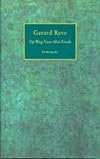
Op weg naar het einde
by Gerard Reve
On This Page
Description
Reisbrieven uit Engeland, Schotland, Spanje en Amsterdam.Tags
Recommendations




Member Reviews
Op weg naar het einde often gets cited as Reve's breakthrough work, where he first found the combination of style and subject matter that suited him best. Like most of his later works, it's at an indeterminate point on the borderline between memoir and fiction - the narrator is the Dutch writer Gerard R from the city of A, but there's so much irony about that we can't be absolutely sure at any point that he's speaking for the author.
The book consists of six "travel diaries" (or letters) written in different places, but forming a kind of continuous narrative anchored on specific dates in 1962-63. The narrator attends a PEN conference in Edinburgh (Angus Wilson, Norman Mailer, Mary McCarthy, Muriel Spark and many other prominent writers show more of the time have walk-on parts); he returns to Amsterdam and has to cope with his partner Wim having run off with a plumber from Essex; he goes to London to attempt a reconciliation with Wim; he spends time with his friend P in the Essex countryside; he travels to Spain to try to reduce his living expenses. In between describing his adventures, there are many reflections on sex, religion, literature, death, and alcohol, often combined in unexpected ways (there's a magnificent passage where during Mass in an Amsterdam Catholic church, he has a sexual fantasy about a young man sitting opposite him). He fulminates entertainingly against the stupidity of his fellow-writers and the meanness of the reading public, who are not prepared to shell out a measly few guilders for a book.
The language itself is ironic: he writes about the most secular subject-matter in a style that recalls the religious writing of a few centuries earlier; he insists on quaint alternative spellings to add to the strangeness of what he's writing and force the reader to pay attention to the actual words (there seems to be some sort of etymological system to this, but obviously the main point is Verfremdung).
It's a funny, shocking and beautifully written book, and it comes with a good deal of period detail which sets my nostalgia engine working as well. There are some glorious moments in the text - when he stands up against Hugh MacDiarmid's homophobic comments at the PEN conference, for instance, or his diatribe in support of the Dutch writers' strike of 1962 when he goes on for page after page discussing the subsidy writers should get per page... show less
The book consists of six "travel diaries" (or letters) written in different places, but forming a kind of continuous narrative anchored on specific dates in 1962-63. The narrator attends a PEN conference in Edinburgh (Angus Wilson, Norman Mailer, Mary McCarthy, Muriel Spark and many other prominent writers show more of the time have walk-on parts); he returns to Amsterdam and has to cope with his partner Wim having run off with a plumber from Essex; he goes to London to attempt a reconciliation with Wim; he spends time with his friend P in the Essex countryside; he travels to Spain to try to reduce his living expenses. In between describing his adventures, there are many reflections on sex, religion, literature, death, and alcohol, often combined in unexpected ways (there's a magnificent passage where during Mass in an Amsterdam Catholic church, he has a sexual fantasy about a young man sitting opposite him). He fulminates entertainingly against the stupidity of his fellow-writers and the meanness of the reading public, who are not prepared to shell out a measly few guilders for a book.
The language itself is ironic: he writes about the most secular subject-matter in a style that recalls the religious writing of a few centuries earlier; he insists on quaint alternative spellings to add to the strangeness of what he's writing and force the reader to pay attention to the actual words (there seems to be some sort of etymological system to this, but obviously the main point is Verfremdung).
It's a funny, shocking and beautifully written book, and it comes with a good deal of period detail which sets my nostalgia engine working as well. There are some glorious moments in the text - when he stands up against Hugh MacDiarmid's homophobic comments at the PEN conference, for instance, or his diatribe in support of the Dutch writers' strike of 1962 when he goes on for page after page discussing the subsidy writers should get per page... show less
Should have read it about 3 decades ago. Then I could have enjoyed rereading it sooner. It's seldom that I laugh out loud because of a book. And the language just so.
Ratings
Members
- Recently Added By
Lists

Canon van de Nederlandse letterkunde
125 works; 5 members
Author Information

127+ Works 5,449 Members
Awards and Honors
Notable Lists
Series
Belongs to Publisher Series
Work Relationships
Is contained in
Has as a reference guide/companion
Common Knowledge
- Original publication date
- 1963
- Original language*
- Nederlands
*Some information comes from Common Knowledge in other languages. Click "Edit" for more information.
Classifications
- Genres
- General Fiction, Fiction and Literature
- DDC/MDS
- 839.313 — Literature & rhetoric German & related literatures Other Germanic literatures Netherlandish literatures Dutch Dutch fiction
- LCC
- PT5881.28 .E9 .Z52 — Language and Literature German, Dutch and Scandinavian literatures Dutch literature Individual authors or works 1961-2000
Statistics
- Members
- 257
- Popularity
- 126,390
- Reviews
- 3
- Rating
- (3.97)
- Languages
- Dutch
- Media
- Paper
- ISBNs
- 9
- ASINs
- 1