On This Page
Description
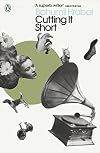
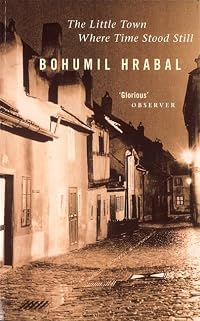
'As I crammed the cream horn voraciously into my mouth, at once I heard Francin's voice saying that no decent woman would eat a cream puff like that' In a quiet town where not much happens, Maryska, the flamboyant brewer's wife, stands out. She cuts her skirt short so that she can ride her bicycle, her golden hair flying out behind her. She butchers pigs. She drinks and eats with relish. And when the garrulous ranconteur Uncle Pepin comes to visit the locals are scandalized even further, in show more Bohumil Hrabal's affecting, exuberant portrayal of a small central European community between the wars. 'One of the greatest European prose writers' Philip Roth 'Hrabal combines good humour and hilarity with tenderness' Observer show lessTags
Recommendations



















Member Reviews
Short is indeed the key word here; a 120-page novel in 12 short chapters, told from the POV of a woman in a small Czech village in the first half of the 20th century as the modern world starts closing in. Maryska (based on Hrabal's own mother) is the wife of Francin, who oversees daily operations at the local brewery, and her life is one joy after another; precious gifts from her loving (but reserved and very busy) husband every time he comes back from Prague, taking long bike rides with her long hair flowing behind her, lighting the old-fashioned lamps at the brewery after the generator closes down at night, helping out with the annual pig slaughter and sampling the results... and of course, helping take care of Francin's brother who show more came back from the war a little weird and won't leave.
There's a great deal of warmth mixed with almost slapstickish bizarre humour in this, with kooky but alive small-town characters and told in a beautifully descriptive, down-to-earth language. Hrabal is such a great stylist that you'd almost be forgiven for thinking it's a pure piece of comic nostalgia about how everything was better and simpler back in the good old days - the novel ends before Hrabal himself is actually born.
But then there's the knowledge that this was a piece of forbidden literature back in the 70s, and the longer we get into the novel, the more a creepy undertone starts appearing as things start getting... shorter. Skirts, hair, tails, lives. As humorous as the presentation is, everything that gets cut off or out makes life poorer, duller, darker. Considering the circumstances it was written under, the subtext is subtle but insidious: the more of the little unnecessary, fun bits of life you cut off, the less humorous it gets. And then the jokes, and the stories, stop and all that remains is authority and punishment.
And, of course, a whole lot of laughter in between. It is mostly a comedy, after all. Just a darker one than it seems at first. show less
There's a great deal of warmth mixed with almost slapstickish bizarre humour in this, with kooky but alive small-town characters and told in a beautifully descriptive, down-to-earth language. Hrabal is such a great stylist that you'd almost be forgiven for thinking it's a pure piece of comic nostalgia about how everything was better and simpler back in the good old days - the novel ends before Hrabal himself is actually born.
But then there's the knowledge that this was a piece of forbidden literature back in the 70s, and the longer we get into the novel, the more a creepy undertone starts appearing as things start getting... shorter. Skirts, hair, tails, lives. As humorous as the presentation is, everything that gets cut off or out makes life poorer, duller, darker. Considering the circumstances it was written under, the subtext is subtle but insidious: the more of the little unnecessary, fun bits of life you cut off, the less humorous it gets. And then the jokes, and the stories, stop and all that remains is authority and punishment.
And, of course, a whole lot of laughter in between. It is mostly a comedy, after all. Just a darker one than it seems at first. show less
It feels like all of Hrabal's meticulously-told stories are really about something else. Closely Observed Trains was about the loss of innocence in war; All My Cats was about guilt; and Cutting It Short feels like a story of the inexorable march of history, with tradition inevitably being left behind.
This is a marvellous little book about a woman called Mary who tries to be decent but can't quite manage it; her long-suffering husband Francin; and her brother-in-law, Cousin Pepin, who tells the most weirdly amusing shaggy dog stories. There's no real plot here, just a series of vignettes, but taken together it works much better than it should because of Hrabal's incredible writing.
This is a marvellous little book about a woman called Mary who tries to be decent but can't quite manage it; her long-suffering husband Francin; and her brother-in-law, Cousin Pepin, who tells the most weirdly amusing shaggy dog stories. There's no real plot here, just a series of vignettes, but taken together it works much better than it should because of Hrabal's incredible writing.
Cseh idill. A 68-as prágai szovjet bevonulás után Hrabal bezárkózott kerskói házikójába. "Ha rossz kedvem volt, kimentem hozzá, és jól leittuk magunkat. Mellette visszatért az életkedvem" - emlékezik Jiří Menzel. A Sörgyári capriccio 1970-ben született. Hrabal a boldog időket örökíti meg benne, azt az időszakot, amikor ő még csak szerelmes gondolatként motoszkált az anyja fejében - ha igaz. Megeleveníti Nymburkot, a városkát, ahol megállt az idő: megidézi a sörgyár gondnokát, a daliás-ideges motorbicikli-bolond Francint, akivel gondolkodás nélkül cserélne a sörgyár teljes igazgatótanácsa - egy nő miatt. Egy gyönyörű aranyhajú asszony miatt, aki úgy issza a sört, úgy eszi a show more disznótorost, úgy mászik fel a kéménybe a lobogó hajával, hogy egész Nymburk szájtátva nézi. A tériszonyos tűzoltóparancsnokkal egyetemben. Csak egy igazi bolond tud ezzel a nővel - Hrabal leendő anyjával - lépést tartani: Pepin bácsi. Hrabal nagybátyja és zseniálisan szószátyár múzsája. Krónikában fogant költészet. Menzel felejthetetlen filmet komponált a szépségnek, a derűnek, az életörömnek és a komikumnak ebből az utánozhatatlan elegyéből. show less
Mar 12, 2018Hungarian
Ratings
Members
- Recently Added By
Author Information

170+ Works 7,897 Members
Hrabal worked as a lawyer, clerk, railwayman, traveling salesman, steelworker, and laborer before turning to literature in 1962. In his tragic-comic novels and short stories he concentrates on the everyday lives of ordinary people. Thomas Lask says, "Hrabal shows an offbeat, original mind, a fey imagination and a sure hand in constructing his show more tales" (N.Y. Times Bk. Review). Hrabal's novel Closely Watched Trains (1965) was made into an internationally successful movie. (Bowker Author Biography) show less
Some Editions
Series

Belongs to Publisher Series
suhrkamp taschenbuch (1613)
Work Relationships
Is contained in
Common Knowledge
- Canonical title
- Cutting It Short
- Original title
- Postřižiny
- Original publication date
- 1976 (Czech) (Czech); 1974 (samizdat-ed.) (samizdat-ed.); 1983 (German) (German)
Classifications
- Genres
- Fiction and Literature, General Fiction
- DDC/MDS
- 891.86354 — Literature & rhetoric Literatures of other languages East Indo-European and Celtic literatures West and South Slavic languages (Bulgarian, Slovene, Polish, Czech, Slovak, Serbo-Croatian, and Macedonian) Czech Czech fiction 1900–1989 Late 20th century 1945–1989
- LCC
- PG5039.18 .R2 .P614 — Language and Literature Slavic languages and literatures. Baltic languages. Albanian language Slavic. Baltic. Albanian Slavic Czech
- BISAC
Statistics
- Members
- 169
- Popularity
- 192,848
- Reviews
- 3
- Rating
- (3.95)
- Languages
- 10 — Czech, Dutch, English, French, German, Hungarian, Italian, Japanese, Polish, Swedish
- Media
- Paper, Audiobook, Ebook
- ISBNs
- 31
- ASINs
- 4