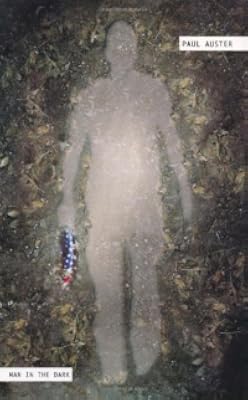
Man in the Dark: A Novel
by Paul Auster
On This Page
Description
Seventy-two-year-old August Brill is recovering from a car accident in his daughter's house in Vermont. When sleep refuses to come, he lies in bed and tells himself stories, struggling to push back thoughts about things he would prefer to forget--his wife's recent death and the horrific murder of his granddaughter's boyfriend, Titus. The retired book critic imagines a parallel world in which America is not at war with Iraq but with itself. In this other America the twin towers did not fall show more and the 2000 election results led to secession, as state after state pulled away from the union and a bloody civil war ensued. As the night progresses, Brill's story grows increasingly intense, and what he is so desperately trying to avoid insists on being told. Joined in the early hours by his granddaughter, he gradually opens up to her and recounts the story of his marriage. After she falls asleep, he at last finds the courage to revisit the trauma of Titus's death.--From publisher description. show lessTags
Recommendations







Member Recommendations
Peace by Gene Wolfe
by BobNolin
Member Reviews
I bought "Man In The Dark" because I was transferring between flights in an airport in some non-English speaking country and I'd run out of things to read. I had no idea that Paul Auster is seen in America as a contemporary god of literature, who's writing, to quote Wikipedia, "blends absurdism, existentialism, crime fiction, and the search for identity and personal meaning."
So I came to "Man In The Dark" with no preconceptions, just a willingness to engage with the text.
I was impressed by the concept: an insomniac old man, in pain from a leg shattered in a recent car accident, is trying to get through the night in his daughter's house. His hours of unwelcome wakefulness are stained by grief for his dead wife and worry about his lonely, show more divorced daughter. He seeks refuge from his cares by talking to his granddaughter and sleep-dreaming a Kafkaesque novel about a dystopian alternative-future US, locked in a civil war.
This was all very promising. The old man, a prize winning journalist was beautifully realized and his conversations with his granddaughter have some wonderful observations about films and the role of objects in film narrative. I felt this was a man I'd like to spend time with.
Unfortunately the book then started to get clever and to play with metaphysical twists and turns that seemed forced and reminded me of just how strongly I associate boredom with Samuel Becket, who made me wait for Godot for an unbearable eternity (yes, I know that that's what he mean to do. What I don't know is why I should thank him for that.).
The book within a book, about a man who wakes in a hole and finds himself drawn into fighting in a war where he has no allegiance to any side was never very compelling. It degenerated into a Kafka-wannabe college-student effort and finally disappeared up its own metaphysical orifice when it turns out that the hero in the story can only win through if he assassinates the old man who invented him.
The structure is clever but in a way that suggests all of the meanings of "conceit".
I read the book to the end. I was able to acknowledge the skill of the author and the sincerity of the moral struggle but it seemed to me that this book failed both as a novel and as a vehicle for original metaphysical thought.
This being said, I'm sure it will appear on High School reading lists for a generation as an example of "real" literature - you know, the kind people read to show how clever they are rather than so they can have a good time. show less
So I came to "Man In The Dark" with no preconceptions, just a willingness to engage with the text.
I was impressed by the concept: an insomniac old man, in pain from a leg shattered in a recent car accident, is trying to get through the night in his daughter's house. His hours of unwelcome wakefulness are stained by grief for his dead wife and worry about his lonely, show more divorced daughter. He seeks refuge from his cares by talking to his granddaughter and sleep-dreaming a Kafkaesque novel about a dystopian alternative-future US, locked in a civil war.
This was all very promising. The old man, a prize winning journalist was beautifully realized and his conversations with his granddaughter have some wonderful observations about films and the role of objects in film narrative. I felt this was a man I'd like to spend time with.
Unfortunately the book then started to get clever and to play with metaphysical twists and turns that seemed forced and reminded me of just how strongly I associate boredom with Samuel Becket, who made me wait for Godot for an unbearable eternity (yes, I know that that's what he mean to do. What I don't know is why I should thank him for that.).
The book within a book, about a man who wakes in a hole and finds himself drawn into fighting in a war where he has no allegiance to any side was never very compelling. It degenerated into a Kafka-wannabe college-student effort and finally disappeared up its own metaphysical orifice when it turns out that the hero in the story can only win through if he assassinates the old man who invented him.
The structure is clever but in a way that suggests all of the meanings of "conceit".
I read the book to the end. I was able to acknowledge the skill of the author and the sincerity of the moral struggle but it seemed to me that this book failed both as a novel and as a vehicle for original metaphysical thought.
This being said, I'm sure it will appear on High School reading lists for a generation as an example of "real" literature - you know, the kind people read to show how clever they are rather than so they can have a good time. show less
A recently widowed writer, whose name by pure chance sounds a lot like "Paul Auster", lies on his back in a dark room. A car accident has temporarily disabled him, and so now he spends his nights sleepless on his daughter's couch in Vermont, telling himself stories to pass the time. Upstairs, his divorced daughter and recently bereaved granddaughter (her boyfriend never came back from Iraq) lie, presumably sleeping, as August Brill (for 'tis his name) makes up a story about a young man who wakes up in a hole to find that the USA is at war with itself. In the alternate universe that Brill made up for him, 9/11 never happened and instead the repercussions of the 2000 election led to full-blown civil war between the liberal coast states show more and conservative (not to mention much better armed) middle America. The young man is told that only he can stop the war. How? Kill the old bastard who's lying on a couch in Vermont making it all up.
Stories within stories, obvious author avatars, seemingly random accidents that throw an entire life out of whack, metaphysical ruminations on how we create our own world... everything is business as usual in the country of Austeria, right?
Well, maybe not. I've been wanting Auster to get back to this kind of willfully too-cleverly metafictional and yet gripping stories he used to do so well; his last two novels - the pleasant but rather pointless Brooklyn Follies and the ridiculously navelgazing Travels In The Scriptorium - had their good sides, but where one had very little for Auster fans to enjoy and the other had very little for anyone who's not a complete Austroholic, in Man In The Dark he manages to get the balance back.
So why don't I love it?
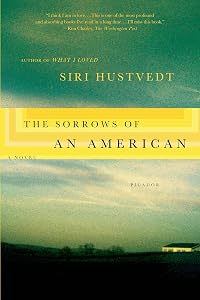
I really should. It's a very clever book. The various storylines - and boy, does he manage to pack a few into less than 200 pages - continuously refer back to the same dead objects and dead people that the novel's characters discuss in their analyses of movies; like his last two novels (and like his wife Siri Hustvedt's excellent The Sorrows of an American), 9/11 and the mad decade that's followed it remain an almost unspoken absence in the centre, just like Brill's and his granddaughter's grief is held off until the very end. It's all about how to get through without losing yourself, how to survive that private/public civil war without one side crushing the other but by finding a way to keep going. Also, this is arguably that rare beast: an Auster novel where nothing happens by chance. The setup, with our narrator incapacitated following a car accident, looks like one - until he retraces his steps and realizes what brought him here, and suddenly nothing looks random anymore. It's a trick that carries a double edge, though, since that's exactly what his granddaughter does too - and ends up with a conclusion that almost destroys her, that everything is her fault. When Brill throws his writer's quill in frustration, it's both an acknowledgement of how useless mere Story can seem (the bookstores and TV stations in New York and LA are no match for bombs, an against-all-odds love story doesn't stop cancer) and one a powerful restatement of how indespensible it is in knowing who we are. Because obviously, even when Brill gives up his attempts at fiction, Auster continues his. And as long as he does, this preposterous world keeps a-spinning.
So why don't I love it?
In a lot of ways, this is probably both the key to Auster's latest couple of efforts and to whatever is to come; a reboot. He has taken apart his fiction machine, polished and reconditioned each part individually, and then put them back together into something similar to the old one but with some new features. And that I love. But I expect a lot of Auster, and there's still some bugs to work out. Man In The Dark is a very nice novel, but it doesn't soar, damnit. When I reach the end it feels like it's not done; it's too short, too sprawling, with ideas and substories that barely have time to develop into anything but an obvious illustration of his theme before he ditches them; as if he suddenly has so much to say he can't figure out where to start or end. That gives me a lot of hope for his future novels, but for this particular one, I can't really love it. show less
Stories within stories, obvious author avatars, seemingly random accidents that throw an entire life out of whack, metaphysical ruminations on how we create our own world... everything is business as usual in the country of Austeria, right?
Well, maybe not. I've been wanting Auster to get back to this kind of willfully too-cleverly metafictional and yet gripping stories he used to do so well; his last two novels - the pleasant but rather pointless Brooklyn Follies and the ridiculously navelgazing Travels In The Scriptorium - had their good sides, but where one had very little for Auster fans to enjoy and the other had very little for anyone who's not a complete Austroholic, in Man In The Dark he manages to get the balance back.
So why don't I love it?
I really should. It's a very clever book. The various storylines - and boy, does he manage to pack a few into less than 200 pages - continuously refer back to the same dead objects and dead people that the novel's characters discuss in their analyses of movies; like his last two novels (and like his wife Siri Hustvedt's excellent The Sorrows of an American), 9/11 and the mad decade that's followed it remain an almost unspoken absence in the centre, just like Brill's and his granddaughter's grief is held off until the very end. It's all about how to get through without losing yourself, how to survive that private/public civil war without one side crushing the other but by finding a way to keep going. Also, this is arguably that rare beast: an Auster novel where nothing happens by chance. The setup, with our narrator incapacitated following a car accident, looks like one - until he retraces his steps and realizes what brought him here, and suddenly nothing looks random anymore. It's a trick that carries a double edge, though, since that's exactly what his granddaughter does too - and ends up with a conclusion that almost destroys her, that everything is her fault. When Brill throws his writer's quill in frustration, it's both an acknowledgement of how useless mere Story can seem (the bookstores and TV stations in New York and LA are no match for bombs, an against-all-odds love story doesn't stop cancer) and one a powerful restatement of how indespensible it is in knowing who we are. Because obviously, even when Brill gives up his attempts at fiction, Auster continues his. And as long as he does, this preposterous world keeps a-spinning.
So why don't I love it?
In a lot of ways, this is probably both the key to Auster's latest couple of efforts and to whatever is to come; a reboot. He has taken apart his fiction machine, polished and reconditioned each part individually, and then put them back together into something similar to the old one but with some new features. And that I love. But I expect a lot of Auster, and there's still some bugs to work out. Man In The Dark is a very nice novel, but it doesn't soar, damnit. When I reach the end it feels like it's not done; it's too short, too sprawling, with ideas and substories that barely have time to develop into anything but an obvious illustration of his theme before he ditches them; as if he suddenly has so much to say he can't figure out where to start or end. That gives me a lot of hope for his future novels, but for this particular one, I can't really love it. show less
There is something primitive about Paul Auster. This primitiveness is lodged exactly where it should not be, in the fluency and ease of his storytelling. As reviewers always say, he is an inexhaustible source of stories, and in this book the stories never stop: there’s never any danger of slowing down; that is fitting because somehow slowing down feels like treacherous thing to do. What would happen if one story failed to succeed the last in a seamless sequence? Why should that seem like a problem? It feels that way, I think, because despite Auster’s themes—the book is about a widowed older man, his daughter who was abandoned by her husband, and the daughter’s daughter whose boyfriend died in Iraq—this is a book in which show more stories are used as distractions to avoid thinking more deeply. Auster is absolutely accomplished as a storyteller, and that theme (using stories to distract yourself) is built into the book. The principal character invents some stories of his own, to help him not to think about his family. That much Auster knows, and controls. He even has his principal character kill off the protagonist of his own invented story. But at another level, Auster doesn’t seem aware that all the stories in his book, and not just the ones invented by his narrator, serve the function of avoiding real introspection, real difficulty. As evidence of that I take the quality that binds all the stories in this novel together: the stories all run with a predictable, uninterrupted fluency. They are like driving by the scene of an accident: you slow up a little, but not enough to get involved. The story that the narrator invents in order not to think about his own past is itself as threadbare as they come (a post-apocalyptic fantasy, along the lines of any number of TV fantasy movies), but that doesn’t seem to bother either the narrator (who is supposedly a literary critic, and should really show some embarrassment at his own story), or the novelist (who is actually a prolific writer, and could easily have added a subtle sign that he didn’t find his narrator’s invented stories as entrancing as his narrator does).
That is what I mean by “primitive”: the architecture of the postmodern novel is there, and there’s a clarity of structure and pacing that few novelists can match, but Auster seems relentlessly to misunderstand the function of narrative: it cannot only be a balm or distraction. Narrative has to break down or get itself in trouble, or falter, or question itself—not just the way a character might question the truth of a narrative, or its appropriateness, or its usefulness in distracting him—but the way a character might fail just telling a story, fail in the telling and not just in deciding whether to tell, the way this sentence is failing because I can’t quite get my thought about it right.
There are a few moments in Man in the Dark when the flow of stories stop, but they are stage-managed to create a little shocks, or streams of tears: and that, too, is a kind of evasion, an easier sort of crisis, something not at all genuinely persistently moving. The surprise ending of the entire book is one such moment.
Spoiler alert: I’m about to say what that surprise is. But note: books that can actually be spoiled by giving away their endings are trivial sorts of books like murder mysteries and detective stories. This book presents itself as literary fiction, and there shouldn’t be a spoiler in it. In this book the surprise is that the grand-daughter’s boyfriend was kidnapped in Iraq, and the family has seen his gruesome execution video on the internet.
When I read that I groaned. Isn’t ordinary human suffering enough to create empathy and significance? Is it really necessary to tack on something spectacular, something topical and political, something garish and horrible? Doesn’t that sort of ornament just distract from what really counts—which is, in this case, that a person has died? The surprise ending is tremendously irritating, not for its politics, but because it functions just the way an elaborate murder does in Agatha Christie: it helps us not to think about what we are actually witnessing, a death. Readers of murder mysteries expect that kind of superficiality. Here, where there are literary ambitions, and where many pages are devoted to people’s feelings and thoughts, it is not just annoying: it is bewildering that a novelist could think such a surprise is sufficient, justified, necessary, sensible, or even expressive. show less
That is what I mean by “primitive”: the architecture of the postmodern novel is there, and there’s a clarity of structure and pacing that few novelists can match, but Auster seems relentlessly to misunderstand the function of narrative: it cannot only be a balm or distraction. Narrative has to break down or get itself in trouble, or falter, or question itself—not just the way a character might question the truth of a narrative, or its appropriateness, or its usefulness in distracting him—but the way a character might fail just telling a story, fail in the telling and not just in deciding whether to tell, the way this sentence is failing because I can’t quite get my thought about it right.
There are a few moments in Man in the Dark when the flow of stories stop, but they are stage-managed to create a little shocks, or streams of tears: and that, too, is a kind of evasion, an easier sort of crisis, something not at all genuinely persistently moving. The surprise ending of the entire book is one such moment.
Spoiler alert: I’m about to say what that surprise is. But note: books that can actually be spoiled by giving away their endings are trivial sorts of books like murder mysteries and detective stories. This book presents itself as literary fiction, and there shouldn’t be a spoiler in it. In this book the surprise is that the grand-daughter’s boyfriend was kidnapped in Iraq, and the family has seen his gruesome execution video on the internet.
When I read that I groaned. Isn’t ordinary human suffering enough to create empathy and significance? Is it really necessary to tack on something spectacular, something topical and political, something garish and horrible? Doesn’t that sort of ornament just distract from what really counts—which is, in this case, that a person has died? The surprise ending is tremendously irritating, not for its politics, but because it functions just the way an elaborate murder does in Agatha Christie: it helps us not to think about what we are actually witnessing, a death. Readers of murder mysteries expect that kind of superficiality. Here, where there are literary ambitions, and where many pages are devoted to people’s feelings and thoughts, it is not just annoying: it is bewildering that a novelist could think such a surprise is sufficient, justified, necessary, sensible, or even expressive. show less
In Paul Auster’s inventive new novel Man in the Dark, an aging writer named August Brill narrates stories over the course of a single long night to keep his mind off a devastating series of recent family tragedies; near dawn, his granddaughter joins him for an intimate pre-dawn conversation. In the hands of a less gifted writer this would be barely a short story, yet upon this slender armature Auster hangs a tale that incorporates magic realism, science fiction, Kierkegaardian dread, postmodern metafiction, and a burning evocation of the terrors and dislocations of war.
The strongest part of the book is the story-within-a-story that the insomnia-wracked Brill makes up on the fly, a Vonnegutian whopper about a man who is transplanted to show more a parallel reality where the United States is mired in a brutal civil war. The crabwise relation between story and creator—a familiar theme for Auster, beautifully handled here—invests the episode with a dreamlike anti-logic that recalls Flann O’Brien. The adventures of Brill’s creation (tellingly, a magician named Brick) tap the primal power of one of the most enduring scenarios in science fiction: that of the outsider suddenly transplanted to an alien world. Brick’s bizarre experience in this alternate America mirrors the strangeness of post-9/11 life without slopping over into the didactic or obvious: Auster leaves the reader to register his own emotional response to this peculiar fable. Unfortunately, Brill grows tired of his jeu d’esprit and abruptly truncates it, returning to the obsessive plumbing of his grief.
When Brill is joined near the end of his restless night by his granddaughter Katya, equally shattered and adrift, he relates the story of his courtship and long marriage to his recently deceased wife in a sustained gulp of anguished reminiscence. Katya responds with some deep secrets of her own, and despite some tinny dialogue (“Why is life so horrible, Grandpa?” “Because it is, that’s all. It just is.”), the cross-generational connection between these two damaged souls is both odd and touching. Man in the Dark’s sole glimpse of surcease comes in the halting reassurances the two offer each other.
Although Auster’s prose is precise and burnished, at the heart of August Brill’s meditations lies a self-absorption and petulance that eventually feels weary and circular. Brill’s mind is a claustrophobic place, and no amount of mental games and allusions can fully open it up—readers can be forgiven if they occasionally wish that the guy would just fall asleep, already. More to the point, the horrific tragedies he has endured do not necessarily make his pain feel earned, and Auster’s inclusion of several unrelated vignettes of catastrophe, riot, and war feels like piling on. Still, this somber, elegant book, rife with nuances and subtle echoes, crisscrosses the line between memory and loss, reaches for the profound, and very nearly finds it.
— Rain Taxi, Fall 2008, Volume 13, No. 3 show less
The strongest part of the book is the story-within-a-story that the insomnia-wracked Brill makes up on the fly, a Vonnegutian whopper about a man who is transplanted to show more a parallel reality where the United States is mired in a brutal civil war. The crabwise relation between story and creator—a familiar theme for Auster, beautifully handled here—invests the episode with a dreamlike anti-logic that recalls Flann O’Brien. The adventures of Brill’s creation (tellingly, a magician named Brick) tap the primal power of one of the most enduring scenarios in science fiction: that of the outsider suddenly transplanted to an alien world. Brick’s bizarre experience in this alternate America mirrors the strangeness of post-9/11 life without slopping over into the didactic or obvious: Auster leaves the reader to register his own emotional response to this peculiar fable. Unfortunately, Brill grows tired of his jeu d’esprit and abruptly truncates it, returning to the obsessive plumbing of his grief.
When Brill is joined near the end of his restless night by his granddaughter Katya, equally shattered and adrift, he relates the story of his courtship and long marriage to his recently deceased wife in a sustained gulp of anguished reminiscence. Katya responds with some deep secrets of her own, and despite some tinny dialogue (“Why is life so horrible, Grandpa?” “Because it is, that’s all. It just is.”), the cross-generational connection between these two damaged souls is both odd and touching. Man in the Dark’s sole glimpse of surcease comes in the halting reassurances the two offer each other.
Although Auster’s prose is precise and burnished, at the heart of August Brill’s meditations lies a self-absorption and petulance that eventually feels weary and circular. Brill’s mind is a claustrophobic place, and no amount of mental games and allusions can fully open it up—readers can be forgiven if they occasionally wish that the guy would just fall asleep, already. More to the point, the horrific tragedies he has endured do not necessarily make his pain feel earned, and Auster’s inclusion of several unrelated vignettes of catastrophe, riot, and war feels like piling on. Still, this somber, elegant book, rife with nuances and subtle echoes, crisscrosses the line between memory and loss, reaches for the profound, and very nearly finds it.
— Rain Taxi, Fall 2008, Volume 13, No. 3 show less
Quante ne sa, uncle Paul
Paul Auster resta per me legato al "racconto di Natale" nel finale di "Smoke", film per il quale collaborò alla stesura della sceneggiatura. Ogni volta mi sembra quasi come se ascoltassi qualcuno, uno zio, che mi racconta una bella storia, e sta lì, di fronte a me, e a volte l'emozione è tanta e gli occhi mi si riempiono di lacrime che devo abbassare lo sguardo per non farmi scoprire. Ci sono storie complicate ed intrecciate nel tempo e nella scrittura, ma poi si stendono in una linearità che è quella della vita di ognuno di noi. Ultimamente le storie di Paul Auster hanno molto risentito delle ferite della cronaca recente: l'attentato al WTC, l'11 settembre, la guerra in Iraq, tutte cose difficili da farsi show more scivolare addosso, e lui le infila in vite quotidiane, senza la forzatura dell'egocentrismo tipico degli americani, ma solo per raccontare, per testimoniare quanto orrore e morte seminano eventi che sembrano lontani, visti sullo schermo di un televisore. Ma dietro a ciò che sembra "cinematografico" ci sono storie vere, vite distrutte, affetti smembrati, come in tutte le guerre. Solo che adesso, rispetto ai due principali conflitti mondiali, sembra non percepirsi più alcuna linea di demarcazione. La bomba può scoppiare in ogni momento ed è solo questione di stare nel posto sbagliato al momento sbagliato, nonostante le apparenze di una normale giornata in un normale paese nell'anno di grazia 2001, quando le guerre sembrano echi lontani o quanto meno "not in my backyard"... show less
Paul Auster resta per me legato al "racconto di Natale" nel finale di "Smoke", film per il quale collaborò alla stesura della sceneggiatura. Ogni volta mi sembra quasi come se ascoltassi qualcuno, uno zio, che mi racconta una bella storia, e sta lì, di fronte a me, e a volte l'emozione è tanta e gli occhi mi si riempiono di lacrime che devo abbassare lo sguardo per non farmi scoprire. Ci sono storie complicate ed intrecciate nel tempo e nella scrittura, ma poi si stendono in una linearità che è quella della vita di ognuno di noi. Ultimamente le storie di Paul Auster hanno molto risentito delle ferite della cronaca recente: l'attentato al WTC, l'11 settembre, la guerra in Iraq, tutte cose difficili da farsi show more scivolare addosso, e lui le infila in vite quotidiane, senza la forzatura dell'egocentrismo tipico degli americani, ma solo per raccontare, per testimoniare quanto orrore e morte seminano eventi che sembrano lontani, visti sullo schermo di un televisore. Ma dietro a ciò che sembra "cinematografico" ci sono storie vere, vite distrutte, affetti smembrati, come in tutte le guerre. Solo che adesso, rispetto ai due principali conflitti mondiali, sembra non percepirsi più alcuna linea di demarcazione. La bomba può scoppiare in ogni momento ed è solo questione di stare nel posto sbagliato al momento sbagliato, nonostante le apparenze di una normale giornata in un normale paese nell'anno di grazia 2001, quando le guerre sembrano echi lontani o quanto meno "not in my backyard"... show less
This is a stunning return to form by one of my former favourites. Like Atwood, Carthy and Jeanette Winterson, he's taken themes and settings from science fiction without apparently being tarred with the snobbery habitually employed to discuss that genre's work. I thought the last couple of Auster's books were somewhat slight, but Man in the Dark retains his cool, dispassionate style while dealing, again, with the big issues: personal loss and national decline. It's also interesting to see Auster dealing with American history in similar ways to Roth (recently) and Gore Vidal, raising all those questions about dissent, cultural glue and the nature and direction of allegiance: to a state, an ideal or a smaller unit.
 This review was written for LibraryThing Early Reviewers.
Why was I so moved by this Paul Auster novel? I started out thinking this is a rather distanced and constructed story, but as I read on the story of an old man reluctantly looking back on his mistakes it touched me more and more. The last part of the book is basically a conversation between two wounded people, the granddaughter and the grandfather, a real page turner. That can be said about the fiction-within-fiction story that the old man concocts as well. Auster writes better than most contemporary writers, and he handles so many genres, he never seizes to surprise and delight me. He was among my favorite writers before Man in the Dark, he is even more so now.
Members
- Recently Added By
Published Reviews
ThingScore 88
Auster reminds us that each of us looks at existence through story-colored lenses. The world we inhabit is literally shaped by Story. We all have our "life stories," and these govern how we see ourselves and others, how we interpret events and memories and expectations. When our saviors and teachers speak to us about the greatest truths, whether of religion or philosophy, they always speak to show more us in parables. When artists, or ordinary people, talk about what truly matters, they start and end by telling stories, wonderful, amazing stories—like those in the works of Paul Auster. show less
added by pdever
The “parallel worlds” visited and occupied by an aging intellectual’s troubled mind and heart assume intriguing metafictional form in [this] challenging novel. ... Auster’s lucid prose and masterly command of his tricky narrative’s twists, turns and mirrorings keep us riveted to the pages. ... Probably Auster’s best novel, and a plaintive summa of all [his] books that ... have gone show more into its making. show less
added by Roycrofter
Lists

Books Read in 2015
3,299 works; 126 members

Sleeplessness
16 works; 3 members
Author Information

106+ Works 65,112 Members
Paul Auster was born on February 3, 1947, in Newark, New Jersey. He received a B.A. and a M.A. in English and Comparative Literature from Columbia University. In addition to his career as a writer, Auster has been a census taker, tutor, merchant seaman, little-league baseball coach, and a telephone operator. He started his writing career as a show more translator. He soon gained popularity for the detective novels that make up his New York Trilogy. His other works include The Invention of Solitude; Leviathan; Moon Palace; Facing the Music; In the Country of Last Things; The Music of Chance; Mr. Vertigo; and The Brooklyn Follies. His latest novels are entitled, Invisible and Sunset Park. In addition to his novels, Auster has written screenplays and directed several films. He is the recipient of a fellowship from the National Endowment for the Arts and a French Prix Medicis for Foreign Literature. (Bowker Author Biography) show less
Some Editions
Awards and Honors
Awards
Series
Belongs to Publisher Series
Work Relationships
Is contained in
Common Knowledge
- Canonical title*
- Seul dans le noir
- Original title
- Man in the Dark
- Original publication date
- 2008-03-14
- People/Characters
- August Brill; Miriam; Katya; Titus Small; Sonia Brill; Owen Brick (show all 12); Molly Wald; Lou Frisk; Serge Tobak (Sarge Serge); Virginia Blaine; Oona McNally; Duke Rothstein
- Important places
- Vermont, USA; Wellington, Massachusetts, USA (Fictional); New York, New York, USA
- Dedication
- For David Grossman
and his wife Michal
his son Jonathan
his daughter Ruthi
and in memory of Uri - First words
- I am alone in the dark, turning the world around in my head as I struggle through another bout of insomnia, another white night in the great American wilderness.
- Last words
- (Click to show. Warning: May contain spoilers.)Yes, Dad, she says, studying her daughter with a worried look in her eyes, the weird world rolls on.
- Original language
- English
*Some information comes from Common Knowledge in other languages. Click "Edit" for more information.
Classifications
Statistics
- Members
- 2,084
- Popularity
- 9,977
- Reviews
- 106
- Rating
- (3.57)
- Languages
- 18 — Arabic, Catalan, Chinese, Czech, Danish, Dutch, English, French, German, Hebrew, Icelandic, Italian, Norwegian (Bokmål), Polish, Portuguese, Spanish, Swedish, Turkish
- Media
- Paper, Audiobook, Ebook
- ISBNs
- 65
- ASINs
- 11
