On This Page
Description
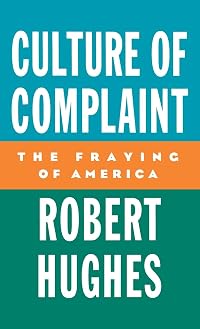
This book is a call for the re-knitting of a fragmented and over-tribalized America--a deeply passionate book, filled with barbed wit and devastating takes on public life, both left and right of center. To the right, the author fires broadsides at the populist demagogy of Pat Buchanan, Pat Robertson, Jesse Helms and especially Ronald Reagan. To the left, he skewers political correctness, Afro-centrism, and academic obsessions with theory. PC censoriousness and "family-values" rhetoric, he show more argues, are only two sides of the same character, extrusions of America's puritan heritage into the present--and, at root, signs of America's difficulty in seeing past the end of the Us-versus-Them mentality implanted by four decades of the Cold War. This book is fired by a deep concern, but it is not a relentless diatribe. While the author lambastes some aspects of American politics and denounces political correctness, he offers a heartfelt defense of non-ideological multiculturalism as an antidote to Americans' difficulty in imagining the rest of the world--and other Americans. show lessTags
Recommendations



















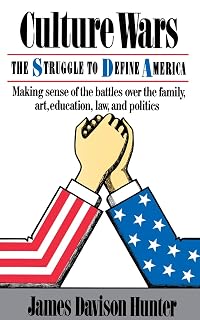
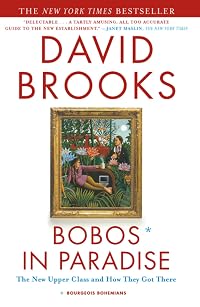



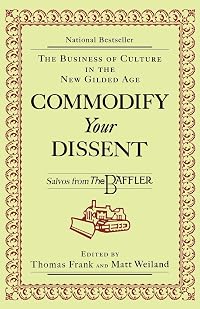





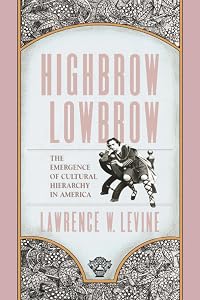

Member Reviews
Robert Hughes The Culture of Complaint
Thoughts 20 years after publication
Hughes' assumption that because we worshipped readily in the past we are always seeking to worship something – supported by a quote from Auden - is a paradigm I do not accept. Even when worshipping gods the 'mystery' in religion was a strong force and just because people want to believe in mysteries now now does not mean they worship them. The conspiracy theories we see everywhere are the banal ravings of people who have no political power and have not learned that this not the only or the strongest, power available to individuals.
He states at the outset he is not a citizen of the USA. That and his age make it useful to him to comment upon American culture as he show more has one foot in history. He then denigrates modern society, its loss of focus on anything much but victim-hood as an excuse never to take blame for one's own actions. To this we can quote Tacitus Histories, 'and how should it be otherwise, if the father ceases to give a laudable example?' (Book 2 chapter 4, paragraph 52. Trans Arthur Murphy) Throughout his book I did have problems wondering if anything he said was new or different from what commentators upon society have said for two thousand years.
He is right though that political correctness in its attempts to change language without changing education and therefore the foundations where ignorance grows, has done nothing but create a mass of new euphemisms. Words do matter, they will hurt, but it is ignorance that kills.
His important, unspoken, critique of American politics is true of all politics in democratic society; there will always be an element of fascism in any and all laws and mores.
On the other hand seeing multiculturalism as a new form of communism because it seeks to bring everyone under one umbrella society goes too far because acceptance in order to stem bigotry and ignorance, is not the same as demanding conformity.
Andrew Riemer's quote on 'cultural nationalism' is where these lectures really begin because multiculturalism is not a call for nations to be inclusive but a challenge to live in the world as we have colonised it. He is right that revisiting history has destroyed many national myths – and rightly so.
Yet his argument that everything in America devolves into the kitsch is ultimately searing. That museums and art galleries are locked into funding rounds that nod towards public morality. That Modernism is, in fact, a euphemism for 'publicly funded' (my deduction not his).
He claims there is a war for culture. That political prestige from cultural good works is mixed with the vision of public morality within the governments of States. Art, he says, is another therapy in a therapy culture.
His final comments, on how awed American were when they toured Europe in the 1850s goes to the heart of of his critique of the avant guarde in the USA. America has not produced an artist on a par with the best in Europe. Maybe she hasn't had the time. Maybe she hasn't had enough wars on her soil to get the grit into the consciousness of artists that makes the pearls. Or maybe she doesn't want them.
The point of Hughes' lectures is to inspire debate. He makes many good points. He may be angry but his anger has its own strength of character. He isn't looking to define art or aesthetics but he does demand that no one's narrow minded political opinion rule a whole country. show less
Thoughts 20 years after publication
Hughes' assumption that because we worshipped readily in the past we are always seeking to worship something – supported by a quote from Auden - is a paradigm I do not accept. Even when worshipping gods the 'mystery' in religion was a strong force and just because people want to believe in mysteries now now does not mean they worship them. The conspiracy theories we see everywhere are the banal ravings of people who have no political power and have not learned that this not the only or the strongest, power available to individuals.
He states at the outset he is not a citizen of the USA. That and his age make it useful to him to comment upon American culture as he show more has one foot in history. He then denigrates modern society, its loss of focus on anything much but victim-hood as an excuse never to take blame for one's own actions. To this we can quote Tacitus Histories, 'and how should it be otherwise, if the father ceases to give a laudable example?' (Book 2 chapter 4, paragraph 52. Trans Arthur Murphy) Throughout his book I did have problems wondering if anything he said was new or different from what commentators upon society have said for two thousand years.
He is right though that political correctness in its attempts to change language without changing education and therefore the foundations where ignorance grows, has done nothing but create a mass of new euphemisms. Words do matter, they will hurt, but it is ignorance that kills.
His important, unspoken, critique of American politics is true of all politics in democratic society; there will always be an element of fascism in any and all laws and mores.
On the other hand seeing multiculturalism as a new form of communism because it seeks to bring everyone under one umbrella society goes too far because acceptance in order to stem bigotry and ignorance, is not the same as demanding conformity.
Andrew Riemer's quote on 'cultural nationalism' is where these lectures really begin because multiculturalism is not a call for nations to be inclusive but a challenge to live in the world as we have colonised it. He is right that revisiting history has destroyed many national myths – and rightly so.
Yet his argument that everything in America devolves into the kitsch is ultimately searing. That museums and art galleries are locked into funding rounds that nod towards public morality. That Modernism is, in fact, a euphemism for 'publicly funded' (my deduction not his).
He claims there is a war for culture. That political prestige from cultural good works is mixed with the vision of public morality within the governments of States. Art, he says, is another therapy in a therapy culture.
His final comments, on how awed American were when they toured Europe in the 1850s goes to the heart of of his critique of the avant guarde in the USA. America has not produced an artist on a par with the best in Europe. Maybe she hasn't had the time. Maybe she hasn't had enough wars on her soil to get the grit into the consciousness of artists that makes the pearls. Or maybe she doesn't want them.
The point of Hughes' lectures is to inspire debate. He makes many good points. He may be angry but his anger has its own strength of character. He isn't looking to define art or aesthetics but he does demand that no one's narrow minded political opinion rule a whole country. show less
I read this when it was first published some 30 years ago and was disturbed by it then. It's basically a history of the unraveling of American political discourse by an Australian art critic, with screeds on overreach aimed both left and right. And correctly so. While he gets the history of our polarization right, he misses the velocity at which it's accelerating. Campaigns no longer send faxes or mailers, they post and text. And the cesspool is getting deeper faster. Interesting that even in 1993 he manages a sideswipe at Trump the real estate developer - if the author was still living and put out a new edition today it would probably self-combust.
Robert Hughes The Culture of Complaint
Thoughts 20 years after publication
Hughes' assumption that because we worshipped readily in the past we are always seeking to worship something – supported by a quote from Auden - is a paradigm I do not accept. Even when worshipping gods the 'mystery' in religion was a strong force and just because people want to believe in mysteries now now does not mean they worship them. The conspiracy theories we see everywhere are the banal ravings of people who have no political power and have not learned that this not the only or the strongest, power available to individuals.
He states at the outset he is not a citizen of the USA. That and his age make it useful to him to comment upon American culture as he show more has one foot in history. He then denigrates modern society, its loss of focus on anything much but victim-hood as an excuse never to take blame for one's own actions. To this we can quote Tacitus Histories, 'and how should it be otherwise, if the father ceases to give a laudable example?' (Book 2 chapter 4, paragraph 52. Trans Arthur Murphy) Throughout his book I did have problems wondering if anything he said was new or different from what commentators upon society have said for two thousand years.
He is right though that political correctness in its attempts to change language without changing education and therefore the foundations where ignorance grows, has done nothing but create a mass of new euphemisms. Words do matter, they will hurt, but it is ignorance that kills.
His important, unspoken, critique of American politics is true of all politics in democratic society; there will always be an element of fascism in any and all laws and mores.
On the other hand seeing multiculturalism as a new form of communism because it seeks to bring everyone under one umbrella society goes too far because acceptance in order to stem bigotry and ignorance, is not the same as demanding conformity.
Andrew Riemer's quote on 'cultural nationalism' is where these lectures really begin because multiculturalism is not a call for nations to be inclusive but a challenge to live in the world as we have colonised it. He is right that revisiting history has destroyed many national myths – and rightly so.
Yet his argument that everything in America devolves into the kitsch is ultimately searing. That museums and art galleries are locked into funding rounds that nod towards public morality. That Modernism is, in fact, a euphemism for 'publicly funded' (my deduction not his).
He claims there is a war for culture. That political prestige from cultural good works is mixed with the vision of public morality within the governments of States. Art, he says, is another therapy in a therapy culture.
His final comments, on how awed American were when they toured Europe in the 1850s goes to the heart of of his critique of the avant guarde in the USA. America has not produced an artist on a par with the best in Europe. Maybe she hasn't had the time. Maybe she hasn't had enough wars on her soil to get the grit into the consciousness of artists that makes the pearls. Or maybe she doesn't want them.
The point of Hughes' lectures is to inspire debate. He makes many good points. He may be angry but his anger has its own strength of character. He isn't looking to define art or aesthetics but he does demand that no one's narrow minded political opinion rule a whole country. show less
Thoughts 20 years after publication
Hughes' assumption that because we worshipped readily in the past we are always seeking to worship something – supported by a quote from Auden - is a paradigm I do not accept. Even when worshipping gods the 'mystery' in religion was a strong force and just because people want to believe in mysteries now now does not mean they worship them. The conspiracy theories we see everywhere are the banal ravings of people who have no political power and have not learned that this not the only or the strongest, power available to individuals.
He states at the outset he is not a citizen of the USA. That and his age make it useful to him to comment upon American culture as he show more has one foot in history. He then denigrates modern society, its loss of focus on anything much but victim-hood as an excuse never to take blame for one's own actions. To this we can quote Tacitus Histories, 'and how should it be otherwise, if the father ceases to give a laudable example?' (Book 2 chapter 4, paragraph 52. Trans Arthur Murphy) Throughout his book I did have problems wondering if anything he said was new or different from what commentators upon society have said for two thousand years.
He is right though that political correctness in its attempts to change language without changing education and therefore the foundations where ignorance grows, has done nothing but create a mass of new euphemisms. Words do matter, they will hurt, but it is ignorance that kills.
His important, unspoken, critique of American politics is true of all politics in democratic society; there will always be an element of fascism in any and all laws and mores.
On the other hand seeing multiculturalism as a new form of communism because it seeks to bring everyone under one umbrella society goes too far because acceptance in order to stem bigotry and ignorance, is not the same as demanding conformity.
Andrew Riemer's quote on 'cultural nationalism' is where these lectures really begin because multiculturalism is not a call for nations to be inclusive but a challenge to live in the world as we have colonised it. He is right that revisiting history has destroyed many national myths – and rightly so.
Yet his argument that everything in America devolves into the kitsch is ultimately searing. That museums and art galleries are locked into funding rounds that nod towards public morality. That Modernism is, in fact, a euphemism for 'publicly funded' (my deduction not his).
He claims there is a war for culture. That political prestige from cultural good works is mixed with the vision of public morality within the governments of States. Art, he says, is another therapy in a therapy culture.
His final comments, on how awed American were when they toured Europe in the 1850s goes to the heart of of his critique of the avant guarde in the USA. America has not produced an artist on a par with the best in Europe. Maybe she hasn't had the time. Maybe she hasn't had enough wars on her soil to get the grit into the consciousness of artists that makes the pearls. Or maybe she doesn't want them.
The point of Hughes' lectures is to inspire debate. He makes many good points. He may be angry but his anger has its own strength of character. He isn't looking to define art or aesthetics but he does demand that no one's narrow minded political opinion rule a whole country. show less
Henry Louis Gates, Jr. reviewed Robert Hughes' (author of Fatal Shore) new book, The Culture of Complaint in the April 19, 1993 issue of The New Yorker. Hughes takes aim at both the Right and the Left who are both involved with politicizing culture: "If someone agrees with us on the aims and uses of culture, we think him objective; if not, we accuse him of politicizing the debate. In fact, political agendas are everywhere and the American conservatives' ritual claim that their own cultural or scholarly positions are apolitical is patently untrue."
But Hughes has little time for the "hoary Victorian notions" about how art and literature can be uplifting. For example, the most universally recognized painting of the century, "Guernica" had show more no effect whatsoever on the conduct of the Spanish Civil War nor on Franco in particular. (One could even speculate that watching the Brady Bunch might have been more formative socially to larger numbers of people given the pervasiveness of visual media.)
"Joe Sixpack isn't looking at the virtuous feminist knockoffs of John Heartfield on the Whitney wall -- he's got a Playmate taped on the sheetrock next to the band saw, and all the Barbara Krugers in the world aren't going to get him to mend his ways."
Hughes does worry about the fragmentation of American life; the "us" vs. "them" rhetoric that "John Mitchell called 'positive Polarization.'" We are in deep trouble when "'sensitivity' gets more attention than social justice. Behind our propensity for offering lexical redress to political grievances, [Robert Hughes] suspects, is the hope of creating 'a sort of linguistic Lourdes, where evil and misfortune are dispelled by a dip in the waters of euphemism.'"
Ironically, he suggests the cry from the right that Afrocentrism is a political movement is backwards. "The trick of Afrocentrism is to have supplanted real politics with a kind of group therapy. It seeks to redress the problem of poor self-esteem [borrowing language from the ubiquitous self-therapeutic movement] rather than the problem of poor life chances....Afrocentric education is presented [by its proponents] as a technique of social control, one that will contain what white America fears most -- black violence --...culture as therapy....self-love makes the world go round." The problem, of course, is that self-esteem is not just difficult to measure; it doesn't correlate with the behavior it's supposed to support. As sociologist Neil Smelser reported in a 1989 survey "The associations between self-esteem and its expected consequences are mixed, insignificant, or absent...even less can be said for the causal relationship between the two."
Hughes is a proponent of multiculturalism. "...monoculture works poorly. It exhausts the soil. The social richness of America ... comes from the diversity of its tribes. Its capacity for cohesion, for some spirit of common agreement on what is to be done, comes from the willingness of those tribes not to elevate their differences into impassable barriers and ramparts."
The reviewer suggests that "diversity" is something of a "distraction from the more serious issues of racial immiseration [you won't find this in your little Webster's, at least I didn't -- It means a state of making miserable, great word] and economic inequality." Gates contends that the ubiquitous media or "Coca[cola]-culturalism is far more significant for the destruction of diversity -- that in Nepal ancient Hindu religious practices have been disrupted by the BBC World Service and Michael Jackson more than indigenous social fragmentation and the same thing has happened in the United States -- a kind of corporate culturalism -- which will destroy the individuality of diverse cultures. show less
But Hughes has little time for the "hoary Victorian notions" about how art and literature can be uplifting. For example, the most universally recognized painting of the century, "Guernica" had show more no effect whatsoever on the conduct of the Spanish Civil War nor on Franco in particular. (One could even speculate that watching the Brady Bunch might have been more formative socially to larger numbers of people given the pervasiveness of visual media.)
"Joe Sixpack isn't looking at the virtuous feminist knockoffs of John Heartfield on the Whitney wall -- he's got a Playmate taped on the sheetrock next to the band saw, and all the Barbara Krugers in the world aren't going to get him to mend his ways."
Hughes does worry about the fragmentation of American life; the "us" vs. "them" rhetoric that "John Mitchell called 'positive Polarization.'" We are in deep trouble when "'sensitivity' gets more attention than social justice. Behind our propensity for offering lexical redress to political grievances, [Robert Hughes] suspects, is the hope of creating 'a sort of linguistic Lourdes, where evil and misfortune are dispelled by a dip in the waters of euphemism.'"
Ironically, he suggests the cry from the right that Afrocentrism is a political movement is backwards. "The trick of Afrocentrism is to have supplanted real politics with a kind of group therapy. It seeks to redress the problem of poor self-esteem [borrowing language from the ubiquitous self-therapeutic movement] rather than the problem of poor life chances....Afrocentric education is presented [by its proponents] as a technique of social control, one that will contain what white America fears most -- black violence --...culture as therapy....self-love makes the world go round." The problem, of course, is that self-esteem is not just difficult to measure; it doesn't correlate with the behavior it's supposed to support. As sociologist Neil Smelser reported in a 1989 survey "The associations between self-esteem and its expected consequences are mixed, insignificant, or absent...even less can be said for the causal relationship between the two."
Hughes is a proponent of multiculturalism. "...monoculture works poorly. It exhausts the soil. The social richness of America ... comes from the diversity of its tribes. Its capacity for cohesion, for some spirit of common agreement on what is to be done, comes from the willingness of those tribes not to elevate their differences into impassable barriers and ramparts."
The reviewer suggests that "diversity" is something of a "distraction from the more serious issues of racial immiseration [you won't find this in your little Webster's, at least I didn't -- It means a state of making miserable, great word] and economic inequality." Gates contends that the ubiquitous media or "Coca[cola]-culturalism is far more significant for the destruction of diversity -- that in Nepal ancient Hindu religious practices have been disrupted by the BBC World Service and Michael Jackson more than indigenous social fragmentation and the same thing has happened in the United States -- a kind of corporate culturalism -- which will destroy the individuality of diverse cultures. show less
Ratings
Members
- Recently Added By
Lists

Fake Top 100 Nonfiction
79 works; 3 members

A Good Read (Radio 4)
221 works; 1 member
Author Information

53+ Works 11,271 Members
Robert Hughes was born in Sydney, Australia on July 28, 1938. He studied art and architecture at the University of Sydney. He pursued art criticism mostly as a sideline while painting, writing poetry and serving as a cartoonist for the weekly intellectual journal The Observer. He left Australia and spent time in Italy before settling in London, show more where he became a well-known critical voice and wrote for several newspapers. He was chief art critic for Time magazine for over 30 years. He wrote several books including The Fatal Shore, American Visions: The Epic History of Art in America, Culture of Complaint: The Fraying of America, Things I Didn't Know, and Rome. He also hosted an eight-part documentary about the development of modernism from the Impressionists through Warhol entitled The Shock of the New. It was seen by more than 25 million viewers when it ran first on BBC and then on PBS. He also wrote a book by the same name about the series. He died after a long illness on August 6, 2012 at the age of 74. (Bowker Author Biography) show less
Awards and Honors
Distinctions
Series

Belongs to Publisher Series
Harvill (175)
Common Knowledge
- Canonical title
- Culture of Complaint: The Fraying of America
- Original title
- Culture of Complaint: The Fraying of America
- Original publication date
- 1993
- Important places
- USA
- Dedication
- For Elizabeth Sifton
- First words
- This book grows out of a series of lectures I was invited to give under the auspices of Oxford University Press and the New York Public Library at the Library in January 1992.
- Last words
- (Click to show. Warning: May contain spoilers.)Only if it resists both can the museum continue with its task of helping us discover a great but always partially lost civilization: our own.
- Original language
- English
Classifications
Statistics
- Members
- 736
- Popularity
- 38,344
- Reviews
- 4
- Rating
- (3.85)
- Languages
- 7 — Dutch, English, French, German, Italian, Portuguese, Spanish
- Media
- Paper, Ebook
- ISBNs
- 13
- ASINs
- 6