
Imperial Woman
by Pearl S. Buck
On This Page
Description
The story of Tzu Hsi is the story of the last Empress in China. In this audio book, Pearl S. Buck recreates the life of one of the most intriguing rules during a time of intense turbulence. Tzu Hsi was born into one of the lowly ranks of the Imperial dynasty. According to custom, she moved to the Forbidden City at the age of seventeen to become one of hundreds of concubines. But her singular beauty and powers of manipulation quickly moved her into the position of Second Consort. Tzu Hsi was show more feared and hated by many in the court, but adored by the people. The Empresss rise to power (even during her husbands life) parallels the story of Chinas transition from the ancient to the modern way. Pearl S. Bucks knowledge of and fascination with the Empresss life are contagious. She reveals the essence of this self-involved and infamous last Empress, at the same time she takes the listener through Chinas struggle for freedom and democracy. show lessTags
Recommendations









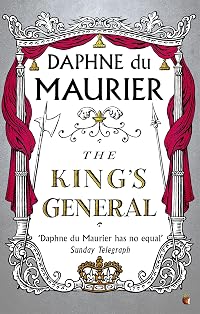
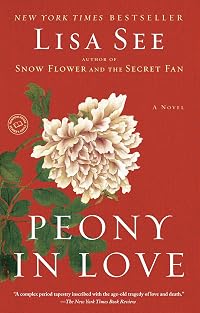
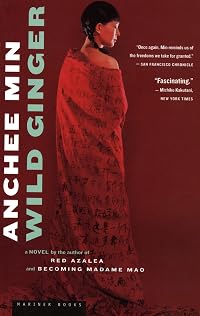


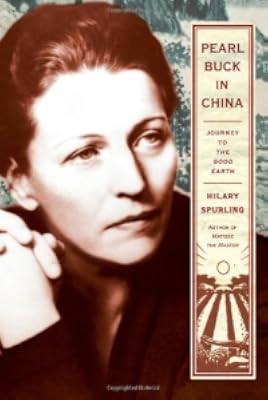




Member Recommendations
infiniteletters Female power and the harem
Member Reviews
I was somewhat surprised at how quickly and completely I became immersed in this fictionalized rendering of the life of a real Chinese Empress, variously known as Noble Consort Yi, Dowager Empress Cixi, and Dowager Empress Tzu Hsi. Tzu Hsi began her life at Court as one of many concubines of the Xianfeng Emperor, a young dissolute ruler whose vices were already diminishing his health and power. Determined from the start to rise through the ranks and become important in her own right, Tzu Hsi soon found favor with the Emperor, and ultimately cemented her position by giving birth to his only son. She spent her down time reading and studying, and observing closely the intrigues of life among concubines, eunuchs, Princes and politicians. show more She became the power behind the throne for the Xianfeng Emperor, later for her son, and finally for the nephew she elevated to the Dragon Throne upon the death of her son. Not one of these three had the wits or will to oppose her. For over 45 years, the Dowager Empress reigned from "behind the curtain", guiding her country through famines, wars and rebel uprisings, striving to maintain the glory of the Empire, and to keep Western influence at bay. Eventually, however, she was instrumental in easing China forward into the 20th century by encouraging education, eliminating some of the more brutal practices of the past (foot-binding, death by "slicing", and other atrocities) and allowing some modernization.
Buck has us believe that the child Tzu Hsi bore was actually fathered by her kinsman, an Imperial Guard she had been betrothed to before being chosen for the Emperor's harem, a man who served as an advisor to her throughout her long reign. I have not seen the existence of such a person suggested in historical accounts, which do mention contemporary suspicions that the Dowager Empress poisoned either her son, her nephew, or both. Buck does not include those allegations in her version.
I really enjoyed getting lost in this story; it took me back to the days when every book I picked up was a treat, I couldn't tell the good ones from the bad ones and didn't care, and the world between the covers was a magical unfamiliar place I could happily explore for hours. I'm going to give Pearl Buck a chance to do that for me again.
June 2019 show less
Buck has us believe that the child Tzu Hsi bore was actually fathered by her kinsman, an Imperial Guard she had been betrothed to before being chosen for the Emperor's harem, a man who served as an advisor to her throughout her long reign. I have not seen the existence of such a person suggested in historical accounts, which do mention contemporary suspicions that the Dowager Empress poisoned either her son, her nephew, or both. Buck does not include those allegations in her version.
I really enjoyed getting lost in this story; it took me back to the days when every book I picked up was a treat, I couldn't tell the good ones from the bad ones and didn't care, and the world between the covers was a magical unfamiliar place I could happily explore for hours. I'm going to give Pearl Buck a chance to do that for me again.
June 2019 show less
As a work of historical fiction, Imperial Woman follows the political history, as well as the gossipy side of that history, pretty well. And as is usually the case with Buck's fiction, her storytelling skills immediately bring the reader into the novel. For what is the fourth or fifth time, I began reading a Buck novel with only the intent to look at the first few pages and quickly found myself some ninety pages in.
I am not sure about Buck's accuracy in detailing actual Chinese beliefs and cultural attitudes--she often seems to read her own values into theirs, whether they be Chinese peasants or aristocrats. But Buck does manage to pull off quite a feat in making Western readers side almost entirely with the Chinese view of Western show more inroads into China. More than that, Buck can cock a snook better than anyone when criticizing Western missionaries, ambassadors, their wives, and merchants.
Against this grand context of China versus the West during the last half of the nineteenth century, there is also the personal story of the Empress Tzu Hsi (Cixi). Quite a story it is, of a concubine who works her way to the throne and ultimate power, dispensing with three emperors along the way and a host of princes, generals, retainers, and imperial eunuchs. Always a reactionary, Tzu Hsi nevertheless generates sympathy all the while. And even when Buck ends the novel, the reader finds Tzu Hsi plotting to control yet a fourth emperor, the boy emperor Puyi. Then, Buck chooses to close her book before that equally tragic tale can begin in full--which would come on the very deathbed of Tzu Hsi. show less
I am not sure about Buck's accuracy in detailing actual Chinese beliefs and cultural attitudes--she often seems to read her own values into theirs, whether they be Chinese peasants or aristocrats. But Buck does manage to pull off quite a feat in making Western readers side almost entirely with the Chinese view of Western show more inroads into China. More than that, Buck can cock a snook better than anyone when criticizing Western missionaries, ambassadors, their wives, and merchants.
Against this grand context of China versus the West during the last half of the nineteenth century, there is also the personal story of the Empress Tzu Hsi (Cixi). Quite a story it is, of a concubine who works her way to the throne and ultimate power, dispensing with three emperors along the way and a host of princes, generals, retainers, and imperial eunuchs. Always a reactionary, Tzu Hsi nevertheless generates sympathy all the while. And even when Buck ends the novel, the reader finds Tzu Hsi plotting to control yet a fourth emperor, the boy emperor Puyi. Then, Buck chooses to close her book before that equally tragic tale can begin in full--which would come on the very deathbed of Tzu Hsi. show less
Before I attempt to say anything about this novel, I simply wish to note that I do not in any way award these five stars out of some misguided sentiment that this book accurately portrays China and all its entailing history as its own cultural members would. The most concrete experience I have with the country is having been taught the Chinese phrases for 'left turn', 'right turn', and 'straight ahead' during a road trip many years ago, and I assure you, neither my intercultural credibility nor my accent has improved since then. What I do award these five stars for is the wonderful piece of work that Buck created, a fictional recounting of the life of the last Empress of China.
It wasn't too long ago that I read [book:Memoirs of show more Hadrian|12172], another novel concerned with the fictional portrayal of a historical personage who ruled for much of their life over a vast and complex culture. Both that novel and this required my reader self to step back a moment from their usual outpost of critiquing from the realms of factual accuracy and moral codes, and instead plunge headfirst into the lives of these individuals, both of whom entire empires held in reverence. Within this respective novel, the girl Orchid, the imperial concubine Yehonala, the Empress Mother Tzu Hsi, and the venerable Old Buddha play out their shared life within the bodily confines of a single woman. A woman who grew from one of millions to be one of the chosen hundreds to finally the one venerated above all others, who stayed that way through thriving peace and cultural upheaval until the end of her days. A woman who never needed full approval from neither her kinsman nor the reader, but simply a willingness to follow her. And follow her I did.
The ease with which I immersed myself in this fictionalized biography of a foreign land is a credit to Buck and her lovingly thorough storytelling. For the difficulty with historical fiction, a difficulty that only increases when the fiction chooses to follow a single personage of notable fame, is the ever present competition between the enraptured gaze of the reader and the desire to fact check. What worsens the latter distraction even more so is when the cultural setting is completely foreign and, as noted previously, tempts the reader to view the book penned by an outsider as a true glimpse of the inside. And with the feeling of reading truth, comes the ease of subsequent judgment and all too frequent condemnation.
Thus, I could have tired of Buck's page after page of detailing the life of this young Manchu girl who grew to become the Empress of China, the traditional values, the cultural artifacts, the countless court proceedings that meandered as slowly as was needed to recount the days with full insight into the visual splendor and historical significance. I could have become frustrated with the Empress herself, achieving such power and all the self righteous confidence that often accompanies it, adhering to standards of living that seem so strange in comparison to my own. I could have turned the final page with a feeling that my time would have been better spent with an accredited biography, or even a book written by an actual denizen of that far off mainland.
But I didn't. I watched this Empress grow from the impetuous courage of youth to the venerable wisdom of old age, and I rooted her on in every page. I delighted in the beauty of both the aesthetic and the erudite contained within the walls of the Forbidden City, as well as the sheer wealth of this culture that despite my long familiarity with I in truth know so little about. I watched as the future took its horrific toll on the heartfelt desire to maintain the value of the past, and mourned the tragedy of one world power colliding with another in an overwhelming miasma of violent misunderstanding. From this fictional seat in the so called East, I watched as the West and its drastically different histories flung itself upon these shores so foreign to its inherent sociocultural natures. From the mind of an Empress, I understood the disparity between the power a ruler has, and what is truly required of them in order to successfully rule.
In short, while the setting was foreign and the facts perhaps not in full adherence, the story was a human one, something I can recognize in any form. I felt for this Empress and the country she cherished in her own brilliant and steadfast ways, and perhaps even learned a few things about an ancient world that exists alongside my own to this day. And when it comes to the realm of historical fiction, that's all that I ask for. show less
It wasn't too long ago that I read [book:Memoirs of show more Hadrian|12172], another novel concerned with the fictional portrayal of a historical personage who ruled for much of their life over a vast and complex culture. Both that novel and this required my reader self to step back a moment from their usual outpost of critiquing from the realms of factual accuracy and moral codes, and instead plunge headfirst into the lives of these individuals, both of whom entire empires held in reverence. Within this respective novel, the girl Orchid, the imperial concubine Yehonala, the Empress Mother Tzu Hsi, and the venerable Old Buddha play out their shared life within the bodily confines of a single woman. A woman who grew from one of millions to be one of the chosen hundreds to finally the one venerated above all others, who stayed that way through thriving peace and cultural upheaval until the end of her days. A woman who never needed full approval from neither her kinsman nor the reader, but simply a willingness to follow her. And follow her I did.
The ease with which I immersed myself in this fictionalized biography of a foreign land is a credit to Buck and her lovingly thorough storytelling. For the difficulty with historical fiction, a difficulty that only increases when the fiction chooses to follow a single personage of notable fame, is the ever present competition between the enraptured gaze of the reader and the desire to fact check. What worsens the latter distraction even more so is when the cultural setting is completely foreign and, as noted previously, tempts the reader to view the book penned by an outsider as a true glimpse of the inside. And with the feeling of reading truth, comes the ease of subsequent judgment and all too frequent condemnation.
Thus, I could have tired of Buck's page after page of detailing the life of this young Manchu girl who grew to become the Empress of China, the traditional values, the cultural artifacts, the countless court proceedings that meandered as slowly as was needed to recount the days with full insight into the visual splendor and historical significance. I could have become frustrated with the Empress herself, achieving such power and all the self righteous confidence that often accompanies it, adhering to standards of living that seem so strange in comparison to my own. I could have turned the final page with a feeling that my time would have been better spent with an accredited biography, or even a book written by an actual denizen of that far off mainland.
But I didn't. I watched this Empress grow from the impetuous courage of youth to the venerable wisdom of old age, and I rooted her on in every page. I delighted in the beauty of both the aesthetic and the erudite contained within the walls of the Forbidden City, as well as the sheer wealth of this culture that despite my long familiarity with I in truth know so little about. I watched as the future took its horrific toll on the heartfelt desire to maintain the value of the past, and mourned the tragedy of one world power colliding with another in an overwhelming miasma of violent misunderstanding. From this fictional seat in the so called East, I watched as the West and its drastically different histories flung itself upon these shores so foreign to its inherent sociocultural natures. From the mind of an Empress, I understood the disparity between the power a ruler has, and what is truly required of them in order to successfully rule.
In short, while the setting was foreign and the facts perhaps not in full adherence, the story was a human one, something I can recognize in any form. I felt for this Empress and the country she cherished in her own brilliant and steadfast ways, and perhaps even learned a few things about an ancient world that exists alongside my own to this day. And when it comes to the realm of historical fiction, that's all that I ask for. show less
'Imperial Woman" is a historical novel about the last Empress of China under the Manchu Dynasty. She was known by many different names: Tzu Hsi, Cixi, The Empress Dowager, and “Old Buddha”. This is a story of her rise to power...from concubine to empress. She was only twenty-five years old when the emperor died and left her to run the entire country of China, which she did with shrewd deliberation and fierce pride. This was no easy task because trouble was brewing everywhere. Muslims in the south threatened to cut off a separate territory to call their own, rebellion raged, and the country was divided. Westerners, through force, demanded rights to trade, preach, and travel freely within Chinese borders. And she was under the show more constant threat of being dethroned by male members of the royal family.
As rule by dynasty was coming to an end in China, the empress watched with horror, powerless to stop the unwanted western influence, incapable of understanding why so many foreign nations were intent on destroying China’s centuries old lifestyle. She preferred isolation for China, steeped in tradition and Chinese cultural values which strongly clashed with the western ideas of Christianity, individualism, and materialism.
During her fifty years of rule Tzu Hsi experienced drastic change in China: floods, famines, the Opium wars and the Boxer Rebellion. Her life included love, drama, intrigue, and murder. She ruled with an iron fist and appeared to be a cold-hearted tyrant. She would go to any lengths to maintain her exalted title of Empress……but she loved her country faithfully and “her people loved her….the peasants and small-town people revered her.” Pearl Buck seems to have made an effort to present Tzu Hsi in the most favorable light, failing to pass judgement on her obsession with material things and her stubborn insistence on maintaining the outdated status quo of the government and cultural conditions. Tzu Hsi made some really bad decisions that cost China dearly in foreign affairs and loss of territories. Only an author personally familiar with life in China in the early twentieth century could possibly have written this story with such ethnic flair and heartfelt emotion, understanding the perspective of all characters: the concubines, eunuchs, the Empress’s friends and enemies, and the general population of China. Pearl Buck did a beautiful job of bringing to life the fairy-tale “rags to riches” story of Tzu Hsi, showing her human side: loneliness, jealousy, fear, anger, love, desire, and her weakness of extravagant adoration of beautiful things. The years covered during the Empress’s reign in "Imperial Woman" are just a small link in the chain of events of Chinese history, but an important period of time as these tumultuous years represent the calm before the storm of the coming revolution. show less
As rule by dynasty was coming to an end in China, the empress watched with horror, powerless to stop the unwanted western influence, incapable of understanding why so many foreign nations were intent on destroying China’s centuries old lifestyle. She preferred isolation for China, steeped in tradition and Chinese cultural values which strongly clashed with the western ideas of Christianity, individualism, and materialism.
During her fifty years of rule Tzu Hsi experienced drastic change in China: floods, famines, the Opium wars and the Boxer Rebellion. Her life included love, drama, intrigue, and murder. She ruled with an iron fist and appeared to be a cold-hearted tyrant. She would go to any lengths to maintain her exalted title of Empress……but she loved her country faithfully and “her people loved her….the peasants and small-town people revered her.” Pearl Buck seems to have made an effort to present Tzu Hsi in the most favorable light, failing to pass judgement on her obsession with material things and her stubborn insistence on maintaining the outdated status quo of the government and cultural conditions. Tzu Hsi made some really bad decisions that cost China dearly in foreign affairs and loss of territories. Only an author personally familiar with life in China in the early twentieth century could possibly have written this story with such ethnic flair and heartfelt emotion, understanding the perspective of all characters: the concubines, eunuchs, the Empress’s friends and enemies, and the general population of China. Pearl Buck did a beautiful job of bringing to life the fairy-tale “rags to riches” story of Tzu Hsi, showing her human side: loneliness, jealousy, fear, anger, love, desire, and her weakness of extravagant adoration of beautiful things. The years covered during the Empress’s reign in "Imperial Woman" are just a small link in the chain of events of Chinese history, but an important period of time as these tumultuous years represent the calm before the storm of the coming revolution. show less
It just doesn't get any better than Pearl Buck writing about the orient. This was a more historical story than most of hers, well researched for the time, about Empress (Dragon Queen) Cixi, the last Empress of China. The empress had charisma, shrewdness, and a sadistic streak; although when she loved it was deeply. A lot of court intrigue, fashion, and drama. Really liked this one! 376 pages
This story is set as a biography of Yehonala/Yehenara/Tzu Hsi/Empress Dowager Cixi, and was overall a good read. But as a novel only, mind you.
The details of Tzu Hsi's life (especially her early life) are largely unknown, and many people smeared her good name (like Edmund Backhouse), so this novel is meant to be just that - a novel, because in this story, Yehenara has an affair - one of the many Backhouse spread, though Pearl Buck's portrayal of Cixi is much, MUCH kinder even with the affair (and a few other things later on in the story) This was written in an era where Edmund Backhouse's filthy (and later revealed to be false) stories of Yehenara were still widely believed (and used as a source!) It should not be read as an actual show more biography of Tzu Hsi's life, though I still recommend this book as a good read/novel. If you enjoyed Ms. Buck's other works, you will definitely enjoy this. show less
The details of Tzu Hsi's life (especially her early life) are largely unknown, and many people smeared her good name (like Edmund Backhouse), so this novel is meant to be just that - a novel, because in this story, Yehenara has an affair - one of the many Backhouse spread, though Pearl Buck's portrayal of Cixi is much, MUCH kinder even with the affair (and a few other things later on in the story) This was written in an era where Edmund Backhouse's filthy (and later revealed to be false) stories of Yehenara were still widely believed (and used as a source!) It should not be read as an actual show more biography of Tzu Hsi's life, though I still recommend this book as a good read/novel. If you enjoyed Ms. Buck's other works, you will definitely enjoy this. show less
This is a biographical novel based on the life of Empress Tzu Hsi (Sacred Mother), the most powerful figure in late 19th century China and the real power behind the throne during the reigns of two of the last three weak Emperors in China. She was originally chosen as one of many concubines to the young Emperor Hsien Feng. Her position confirmed when she gave birth to a healthy male heir, she then became Regent to her son when Hsien Feng died aged 30 ("For ten years of her young womanhood she must rule in her son’s place. And what was her realm? A country vaster than she could guess, a nation older than history, a people whose number had never been counted, to whom she was herself an alien"). She ruled over her equally weak nephew when show more her son died at an even younger age. In many ways an arch-conservative, she was unable to stem the tide of other countries' attempts to exploit China economically, and failed to realise the need for her country to compete through developing industry and railways and trading more overseas. As depicted in this novel, she is a compelling figure, clearly dominating the court with a strong sense of what she at least sure as China's imperial and national interest ("a man’s mind in a woman’s body"), dealing with the competing forces of aggressive foreign nations, the Tai Ping rebellion and later the extreme nationalist Boxers. An autocrat of course, but seeing herself as a benevolent one, "she set herself to clean away rebels and reformers from among the Chinese whom she ruled, and to bring the whole people under the power of her own hand and heart again". This novel ends a few years before her death in 1908. The author records in a foreword that "decades after she was dead I came upon villages in the inlands of China where the people thought she still lived and were frightened when they heard she was dead. "Who will care for us now?" they cried". show less
Members
- Recently Added By
Lists

Best Fiction Set in China
43 works; 27 members

1950s
340 works; 22 members
Author Information

440+ Works 37,226 Members
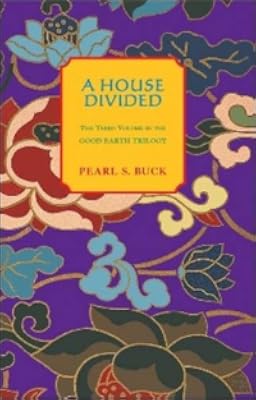
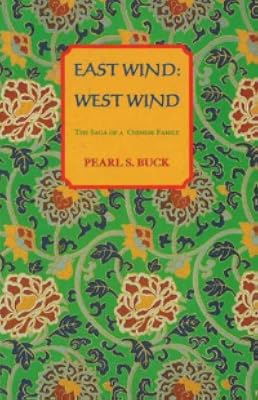
Pearl S. Buck, June 26, 1892 - March 6, 1973 Pearl Sydenstricker Buck was an American author, best know for her novels about China. Buck was born on June 26, 1892, in Hillsboro, West Virginia, but as the daughter of Presbyterian missionaries she was taken to China in infancy. She received her early education in Shanghai, but returned to the United show more States to attend college, and graduated from Randolph-Macon Woman's College in Virginia in 1914. Buck became a university teacher there and married John Lossing Buck, an agricultural economist, in 1917. Buck and her husband both taught in China, and she published magazine articles about life there. Her first novel East Wind, West Wind was published in 1930. Buck achieved international success with The Good Earth, which won the Pulitzer Prize in 1932. This story of a Chinese peasant family's struggle for survival was later made into a MGM film. Buck resigned from the Presbyterian Board of Foreign Missions after publishing an article that was critical of missionaries. She returned to the United States because of political unrest in China. Buck's novels during this period include Sons, A House Divided, and The Mother. She also wrote biographies of her father (Fighting Angel) and her mother (The Exile). She won the Nobel Prize for Literature in 1938. During her career, Buck published over 70 books: novels, nonfiction, story collections, children's books, and translations from the Chinese. She also wrote under the pseudonym John Sedges. In the United States, Buck was active in the civil rights and women's rights movements. In 1942 she founded the East and West Association to promote understanding between Asia and the West. In 1949, Buck established Welcome House, the first international interracial adoption agency. In 1964, she established the Pearl S. Buck foundation to sponsor support for Amerasian children who were not considered adoptable. Pearl Buck died in Danbury, Vermont, on March 6, 1973. (Bowker Author Biography) show less
Some Editions
Awards and Honors
Distinctions
Notable Lists
Series
Belongs to Publisher Series
Zwarte Beertjes (70/71)
Work Relationships
Is contained in
Contains
Is abridged in
Common Knowledge
- Canonical title
- Imperial Woman
- Original title
- Imperial woman
- Original publication date
- 1956
- People/Characters
- Empress Dowager Cixi; Empress Dowager Tzu-Hsi (alternate spelling); Yehonala Tzu-Hsi, Imperial Concubine Yi; Jung Lu; Li Lien-ying; Sakota (show all 7); Lady Mei
- Important places
- Beijing, China; Forbidden City, Beijing, China
- First words
- Foreword: Tzu Hsi, the last ruling Empress of China, was a woman so diverse in her gifts, so contradictory in her behavior, so rich in the many aspects of her personality, that it is difficult to comprehend and convey her wh... (show all)ole self.
It was April in the city of Peking, the fifth month of the solar year of 1852, the third month of the moon year, the two hundred and eighth year of the Manchu, the great Ch'ing dynasty. - Last words
- (Click to show. Warning: May contain spoilers.)"Perhaps," she said, "perhaps--"
Classifications
- Genres
- Fiction and Literature, General Fiction, Historical Fiction
- DDC/MDS
- 813.52 — Literature & rhetoric American literature in English American fiction in English 1900-1999 1900-1945
- LCC
- PS3503 .U198 .I5 — Language and Literature American literature American literature Individual authors 1900-1960
- BISAC
Statistics
- Members
- 1,321
- Popularity
- 18,352
- Reviews
- 26
- Rating
- (4.03)
- Languages
- 13 — Danish, Dutch, English, Finnish, French, German, Indonesian, Italian, Norwegian (Bokmål), Polish, Portuguese, Spanish, Swedish
- Media
- Paper, Audiobook, Ebook
- ISBNs
- 41
- ASINs
- 50