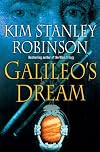
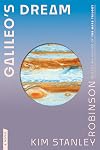
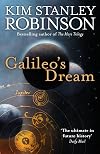
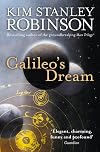
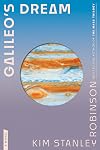
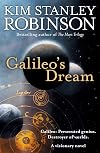
Galileo's Dream
by Kim Stanley Robinson
On This Page
Description
From the summit of their distant future, a charismatic renegade named Ganymede travels to the past to bring Galileo forward in an attempt to alter history and ensure the ascendancy of science over religion. Yet between his brief and jarring visitations to this future, Galileo must struggle against the ignorance and superstition of his own time.Tags
Recommendations
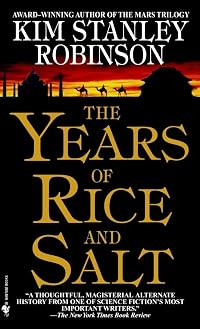
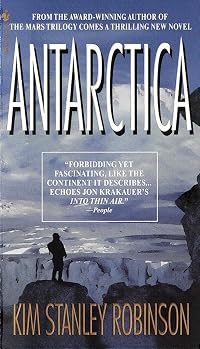











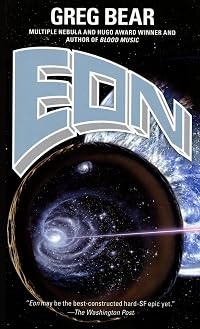

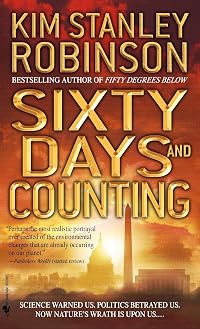
Member Recommendations
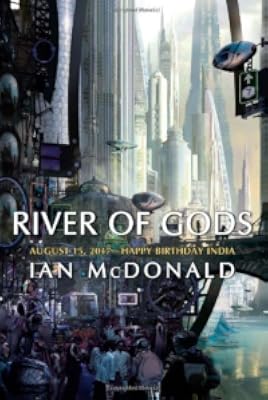
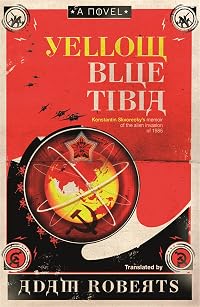
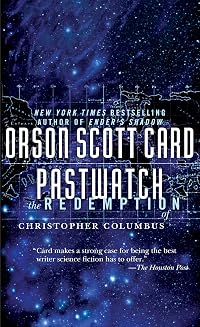
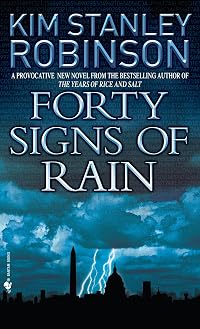
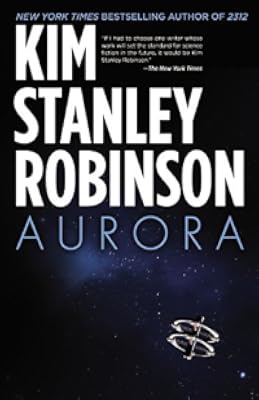
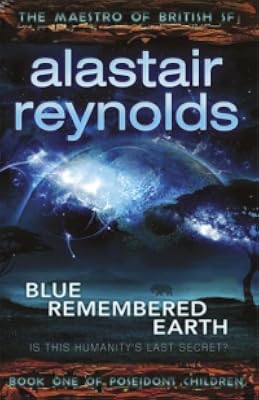
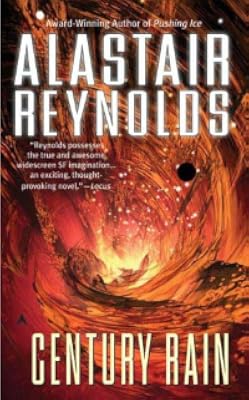
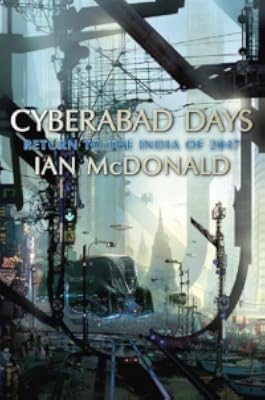
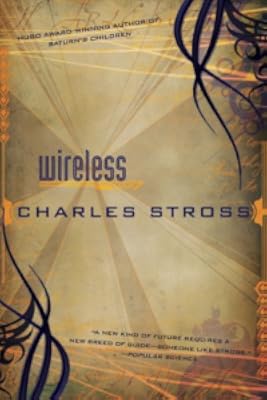
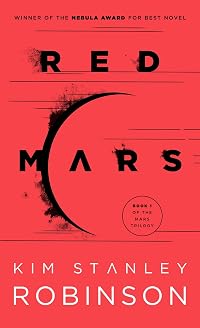
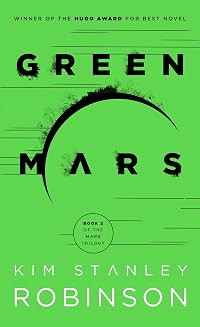
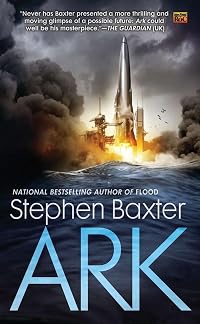
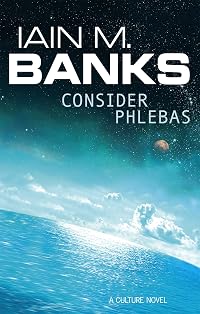
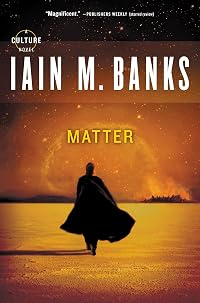
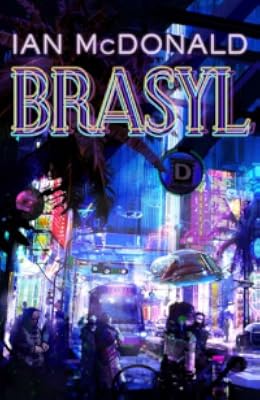
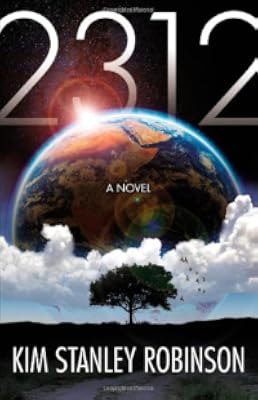
AlanPoulter Each novel speculates on the far future by means of a time-travelling scientist.
Member Reviews
I very much enjoyed this fascinating book, but I think it might have worked better as a straight historical novel, or perhaps just with the time travelers occasionally visiting Galileo. The science fiction sections are much weaker — not nearly as good as I'd expect from Robinson — but fortunately they make up much less than half the book.
I loved the detailed texture of the historical sections, as well as learning about Galileo. Who knew he was such an a--hole? But I suppose that's not uncommon in geniuses. I could have done without the 31st-century portions, except for occasional memorable moments such as when Galileo sees a large group of Carnival revelers wearing Galileo masks.
I loved the detailed texture of the historical sections, as well as learning about Galileo. Who knew he was such an a--hole? But I suppose that's not uncommon in geniuses. I could have done without the 31st-century portions, except for occasional memorable moments such as when Galileo sees a large group of Carnival revelers wearing Galileo masks.
A combination of historical fiction and science fiction. We meet Galileo in Padua and later Florence, already a well-established scientist. He is shown as a somewhat self-centred and damaged character who loves his daughters. This historical fiction is interspersed with time travel trips to the future on the moons of Jupiter, where he meets some enigmatic characters and becomes involved in ethical discussions about lifeforms. The novel takes you through Galileo's trial by the pope and his deteriorating health. This sounds a mash-up but it was always engaging and interesting and despite his faults I felt attached to the Galileo he depicted and felt that Kim Stanley Robinson is too.
This is Kim Stanley Robinson’s love letter to science and mathematics. I loved it!
In many ways, this is perhaps the least typical novel Kim Stanley Robinson has written. It’s certainly the most passionate and overtly philosophical work he’s written.
What struck me first about the book is how reminiscent it is of the unexpected traveler stories so popular in the SF pulp era of the ‘20s and ‘30s. It was refreshing. At the same time, the scientific theory that defines the world in this novel is about as cutting edge as it gets. Of course, much of the book is set in Galileo’s Italy of the first half of the 17th century and explores both the state of science at that time and the conflicts with religion that defined it.
One might show more expect that all these different styles would make the book a giant mess... but it doesn’t.
This isn’t Mr. Robinson’s best work by any means, but in many ways it’s his most personal. In many ways, I think it’s his most powerful. His writing here has immediacy and an intimacy that I never saw in his more famous novels.
If I have one complaint, it’s that the ending feels like it drags out for too long. More than once in the last few chapters, I found myself wishing he’d just wrap it up already. But by the time I got to the true end of the novel, I was glad that Mr. Robinson had taken me there. So I guess that makes it worth it.
What I like best about this novel are two sections beginning about a third of the way into the book where he takes us through a concise history of the development of mathematics and physics, from Archimedes to current 10-dimensional string theory. He explains it all about as well as I've ever seen these issues explained in lay terms. In particular, I appreciate that he freely acknowledges how much of our understanding of the universe is counter-intuitive and apparently contradictory, how little of it makes sense to most people.
I first became interested in cosmology – the Big Bang, quantum mechanics, relativity, etc. – when I was in third grade. I’ve spent my life pondering these ideas, trying to wrap my brain around concepts that are irreducibly counter-intuitive and simply can’t be imagined. As Mr. Robinson quotes Niels Bohr in this novel: “If quantum mechanics hasn't profoundly shocked you, you haven't understood it yet.” This is true of all cosmology. I’ve had a lifetime of learning to be comfortable with the shock of these extraordinary ideas.
I know many people, however, who haven’t been acclimated to these sorts of ideas before, who haven’t learned how to think in such deeply counter-intuitive ways. Trying to explain cutting edge physics to someone new to it is therefore very difficult.
For the foreseeable future, I’m going to use these passages from Galileo’s Dream to do it. It’s simply the best introduction to cosmological theory I’ve read. show less
In many ways, this is perhaps the least typical novel Kim Stanley Robinson has written. It’s certainly the most passionate and overtly philosophical work he’s written.
What struck me first about the book is how reminiscent it is of the unexpected traveler stories so popular in the SF pulp era of the ‘20s and ‘30s. It was refreshing. At the same time, the scientific theory that defines the world in this novel is about as cutting edge as it gets. Of course, much of the book is set in Galileo’s Italy of the first half of the 17th century and explores both the state of science at that time and the conflicts with religion that defined it.
One might show more expect that all these different styles would make the book a giant mess... but it doesn’t.
This isn’t Mr. Robinson’s best work by any means, but in many ways it’s his most personal. In many ways, I think it’s his most powerful. His writing here has immediacy and an intimacy that I never saw in his more famous novels.
If I have one complaint, it’s that the ending feels like it drags out for too long. More than once in the last few chapters, I found myself wishing he’d just wrap it up already. But by the time I got to the true end of the novel, I was glad that Mr. Robinson had taken me there. So I guess that makes it worth it.
What I like best about this novel are two sections beginning about a third of the way into the book where he takes us through a concise history of the development of mathematics and physics, from Archimedes to current 10-dimensional string theory. He explains it all about as well as I've ever seen these issues explained in lay terms. In particular, I appreciate that he freely acknowledges how much of our understanding of the universe is counter-intuitive and apparently contradictory, how little of it makes sense to most people.
I first became interested in cosmology – the Big Bang, quantum mechanics, relativity, etc. – when I was in third grade. I’ve spent my life pondering these ideas, trying to wrap my brain around concepts that are irreducibly counter-intuitive and simply can’t be imagined. As Mr. Robinson quotes Niels Bohr in this novel: “If quantum mechanics hasn't profoundly shocked you, you haven't understood it yet.” This is true of all cosmology. I’ve had a lifetime of learning to be comfortable with the shock of these extraordinary ideas.
I know many people, however, who haven’t been acclimated to these sorts of ideas before, who haven’t learned how to think in such deeply counter-intuitive ways. Trying to explain cutting edge physics to someone new to it is therefore very difficult.
For the foreseeable future, I’m going to use these passages from Galileo’s Dream to do it. It’s simply the best introduction to cosmological theory I’ve read. show less
I wonder if this project started off as an attempt at a straight fictional biography, like [b:Doctor Mirabilis|123671|Doctor Mirabilis|James Blish|http://photo.goodreads.com/books/1290068768s/123671.jpg|962904] which is also about a scientist who falls foul of the Catholic Church? Hard to say, but it stands as a science fiction story in which Galileo is contacted by humans from the distant future who want him to help with a problem they are having on Europa...
So there are two stories, one about Galileo's life from the start of his work on telescopes up to his death and another about dreams of Europa where strange and complicated things are happening and something has been discovered in the ocean...Eventually these two threads intertwine show more and start to affect each other in dramatic ways.
This book really ought to be a failure. Chunks of it are theme and variation on Galileo is debauched, ill, irritable and always short of money - it should get boring but it never quite does. Maybe because the parts where Galileo is doing science or where he is dreaming the future leaven it sufficiently. Maybe because the drama played out over the Copernican world-view is compelling. Maybe because the drama played out near Jupiter is compelling and towards the end an imaginative and descriptive triumph that brought tears to my eyes.
People who have read a fair amount of KSR will know that he has a strong theme of environmental concern running through most of his books. It's back again here but it is mixed with questions about the effect of science and religion on society, whether human nature will evolve, the consequences of war, the compulsive nature of the scientific mind, the beauty of nature and what constitutes life.
A pleasure to read, building steadily to a dramatic climax in Rome and on the moons of Jupiter. show less
So there are two stories, one about Galileo's life from the start of his work on telescopes up to his death and another about dreams of Europa where strange and complicated things are happening and something has been discovered in the ocean...Eventually these two threads intertwine show more and start to affect each other in dramatic ways.
This book really ought to be a failure. Chunks of it are theme and variation on Galileo is debauched, ill, irritable and always short of money - it should get boring but it never quite does. Maybe because the parts where Galileo is doing science or where he is dreaming the future leaven it sufficiently. Maybe because the drama played out over the Copernican world-view is compelling. Maybe because the drama played out near Jupiter is compelling and towards the end an imaginative and descriptive triumph that brought tears to my eyes.
People who have read a fair amount of KSR will know that he has a strong theme of environmental concern running through most of his books. It's back again here but it is mixed with questions about the effect of science and religion on society, whether human nature will evolve, the consequences of war, the compulsive nature of the scientific mind, the beauty of nature and what constitutes life.
A pleasure to read, building steadily to a dramatic climax in Rome and on the moons of Jupiter. show less
Recently, I was sort of following a debate going on in the science fiction community about the lack of optimism in sci fi these days. Honestly, I hadn't noticed that science fiction had been growing more pessimistic, since I tend toward downer books anyway. There is not much hope in your average dystopian or post-apocalyptic story. But it does make a certain amount of sense that science fiction as a whole would be growing more gloomy. Back in the Golden Age of sci fi, when we were just starting to contemplate space exploration and making fantastic technological innovations, the writing reflected the general mood: one of optimism and looking forward to a rosy future, where everyone gets their own jet pack or flying car. But as our show more cultural outlook grew more pessimistic, when we realized the havoc we were wreaking on our environment and the dark side of technology, of course the books got more pessimistic as well.
But I have to admit that Kim Stanley Robinson's novel Galileo's Dream made me feel downright dejected. It pits science in a battle against religion, and science does not win. The projected future for humanity is very bleak indeed.
Galileo's Dream is an intriguing blend of historical fiction and science fiction. It tells the story of Galileo's life from when he developed the telescope -- an idea that was suggested to him by a mysterious stranger -- to his death. When Galileo uses his new telescope to discover Jupiter's four largest moons, the stranger returns and transports him through time and space to one of those moons, 1,000 years in the future. (That's the science fiction part, in case you hadn't guessed.)
While Galileo's life story is interesting, and Robinson pays close attention to the historical details, the scenes on Jupiter's moons made for the most exciting reading. Robinson describes the moons with human settlements -- icy Europa, sulfurous Io, rocky Ganymede -- with loving precision, and the images of Jupiter hanging above them are awe-inspiring. There is also more action in the future scenes, as Galileo is dragged along by two factions fighting over how to deal with the discovery of an alien sentience in the ocean underneath Europa's ice shell, and I wish we had spent more time there.
It is not at first clear why Galileo was brought forward into the future, but it seems that the stranger -- whose name is also Ganymede -- is trying to manipulate Galileo's fate, in an endeavor to alter the course of human history. As the "first scientist," Galileo is a pivotal figure in the development of science and the efforts of religion to suppress scientific discoveries. He was accused of heresy for supporting the Copernican view that the Earth orbits the Sun and brought before the Inquisition. Apparently, Ganymede is trying to ensure that Galileo is burned at the stake for heresy, which will in some way help the cause of science. Human history has been so traumatic that the colonists on Jupiter's moons are suffering a permanent post-traumatic stress disorder as a result. No details are given; we don't even know if the Earth is still habitable in the future. But Galileo's unjust execution would result in more people accepting science and turning away from religion. For me, this story line and the reasoning behind it was somewhat muddled and hard to follow, which is the main fault I can find with this book.
Regardless, it's clear that even with the right outcome, things won't get better for humanity, just less bad. Humanity is so destructive, so doomed, that the horrors we visit upon ourselves can't be avoided entirely. They can just be mitigated. This view felt overwhelmingly pessimistic to me, although I can understand where Robinson is coming from. As an advocate for scientific approaches to mitigating climate change, Robinson must feel let down by the public's refusal to accept the evidence of global warming. Even in the early 21st century, science doesn't get much respect.
Galileo, ironically, is the most optimistic character in the novel, even though his final years weren't all that pleasant. He has no trouble reconciling religion and science, and he can accept the alien consciousness on Europa because he already believes in and respects higher beings. In science and mathematics, Galileo clearly sees the hand of God at work -- in the beauty of the simple ratios that occur naturally again and again. He relishes the act of understanding the natural world as a religious experience. Yet he lives in a brutal, uncertain, superstitious time.
Galileo's Dream is a meaty book that may require more than one reading to fully digest. I haven't even touched on the philosophizing about time and dimensions that goes on, which is all fascinating. But the net effect of reading it was so depressing that I'm not sure I'll go back for seconds. show less
But I have to admit that Kim Stanley Robinson's novel Galileo's Dream made me feel downright dejected. It pits science in a battle against religion, and science does not win. The projected future for humanity is very bleak indeed.
Galileo's Dream is an intriguing blend of historical fiction and science fiction. It tells the story of Galileo's life from when he developed the telescope -- an idea that was suggested to him by a mysterious stranger -- to his death. When Galileo uses his new telescope to discover Jupiter's four largest moons, the stranger returns and transports him through time and space to one of those moons, 1,000 years in the future. (That's the science fiction part, in case you hadn't guessed.)
While Galileo's life story is interesting, and Robinson pays close attention to the historical details, the scenes on Jupiter's moons made for the most exciting reading. Robinson describes the moons with human settlements -- icy Europa, sulfurous Io, rocky Ganymede -- with loving precision, and the images of Jupiter hanging above them are awe-inspiring. There is also more action in the future scenes, as Galileo is dragged along by two factions fighting over how to deal with the discovery of an alien sentience in the ocean underneath Europa's ice shell, and I wish we had spent more time there.
It is not at first clear why Galileo was brought forward into the future, but it seems that the stranger -- whose name is also Ganymede -- is trying to manipulate Galileo's fate, in an endeavor to alter the course of human history. As the "first scientist," Galileo is a pivotal figure in the development of science and the efforts of religion to suppress scientific discoveries. He was accused of heresy for supporting the Copernican view that the Earth orbits the Sun and brought before the Inquisition. Apparently, Ganymede is trying to ensure that Galileo is burned at the stake for heresy, which will in some way help the cause of science. Human history has been so traumatic that the colonists on Jupiter's moons are suffering a permanent post-traumatic stress disorder as a result. No details are given; we don't even know if the Earth is still habitable in the future. But Galileo's unjust execution would result in more people accepting science and turning away from religion. For me, this story line and the reasoning behind it was somewhat muddled and hard to follow, which is the main fault I can find with this book.
Regardless, it's clear that even with the right outcome, things won't get better for humanity, just less bad. Humanity is so destructive, so doomed, that the horrors we visit upon ourselves can't be avoided entirely. They can just be mitigated. This view felt overwhelmingly pessimistic to me, although I can understand where Robinson is coming from. As an advocate for scientific approaches to mitigating climate change, Robinson must feel let down by the public's refusal to accept the evidence of global warming. Even in the early 21st century, science doesn't get much respect.
Galileo, ironically, is the most optimistic character in the novel, even though his final years weren't all that pleasant. He has no trouble reconciling religion and science, and he can accept the alien consciousness on Europa because he already believes in and respects higher beings. In science and mathematics, Galileo clearly sees the hand of God at work -- in the beauty of the simple ratios that occur naturally again and again. He relishes the act of understanding the natural world as a religious experience. Yet he lives in a brutal, uncertain, superstitious time.
Galileo's Dream is a meaty book that may require more than one reading to fully digest. I haven't even touched on the philosophizing about time and dimensions that goes on, which is all fascinating. But the net effect of reading it was so depressing that I'm not sure I'll go back for seconds. show less
While reading Galileo’s Dream, I had to keep checking the author’s name to be sure it really was Kim Stanley Robinson and not Neal Stephenson. Robinson has been very philosophic in other books of his I’ve read, such as Years of Rice and Salt, but I do not remember him being so overtly scientific before, to the point of delivering small lectures on Physics, Calculus and Astronomy. Through the mouth of Galileo, as penned by Robinson, these lectures are anything but boring.
Rather than obsess on the science of the book, I’d rather focus on the art of the book. Robison fancifully posits that Galileo’s great leaps in science and technology, beginning with the idea for a telescope, over his contemporaries was due to visits of beings show more from the moons of Jupiter and actual visits to these moons. While visiting these locations, his corporeal body on Earth would appear to be in a trance and Galileo would awaken with an imperfect memory of these trips and assume they were a dream, hence the title of this work.
Galileo’s Dream is not pure fiction, however. At the core of the book is a very gripping biography of the scientist’s last 35 years or so of his life. Galileo’s battles with the Pope’s of his time over Galileo’s theory of planetary movement is well documented elsewhere, for example, and plays a large part in the story Robinson gives us. It is just the background dialog that is built on speculation.
While the science fiction aspect of the work is a direct counterpoint to the biographical portions, it blends nicely. Robinson uses these science fiction interludes to introduce another level of intensity to the story. Galileo had enough trouble in real life that could be classified as political, yet here we find him in the middle of an extraterrestrial controversy where he becomes an unwitting pawn in the battle over Europa. Whether this is a passing nod to Arthur C Clarke or just a coincidence is not clear, but it does make for an interesting twist that this battle is over whether an indigenous life form on Europa should be contacted or left alone.
Kim Stanley Robinson rarely disappoints and Galileo’s Dream is no exception. The dialog is wonderful and the facts are presented inside a fanciful tale with enough action to keep the pace moving along. This is a book with a little something for almost all readers. Very much worth a full five stars. show less
Rather than obsess on the science of the book, I’d rather focus on the art of the book. Robison fancifully posits that Galileo’s great leaps in science and technology, beginning with the idea for a telescope, over his contemporaries was due to visits of beings show more from the moons of Jupiter and actual visits to these moons. While visiting these locations, his corporeal body on Earth would appear to be in a trance and Galileo would awaken with an imperfect memory of these trips and assume they were a dream, hence the title of this work.
Galileo’s Dream is not pure fiction, however. At the core of the book is a very gripping biography of the scientist’s last 35 years or so of his life. Galileo’s battles with the Pope’s of his time over Galileo’s theory of planetary movement is well documented elsewhere, for example, and plays a large part in the story Robinson gives us. It is just the background dialog that is built on speculation.
While the science fiction aspect of the work is a direct counterpoint to the biographical portions, it blends nicely. Robinson uses these science fiction interludes to introduce another level of intensity to the story. Galileo had enough trouble in real life that could be classified as political, yet here we find him in the middle of an extraterrestrial controversy where he becomes an unwitting pawn in the battle over Europa. Whether this is a passing nod to Arthur C Clarke or just a coincidence is not clear, but it does make for an interesting twist that this battle is over whether an indigenous life form on Europa should be contacted or left alone.
Kim Stanley Robinson rarely disappoints and Galileo’s Dream is no exception. The dialog is wonderful and the facts are presented inside a fanciful tale with enough action to keep the pace moving along. This is a book with a little something for almost all readers. Very much worth a full five stars. show less
Not an easy read, this book looks at the life of Galileo from the point at which he starts down the path that will lead him into conflict with the Catholic Church, the discovery of the moons of Jupiter and Galileo's subsequent promotion of the Copernican, heliocentric theory. This was considered heresy for proposing a fixed Sun and a moving Earth, in contradiction to Scripture. This account is interleaved with a science fiction story wherein Galileo is co-opted by far-future humans inhabiting the Jovian moons to bring a fresh perspective to political conflict regarding the discovery of an intelligence deep in the oceans of Europa, and others possibly elsewhere in the Jovian system.
Quite what Robinson was trying to achieve here, I'm show more uncertain. This is nearly a 600-page novel, so either story could have stood on its own; a biographical novel about Galileo or a science fiction story. The historical segments - which form the bulk of the book - are richly drawn and make Galileo into a very likeable character; we rejoice in his triumphs, we grasp his defeats, we share his personal tragedies and we feel his many ailments. Personally, I saw him being played by John Rhys-Davies, though I may have been subconsciously recollecting a Star Trek: Voyager episode where he did just that.
The science fictional episodes fit fairly seamlessly into the novel, and are supposed to make Galileo reflect on his travails in his own time. In the end, each informs his attitude to the other; the future Jovian humans see Galileo as "the first scientist" and so hold him in some degree of respect, though Robinson does make Galileo's development of the telescope something of a deus ex machina. Robinson probably felt this was required to kick-start the novel, but it wasn't necessary - as far as we know, Galileo was able to improve the telescope all by himself without any prompting from visitors from the future - so in reflection it doesn't ring entirely true.
There are occasional hints that the story is being narrated by a third party; the identity of this third party is revealed before the end of the novel buts adds little.
Two technical quibbles: the typeface in the Harper Voyager 2010 UK paperback edition has severe kerning issues, especially with full stops (and some proofreading failures); and Robinson uses the American word 'Fall' for Autumn throughout, which jars badly when we are reading text which otherwise evokes early 17th-century Italy.
SF writers have explored early science before; the immediate example that springs to mind is James Blish's study of Francis Bacon, 'Doctor Mirabilis'; but Blish wrote that as a straight historical novel. The two interlaced stories in 'Galileo's Dream' do enable the alternative consequences of Galileo's actions to be brought home to him very directly; but in the end, I was still left wondering quite what the point of the exercise was. Still, the quality of the historical parts of the novel shine through, and for that alone it was a worthwhile read. show less
Quite what Robinson was trying to achieve here, I'm show more uncertain. This is nearly a 600-page novel, so either story could have stood on its own; a biographical novel about Galileo or a science fiction story. The historical segments - which form the bulk of the book - are richly drawn and make Galileo into a very likeable character; we rejoice in his triumphs, we grasp his defeats, we share his personal tragedies and we feel his many ailments. Personally, I saw him being played by John Rhys-Davies, though I may have been subconsciously recollecting a Star Trek: Voyager episode where he did just that.
The science fictional episodes fit fairly seamlessly into the novel, and are supposed to make Galileo reflect on his travails in his own time. In the end, each informs his attitude to the other; the future Jovian humans see Galileo as "the first scientist" and so hold him in some degree of respect, though Robinson does make Galileo's development of the telescope something of a deus ex machina. Robinson probably felt this was required to kick-start the novel, but it wasn't necessary - as far as we know, Galileo was able to improve the telescope all by himself without any prompting from visitors from the future - so in reflection it doesn't ring entirely true.
There are occasional hints that the story is being narrated by a third party; the identity of this third party is revealed before the end of the novel buts adds little.
Two technical quibbles: the typeface in the Harper Voyager 2010 UK paperback edition has severe kerning issues, especially with full stops (and some proofreading failures); and Robinson uses the American word 'Fall' for Autumn throughout, which jars badly when we are reading text which otherwise evokes early 17th-century Italy.
SF writers have explored early science before; the immediate example that springs to mind is James Blish's study of Francis Bacon, 'Doctor Mirabilis'; but Blish wrote that as a straight historical novel. The two interlaced stories in 'Galileo's Dream' do enable the alternative consequences of Galileo's actions to be brought home to him very directly; but in the end, I was still left wondering quite what the point of the exercise was. Still, the quality of the historical parts of the novel shine through, and for that alone it was a worthwhile read. show less
Members
- Recently Added By
Lists

Best Science Fiction Novels
816 works; 430 members

Best Time Travel Novels
165 works; 125 members

Best Post-Apocalyptic Stories
143 works; 88 members

Arthur C. Clarke Award Winners and Shortlisted Books
219 works; 14 members

Space Colonization
100 works; 26 members

real people in fiction circumstances
74 works; 10 members

2000s (the decade, not the century)
184 works; 11 members

Historical Figures in Fiction
51 works; 5 members

BingoDOG - Scientists in Fiction
111 works; 17 members

Books Read in 2011
684 works; 19 members

Best Dystopias
280 works; 276 members

Slipstream or Interstitial Fiction
160 works; 19 members
Author Information

139+ Works 49,429 Members
Kim Stanley Robinson was born in Orange County, California on March 23, 1952. He received a B. A. and Ph. D. from the University of California at San Diego and an M. A. from Boston University. His first trilogy of books, Orange County, collectively won a Nebula Award and two Hugo Awards. His other works include the Mars trilogy, 2312, and Aurora. show more He has won an Asimov Award, a World Fantasy Award, a Locus Reader's Poll Award, and a John W. Campbell Award. (Bowker Author Biography) show less
Some Editions
Awards and Honors
Awards
Distinctions
Notable Lists
Common Knowledge
- Original publication date
- 2009-08-06
- People/Characters
- Galileo Galilei; Pope Urban VIII; Ganymede
- Important places
- Venice, Veneto, Italy; Florence, Tuscany, Italy; Roma, Lazio, Italia; Jupiter
- Important events
- Discovery of Jupiter's Moons (1609 | 1610)
- Epigraph
- The Muses love alternatives. -- Virgil, Eclogues, Book III
- First words
- All of a sudden Galileo felt that this moment had happened before - that he had been standing in the artisans' Friday market outside Venice's Arsenale and felt someone's gaze on him, and looked up to see a man staring at him,... (show all) a tall stranger with a beaky narrow face.
- Last words
- (Click to show. Warning: May contain spoilers.)And together we may crab sideways toward the good.
Classifications
Statistics
- Members
- 934
- Popularity
- 28,535
- Reviews
- 49
- Rating
- (3.43)
- Languages
- English, French, Spanish
- Media
- Paper, Audiobook, Ebook
- ISBNs
- 15
- ASINs
- 5