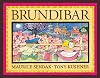
Brundibar
by Tony Kushner
On This Page
Description
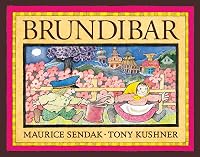
Aninku and Pepicek find their mother sick one morning, they need to buy her milk to make her better. The brother and sister go to town to make money by singing. But a hurdy-gurdy grinder, Brundibar, chases them away. They are helped by three talking animals and three hundred schoolchildren, to defeat the bully. Brundibar is based on a Czech opera for children that was performed fifty-five times by the children of Terezin, a Nazi concentration camp in 1943.Tags
Recommendations











Member Recommendations
Member Reviews
Two children go into town to fetch fresh milk for their ailing mother. However, they don't have the money to pay for it so they try singing in the square to make some change. But Brundibar drowns out their singing with his organ grinding. Can the children overcome the bully and get the milk their mother needs?
This book is based on an opera of the same name, which was infamously performed by children held in a Nazi concentration camp. While the text of the book makes no mention of anything related to World War II or the Holocaust, Sendak's illustrations do. An optimistic ending about help always being available keeps the book from being too heartbreaking, but then a final page spread has a note from Brundibar saying how "Bullies don't show more give up completely. One departs, the next appears..." I suppose that is meant to be cautionary in a "never forget" way, but it does leave the book on a bit of downer. show less
This book is based on an opera of the same name, which was infamously performed by children held in a Nazi concentration camp. While the text of the book makes no mention of anything related to World War II or the Holocaust, Sendak's illustrations do. An optimistic ending about help always being available keeps the book from being too heartbreaking, but then a final page spread has a note from Brundibar saying how "Bullies don't show more give up completely. One departs, the next appears..." I suppose that is meant to be cautionary in a "never forget" way, but it does leave the book on a bit of downer. show less
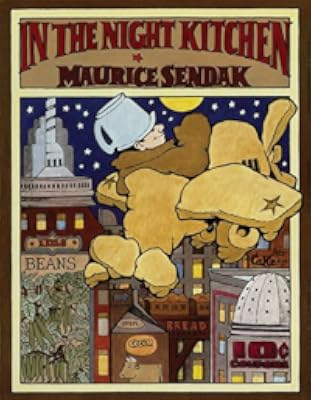
This is an energetic, complex, visually vibrant story based on a Czech opera with a dark history. It was performed many times by children in concentration camps, and in fact Brundibar -- the bad guy -- looks a bit like Hitler. Sendak's illustrations almost pop off the page, Kushner's prose is perfectly pitched. Two children's frantic errand to find milk for their sick mother turns into a marathon involving all the village's children and (my favorite touch) one of the bakers from In the Night Kitchen.
Adults can read Brundibar for the complex backstory and analogies, but kids will like it for its nutty energy.
Adults can read Brundibar for the complex backstory and analogies, but kids will like it for its nutty energy.
In this adaptation by Tony Kushner we have a updated version of the late Slovakian Opera piece, Brundibar. Brundibar, a vile bully in the story tries to scare of two children, Aninku and Pepicek, from making money on the streets singing to save up to buy some milk for their sick mother back home. The doctor sends them into town to find milk. Illustrated by the talented Maurice Sendak (Where the Wild Things Are) I thought I would read this tale since I was researching children's book's on the holocaust. It was a very interesting story, very straight forward, where their are heros and a main antagonist. What I found interesting was that the opera was performed the children of Terezin from the concentration camp during World War 2. The show more children performed it for the Nazi's 52 times. Kushner's adaptation at the very end has a page where the children, town, and animals all cry out that tyrants will never last and that to have courage and hope in the face of tyranny. What an inspiring and lovely book. It brought tears to my eyes. Every child has their own Brundibar, or bully and the lesson is that we must always stand as a group against the bully and the tyrant. Lastly, the book contains significant songs and rhymes that children can enjoy will practicing their rhyming words and meter. show less
A sassy narrative style and splendid, multi-meaningful illustrations capture both the fairy tale charm and the underlying menace of a children's opera that was performed by prisoners in the Terezin concentration camp.
This is going to be a bit of a complex review, so let's get on with it.
First, some backstory. Brundibar was an opera performed by the children of Theresienstadt concentration camp as a sop to show the Red Cross that they weren't being maltreated. Most of those children were later killed at Auschwitz.
It is clear from the illustrations that this book was not just inspired by the opera itself, but by the Holocaust. Or, no, not that it was *inspired* by the Holocaust, but that it's in tribute to those children. The illustrations have swastikas, many characters wear yellow armbands with a Star-of-David on them, the wicked character Brundibar looks like Hitler. At one point the children sing a lullabye about growing up and leaving, and the show more spread following the lullabye shows children being carried off by crows while their mothers weep - to adult eyes, it looks plainly like they're meant to be dead, although my nieces (pre-k and first grade) have never commented on it at all.
Now, you can take these details and go with them as far as you like. You can talk about what the pictures obviously represent,, or you can ignore them entirely. Either way is up to you, and I can't say one way is better than the other.
As far as the story itself, it's written in a sort of half-comic style, with the characters speaking in dialog bubbles, often directly to the reader. There are some scary scenes - they're chased from the square by the villainous Brundibar and hide overnight in an alley, there's the constant fear that their sick mother will die if they don't succeed in earning money for milk, and at the end of the book, after their triumphant victory, we have a message from Brundibar himself saying "Bullies don't give up completely. One departs, the next appears..." which I guess is true enough, but a bit depressing to contemplate.
My nieces adore this book. At one point, when the older one was three, I was reading it several times a day. The only problems I actually have with it is that a lot of the dialog is explicitly called "singing", but there's no indication of the tune, so you have to kinda make it up. This frustrates me, especially the aforementioned lullaby, which is kinda long and takes up two pages of text.
I recommend this book. However, I do suggest you read it first. If you think you'll be uncomfortable with the subject matter I mentioned, or that you don't want to have to explain it to your children, you shouldn't buy it. show less
First, some backstory. Brundibar was an opera performed by the children of Theresienstadt concentration camp as a sop to show the Red Cross that they weren't being maltreated. Most of those children were later killed at Auschwitz.
It is clear from the illustrations that this book was not just inspired by the opera itself, but by the Holocaust. Or, no, not that it was *inspired* by the Holocaust, but that it's in tribute to those children. The illustrations have swastikas, many characters wear yellow armbands with a Star-of-David on them, the wicked character Brundibar looks like Hitler. At one point the children sing a lullabye about growing up and leaving, and the show more spread following the lullabye shows children being carried off by crows while their mothers weep - to adult eyes, it looks plainly like they're meant to be dead, although my nieces (pre-k and first grade) have never commented on it at all.
Now, you can take these details and go with them as far as you like. You can talk about what the pictures obviously represent,, or you can ignore them entirely. Either way is up to you, and I can't say one way is better than the other.
As far as the story itself, it's written in a sort of half-comic style, with the characters speaking in dialog bubbles, often directly to the reader. There are some scary scenes - they're chased from the square by the villainous Brundibar and hide overnight in an alley, there's the constant fear that their sick mother will die if they don't succeed in earning money for milk, and at the end of the book, after their triumphant victory, we have a message from Brundibar himself saying "Bullies don't give up completely. One departs, the next appears..." which I guess is true enough, but a bit depressing to contemplate.
My nieces adore this book. At one point, when the older one was three, I was reading it several times a day. The only problems I actually have with it is that a lot of the dialog is explicitly called "singing", but there's no indication of the tune, so you have to kinda make it up. This frustrates me, especially the aforementioned lullaby, which is kinda long and takes up two pages of text.
I recommend this book. However, I do suggest you read it first. If you think you'll be uncomfortable with the subject matter I mentioned, or that you don't want to have to explain it to your children, you shouldn't buy it. show less
Continuing my quest to read all Maurice Sendack books, I finished Brundibar last night.
There is a very tragic story behind this book. Based on a Czech opera, set to music by a Hans Krasa.
As Nazi Germany and the evilness of Hitler and his henchmen were creeping and then running frantically to exterminate Jews, the opera Brundibar was performed by children of in the concentration camp of Terezin.
Used as propaganda, the play was performed 55 times.
Sadly, the composer Krasa was imprisoned in Terezin and later killed in 1944 in Auschwitz.
The book is written by the playwright Tony Kushner with stunning illustrations by Sendak.
When Aniku and Pepicek awake to find their mother gravely ill, they call a doctor who informs them fresh milk will show more save their mother.
With no money, they trek a long way into the town square where many are selling and buying. Alas, the milk man turns them away because they cannot pay for his ware.
Meeting a nasty hurdy gurdy Brundibar who bullies and frightens them while trying to thwart their plans, eventually, the town of 300 children sing in order for Aniku and Pepicek to buy milk.
In real life tragically, often after children performed the play in Treblinka, they were transported to Auschwitz. Still, time and time again, knowing that some of them were slated to die, they sang on and on.
http://theater.nytimes.com/2006/05/09/theater/reviews/09brun.html?pagewanted=all....
http://www.slate.com/articles/life/sandbox/2003/11/the_notsowild_thing.html
Throughout Sendak's illustrations the town square is filled with people wearing the yellow star imposed upon them by the Nazis. The play and the book, while dark and stark in theme, realistically depict good vs evil.
Please take a few minutes (18 of them) and watch this interview with Bill Moyers. It is incredibly insightful and beautiful.
http://www.pbs.org/now/arts/sendak.html show less
There is a very tragic story behind this book. Based on a Czech opera, set to music by a Hans Krasa.
As Nazi Germany and the evilness of Hitler and his henchmen were creeping and then running frantically to exterminate Jews, the opera Brundibar was performed by children of in the concentration camp of Terezin.
Used as propaganda, the play was performed 55 times.
Sadly, the composer Krasa was imprisoned in Terezin and later killed in 1944 in Auschwitz.
The book is written by the playwright Tony Kushner with stunning illustrations by Sendak.
When Aniku and Pepicek awake to find their mother gravely ill, they call a doctor who informs them fresh milk will show more save their mother.
With no money, they trek a long way into the town square where many are selling and buying. Alas, the milk man turns them away because they cannot pay for his ware.
Meeting a nasty hurdy gurdy Brundibar who bullies and frightens them while trying to thwart their plans, eventually, the town of 300 children sing in order for Aniku and Pepicek to buy milk.
In real life tragically, often after children performed the play in Treblinka, they were transported to Auschwitz. Still, time and time again, knowing that some of them were slated to die, they sang on and on.
http://theater.nytimes.com/2006/05/09/theater/reviews/09brun.html?pagewanted=all....
http://www.slate.com/articles/life/sandbox/2003/11/the_notsowild_thing.html
Throughout Sendak's illustrations the town square is filled with people wearing the yellow star imposed upon them by the Nazis. The play and the book, while dark and stark in theme, realistically depict good vs evil.
Please take a few minutes (18 of them) and watch this interview with Bill Moyers. It is incredibly insightful and beautiful.
http://www.pbs.org/now/arts/sendak.html show less
Lavishly illustrated, as one would expect of a Sendak book, this is a wonderful story about overcoming bullies. Based on the 1938 Czech opera of the same name, the story concerns two children, Pepicek and Aninku, whose mother is unwell. The doctor recommends that they get her fresh milk, so they set off on the long walk to town to obtain it. Once there, they realise they need money, but their attempts to earn that by singing on their own come to nothing because of the loud music of Brundibar who dominates the square. With the help of a talking cat, dog, sparrow and 300 children they manage to defeat him and earn enough money to purchase the required milk. This is utterly delightful and my nearly-two daughter was enchanted.
Members
- Recently Added By
Author Information

Playwright Tony Kushner was born in New York City and raised in Louisiana. In addition to his plays, Kushner teaches at New York University and has co-written an opera with Bobby McFerrin. Kushner is best known for Angels in America: A Gay Fantasia on National Themes, a two-part seven-hour play that has won many awards (two Tony Awards, a Pulitzer show more Prize, two Drama Desk Awards, the Evening Standard Award, the New York Critics Circle Award, and the Los Angeles Drama Critics Circle Award). It was also selected one of the ten best plays of the 20th century by London's Royal National Theatre. (Bowker Author Biography) show less
All Editions
Awards and Honors
Work Relationships
Is a retelling of
Common Knowledge
- Canonical title
- Brundibar
- Alternate titles
- Brundibar: After the Opera by Hans Krasa and Adolf Hoffmeister
- Original publication date
- 2003
- Important places
- Theresienstadt concentration camp, Terezín, Czech Republic
- First words
- I am Pepicek, very small.
And I am Aninku, his sister, even smaller. - Last words
- (Click to show. Warning: May contain spoilers.)Though I go, I won't go far ... I'll be back.
Love,
Brundibar
Classifications
Statistics
- Members
- 623
- Popularity
- 46,965
- Reviews
- 12
- Rating
- (3.86)
- Languages
- English, French, German, Japanese
- Media
- Paper
- ISBNs
- 7
- UPCs
- 1
- ASINs
- 2