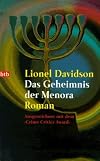
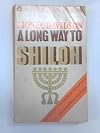
The Menorah Men
by Lionel Davidson
On This Page
Description
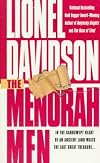
IN THE SANDSWEPT HEART OF AN ANCIENT LAND WAITS THE LAST GREAT TREASURE... Treasure priceless beyond mere money. The Menorah: the seven branched lamp, true symbol of Judaism, believed lost, destroyed, two thousand years ago. Now rumour has become fact. Ancient scrolls have been discovered attesting to its survival, hinting at its final hiding place. For the Israelis, no sacrifice is too great to ensure its safe homecoming. But some of Israel's neighbouring states have very different ideas. show more Caspar Laing, a brilliant young professor of Semitics, is brought to Israel for a secret and highly dangerous mission: to decode the scrolls and locate the prize. His only problem - staying alive long enough to do so... show lessTags
Recommendations
















Member Reviews
Part of the fun of mystery novels is trying to work out puzzles, and I quite enjoyed chewing over a puzzle presented by this one: why do I dislike this so much?
There was an obvious answer: the protagonist and his portrayal. Our narrator, Casper Laing, is a loathsome sex pest, an irresponsible drunk, and a heedless narcissist. Now, you can’t write a character quite so flawed without noticing that you’re doing so, but Davidson apparently thinks that his creation is, overall, a good egg. At the crucial moments, Laing dashingly displays all the heroic virtues, and earns absolution for all his vices, none of which turn out to be too consequential anyway. The object of his affections (most often referred to as “the girl”) turns out to show more consider relentless badgering the very best of foreplay; his drinking results in nothing much more than chucklesome antics; and the headlong charges after his own interests deliver outrageous success more often than not. There is much to dislike here, but after some thought I concluded that this was a red herring. Too obvious. The answer had to be deeper.
Was it, perhaps, the plot? The plot is unarguably preposterous, a caper across the plains and deserts of Israel in search of McGuffins. Laing is a brilliant young professor of archaeology, or philology, or some such thing involving very old Middle Eastern languages (don’t worry, though—we’re assured early on that he’s the sexy “intuitive” kind of brainy, not the frumpy thinking-hard-about-stuff kind). He’s hired by people vaguely connected with the Israeli establishment, at first to find and interpret an ancient scroll, and subsequently to find and recover the treasure whose location the scroll reveals, all before the Bad Guys get there first. Escapades and shenanigans ensue: scrapes, escapes, fights, heights, chases, even a courtroom scene. It’s all deeply, deeply silly, a succession of set pieces tenuously connected. But dislikeable? Surely not. Who doesn’t like a silly pseudo-archaeological adventure, done well? (it’s easy to believe that George Lucas absorbed quite a lot from this book that later shaped Indiana Jones)
But wait: that’s it. Done well! Or, in this case, not. Here’s the thing: to successfully pull off this kind of caper, you need to dissuade the audience from thinking too closely about what’s going on. The writing needs to be fluent, pacey, and smooth: it needs to speed the reader along, not trip them up. And for far too much of this book, the reader is stumbling around. Furthermore, this is due to clearly deliberate style choices. It’s as if Davidson has taken far too much heed of two bits of common writing advice. First: “show, don’t tell”. Yes, fine, avoid clunky exposition, but not at the cost of leaving your descriptions so vague and oblique that the reader frequently has to pause to work out what the hell is actually being described. Second: “avoid cliché like the plague”. Again, fine, but if the alternative is convoluted syntax, dangling pronouns, pile-ups of adverbs and modifiers, and the occasional gobstopping thesaurus word (“inpissated”, anyone?) . . . well, you might be better off just laying out some boilerplate now and again. The whole thing reminded me somewhat obscurely of Beckett, and that would be a compliment if the work were one where a tricksy style ought to be to the focus, but in this case it’s definitely not a compliment.
I’ve analysed all this as if the problem is that Davidson is trying to be A Writer, rather than just writing. The other slightly worrying possibility is that he thinks he has faithfully recreated how brainy people actually speak and think. Whatever the cause, it’s all a bit of a shame, because when he forgets being A Writer and just writes, he can put a tense, gripping scene on the page, and he can manage evocative description of locale. I can see why a lot of people like this. But I didn’t much. show less
There was an obvious answer: the protagonist and his portrayal. Our narrator, Casper Laing, is a loathsome sex pest, an irresponsible drunk, and a heedless narcissist. Now, you can’t write a character quite so flawed without noticing that you’re doing so, but Davidson apparently thinks that his creation is, overall, a good egg. At the crucial moments, Laing dashingly displays all the heroic virtues, and earns absolution for all his vices, none of which turn out to be too consequential anyway. The object of his affections (most often referred to as “the girl”) turns out to show more consider relentless badgering the very best of foreplay; his drinking results in nothing much more than chucklesome antics; and the headlong charges after his own interests deliver outrageous success more often than not. There is much to dislike here, but after some thought I concluded that this was a red herring. Too obvious. The answer had to be deeper.
Was it, perhaps, the plot? The plot is unarguably preposterous, a caper across the plains and deserts of Israel in search of McGuffins. Laing is a brilliant young professor of archaeology, or philology, or some such thing involving very old Middle Eastern languages (don’t worry, though—we’re assured early on that he’s the sexy “intuitive” kind of brainy, not the frumpy thinking-hard-about-stuff kind). He’s hired by people vaguely connected with the Israeli establishment, at first to find and interpret an ancient scroll, and subsequently to find and recover the treasure whose location the scroll reveals, all before the Bad Guys get there first. Escapades and shenanigans ensue: scrapes, escapes, fights, heights, chases, even a courtroom scene. It’s all deeply, deeply silly, a succession of set pieces tenuously connected. But dislikeable? Surely not. Who doesn’t like a silly pseudo-archaeological adventure, done well? (it’s easy to believe that George Lucas absorbed quite a lot from this book that later shaped Indiana Jones)
But wait: that’s it. Done well! Or, in this case, not. Here’s the thing: to successfully pull off this kind of caper, you need to dissuade the audience from thinking too closely about what’s going on. The writing needs to be fluent, pacey, and smooth: it needs to speed the reader along, not trip them up. And for far too much of this book, the reader is stumbling around. Furthermore, this is due to clearly deliberate style choices. It’s as if Davidson has taken far too much heed of two bits of common writing advice. First: “show, don’t tell”. Yes, fine, avoid clunky exposition, but not at the cost of leaving your descriptions so vague and oblique that the reader frequently has to pause to work out what the hell is actually being described. Second: “avoid cliché like the plague”. Again, fine, but if the alternative is convoluted syntax, dangling pronouns, pile-ups of adverbs and modifiers, and the occasional gobstopping thesaurus word (“inpissated”, anyone?) . . . well, you might be better off just laying out some boilerplate now and again. The whole thing reminded me somewhat obscurely of Beckett, and that would be a compliment if the work were one where a tricksy style ought to be to the focus, but in this case it’s definitely not a compliment.
I’ve analysed all this as if the problem is that Davidson is trying to be A Writer, rather than just writing. The other slightly worrying possibility is that he thinks he has faithfully recreated how brainy people actually speak and think. Whatever the cause, it’s all a bit of a shame, because when he forgets being A Writer and just writes, he can put a tense, gripping scene on the page, and he can manage evocative description of locale. I can see why a lot of people like this. But I didn’t much. show less
This one is old-style thriller. Pace is intentionally slowed down for the sake of side-quests so to speak - like romance between a main character and soldier woman tasked with protecting him or constant verbal battles between main character and his academia opponents - and this has a direct effect on the story itself.
If you like slow paced thrillers that takes time to give you background on a society (be it England or Israel) then this is book for you.
If you are expecting fast paced action story - then you might want to skip this one.
Action scenes are frenetic and very realistic. I truly enjoyed them, just wished there was more actual action than talk.
All in all highly recommended to all fans of good adventure story.
If you like slow paced thrillers that takes time to give you background on a society (be it England or Israel) then this is book for you.
If you are expecting fast paced action story - then you might want to skip this one.
Action scenes are frenetic and very realistic. I truly enjoyed them, just wished there was more actual action than talk.
All in all highly recommended to all fans of good adventure story.
Interesting and unusual premise, easy to read, but the main character is an arse and the action, whilst excellent, is sparse. Not as good as Kolymsky Heights.
Looking for a Menorah in all the wrong places.
Ratings
Members
- Recently Added By
Lists

#JustTheFacts2019Silver
60 works; 1 member
#MysteryBingo2019Silver(Original)
36 works; 1 member
#MysteryBingo2019Silver(Revised)
36 works; 1 member
Author Information

20+ Works 2,083 Members
Lionel Davidson was born in Hull, Yorkshire on March 31, 1922. He left school early and worked as office boy at the Spectator magazine, which published his first short story when he was 15. At 17, he was writing syndicated features for the Morley Adams Group. During World War II, he served as a telegraphist with the Royal Navy's submarine service show more in the Pacific. After the war, he joined the Keystone Press Agency as a freelance reporter. His first novel, The Night of Wenceslas, was published in 1960 and won the Crime Writers' Association's Gold Dagger Award and the Author's Club First Novel Award. It was adapted into a film entitled Hot Enough for June starring Dirk Bogarde in 1964. His other works include The Rose of Tibet and Kolymsky Heights. He also won the CWA's Gold Dagger Award for A Long Way to Shiloh in 1966 and The Chelsea Murders in 1978. In 2001, he was awarded the CWA's Cartier Diamond Dagger lifetime achievement award. He also wrote children's books under the pen name David Line. He died on October 21, 2009 at the age of 87. (Bowker Author Biography) show less
Awards and Honors
Awards
Series
Belongs to Publisher Series
Common Knowledge
- Alternate titles
- De dodelijke zeerol; A Long Way To Shiloh
- Original publication date
- 1966
- People/Characters
- Casper Laing; Agrot
- Dedication
- To Fay
Classifications
Statistics
- Members
- 272
- Popularity
- 118,836
- Reviews
- 4
- Rating
- (3.56)
- Languages
- 6 — Danish, Dutch, English, German, Italian, Norwegian (Bokmål)
- Media
- Paper, Ebook
- ISBNs
- 21
- ASINs
- 16