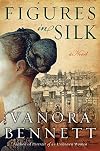
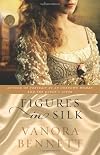
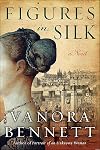
Figures in Silk
by Vanora Bennett
On This Page
Description
In 1471 England, two daughters of a silk merchant follow different paths. Jane Shore becomes the mistress of the king and her sister Isabel becomes powerful in the silk industry.Tags
Recommendations





Member Recommendations
Member Reviews
Vanora Bennett introduces the historical fiction reader to an exciting new world in `Figures in Silk,' a novel of the textile trade in fifteenth century London. It is the story of Jane Shore, known in historical footnotes as King Edward IV's `merry mistress,' and her younger sister, Isabel, who marries the heir to a textile dynasty. Both girls are the daughters of a noted London cloth merchant and, as the novel opens, are being married off to men of their father's choosing. While Jane's life is certainly dramatic - she meets King Edward at her wedding feast and both are 'fool struck' - it is the soon widowed Isabel and her gritty determination to master the textile trade that centers the novel.
Isabel is an intriguing character - she is show more ambitious, dedicated, both shrewd and naive, but most of all, she is willing to learn and to work hard. The merchants and artisans of the City of London provide an interesting background; Bennett creates real, solid, distinct characters who live in the city - we see the plight of women in the cloth trade - as laws and customs keep them from competing with men on an equal footing. And we also see Isabel in love with the mysterious and unattainable soldier that she meets at the book's onset.
Bennett does a craftsman's job of weaving all the threads together in her tapestry. The focus remains on Isabel and her attempt to bring the manufacture of silk to London with Jane's meteoric rise and fall at court providing further historical perspective.
I greatly enjoyed reading 'Figures in Silk.' The novel's strong points are the choice of subject - the Shore girls and the cloth trade - it's nice to read about commoners for once, the arresting portrait of the City of London and its merchants and artisans, and the strong characterizations. These became people that I really liked and cared about. The major flaw, for me, is that the novel's last quarter felt a bit rushed. show less
Isabel is an intriguing character - she is show more ambitious, dedicated, both shrewd and naive, but most of all, she is willing to learn and to work hard. The merchants and artisans of the City of London provide an interesting background; Bennett creates real, solid, distinct characters who live in the city - we see the plight of women in the cloth trade - as laws and customs keep them from competing with men on an equal footing. And we also see Isabel in love with the mysterious and unattainable soldier that she meets at the book's onset.
Bennett does a craftsman's job of weaving all the threads together in her tapestry. The focus remains on Isabel and her attempt to bring the manufacture of silk to London with Jane's meteoric rise and fall at court providing further historical perspective.
I greatly enjoyed reading 'Figures in Silk.' The novel's strong points are the choice of subject - the Shore girls and the cloth trade - it's nice to read about commoners for once, the arresting portrait of the City of London and its merchants and artisans, and the strong characterizations. These became people that I really liked and cared about. The major flaw, for me, is that the novel's last quarter felt a bit rushed. show less
Vanora Bennett's "Figures in Silk" follows the life of Isabel Claver, a young silk merchant in late 15th century London. Isabel's father, a famous silk trader, marries her off at age 14 to the son of the silk trader Alice Claver. Isabel is widowed within a year, but because of a chance encounter with a mysterious young man, she decides to stay with her mother in law to learn the silk business. Isabel becomes a brilliant silk trader in her own right, using the connections of her sister Jane Shore, who is mistress to King Edward, to rise to the top of her field. Isabel also re-encounters her mysterious man, only to discover he is Richard, Duke of Gloucester. Will Isabel and Richard end up happily ever after, or will the politics of the show more War of the Roses get in the way?
I don't know a lot about this period in English history, but I thought "Figures in Silk" did a good job of capturing the atmosphere of late 15th century London. Yes there are some things in the novel that are a bit of a stretch--commoner sisters being mistresses to Kings for one--but I also thought there was a lot to like in this novel. Isabel is spirited and free minded, but like so many women, she can also be blinded by irrational love. She's very real, and it is interesting to see her balance her business interest and the role of a freed woman during this period in London. I found this book difficult to put down--I always wanted to know what was coming next--and it has made me interested in this period in English history.
I would recommend this book to fans of Phillippa Gregory, because it has the same type of courtly intrigue and strong female characters as her books. show less
I don't know a lot about this period in English history, but I thought "Figures in Silk" did a good job of capturing the atmosphere of late 15th century London. Yes there are some things in the novel that are a bit of a stretch--commoner sisters being mistresses to Kings for one--but I also thought there was a lot to like in this novel. Isabel is spirited and free minded, but like so many women, she can also be blinded by irrational love. She's very real, and it is interesting to see her balance her business interest and the role of a freed woman during this period in London. I found this book difficult to put down--I always wanted to know what was coming next--and it has made me interested in this period in English history.
I would recommend this book to fans of Phillippa Gregory, because it has the same type of courtly intrigue and strong female characters as her books. show less
Cloth of silk hiding freise...
I recommend Bennett's "Figures in Silk" to those who enjoy historical fiction set in 15th century England and the Wars of the Roses. Bennett introduces the reader to Isabel Lambert, the sister of the infamous 'merry mistress' of Edward IV, Jane Shore. Isabel is the younger daughter of silk merchant John Lambert and by accident she encounters a dark, mysterious young man in a tavern in April of 1471 who encourages her to make her own way in the world. Smitten by the man and taking his advice, Isabel agrees to the marriage her father has arranged with a silkwoman's son, and soon becomes a widow and a merchant with her mother-in-law. They go into a business unheard of at the time, and succeed after a few show more roadblocks. In the background is the mysterious young man, Richard, duke of Gloucester and later, Richard III. Some Ricardians may not like the portrait Bennett paints of this infamous king. Bennett uses the gossip and conjecture of the time to paint a less than sympathetic picture. Nothing is revealed, but there is room for doubt in Isabel's mind as to her lover's motives throughout the story. I also like the less-than-saintly portrayal of Elizabeth of York, so often shown as a passive Yorkist martyr. Here, Elizabeth raises a few eyebrows - can we say conniving teenaged girl?
As to craft, the story is well told and thoroughly enjoyable. I absolutely loved the detail of the silk industry and the life of the mercers, the vignettes of the merchant class life in London. I also liked how the famous events of the Wars of the Roses are sketched in but take a back seat to the lives of ordinary people. As for the technical issues, once again Spellcheck probably was the villain here, but there were a few continuity problems, i.e., Isabel and Anne are supposedly walking to Westminster from London, and yet Isabel gives her reins to a servant. There is a list of people attending the King's statement at Clerkenwell, rather, the occupation. It was a bit annoying.
This is a book, like Jarman's "We Speak No Treason" and Penman's many titles, that I will most likely read again. I invite you to read it and discover these figures in silk. show less
I recommend Bennett's "Figures in Silk" to those who enjoy historical fiction set in 15th century England and the Wars of the Roses. Bennett introduces the reader to Isabel Lambert, the sister of the infamous 'merry mistress' of Edward IV, Jane Shore. Isabel is the younger daughter of silk merchant John Lambert and by accident she encounters a dark, mysterious young man in a tavern in April of 1471 who encourages her to make her own way in the world. Smitten by the man and taking his advice, Isabel agrees to the marriage her father has arranged with a silkwoman's son, and soon becomes a widow and a merchant with her mother-in-law. They go into a business unheard of at the time, and succeed after a few show more roadblocks. In the background is the mysterious young man, Richard, duke of Gloucester and later, Richard III. Some Ricardians may not like the portrait Bennett paints of this infamous king. Bennett uses the gossip and conjecture of the time to paint a less than sympathetic picture. Nothing is revealed, but there is room for doubt in Isabel's mind as to her lover's motives throughout the story. I also like the less-than-saintly portrayal of Elizabeth of York, so often shown as a passive Yorkist martyr. Here, Elizabeth raises a few eyebrows - can we say conniving teenaged girl?
As to craft, the story is well told and thoroughly enjoyable. I absolutely loved the detail of the silk industry and the life of the mercers, the vignettes of the merchant class life in London. I also liked how the famous events of the Wars of the Roses are sketched in but take a back seat to the lives of ordinary people. As for the technical issues, once again Spellcheck probably was the villain here, but there were a few continuity problems, i.e., Isabel and Anne are supposedly walking to Westminster from London, and yet Isabel gives her reins to a servant. There is a list of people attending the King's statement at Clerkenwell, rather, the occupation. It was a bit annoying.
This is a book, like Jarman's "We Speak No Treason" and Penman's many titles, that I will most likely read again. I invite you to read it and discover these figures in silk. show less
I have to say of all the war of the roses books this is going to be one of my favorites. While it does focus on the royals in some respects the main focus is the story of trying to get the silk weaving business brought to England. You learn all the ins and outs of the mercers guild and many others within England at the time. Isabel Lambert a fictional created sister to the infamous Jane Lambert, better known as Jane Shore Mistress to King Edward is the center piece in all of this silk world.
Isabel after meeting with a mysterious stranger (who I guessed right on the first meeting) goes on to marry the Son of the wealthiest independent silkwomen in London Alice Claver. After the death of her Husband not very long after they were married show more Isabel is stuck with a question of what to do. She ends up becoming the apprentice of her Mother in Law. We follow these industrious women for a very long road of over 10 years as they have ups and downs and work towards a dream of not having to import woven silk from the various ports of the world. I loved learning about the silk world and following them along the path. The back story with the royal family fit as well because the merchants could not act without the royals and the royals often wanted loans from the merchants. It certainly is an interesting fiction and would I very much recommend. show less
Isabel after meeting with a mysterious stranger (who I guessed right on the first meeting) goes on to marry the Son of the wealthiest independent silkwomen in London Alice Claver. After the death of her Husband not very long after they were married show more Isabel is stuck with a question of what to do. She ends up becoming the apprentice of her Mother in Law. We follow these industrious women for a very long road of over 10 years as they have ups and downs and work towards a dream of not having to import woven silk from the various ports of the world. I loved learning about the silk world and following them along the path. The back story with the royal family fit as well because the merchants could not act without the royals and the royals often wanted loans from the merchants. It certainly is an interesting fiction and would I very much recommend. show less
Isabel and Jane are sisters of very different types. Beautiful Jane is indolent, idle and flirtatious, and holds her widowed father, an esteemed silk merchant, in the palm of her hand. Isabel is serious, independent and hardworking, always at odds with her father and hopeful of the future to come. But when her father loses standing in the eyes of the local guild, he decides to marry off both girls to prosperous families in order to raise public opinion of himself and his business. This means that Jane will wed a man who doesn’t love her and who is reproachful of everything she does, while Isabel will marry into the house of Claver, a virtuous and noble family of silk workers. Though neither of the girls love their husbands, Isabel show more begins to feel a sort of affection toward the young man she marries and is devastated when he’s killed while defending the city from an attack to overthrow King Edward. When Isabel decides to apprentice herself to her mother-in-law for ten years to avoid the scandal her husband left behind and Jane annuls her marriage to become the mistress of the King, the sisters are set apart. But as Isabel works away her ten years, she falls in love with a mysterious and unavailable man and must be satisfied with the random trysts that he and she agree to. When she discovers that her lover is actually the Duke of Gloucester, brother of the king and possible usurper of the throne, the danger she uncovers is almost too much for her to handle. Are the rumors of her beloved Richard really true? This tale of the War of the Roses as seen through the traitorous eyes of Richard, Duke of Gloucester and his humble and naive lover is full to the brim with cunning, treachery, and a very unlikely romance between a virtuous woman and a man who remains one of the most notorious characters in all of history.
When I discovered this book would be our book club choice for the month of February, I was rather excited because not only am I an avid lover of historical fiction, but I knew I would soon be touring another book by Vanora Bennett, called The Queen’s Lover, and I thought this would be an excellent way for me to get a sample of what was to come. It wasn’t until about a third of the way through that I realized the book’s topic was the War of the Roses, and when I discovered that I would soon be neck deep in this particular story again, I was rather pleased because, though there are many books out there on this subject, I always relish the opportunity to see the story portrayed from another viewpoint.
I have to say this book and I didn’t get off to a great start together. I’m not sure if was because the first sections were mostly about scene setting and character introduction, but for the first hundred pages or so, I found myself getting easily distracted and almost bored. For some reason, the characters lacked the piquancy that I relish in most of the historical fiction I read, and I found that both girls, especially Isabel, were just too bland for me to get invested in. I also had a problem with the descriptions of the silk work. Often, I find that fiction which delves deeply into some kind of craft is wonderful in a way I can’t describe, because it elucidates and also captures my interest in its minute details. This was not the case here, because although I felt that Bennett really knew her stuff in regards to silk work, she was unable to translate the excitement and flavor of the craft to her readers. I have to admit that I glossed over a lot of these sections because they just didn’t interest me. I was beginning to think this book would be a total loss, until I got to the second section and things began to pick up dramatically.
Due to the activism of the local community of silk workers, the widowed Isabel and others like her have a degree of independence and autonomy that is almost unheard of during this point in history. It’s mentioned several times in the text that women like Isabel’s mother-in-law petitioned and argued for the rights of these women to run their own businesses and to be free from the impingement of men that may have held them back. In essence, this is the reason Isabel was able to make a name and a fortune for herself through her silk work, and the reason that her petition to the king for the silk workers to begin making their own exotic silks was granted. The secret operation of building up this business had to be kept very quiet in order for the foreign contingent of importers in England not to be angered. As Isabel begins her secret work, she once again finds herself at odds due to her very loose relationship with a man she presumes to be a soldier, but who is a very different animal altogether.
The relationship between Isabel and the man she knows as Dickon is one that’s inflamed by passion and separated by formalities. Dickon is Isabel’s reason for hope and her lover for a very long period of time. When she discovers his true identity and hears the rumors associated with him, her life shatters into shards of self deception and mistrust. Her relationship with Dickon and likewise her sister’s with the king puts the two of them in a hotbed of danger and uncertainty, and though Isabel goes to great lengths to deceive herself of Dickon’s true nature, the proof of his madness and treachery increases on a scale that can’t be denied. When he begins to enlist Isabel’s help in his dangerous plans and uses her confidences to thwart those who oppose him, Isabel is angered and heartbroken. In reality, Isabel is used by both sides in this battle, and though she doesn’t know it, her first and final betrayal of Dickon will be the loose end that completely unravels him.
Though I didn’t really enjoy the beginning, and the conclusion left me a bit tepid, the majority of the story was entrancing to say the least. To see the War of The Roses from the point of view of the villain was more than intriguing to me, and the fact that Dickon could fool not only the clever Isabel, but this reader, who already knew the outcome of this story, was an achievement in itself. If historical fiction is a genre you appreciate, I would recommend this book to you, though perhaps like me, it might take awhile for the story to really ramp up for you. show less
When I discovered this book would be our book club choice for the month of February, I was rather excited because not only am I an avid lover of historical fiction, but I knew I would soon be touring another book by Vanora Bennett, called The Queen’s Lover, and I thought this would be an excellent way for me to get a sample of what was to come. It wasn’t until about a third of the way through that I realized the book’s topic was the War of the Roses, and when I discovered that I would soon be neck deep in this particular story again, I was rather pleased because, though there are many books out there on this subject, I always relish the opportunity to see the story portrayed from another viewpoint.
I have to say this book and I didn’t get off to a great start together. I’m not sure if was because the first sections were mostly about scene setting and character introduction, but for the first hundred pages or so, I found myself getting easily distracted and almost bored. For some reason, the characters lacked the piquancy that I relish in most of the historical fiction I read, and I found that both girls, especially Isabel, were just too bland for me to get invested in. I also had a problem with the descriptions of the silk work. Often, I find that fiction which delves deeply into some kind of craft is wonderful in a way I can’t describe, because it elucidates and also captures my interest in its minute details. This was not the case here, because although I felt that Bennett really knew her stuff in regards to silk work, she was unable to translate the excitement and flavor of the craft to her readers. I have to admit that I glossed over a lot of these sections because they just didn’t interest me. I was beginning to think this book would be a total loss, until I got to the second section and things began to pick up dramatically.
Due to the activism of the local community of silk workers, the widowed Isabel and others like her have a degree of independence and autonomy that is almost unheard of during this point in history. It’s mentioned several times in the text that women like Isabel’s mother-in-law petitioned and argued for the rights of these women to run their own businesses and to be free from the impingement of men that may have held them back. In essence, this is the reason Isabel was able to make a name and a fortune for herself through her silk work, and the reason that her petition to the king for the silk workers to begin making their own exotic silks was granted. The secret operation of building up this business had to be kept very quiet in order for the foreign contingent of importers in England not to be angered. As Isabel begins her secret work, she once again finds herself at odds due to her very loose relationship with a man she presumes to be a soldier, but who is a very different animal altogether.
The relationship between Isabel and the man she knows as Dickon is one that’s inflamed by passion and separated by formalities. Dickon is Isabel’s reason for hope and her lover for a very long period of time. When she discovers his true identity and hears the rumors associated with him, her life shatters into shards of self deception and mistrust. Her relationship with Dickon and likewise her sister’s with the king puts the two of them in a hotbed of danger and uncertainty, and though Isabel goes to great lengths to deceive herself of Dickon’s true nature, the proof of his madness and treachery increases on a scale that can’t be denied. When he begins to enlist Isabel’s help in his dangerous plans and uses her confidences to thwart those who oppose him, Isabel is angered and heartbroken. In reality, Isabel is used by both sides in this battle, and though she doesn’t know it, her first and final betrayal of Dickon will be the loose end that completely unravels him.
Though I didn’t really enjoy the beginning, and the conclusion left me a bit tepid, the majority of the story was entrancing to say the least. To see the War of The Roses from the point of view of the villain was more than intriguing to me, and the fact that Dickon could fool not only the clever Isabel, but this reader, who already knew the outcome of this story, was an achievement in itself. If historical fiction is a genre you appreciate, I would recommend this book to you, though perhaps like me, it might take awhile for the story to really ramp up for you. show less
While I found Figures in Silk to be a good read, I cannot say there was anything particularly bad or amazing about the novel. This novel centered itself around the character of Isabel Claver, a fictional sister of King Edward IV's mistress Jane Shore. While Isabel, who finds her vocation in the London silk industry, is an interesting character, I found her affair with Richard of Gloucester to be a bit contrived. However, I must give credit to the author for not attempt to completely whitewash Richard's character, as often happens in fiction set in this period.
3 stars. The premise was good and it was a different sort of perspective on the personality of Richard III. The author focuses on the silk industry and in particular, the attempt to begin manufacturing in England, an industry controlled by the Venetians. Two sisters, Jane Shore and Isabel Claver, approach life in very different ways. Jane becomes mistress to King Edward and lives on the bounty of others. Isabel's husband dies shortly after the marriage but she stays with her mother-in-law as her apprentice to learn the business. She also finds herself having an affair with the King's brother, Dickon. Although a good premise, the flow was choppy and I never got invested in any of the characters. I also thought the abrupt change in show more Richard's personality towards the end was unnatural. show less
Members
- Recently Added By
Lists

Authors from England
147 works; 4 members
Author Information

13 Works 2,074 Members
Common Knowledge
- Canonical title
- Figures in Silk
- Original publication date
- 2009
- People/Characters
- Jane Shore; Edward IV, King of England; Isabel Claver; Richard III, King of England; Alice Claver; William Caxton (c.1422-1491) (show all 16); Dickon; Anne Pratte; Will Shore; Thomas Claver; John Lambert; Elizabeth Woodville, Queen Consort of England; Lady Elizabeth Darcey; Thomas Lynom; William Pratte; Goffredo D'Amico
- Important places
- London, England, UK; Westminster, London, England, UK
- Important events
- Wars of the Roses (1455 | 1485)
- Dedication
- For Luke and Joe
- First words
- Outside the gates of London,the victorious army of King Edward IV and his brother, Richard, Duke of Gloucester, is camped, waiting to make a triumphal procession into the capital tomorrow.
- Last words
- (Click to show. Warning: May contain spoilers.)But he was beginning to grin again even before Isabel spoke, as if he'd already guessed that the next thing she'd say would be: "Take me too."
Classifications
Statistics
- Members
- 435
- Popularity
- 70,837
- Reviews
- 20
- Rating
- (3.49)
- Languages
- English, German, Italian, Romanian
- Media
- Paper, Audiobook, Ebook
- ISBNs
- 23
- ASINs
- 7