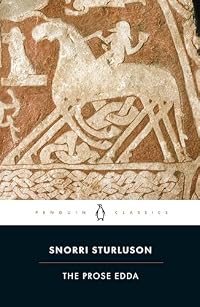
The Prose Edda
by Snorri Sturluson
On This Page
Description
Gods and giants bestride these ancient tales, in which warrior queens and noble heroes battle with elves, dwarves, and fearsome monsters. Spanning the dawn of the world's creation to its fiery destruction, these gripping Norse legends chronicle the triumphs and tragedies of a lost era. Resounding with a poetic instinct for the picturesque, the dramatic, and the human, they form vivid portraits of the characters' personalities. They also depict the comic and disastrous results of ambition, show more passion, and destiny. The wellspring of modern knowledge of Norse mythology, these sagas preserved the Vikings' narrative style from an invading European influence. Iceland's great literary genius, Snorri Sturluson (1179-1241), combined oral traditions, genealogical records, and old songs to immortalize his country's glorious past. Edda means "poetic art," and Sturluson's guidebook for Icelandic poets has been a timeless inspiration for generations of writers around the world, including Wagner, Borges, and Tolkien. show lessTags
Recommendations
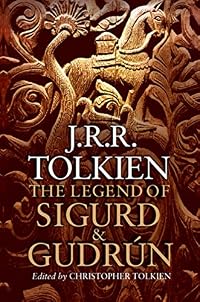
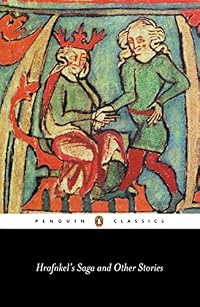
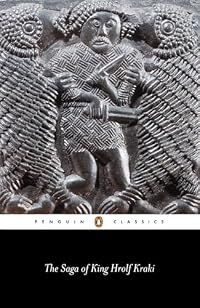
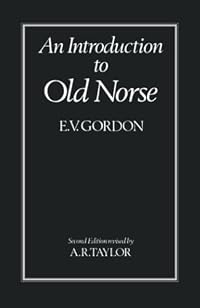


Member Recommendations
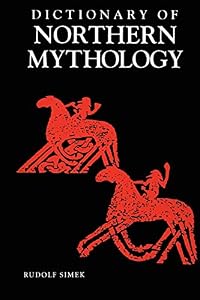
CGlanovsky The Edda feels like the primary source material for Gaiman's retelling
20
CGlanovsky Creation myths and pantheons
Member Reviews
Since this was my second time reading, I skipped Snorri's final section detailing verse-forms, as I was more interested in the mythology than the art of ancient poetry.
Snorri created this collection of stories and poetry how-to in part to save a dying art. He himself was Christian but he wished to ensure that traditional Norse poetic composition was not lost. He has an interesting theory on the origin of Aesir worship, linking them with Trojan mythology.
Reading this composition, I couldn't help but be sad that this is one of the few sources we still have for Norse mythology, and what we get here is often tantalising fragments. Snorri often quotes other compositions, which have been lost to the ages save the few lines he includes. Just show more what was Heimdall's poem, what would it have told us about the enigmatic watchman of the gods, and would it have told us why the head is called "Heimdall's sword"?
This is certainly a must for anyone wishing to dig down into Norse mythology. This is one of the main sources that collections of the myths draw from, and you can judge for yourself how well they have interpreted the fragmentary source material. One of the surprises is how numerous the gods were, yet these days we only really pay any attention to Odin, Thor and Loki, seeing as the surviving myths concern mainly these three and give them such lively personalities. But what of Loki and Odin's companion Hoenir? What of Gefjon who ploughed up a whole island? We may never know.
One thing I can say with fair certainty: our modern interpretation of Odin seems to be completely wrong. Sure he was "All Father", but he was also "Corpse Father" and "Dread". I feel that rather than being a kindly old man, he must have been terrifying. show less
Snorri created this collection of stories and poetry how-to in part to save a dying art. He himself was Christian but he wished to ensure that traditional Norse poetic composition was not lost. He has an interesting theory on the origin of Aesir worship, linking them with Trojan mythology.
Reading this composition, I couldn't help but be sad that this is one of the few sources we still have for Norse mythology, and what we get here is often tantalising fragments. Snorri often quotes other compositions, which have been lost to the ages save the few lines he includes. Just show more what was Heimdall's poem, what would it have told us about the enigmatic watchman of the gods, and would it have told us why the head is called "Heimdall's sword"?
This is certainly a must for anyone wishing to dig down into Norse mythology. This is one of the main sources that collections of the myths draw from, and you can judge for yourself how well they have interpreted the fragmentary source material. One of the surprises is how numerous the gods were, yet these days we only really pay any attention to Odin, Thor and Loki, seeing as the surviving myths concern mainly these three and give them such lively personalities. But what of Loki and Odin's companion Hoenir? What of Gefjon who ploughed up a whole island? We may never know.
One thing I can say with fair certainty: our modern interpretation of Odin seems to be completely wrong. Sure he was "All Father", but he was also "Corpse Father" and "Dread". I feel that rather than being a kindly old man, he must have been terrifying. show less
For all that I know about mythology, the more I read of the original collections the more I realize that I don’t know! The Prose Edda is considered the seminal collection of Icelandic Norse mythology, even though it’s a surprisingly small book - and seemingly very slim in terms of actual story. Obviously modern scholars are working with very old manuscript copies of the work, so for all we know large portions of it are missing entirely, but the style of the book is also meant to be very concise. Unlike the Poetic Edda (which I have yet to read) the Prose Edda presents the stories of the Norse gods and the formation of the world in short, digestible form and generally presents them as an oral story being told to a character within show more the book itself. Kind of a strange format for modern readers, but it was a very common literary device used in the time period to make the stories carry more weight (as if they are coming to readers/listeners by divine intervention). What I found most interesting throughout the book was that the author inserted various quotes from poems that presumably existed concurrently - therefore trying to justify his recording of the stories and give them even more importance as some of the quotes come from prophecies, oral culture, and established myths and legends. I’ll have to read the Poetic Edda pretty soon, so that I can compare the two. show less
The Edda is essentially a 13th century crash course in Norse mythology. At the time it was written Iceland was already Christian and the book's author penned an unintentionally humorous disclaimer in the prologue making sure everyone knew that he didn't believe any of this, that he was sophisticated enough to know the truth of Christianity, and he was just concerned about preserving these quaint beliefs for the their cultural and literary value. His sincerity made me giggle a little. I don't know, maybe the disclaimer was necessary back then, it's just so bizarre in a modern context.
Any who the intent of the book seems to be some what instructional. It collects various stories of godly hijinks, heroes and the monsters they face as well show more as shorter bits explaining little details of the world according to Norse mythology and the proper way to name things according to the traditions of skaldic poetry. That's why I call it instructional. Most of early Nordic literature is poetic and has very specific rules and symbolism. It can be tricky to understand the kennings and stories without a fair amount of background information so the Prose Edda is essentially intended to give people the background they need to understand and appreciate the literary tradition of skaldic poetry.
That said it doesn't really matter if you're reading the Edda with the intent to dig into skaldic poetry or not. The Prose Edda is the primary source of Norse mythology available to us today and Norse mythology is crazy. Like other mythological systems the purpose is to explain the world and give the history of the gods, but the Norse take just seems a little crazier and bloodier. I can't really go into the actual mythology without either going on way too long or short changing the stories, but suffice it to say that at one point Loki ties his testicles to a goat and engages in a tug of war with said goat.
On a side note, reading Norse mythology totally put me in the mood to revisit my neglected metal collection. Norse mythology is pretty metal. show less
Any who the intent of the book seems to be some what instructional. It collects various stories of godly hijinks, heroes and the monsters they face as well show more as shorter bits explaining little details of the world according to Norse mythology and the proper way to name things according to the traditions of skaldic poetry. That's why I call it instructional. Most of early Nordic literature is poetic and has very specific rules and symbolism. It can be tricky to understand the kennings and stories without a fair amount of background information so the Prose Edda is essentially intended to give people the background they need to understand and appreciate the literary tradition of skaldic poetry.
That said it doesn't really matter if you're reading the Edda with the intent to dig into skaldic poetry or not. The Prose Edda is the primary source of Norse mythology available to us today and Norse mythology is crazy. Like other mythological systems the purpose is to explain the world and give the history of the gods, but the Norse take just seems a little crazier and bloodier. I can't really go into the actual mythology without either going on way too long or short changing the stories, but suffice it to say that at one point Loki ties his testicles to a goat and engages in a tug of war with said goat.
On a side note, reading Norse mythology totally put me in the mood to revisit my neglected metal collection. Norse mythology is pretty metal. show less
The Edda is a collection of Norse myths, written in the 13th century by a dude named Snorri. It's where we got most of our knowledge of Norse mythology today, and it's wicked awesome. I learned, for instance, that your legs may hump each other and produce a child while you're asleep, which is something I'm going to be more careful about from now on. And that mead started as god spit, then turned into blood, and ended up being farted out of Odin's ass, which is, by a train of logic that actually kinda makes sense when you read it, why it's called the drink of poets. These are important things to know.
I also learned that much of what I learned from reading Thor comics when I was 13 isn't totally accurate. There's no mention at all of him show more being in the Avengers. Captain America doesn't even make a cameo.
And I was interested in the Norse poetic style of "kenning," where you kinda overcomplicate your language; so for instance, "spurner of the bonfires of the sea," where "bonfires of the sea" (as in the sun's reflection off it) means gold, so a spurner of it would be a generous man. That's exactly what rappers do! Here's an example from the mighty Dres of Black Sheep:
I try to stay aware of the drama, it’s crazy
Plus, see I got to tell your mama that I’m Swayze
Here, Swayze refers to his movie Ghost, and ghost means he's gone; so Dres is saying that he's leaving your mama. Which must be sad for her.
I'm not saying that rappers were influenced by Vikings. That would be an awesome thing to say, but not a reasonable one. I'm just saying there's sortof a kinship there.
It's not every day that you get to learn about the spiritual connection between hip-hop and Vikings. This is a cool book, man. show less
I also learned that much of what I learned from reading Thor comics when I was 13 isn't totally accurate. There's no mention at all of him show more being in the Avengers. Captain America doesn't even make a cameo.
And I was interested in the Norse poetic style of "kenning," where you kinda overcomplicate your language; so for instance, "spurner of the bonfires of the sea," where "bonfires of the sea" (as in the sun's reflection off it) means gold, so a spurner of it would be a generous man. That's exactly what rappers do! Here's an example from the mighty Dres of Black Sheep:
I try to stay aware of the drama, it’s crazy
Plus, see I got to tell your mama that I’m Swayze
Here, Swayze refers to his movie Ghost, and ghost means he's gone; so Dres is saying that he's leaving your mama. Which must be sad for her.
I'm not saying that rappers were influenced by Vikings. That would be an awesome thing to say, but not a reasonable one. I'm just saying there's sortof a kinship there.
It's not every day that you get to learn about the spiritual connection between hip-hop and Vikings. This is a cool book, man. show less
The Norse mythology that has come down to us, is primarily thanks to one Icelandic scholar and politician. The Prose Edda is Snorri Sturluson’s attempt to compile the myths of the Northern world and save the knowledge of how skaldic poetry is composed.
The book is essentially divided into two parts, the first is strictly concerned with mythology and the second is a mix of mythology and learning the rules of skaldic poetry. While Snorri follows the examples of Virgil and Geoffrey of Monmouth of connecting the Norse gods to originally being refugees of Troy that uncivilized tribes were awed by and made into gods, his prose retelling of the Norse myths seen in The Poetic Edda is not only exceptionally good but was most well-known versions show more for centuries. In fact, Snorri includes more myths than what appears in The Prose Edda including more that relate to Loki and Sif and others. The second half which features Snorri telling the rules of skaldic poetry by using mythic and saga verses is an easy, quick read that those not really interested will not find daunting in finishing the book but adds to the overall knowledge of skaldic tradition if one reads The Poetic Edda after Snorri’s book.
Unlike The Poetic Edda in which readers are not really sure how much Christianization has leaked into the versions written in, the reader knows from the beginning that Snorri is threading the edge of being a Christian and attempting to preserve his cultures pagan heritage. Brodeur’s translation not only reads well with occasional footnotes when giving meanings to words, but the spellings that the 21st Century reader knows of the various god’s names are the same.
The Prose Edda is the primary source of the vast majority of what we know today of Norse mythology and that alone recommends this book to those interested in mythology of any type. show less
The book is essentially divided into two parts, the first is strictly concerned with mythology and the second is a mix of mythology and learning the rules of skaldic poetry. While Snorri follows the examples of Virgil and Geoffrey of Monmouth of connecting the Norse gods to originally being refugees of Troy that uncivilized tribes were awed by and made into gods, his prose retelling of the Norse myths seen in The Poetic Edda is not only exceptionally good but was most well-known versions show more for centuries. In fact, Snorri includes more myths than what appears in The Prose Edda including more that relate to Loki and Sif and others. The second half which features Snorri telling the rules of skaldic poetry by using mythic and saga verses is an easy, quick read that those not really interested will not find daunting in finishing the book but adds to the overall knowledge of skaldic tradition if one reads The Poetic Edda after Snorri’s book.
Unlike The Poetic Edda in which readers are not really sure how much Christianization has leaked into the versions written in, the reader knows from the beginning that Snorri is threading the edge of being a Christian and attempting to preserve his cultures pagan heritage. Brodeur’s translation not only reads well with occasional footnotes when giving meanings to words, but the spellings that the 21st Century reader knows of the various god’s names are the same.
The Prose Edda is the primary source of the vast majority of what we know today of Norse mythology and that alone recommends this book to those interested in mythology of any type. show less
Six-word review: Authentic medieval masterwork exhausts reader's attention.
Extended review:
The book called "the prose Edda," by Snorri Sturluson, is a (or some might say the) seminal work of Western culture. Its author's story is told in Song of the Vikings: Snorri and the Making of Norse Myths, by Nancy Marie Brown (reviewed here). Brown recommends this 1987 Everyman edition, translated from Old Icelandic by Anthony Faulkes, as her preferred version, so that's the one I chose.
Following a prologue, the text is divided into three parts: "Gylfaginning" (the tricking of Gylfi), "Skalskaparmal" (the language of poetry), and "Hattatal" (list of verse-forms). The first of the three contains the bulk of the stories that we know as the Norse show more myths. The other two are encyclopedic discourses on the art and craft of versification, compiled and composed by a virtuoso of Icelandic poetry; as Brown herself says in her account, "('The Tally of Verse-Forms' is) a flamboyant display that frankly is no fun to read."
After completing the first part, the main narrative portion of the work, I read some way into the inventory of kennings (called periphrasis in literature courses), a blend of metaphor and riddle (for example, calling the sea "ship's road" or "island-fetter" and battle a "clashing metal-shower") as far as I could stand to, and eventually ground to a halt. I skimmed from there, turning all the pages and noting that a goodly portion of the third section is rendered in Old Icelandic verse with prose translation. As Brown says, there's not much point in trying to recreate the musical and rhetorical effects of the original; it can't be done.
This book is a work for students and scholars and not for the lay reader. In the end I settled for reading the helpful text summaries at the back and gave myself credit for reading the book halfway through.
The annotated index is not only extensive and detailed but in some respects unorthodox, in that it contains new information not found in the text. It was here that I found an etymological expansion of the term "Ragnarok," as well as numerous other names and expressions. The index alone makes this work a useful resource for anyone who is going to give the ancient texts and their derivatives more than a casual look, but I would recommend turning elsewhere if you just want to read the stories.
-----------
My rating of five stars has no meaning. This work is in a class with the Bible and the Mahabharata; and how might I rate them? I am in no way qualified to judge it. Either five stars or an abstention is the only thing that makes any sense. Please note that in my ranking system, stars reflect an attempt to evaluate the goodness or worth of a work and don't necessarily signify whether I liked it. show less
Extended review:
The book called "the prose Edda," by Snorri Sturluson, is a (or some might say the) seminal work of Western culture. Its author's story is told in Song of the Vikings: Snorri and the Making of Norse Myths, by Nancy Marie Brown (reviewed here). Brown recommends this 1987 Everyman edition, translated from Old Icelandic by Anthony Faulkes, as her preferred version, so that's the one I chose.
Following a prologue, the text is divided into three parts: "Gylfaginning" (the tricking of Gylfi), "Skalskaparmal" (the language of poetry), and "Hattatal" (list of verse-forms). The first of the three contains the bulk of the stories that we know as the Norse show more myths. The other two are encyclopedic discourses on the art and craft of versification, compiled and composed by a virtuoso of Icelandic poetry; as Brown herself says in her account, "('The Tally of Verse-Forms' is) a flamboyant display that frankly is no fun to read."
After completing the first part, the main narrative portion of the work, I read some way into the inventory of kennings (called periphrasis in literature courses), a blend of metaphor and riddle (for example, calling the sea "ship's road" or "island-fetter" and battle a "clashing metal-shower") as far as I could stand to, and eventually ground to a halt. I skimmed from there, turning all the pages and noting that a goodly portion of the third section is rendered in Old Icelandic verse with prose translation. As Brown says, there's not much point in trying to recreate the musical and rhetorical effects of the original; it can't be done.
This book is a work for students and scholars and not for the lay reader. In the end I settled for reading the helpful text summaries at the back and gave myself credit for reading the book halfway through.
The annotated index is not only extensive and detailed but in some respects unorthodox, in that it contains new information not found in the text. It was here that I found an etymological expansion of the term "Ragnarok," as well as numerous other names and expressions. The index alone makes this work a useful resource for anyone who is going to give the ancient texts and their derivatives more than a casual look, but I would recommend turning elsewhere if you just want to read the stories.
-----------
My rating of five stars has no meaning. This work is in a class with the Bible and the Mahabharata; and how might I rate them? I am in no way qualified to judge it. Either five stars or an abstention is the only thing that makes any sense. Please note that in my ranking system, stars reflect an attempt to evaluate the goodness or worth of a work and don't necessarily signify whether I liked it. show less
A surprisingly quick read. The translation of these exceprts from the Edda is light and easy to read. The other material (intro, and apendices, and endnotes) were a great help in understanding the conventions and references that make these stories work. I appreciate it both from seeing the background and roots of so much in contemporary popular english literature (from marvel to tolkien); and yet it was also intersting to see the connections identified in modern scholarship to linguistics and anthropology (the movement of indo-europeans from the steppes into scandinavia). (2026 Book 1).
Members
- Recently Added By
Lists

Classics you know you should have read but probably haven't
421 works; 407 members

100 Books to Read in a Lifetime (That Are Older Than 200 Years)
415 works; 173 members

Best of World Literature
431 works; 51 members

Harold Bloom - The Western Canon: A. The Theocratic Age
97 works; 13 members

Books Read in 2014
2,341 works; 86 members

Heathen Prison Ministry
11 works; 2 members

Top Five Books of 2020
982 works; 350 members

Loan Library
38 works; 1 member

r/History Recommended Reading List
603 works; 12 members

Western Canon
206 works; 2 members

Before Austen Comes Aesop
318 works; 9 members

Books About Non-Abrahamic Religions
98 works; 2 members
Author Information

Snorri Sturluson's fame as a historian---his main work is the 16 sagas included in Heimskringla (c.1230), a monumental history of Norway from its beginning until 1177---lies both in his critical approach to sources and in his fine, realistic exposition of event and motivation. A similar combination of scholarly and imaginative talent is seen in show more The Prose Edda (c.1220). Intended to be a handbook in skaldic poetry, it preserves invaluable mythological tales that were on the verge of being forgotten even in Sturluson's time. A large part of what we know about Nordic mythology stems from his Edda. The bibliography that follows also lists the anonymous Egil's Saga (1200--30), which many expert Scandinavian medievalists (e.g., Sigurdur Nordal and Bjorn M. Olsen) attribute to Sturluson. It is a fascinating account of life in Norway, England, and Iceland and of the poet-warrior Egil, whose skaldic verse is renowned for its unusual emotional and personal qualities. Snorri Sturluson's own life was as eventful as those about whom he wrote. Returning to Iceland from exile in 1239, he again became deeply involved in serious power struggles and was murdered in 1241. (Bowker Author Biography) show less
Some Editions
Awards and Honors
Series
Belongs to Publisher Series
Work Relationships
Is contained in
Contains
Is abridged in
Common Knowledge
- Canonical title
- The Prose Edda
- Original title
- Edda; Snorra Edda
- Alternate titles
- The Younger Edda
- Original publication date
- 1220 (c.) (c.)
- People/Characters
- Gylfi (king of Sweden); Odin; Ægir; Bragi; Tyr; Idun (show all 17); Vidar; Vali; Loki; Fenrir; Frigg; Gefjon; Fulla; Freyja; Freyr; Thor; Balder (as Baldr)
- Important places
- Asgard; Midgard; Jotunheim; Hel
- Important events
- Creation of the universe; Creation of the world; Creation of humankind; Ragnarok
- Dedication
- I wish to dedicate this volume to Franz Bäuml, Albert Lord,
Richard Tomasson and Eugen Weber, teachers
from whom I learned. - First words
- In the beginning, before the heaven and the earth and the sea were created, the great abyss Ginungagap was without form and void, and the spirit of Fimbultyr moved upon the face of the deep, until the ice-cold rivers, the Eli... (show all)vogs, flowing from Niflheim, came in contact with the dazzling flames from Muspelheim. This was before Chaos.
- Last words
- (Click to show. Warning: May contain spoilers.)“Grind salt both fast and well,” said the captain. The mill began to grind salt, and that with all its might. When the captain had gotten the ship full he wanted to stop the mill; but no matter how he worked, and no matter how he handled it, the mill kept grinding as fast as ever, and the heap of salt kept growing larger and larger, and at last the ship sank. The mill stands on the bottom of the sea grinding this very day, and so it comes that the sea is salt.
- Publisher's editor
- Barber, Laura
- Original language
- Old Norse
- Disambiguation notice
- Please do not combine with the Poetic Edda - a very different work
Classifications
- Genre
- Fiction and Literature
- DDC/MDS
- 813 — Literature & rhetoric American literature in English American fiction in English
- LCC
- PT7313 .E5 .B96 — Language and Literature German, Dutch and Scandinavian literatures Old Norse literature: Old Icelandic and Old Norwegian Scientific and learned literature
- BISAC
Statistics
- Members
- 3,708
- Popularity
- 4,290
- Reviews
- 32
- Rating
- (4.04)
- Languages
- 18 — Czech, Danish, Dutch, English, Esperanto, French, German, Icelandic, Italian, Lithuanian, Norwegian (Nynorsk), Norwegian (Bokmål), Old Norse, Norwegian, Polish, Russian, Spanish, Swedish
- Media
- Paper, Audiobook, Ebook
- ISBNs
- 121
- ASINs
- 39