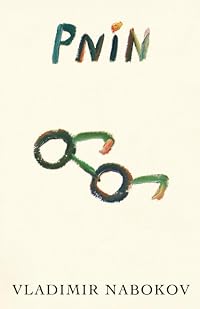
Pnin
by Vladimir Nabokov
On This Page
Description
Pnin is a professor of Russian at an American college who takes the wrong train to deliver a lecture in a language he cannot master. Pnin is a tireless lover who writes to his treacherous Liza: "A genius needs to keep so much in store, and thus cannot offer you the whole of himself as I do." Pnin is the focal point of subtle academic conspiracies he cannot begin to comprehend, yet he stages a faculty party to end all faculty parties forever.Tags
Recommendations






Member Recommendations
bertilak Smith's book is a trifle by comparison, but both deal with eccentric academics.
02
Member Reviews
Having only read [Lolita], my perspective on Nabokov was narrow. I thought of him as a difficult author to read, with dark humor (if any). Then I read [Pnin], and my impression did a 180.
Everyone at the small college where Timofey Pnin teaches thinks he is a ridiculous figure with his humorous language faux pas and bumbling ways. In the era of McCarthy, teaching Russian is as low on the academic spectrum as it is possible to go, and neither his colleagues or his few students respect him. Pnin stumbles through life with bemused good humor, and it is only when he is with his fellow Russian emigre compatriots that we see the well-spoken, confident intellectual that lies below the surface.
[Pnin] is a story of estrangement and belonging, show more assimilation and cultural difference, good-humored self-deprecation and simmering anger. It′s also a story within a story. There is an unnamed narrator telling Pnin′s story, and at the end of the novel, the motives of this narrator are called into question, and the reader is left wondering if this really is Pnin′s story after all.
Metafiction creates a tension between the protagonist and the writer. In most novels, there is a lulling sense that the protagonists true self is being revealed, but in metafiction this is disrupted. We are constantly being reminded that we are reading fiction, fiction created by a biased author, even when the author is claiming to be reciting the facts.
Some people—and I am one of them—hate happy ends. We fell cheated. Harm is the norm. Doom should not jam. The avalanche stopping in its tracks a few feet above the cowering village behaves not only unnaturally but unethically. Had I been reading about this mild old man, instead of writing about him, I would have preferred him to discover, upon his arrival in Cremona, that his lecture was not this Friday but the next. Actually, however, he not only arrived safely but was in time for dinner—a fruit cocktail, to begin with, mint jelly with the anonymous meat course, chocolate syrup with the vanilla ice cream.
By professing to tell the truth, rather than his own inclinations, and following that with an account of a mundane act too detailed not to be true, the reliability of the narrator is made more questionable, not less. The writer doth protest too much, methinks. But Nabokov handles this tension playfully and hides how much of himself is reflected. Certainly he, like both the narrator and Pnin, was a Russian emigre educated in Paris and a professor at small colleges in the United States. Is one aspect of Nabokov′s ego poking fun at another aspect?
On the surface, however, [Pnin] is a delightful romp with delicious descriptions and laugh-out-loud humor.
...Judith Clyde, an ageless blond in aqua rayon, with large, flat cheeks stained a beautiful candy pink and two bright eyes basking in blue lunacy behind a rimless pince-nez, presented the speaker…
Marriage hardly changed their manner of life except that she moved into Pnin's dingy apartment. He went on with his Slavic studies, she with her psychodramatics and her lyrical ovipositing, laying all over the place like an Easter rabbit, and in those green and mauve poems—about the child she wanted to bear, and the lovers she wanted to have, and St. Petersburg (courtesy of Anna Akhmatov)—every intonation, every image, every simile had been used before by other rhyming rabbits.
Blue lunacy and rhyming rabbits, I love it. show less
Everyone at the small college where Timofey Pnin teaches thinks he is a ridiculous figure with his humorous language faux pas and bumbling ways. In the era of McCarthy, teaching Russian is as low on the academic spectrum as it is possible to go, and neither his colleagues or his few students respect him. Pnin stumbles through life with bemused good humor, and it is only when he is with his fellow Russian emigre compatriots that we see the well-spoken, confident intellectual that lies below the surface.
[Pnin] is a story of estrangement and belonging, show more assimilation and cultural difference, good-humored self-deprecation and simmering anger. It′s also a story within a story. There is an unnamed narrator telling Pnin′s story, and at the end of the novel, the motives of this narrator are called into question, and the reader is left wondering if this really is Pnin′s story after all.
Metafiction creates a tension between the protagonist and the writer. In most novels, there is a lulling sense that the protagonists true self is being revealed, but in metafiction this is disrupted. We are constantly being reminded that we are reading fiction, fiction created by a biased author, even when the author is claiming to be reciting the facts.
Some people—and I am one of them—hate happy ends. We fell cheated. Harm is the norm. Doom should not jam. The avalanche stopping in its tracks a few feet above the cowering village behaves not only unnaturally but unethically. Had I been reading about this mild old man, instead of writing about him, I would have preferred him to discover, upon his arrival in Cremona, that his lecture was not this Friday but the next. Actually, however, he not only arrived safely but was in time for dinner—a fruit cocktail, to begin with, mint jelly with the anonymous meat course, chocolate syrup with the vanilla ice cream.
By professing to tell the truth, rather than his own inclinations, and following that with an account of a mundane act too detailed not to be true, the reliability of the narrator is made more questionable, not less. The writer doth protest too much, methinks. But Nabokov handles this tension playfully and hides how much of himself is reflected. Certainly he, like both the narrator and Pnin, was a Russian emigre educated in Paris and a professor at small colleges in the United States. Is one aspect of Nabokov′s ego poking fun at another aspect?
On the surface, however, [Pnin] is a delightful romp with delicious descriptions and laugh-out-loud humor.
...Judith Clyde, an ageless blond in aqua rayon, with large, flat cheeks stained a beautiful candy pink and two bright eyes basking in blue lunacy behind a rimless pince-nez, presented the speaker…
Marriage hardly changed their manner of life except that she moved into Pnin's dingy apartment. He went on with his Slavic studies, she with her psychodramatics and her lyrical ovipositing, laying all over the place like an Easter rabbit, and in those green and mauve poems—about the child she wanted to bear, and the lovers she wanted to have, and St. Petersburg (courtesy of Anna Akhmatov)—every intonation, every image, every simile had been used before by other rhyming rabbits.
Blue lunacy and rhyming rabbits, I love it. show less
It is the gravity of the language that enchanted me - direct and descriptive with the mass of the occasional metaphor forcing an image into view. Otherwise an almost insignificant tale of a once bourgeois Russian scholar seemingly oblivious to how mocked and minimally tolerated he is at a small New England university in the 1950s McCarthy era. The final chapter, told in an much differently focused fashion jars loose some of the certainties of all earlier ones.
Very funny and very sad. The scene where Pnin thinks he's broken the green glass dish, which his stepson gave to him -- it's almost more that you can bear to read.
Second (maybe third) reading:
Nabokov is the master of description and patterning. To quote one of the book's characters: "...Don't you think that what he is trying to do practically in all his novels is to express the fantastic recurrence of certain situations?" That's what I mean by patterning. And in /Pnin's/ case, one of the repeated patterns is "the squirrel pattern." This, because Tim Pnin's one true love, who was killed in a German concentration camp, Mira Belochkin, her last name apparently means, or relates to, the Russian word for squirrel.
Here are a few passages that show more stood out in this recent re-reading of /Pnin/ (and why re-read? because the only good reader is a careful re-reader, so said VN in /Lectures on Literature/):
(1) "[Mrs. Thayers:] husband had such a soothing capacity for showing how silent a man could be if he strictly avoided comments on the weather."
(2) "[Pnin:] scraped various tidbits off the plates into a brown paper bag, to be given eventually to a mangy little white dog, with pink patches on its back, that visited him sometimes in the afternoon -- there was no reason a human's misfortune should interfere with a canine's pleasure."
(3) Finally, here's the scene mentioned in the first review's initial paragraph, where Pnin thinks he's broken his stepson's punch bowl (which the 14-year-old boy had saved up for and sent him, an antique, probably about $1000 or so, and this boy, Victor, is one of this novel's few characters who treat Pnin well):
"[Pnin:] prepared a bubble bath in the sink for the crockery, glass, and silverware, and with infinite care lowered the aquamarine bowl into the tepid foam. Its resonant flint glass emitted a sound full of muffled mellowness as it settled down to soak....[Pnin washes dishes, including gathering the "wiped spoons into a posy":]....He groped under the bubbles, around the goblets, and under the melodious bowl, for any piece of forgotten silver--and retrieved the nutcracker. Fastidious Pnin rinsed it, and was wiping it, when the leggy thing somehow slipped out of the towel and fell like a man from a roof. He almost caught it--his fingertips actually came into contact with it mid-air, but this only helped propel it into the treasure-concealing foam of the sink, where an excruciating crack of broken glass followed upon the plunge.
"Pnin hurled the towel into a corner and, turning away, stood for a moment staring at the blackness beyond the threshold of the open back door. A quiet lacy-winged little green insect circled in the glare of a strong naked lamp above Pnin's glossy bald head. He looked very old, with his toothless mouth half open and a film of tears dimming his blank, unblinking eyes. Then, with a moan of anguished anticipation, he went back to the sink and, bracing himself, dipped his hand deep in the foam. A jagger of glass stung him."
What follows is beautiful and subdued. You'll have to read the novel to find out what happens. show less
Second (maybe third) reading:
Nabokov is the master of description and patterning. To quote one of the book's characters: "...Don't you think that what he is trying to do practically in all his novels is to express the fantastic recurrence of certain situations?" That's what I mean by patterning. And in /Pnin's/ case, one of the repeated patterns is "the squirrel pattern." This, because Tim Pnin's one true love, who was killed in a German concentration camp, Mira Belochkin, her last name apparently means, or relates to, the Russian word for squirrel.
Here are a few passages that show more stood out in this recent re-reading of /Pnin/ (and why re-read? because the only good reader is a careful re-reader, so said VN in /Lectures on Literature/):
(1) "[Mrs. Thayers:] husband had such a soothing capacity for showing how silent a man could be if he strictly avoided comments on the weather."
(2) "[Pnin:] scraped various tidbits off the plates into a brown paper bag, to be given eventually to a mangy little white dog, with pink patches on its back, that visited him sometimes in the afternoon -- there was no reason a human's misfortune should interfere with a canine's pleasure."
(3) Finally, here's the scene mentioned in the first review's initial paragraph, where Pnin thinks he's broken his stepson's punch bowl (which the 14-year-old boy had saved up for and sent him, an antique, probably about $1000 or so, and this boy, Victor, is one of this novel's few characters who treat Pnin well):
"[Pnin:] prepared a bubble bath in the sink for the crockery, glass, and silverware, and with infinite care lowered the aquamarine bowl into the tepid foam. Its resonant flint glass emitted a sound full of muffled mellowness as it settled down to soak....[Pnin washes dishes, including gathering the "wiped spoons into a posy":]....He groped under the bubbles, around the goblets, and under the melodious bowl, for any piece of forgotten silver--and retrieved the nutcracker. Fastidious Pnin rinsed it, and was wiping it, when the leggy thing somehow slipped out of the towel and fell like a man from a roof. He almost caught it--his fingertips actually came into contact with it mid-air, but this only helped propel it into the treasure-concealing foam of the sink, where an excruciating crack of broken glass followed upon the plunge.
"Pnin hurled the towel into a corner and, turning away, stood for a moment staring at the blackness beyond the threshold of the open back door. A quiet lacy-winged little green insect circled in the glare of a strong naked lamp above Pnin's glossy bald head. He looked very old, with his toothless mouth half open and a film of tears dimming his blank, unblinking eyes. Then, with a moan of anguished anticipation, he went back to the sink and, bracing himself, dipped his hand deep in the foam. A jagger of glass stung him."
What follows is beautiful and subdued. You'll have to read the novel to find out what happens. show less
Timofey Pnin is a professor of Russian literature at a middling college. He is not a great teacher or a great thinker, and indeed both daily living, and the English language, have a tendency to get on top of him. It was the world that was absent-minded and it was Pnin whose business it was to set it straight. His life was a constant war with insensate objects that fell apart, or attacked him, or refused to function, or viciously got themselves lost as soon as they entered the sphere of his existence.
His story is told through a number of episodes in his life, often comedies of errors or embarrassment, like the time he caught the wrong train to give an important lecture and ended up losing his notes along the way. Towards the end we learn show more why it is being told through episodes, and we question whether this was in fact an accurate portrayal of Pnin - but in the meantime, this is a bittersweet tale of a hapless man, as well as a satire on US college life, and the lives of emigrés and exiles in the US, which often had me laughing out loud. show less
His story is told through a number of episodes in his life, often comedies of errors or embarrassment, like the time he caught the wrong train to give an important lecture and ended up losing his notes along the way. Towards the end we learn show more why it is being told through episodes, and we question whether this was in fact an accurate portrayal of Pnin - but in the meantime, this is a bittersweet tale of a hapless man, as well as a satire on US college life, and the lives of emigrés and exiles in the US, which often had me laughing out loud. show less
Pnin is a Russian immigrant in the U.S., working as a professor of Russian at a small liberal arts college. This book is a humorous portrait of his trials and tribulations trying to navigate American culture and his personal life. Really, I had no idea Nabokov could be so funny. You end up feeling amused by, sorry for, and impressed by Pnin. It's a short novel, and one that made me feel that every word was considered in the writing process. I really enjoyed it and I'm glad to have read something besides Lolita by Nabokov. I just couldn't get past the subject matter in Lolita, so it was great to get to admire Nabokov's beautiful writing with a more palatable subject.
Hagen: “‘Who, for example, wants him’ -he pointed to radiant Pnin- ‘who wants his personality? Nobody! They will reject Timofey’s wonderful personality without a quaver. The world wants a machine, not a Timofey.’” (161)
I ended up liking this novel more than I thought that I would, after the first 50 pages. Pnin seemed like the most unlikely of protagonists, leading a dull academic existence punctuated by institutional humiliation and interpersonal awkwardness. As I read, however, I started to see Pnin’s drive, to sense his motivation, and to see him as an individual looking for a place to belong but being kept on the margins.
Although this novel preceded John William’s Stoner, I sensed some similarities. Some readers show more of Stoner may disagree, but I found Bill Stoner to be a dignified character, the academic equivalent of a dirt farmer who does what he does, not because it is fruitful or life-altering but because it is what he loves. The kind of academic Stoner is portrayed to be is meant, I think, to be a true if unflattering portrait of what he aspired to be. As lowly as Stoner was, it was a life that he chose and there was dignity in the choosing.
Timofey Pnin is another academic, living a different but still tough, marginalized existence. However, his alienation and isolation is less chosen than imposed upon him. Nevertheless, Pnin carries himself with a dignity that comes through despite attempts by the narrator and the characters in the book to deny it. The narrator presents us with the bumbling, hapless Pnin, the émigré who never fully adapted to the culture or norms of his new home. He’s out of synch with people and institutions. Unlike Stoner, who is consumed by the institution, Pnin is kept out and pushed to the margins, never really allowed membership. His department at Waindell is marginalized and on the verge of non-existence. Pnin is a 9-year assistant professor, which even by 1950’s standards is a long time. His social interactions, with his neighbors, colleagues, wife, son, are strained. He is a stranger in a strange land, but he still carries on. show less
I ended up liking this novel more than I thought that I would, after the first 50 pages. Pnin seemed like the most unlikely of protagonists, leading a dull academic existence punctuated by institutional humiliation and interpersonal awkwardness. As I read, however, I started to see Pnin’s drive, to sense his motivation, and to see him as an individual looking for a place to belong but being kept on the margins.
Although this novel preceded John William’s Stoner, I sensed some similarities. Some readers show more of Stoner may disagree, but I found Bill Stoner to be a dignified character, the academic equivalent of a dirt farmer who does what he does, not because it is fruitful or life-altering but because it is what he loves. The kind of academic Stoner is portrayed to be is meant, I think, to be a true if unflattering portrait of what he aspired to be. As lowly as Stoner was, it was a life that he chose and there was dignity in the choosing.
Timofey Pnin is another academic, living a different but still tough, marginalized existence. However, his alienation and isolation is less chosen than imposed upon him. Nevertheless, Pnin carries himself with a dignity that comes through despite attempts by the narrator and the characters in the book to deny it. The narrator presents us with the bumbling, hapless Pnin, the émigré who never fully adapted to the culture or norms of his new home. He’s out of synch with people and institutions. Unlike Stoner, who is consumed by the institution, Pnin is kept out and pushed to the margins, never really allowed membership. His department at Waindell is marginalized and on the verge of non-existence. Pnin is a 9-year assistant professor, which even by 1950’s standards is a long time. His social interactions, with his neighbors, colleagues, wife, son, are strained. He is a stranger in a strange land, but he still carries on. show less
Members
- Recently Added By
Lists

The Guardian's 1000 Novels Everyone Must Read
1,005 works; 550 members

1001 Books You Must Read Before You Die
1,448 works; 1,133 members

Novels from The Guardian's Great American Novelist Tournament
148 works; 24 members

Favourite Books
1,819 works; 316 members
20th Century Literature
1,161 works; 54 members

Best Campus Novels
99 works; 18 members

1950s
340 works; 22 members
Lithub: 50 Great Classic Novels Under 200 pages
50 works; 10 members
Ten Books That Have Stayed With Me
160 works; 29 members

Short and Sweet
246 works; 24 members

Academia in Fiction
158 works; 23 members
1,001 BYMRBYD Concensus
723 works; 27 members

2017 Goal
18 works; 2 members

A Good Read (Radio 4)
221 works; 1 member

SHOULD Read Books!
354 works; 9 members

O, those Russians (as Boney M sang)
16 works; 1 member
American Lit for Eng 11 Research Project
368 works; 6 members

Books Read in 2018
4,360 works; 110 members
National Book Award Finalists - Fiction
377 works; 12 members

Further Russian Reading
19 works; 3 members

Russian Literature
184 works; 32 members

Lucy's Long List
69 works; 1 member

Books We Love to Reread
688 works; 296 members

Recommended Reading : 600 Classics Reviewed, Editors of Salem Press, 2015
634 works; 6 members

Books to buy
4 works; 1 member

Our Favorite Comfort Reads
334 works; 200 members

The Five Books That Represent Us
391 works; 148 members
Talk Discussions
Past Discussions
You're whining about X! Oh yeah? What about Y, huh?! in Touchstone Testing (August 2019)
Author Information

431+ Works 96,083 Members
Vladimir Vladimirovich Nobokov was born April 22, 1899 in St. Petersburg, Russia to a wealthy family. He attended Trinity College, Cambridge. When he left Russia, he moved to Paris and eventually to the United States in 1940. He taught at Wellesley College and Cornell University. Nobokov is revered as one of the great American novelists of the show more 20th Century. Before he moved to the United States, he wrote under the pseudonym Vladimir Serin. Among those titles, were Mashenka, his first novel and Invitation to a Beheading. The first book he wrote in English was The Real Life of Sebastian Knight. He is best know for his work Lolita which was made into a movie in 1962. In addition to novels, he also wrote poetry and short stories. He was a finalist for the National Book Award for Fiction seven times, but never won it. Nabokov died July 2, 1977. show less
Some Editions
Awards and Honors
Series
Belongs to Publisher Series
Work Relationships
Is contained in
Has as a study
Has as a student's study guide
Common Knowledge
- Canonical title*
- Pnin
- Original title
- Pnin
- Original publication date
- 1957
- People/Characters
- Timofey Pnin
- Important places
- New York, USA
- Dedication
- To Véra
- First words
- The elderly passenger sitting on the north-window side of that inexorably moving railway coach, next to an empty seat and facing two empty ones, was none other than Professor Timofey Pnin.
- Quotations
- Pnin had nothing against Miss Bliss. In trying to visualize a serene senility, he saw her with passable clarity bringing him his lap robe or refilling his fountain pen.
Marriage hardly changed their manner of life except that she moved into Pnin's dingy apartment. He went on with his Slavic studies, she with her psychodramatics and her lyrical ovipositing, laying all over the place like an E... (show all)aster rabbit, and in those green and mauve poems—about the child she wanted to bear, and the lovers she wanted to have, and St. Petersburg (courtesy of Anna Akhmatov)—every intonation, every image, every simile had been used before by other rhyming rabbits. - Last words
- (Click to show. Warning: May contain spoilers.)"And now," he said, "I am going to tell you the story of Pnin rising to address the Cremona Women's Club and discovering he had brought the wrong lecture."
- Blurbers
- Greene, Graham; Updike, John
- Original language
- English
*Some information comes from Common Knowledge in other languages. Click "Edit" for more information.
Classifications
Statistics
- Members
- 4,805
- Popularity
- 2,957
- Reviews
- 99
- Rating
- (3.89)
- Languages
- 19 — Catalan, Czech, Danish, Dutch, English, French, German, Hebrew, Hungarian, Italian, Japanese, Polish, Portuguese, Romanian, Russian, Croatian, Spanish, Swedish, Turkish
- Media
- Paper, Audiobook, Ebook
- ISBNs
- 85
- ASINs
- 39