

The Persecution and Assassination of Jean-Paul Marat as Performed by the Inmates of the Asylum of Charenton Under the Direction of the Marquis de Sade
by Peter Weiss
On This Page
Description
The Marquis de Sade, confined to an insane asylum, stages a play about the assassination of the French revolutionary Marat, using the inmates as actors.Tags
Recommendations





























Member Recommendations
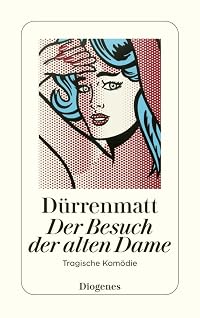
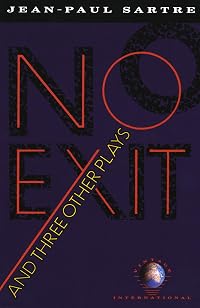
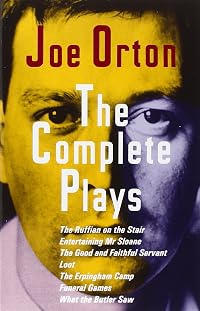
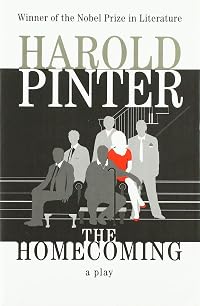
CGlanovsky Plays about plays with absurdist humor
Member Reviews
This edition starts with a wonderful introduction/essay by Peter Brook, the English theatre and film director. Not only does he analyze the play and its reception but tackles the topic of what makes theatre good, in general.
The play itself is one of Sade's swan songs from imprisonment at Charenton, the final imprisonment and the place of his death. In it, the imaginary meeting between the Marquis and Marat is a departure point for Sade, who had said, "It is not my mode of thought that has caused my misfortunes, but the mode of thought of others", to feel resentment over his own condition:
"Give up Marat
You said yourself nothing can be achieved by
scribbling
Long ago I abandoned my masterpiece a roll of paper
in my dungeon years ago
It show more vanished when the Bastille fell
it vanished as everything written
everything thought and planned
will disappear."
and echo the French soul's buyer's remorse over buying revolution heavily seasoned with violence:
"We're all so clogged with dead ideas
passed from generation to generation
that even the best of us don't know the way out
We invented the Revolution
but we don't know how to run it
Look everyone wants to keep something from the past
a souvenir of the old regime
This man decides to keep a painting
This one keeps his mistress
He [pointing] keeps his garden
He [pointing] keeps his estate
He keeps his country house
He keeps his factories
This man couldn't part with his shipyards
This one kept his army
and that one keeps his king"
Marat and Sade both saw the need for revolutionary change and in answering the call, they were killed by the demons they themselves helped to summon:
"...you came one day to the Revolution because you saw the most important vision
That our circumstances must be changed fundamentally
and without these changes everything we try to do must fail" show less
The play itself is one of Sade's swan songs from imprisonment at Charenton, the final imprisonment and the place of his death. In it, the imaginary meeting between the Marquis and Marat is a departure point for Sade, who had said, "It is not my mode of thought that has caused my misfortunes, but the mode of thought of others", to feel resentment over his own condition:
"Give up Marat
You said yourself nothing can be achieved by
scribbling
Long ago I abandoned my masterpiece a roll of paper
in my dungeon years ago
It show more vanished when the Bastille fell
it vanished as everything written
everything thought and planned
will disappear."
and echo the French soul's buyer's remorse over buying revolution heavily seasoned with violence:
"We're all so clogged with dead ideas
passed from generation to generation
that even the best of us don't know the way out
We invented the Revolution
but we don't know how to run it
Look everyone wants to keep something from the past
a souvenir of the old regime
This man decides to keep a painting
This one keeps his mistress
He [pointing] keeps his garden
He [pointing] keeps his estate
He keeps his country house
He keeps his factories
This man couldn't part with his shipyards
This one kept his army
and that one keeps his king"
Marat and Sade both saw the need for revolutionary change and in answering the call, they were killed by the demons they themselves helped to summon:
"...you came one day to the Revolution because you saw the most important vision
That our circumstances must be changed fundamentally
and without these changes everything we try to do must fail" show less
“We're all free and equal to die like dogs”
Every death even the cruelest death
drowns in the total indifference of Nature
Nature herself would watch unmoved
if we destroyed the entire human race
I hate Nature
this passionless spectator this unbreakable iceberg-face
that can bear everything
this goads us to greater and greater acts
Once and for all
the idea of glorious victories
won by the glorious army
must be wiped out
Neither side is glorious
On either side they're just frightened men messing their pants
and they all want the same thing
Not to lie under the earth
but to walk upon it
without crutches.
I saw this play years ago, and I still remember it as one of the most powerful plays I've ever encountered on the stage. In all truth, I wasn't sure how well it would hold up in a simple reading, but the themes and language are as powerful and hardhitting as I remember. Of course, the visuals came back to me as I read Weiss's work, so I can't be sure how well the work translates to a reader unfamiliar with the staged production. I can say that, as a creative play on history that interacts with true personalities and philosophies and histories taken directly from the past, this play is unsurpassable, and worth every effort to produce. I've heard there's a phenomenal dvd production of the play, and I plan on looking it up before fully show more committing to teaching this text--but, in the meantime, if you're a reader of plays or looking for works to produce, you should read this. It may be based in history, but its power and ideas are as relevant now as they were upon Weiss's writing. Absolutely recommended. show less
A brilliant look at revolution and corruption. Because of this play, I will be researching and reading Sade for years.
I like my plays with more plot. But this was very moving. Dischordant and confusing and ikky, but moving...
Does what a play should do--asks political questions in an unforgettable context. I saw a college production, and it was transforming. This version came with the RSC LP recording, which I no longer have. Includes Richard Peaslee's tunes for the songs at the back of the book.
Sein neues Theaterstück, das sich eng an historische Fakten hält, auf authentisches Material sich gründet und doch von einem historischen Stück so weit wie nur irgend möglich entfernt ist. Leben und Tod Jean Paul Marats werden als Spiel im Spiel, als Theater im Theater, dreizehn Jahre nach seinem Tode im Irrenhaus von Charenton dargestellt. Regie führt der Marquis de Sade.
Members
- Recently Added By
Lists

Plays I Like
230 works; 31 members

Recommend the 20 best books you've read in the last five years
2,168 works; 606 members

1960s
281 works; 16 members

German Literature
518 works; 55 members

Literature in Translation
113 works; 5 members

Fiction Set During a Revolution
55 works; 24 members

Favourite Books
1,817 works; 316 members

Books Read in 2016
4,666 works; 199 members
1960s, Best books published therein
254 works; 22 members

20th Century Literature
1,161 works; 54 members

Books Read in 2018
4,360 works; 110 members
My Play Collection
769 works; 3 members

Next Plays / 2025
352 works; 1 member

Books Read in 2026
1,826 works; 65 members
Author Information

In December 1965 Peter Weiss's Marat/Sade (1964), in a presentation by Britain's Royal Shakespeare Company, stormed the Broadway stage, captivating audience and critic alike. The assumption that the play about the murder of Marat by Charlotte Corday might have been one of the many dramatic pieces written by Sade---and enacted by his fellow inmates show more for "therapeutic" reasons during the Marquis's confinement at Charenton---provided Weiss (who maintained that "every word I put down is political") with his framework for the "confrontation of the revolutionary Marat as the apostle of social improvement and the cynical individualist, the Marquis de Sade" (N.Y. Times). The Investigation (1965), which Weiss considered his best play, was first presented in 20 theaters in East and West Germany; Ingmar Bergman (see Vol. 3) was its Swedish director. It was staged in New York in 1966. Taken almost entirely from the actual proceedings of the 1965 Frankfurt War Crimes Tribunal on Auschwitz, The Investigation is a "harrowing but insistently commanding experience" (Walter Kerr, N.Y. Times). The audience, in effect, reenacts the role of the original courtroom spectators in this shattering, true account of man's depravity. Weiss received the Buchner Prize in 1982. (Bowker Author Biography) show less
Some Editions
Awards and Honors
Awards
Series
Belongs to Publisher Series
Work Relationships
Is contained in
Has the adaptation
Has as a commentary on the text
Has as a student's study guide
Common Knowledge
- Canonical title
- The Persecution and Assassination of Jean-Paul Marat as Performed by the Inmates of the Asylum of Charenton Under the Direction of the Marquis de Sade
- Original title
- Die Verfolgung und Ermordung Jean Paul Marats dargestellt durch die Schauspielgruppe des Hospizes zu Charenton unter Anleitung des Herrn de Sade
- Alternate titles
- Marat/Sade
- Original publication date
- 1964 (German); 1965 (English translation) (German | English translation)
- People/Characters
- Jean-Paul Marat; Donatien Alphonse-François, Marquis de Sade; Charlotte Corday
- Important places
- Charenton, Saint-Maurice, Île-de-France, France
- Important events
- French Revolution (1789)
- Related movies
- Marat/Sade (1967 | IMDb)
- First words
- The asylum bell rings behind the stage.
- Last words
- (Click to show. Warning: May contain spoilers.)In desperation Coulmier gives the signal to close the curtain.
- Original language
- German
Classifications
Statistics
- Members
- 1,380
- Popularity
- 17,141
- Reviews
- 15
- Rating
- (3.92)
- Languages
- 14 — Catalan, Czech, Danish, Dutch, English, Estonian, Finnish, French, German, Italian, Portuguese, Russian, Spanish, Swedish
- Media
- Paper, Ebook
- ISBNs
- 24
- UPCs
- 1
- ASINs
- 28