

A Connecticut Yankee in King Arthur's Court
by Mark Twain 
On This Page
Description
In Mark Twain's 1889 novel A Connecticut Yankee in King Arthur's Court, Hank Morgan awakes from a blow to the head only to find that he has been mysteriously transported back in time. It is early medieval England, the time of King Arthur and Hank is taken to the Camelot castle by a Knight of the King's. Ridiculed for his funny manner and dress sense, and sentenced to burn at the stake, Hank recovers through an incredible stroke of luck, and in doing so convinces the superstitious King and show more his subjects that he possesses great powers.. show less
Tags
Recommendations
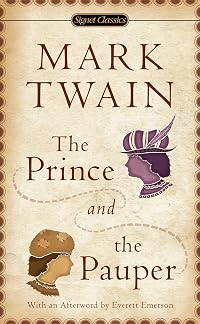

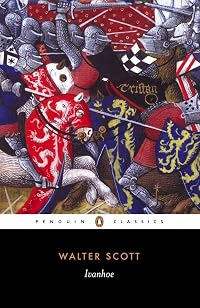

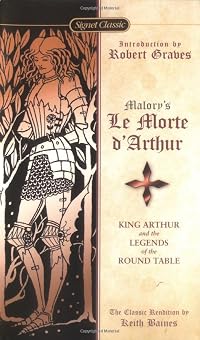
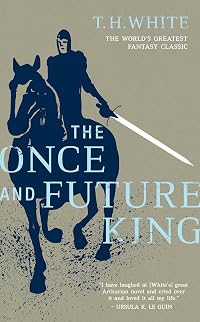





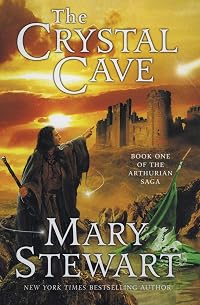
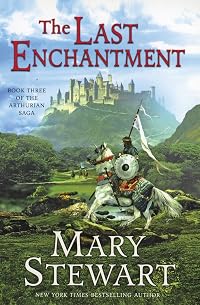

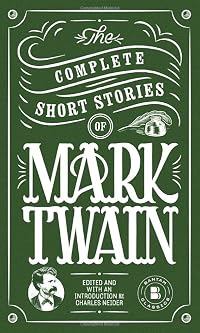
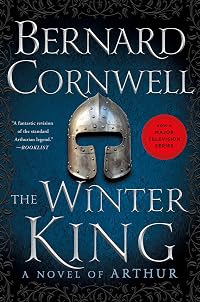






Member Recommendations

Member Reviews
Mark Twain's classic time-traveling satire, A Connecticut Yankee in King Arthur's Court follows Hank Morgan, a northern factory foreman, who finds himself transported back to 6th Century England and uses his 19th century knowledge to elevate himself to the role of The Boss, second only to the King. Much of the story serves to attack institutions in which an elect group concentrates power among themselves and so debases the lower classes that they cannot conceive rising up against it. The slaves Twain portrays in Arthurian England belong less to the 6th century than to 18th and 19th century America. Twain battles superstition as well, writing, "Somehow, every time the magic of fol-de-rol tried conclusions with the magic of science, the show more magic of fol-de-rol got left" (p. 287). Additionally, Twain's criticisms of the Catholic Church, and institutionalized religion in general, reflect his public comments on the religion and serve to foreshadow the story's grim ending.
Twain clearly loves Sir Thomas Malory's Le Morte d'Arthur as he quotes freely from the text, even allowing characters like Sandy to relate tales of knight's exploits in lengthy passages from Malory. Therefore, reading Malory immediately before starting Yankee in King Arthur's Court helps one to better enjoy Twain's references and humor.
This edition from Reader's Digest features gorgeous illustrations by Joseph Ciardiello that capture the absurdity of Twain's story with lavish color and action. The afterword by T.E.D. Klein contextualizes Twain's writing while setting it within the Arthurian canon. The leather binding ensures that this will look wonderful on any bookshelf. show less
Twain clearly loves Sir Thomas Malory's Le Morte d'Arthur as he quotes freely from the text, even allowing characters like Sandy to relate tales of knight's exploits in lengthy passages from Malory. Therefore, reading Malory immediately before starting Yankee in King Arthur's Court helps one to better enjoy Twain's references and humor.
This edition from Reader's Digest features gorgeous illustrations by Joseph Ciardiello that capture the absurdity of Twain's story with lavish color and action. The afterword by T.E.D. Klein contextualizes Twain's writing while setting it within the Arthurian canon. The leather binding ensures that this will look wonderful on any bookshelf. show less
"You can't depend on your eyes when your imagination is out of focus."
‘A Connecticut Yankee in King Arthur’s Court’ begins when Hank Morgan, a skilled mechanic in a nineteenth-century New England arms factory, is struck on the head during a quarrel and awakes to find himself among the knights and magicians of King Arthur’s Camelot. Seeing the power that Merlin holds over King Arthur and his court, the narrator proclaims himself to be an even greater magician, using his 19th century scientific knowledge to create supposed miracles. As his standing in court grows the Yankee embarks on an ambitious plan to modernize Camelot with 19th century with industrial inventions like electricity, schools, newspapers, currency, dynamite and show more fireworks but in the end he is unable to prevent the death of Arthur and an interdict brought against him by the Catholic Church which grows fearful of his power.
Mark Twain was undergoing a series of personal and professional crises when this novel was written in 1889. Twain wrote the book as a burlesque of Romantic notions of chivalry by certain authors of his time like Sir Walter Scott and celebrates homespun ingenuity and democratic values while questioning the ideals of capitalism and outcomes of the Industrial Revolution.
This novel is also one of the first works to feature time travel. Whilst the genre has certainly changed over the years, Twain does it well, showing both the influence of the 19th century on Arthurian times and offering at the end a reasonable explanation as to why history continued as expected.
Twain satirizes concepts of class throughout the book, as the main character — while appreciative of Arthur himself — is determined to do away with all the inherent injustices of a societal order that holds some people to be better than others. Justice, in this book, is particularly brutal.
Twain's writing is sly and sardonic, and I was charmed by the early chapters in particular. As the narrator enters the court at Camelot for the first time he has an encounter with a young boy:
"He arrived, looked me over with a smiling and impudent curiosity; said he had come for me, and informed me that he was a page.
“Go ‘long,” I said, “you ain’t more than a paragraph.”
Unfortunately whilst I admired his writing skill I felt that the book meandered at times losing both direction and impetus as Twain climbed onto his own personal hobbyhorses. Equally I feel that the nature of monarchies have changed so much since this book's publication that some of the arguments put forward have become totally irrelevant, likewise you only have to look at what is happening in certain 'democratic' countries around the world to realise that democracy isn't all that it's cracked up to be either. show less
‘A Connecticut Yankee in King Arthur’s Court’ begins when Hank Morgan, a skilled mechanic in a nineteenth-century New England arms factory, is struck on the head during a quarrel and awakes to find himself among the knights and magicians of King Arthur’s Camelot. Seeing the power that Merlin holds over King Arthur and his court, the narrator proclaims himself to be an even greater magician, using his 19th century scientific knowledge to create supposed miracles. As his standing in court grows the Yankee embarks on an ambitious plan to modernize Camelot with 19th century with industrial inventions like electricity, schools, newspapers, currency, dynamite and show more fireworks but in the end he is unable to prevent the death of Arthur and an interdict brought against him by the Catholic Church which grows fearful of his power.
Mark Twain was undergoing a series of personal and professional crises when this novel was written in 1889. Twain wrote the book as a burlesque of Romantic notions of chivalry by certain authors of his time like Sir Walter Scott and celebrates homespun ingenuity and democratic values while questioning the ideals of capitalism and outcomes of the Industrial Revolution.
This novel is also one of the first works to feature time travel. Whilst the genre has certainly changed over the years, Twain does it well, showing both the influence of the 19th century on Arthurian times and offering at the end a reasonable explanation as to why history continued as expected.
Twain satirizes concepts of class throughout the book, as the main character — while appreciative of Arthur himself — is determined to do away with all the inherent injustices of a societal order that holds some people to be better than others. Justice, in this book, is particularly brutal.
Twain's writing is sly and sardonic, and I was charmed by the early chapters in particular. As the narrator enters the court at Camelot for the first time he has an encounter with a young boy:
"He arrived, looked me over with a smiling and impudent curiosity; said he had come for me, and informed me that he was a page.
“Go ‘long,” I said, “you ain’t more than a paragraph.”
Unfortunately whilst I admired his writing skill I felt that the book meandered at times losing both direction and impetus as Twain climbed onto his own personal hobbyhorses. Equally I feel that the nature of monarchies have changed so much since this book's publication that some of the arguments put forward have become totally irrelevant, likewise you only have to look at what is happening in certain 'democratic' countries around the world to realise that democracy isn't all that it's cracked up to be either. show less
I found A Connecticut Yankee in King Arthur’s Court much darker than I was expecting. It begins with humor, but the story gradually becomes more cynical and disturbing in places. Twain clearly wanted to criticize superstition, monarchy, and inequality, but the novel also ends up criticizing blind faith in progress and technology.
What bothered me most was that Hank Morgan constantly treats the people of Camelot like children who need to be taught nineteenth-century ideas, industry, and technology in order to raise them out of their “backwardness.” I found Morgan arrogant in the way he assumes his own society is automatically superior. He rarely seems interested in understanding the culture he has entered. Instead of trying to show more understand the people and their way of life, he sets out to reshape everything according to his own standards, and unsurprisingly this leads to disastrous consequences.
I also thought the tonal shifts in the novel were strange but interesting. One moment the book feels playful and adventurous, and the next it becomes violent, bleak, and almost apocalyptic. By the end of the book, Twain seems much less optimistic about human nature and technological “progress.”
Although I didn’t always enjoy Hank Morgan as a character, I appreciated how ambitious the novel is. It feels surprisingly modern in the way it questions whether technological advancement actually makes society better. Overall, I found it uneven but thought-provoking, and much darker and more complex when compared to other works from Mark Twain. show less
What bothered me most was that Hank Morgan constantly treats the people of Camelot like children who need to be taught nineteenth-century ideas, industry, and technology in order to raise them out of their “backwardness.” I found Morgan arrogant in the way he assumes his own society is automatically superior. He rarely seems interested in understanding the culture he has entered. Instead of trying to show more understand the people and their way of life, he sets out to reshape everything according to his own standards, and unsurprisingly this leads to disastrous consequences.
I also thought the tonal shifts in the novel were strange but interesting. One moment the book feels playful and adventurous, and the next it becomes violent, bleak, and almost apocalyptic. By the end of the book, Twain seems much less optimistic about human nature and technological “progress.”
Although I didn’t always enjoy Hank Morgan as a character, I appreciated how ambitious the novel is. It feels surprisingly modern in the way it questions whether technological advancement actually makes society better. Overall, I found it uneven but thought-provoking, and much darker and more complex when compared to other works from Mark Twain. show less
There is so much to unpack in A Connecticut Yankee in King Arthur's Court. When one thinks of Samuel Clemens, aka Mark Twain, science fiction doesn't readily come to mind. Sarcastic? Humorous? Yes. But certainly not science fiction in my book. The plot is simple. Nineteenth century mechanic Hank Morgan gets a conk on the head that sends him back to the 6th century. At first he thinks it is all a joke ("Get back to your circus," he tells a knight in full armor riding an armored horse). Once convinced he has truly traveled back in time he realizes he can use his knowledge of the "future," like an upcoming solar eclipse and the invention of electricity, to his advantage.
Woven throughout the plot is Twain's celebration of democracy while show more at the same time condemning humankind through observations about social and human inequalities. He attacks British nobility and rails against poverty and slavery.
How it all ends? The divine right of the King is the be settled in another book. Good news for Twain fans. That kind of ending is like your favorite musician hinting that they are working on a new album. Stay tuned. There is more to come. show less
Woven throughout the plot is Twain's celebration of democracy while show more at the same time condemning humankind through observations about social and human inequalities. He attacks British nobility and rails against poverty and slavery.
How it all ends? The divine right of the King is the be settled in another book. Good news for Twain fans. That kind of ending is like your favorite musician hinting that they are working on a new album. Stay tuned. There is more to come. show less
I read an abridged version of this book as a kid and loved it. Re-read it many times. It contained mostly the action parts, so it was a lot of fun. Read it as an adult (listened to Nick Offerman's reading of it, actually) and found it was so much more. Both a fun story and a compelling statement about Twain's political views. Anti-slavery was the key takeaway, but anti-church, anti-nobility, and pro-democracy were other aspects. It could get a little long winded at times, but Offerman's reading never let me get bored. And quickly enough Twain would swing back into action and propose another showy example of 19th century innovation in 6th century backwaters to make our hero, Hank, shine like a star never to be eclipsed. I'd forgotten how show more sudden and (in a sense) sad the ending was, but I had no other expectations since it started with Hank back in the 19th century so therefore that's how it must end. All in all, I love this book now as an adult just as much as I loved it as a kid. show less
Another Multi-Layered Satire of Americanism
Hank Morgan, a 19th-century arms engineer, is struck on the head during an argument at work and wakes up in England in the 6th century, where he soon makes a name for himself as a magician more powerful than Merlin. Although not a sequel, the novel picks up almost directly from where Mark Twain left off in Adventures of Huckleberry Finn (1884). Although Twain continues to renounce Old World romantic chivalry and heroism by way of hereditary nobility and superstitious tradition in favor of American rugged self-reliance and ingenuity, he criticizes Enlightenment and Industrial Revolution-era philosophies, particularly capitalism. In the end, Hank creates a society just as capable of violence, show more even mass slaughter, and blind obedience, to brand if not religion or title, as the one he rejects. One more wry classic in Twain's oeuvre. show less
Hank Morgan, a 19th-century arms engineer, is struck on the head during an argument at work and wakes up in England in the 6th century, where he soon makes a name for himself as a magician more powerful than Merlin. Although not a sequel, the novel picks up almost directly from where Mark Twain left off in Adventures of Huckleberry Finn (1884). Although Twain continues to renounce Old World romantic chivalry and heroism by way of hereditary nobility and superstitious tradition in favor of American rugged self-reliance and ingenuity, he criticizes Enlightenment and Industrial Revolution-era philosophies, particularly capitalism. In the end, Hank creates a society just as capable of violence, show more even mass slaughter, and blind obedience, to brand if not religion or title, as the one he rejects. One more wry classic in Twain's oeuvre. show less
Mark Twain's classic tale of a 19th-century go-getter who gets hit on the head, wakes up in the kingdom of Camelot, and proceeds to gleefully set about introducing his own era's technology and ideas about civilization to the Dark Ages (soon to be briefly lit by electricity).
This isn't the first time I'd read this novel, but my last encounter was nearly a quarter-century ago, and apparently I hadn't remembered it nearly as well as I'd thought. I'd recalled it, somewhat fondly, as a comic romp, a humorous satire of both Arthurian romance and the social attitudes of the Gilded Age, as well as the predecessor of a zillion less interesting science fiction stories in which improbably ingenious time travelers manage to rebuild their own show more technologically advanced civilizations centuries early, from scratch.
Well, it is all of those things. But what I'd completely forgotten is that it's also a scathing diatribe against monarchy, slavery, state-established religion, and the oppression of the poor, complete with lots of disturbing and depressing scenes calculated to bring the importance of these subjects home. Twain being Twain, it's very well done, but it does perhaps get to be a bit much. It certainly wasn't an ideal thing to read at a time when I was busy and easily distracted.
Rating: Despite it not being quite the right book at the right time for me, I figure it still probably deserves 4/5. Because, come on, Twain. show less
This isn't the first time I'd read this novel, but my last encounter was nearly a quarter-century ago, and apparently I hadn't remembered it nearly as well as I'd thought. I'd recalled it, somewhat fondly, as a comic romp, a humorous satire of both Arthurian romance and the social attitudes of the Gilded Age, as well as the predecessor of a zillion less interesting science fiction stories in which improbably ingenious time travelers manage to rebuild their own show more technologically advanced civilizations centuries early, from scratch.
Well, it is all of those things. But what I'd completely forgotten is that it's also a scathing diatribe against monarchy, slavery, state-established religion, and the oppression of the poor, complete with lots of disturbing and depressing scenes calculated to bring the importance of these subjects home. Twain being Twain, it's very well done, but it does perhaps get to be a bit much. It certainly wasn't an ideal thing to read at a time when I was busy and easily distracted.
Rating: Despite it not being quite the right book at the right time for me, I figure it still probably deserves 4/5. Because, come on, Twain. show less
Members
- Recently Added By
Lists

The Guardian's 1000 Novels Everyone Must Read
1,005 works; 547 members

Classics you know you should have read but probably haven't
421 works; 408 members

Favorite Childhood Books
1,646 works; 518 members

Read the book and saw the movie
1,170 works; 195 members

Best Fantasy Novels
821 works; 361 members

Favourite 19th century fiction
257 works; 62 members

Best Time Travel Novels
165 works; 125 members

Best Arthurian Fiction
104 works; 33 members

Historical Fiction
889 works; 91 members
Harold Bloom - The Western Canon: C. The Democratic Age
336 works; 15 members
Best Political Fiction
92 works; 12 members
Favourite Books
1,817 works; 316 members

Unread books
1,063 works; 87 members

Best time travel books
56 works; 22 members

Children's Fantasy
73 works; 10 members

Out of Copyright
244 works; 14 members

Best Adventure Stories
66 works; 15 members
19th Century
190 works; 16 members

Blue Pyramid 1,276 Best Books of All Time
1,248 works; 32 members

Pleasant Surprises: Books That Exceeded Our Expectations
418 works; 143 members

1964 College Preparatory Reading List
202 works; 8 members
Phi Beta Kappa reading list
260 works; 8 members

Newark Public Library's 1904 List of a Thousand of the Best Novels
95 works; 5 members

Rory Gilmore Book Club
193 works; 5 members
Survey of Science Fiction and Fantasy
101 works; 13 members

Best of American Literature
146 works; 9 members

Victorian Period
113 works; 10 members
Works That Inspired Disney Movies
119 works; 13 members

Books Read in 2015
3,299 works; 129 members

Books Read in 2017
4,249 works; 130 members

Americans Abroad
11 works; 6 members
Modern Arthurian Fiction
237 works; 16 members
American Lit for Eng 11 Research Project
368 works; 6 members

um actually
76 works; 3 members

Armed Services Editions
150 works; 1 member

Read-alike - Ready Player One
11 works; 1 member

Books Read in 2024
4,623 works; 126 members

EGBERTINA'S List of childhood books worthy of merit or unspeakable delight
155 works; 6 members

Recommended Reading : 600 Classics Reviewed, Editors of Salem Press, 2015
634 works; 6 members

Ambleside Year 7
69 works; 1 member
Books We Love to Reread
688 works; 296 members
Time Travel Stories
64 works; 6 members

Books You Couldn't Finish
202 works; 32 members

Biggest Disappointments
606 works; 168 members

Fiction with Men's Given Names in the Title
302 works; 11 members

Books With Place Names in the Title
215 works; 10 members
Honey For a Child's Heart
1,152 works; 25 members

Edad Media
33 works; 1 member
Fiction (Mostly) in Selective Bibliography of American Literature 1775-1900
431 works; 3 members
Speculative Fiction: The Classics
36 works; 5 members

The Complete Rory Gilmore Reading List
506 works; 5 members

1970s
657 works; 23 members
Great American Novels
158 works; 42 members
Favorite Long Books
330 works; 42 members
Talk Discussions
Past Discussions
Group Read - A Connecticut Yankee in King Arthur's Court - Mark Twain in 2013 Category Challenge (April 2013)
Book Discussion: Arthurian Themed Read *Spoiler Free* in The Green Dragon (March 2008)
Author Information

2,751+ Works 208,740 Members
Mark Twain was born Samuel L. Clemens in Florida, Missouri on November 30, 1835. He worked as a printer, and then became a steamboat pilot. He traveled throughout the West, writing humorous sketches for newspapers. In 1865, he wrote the short story, The Celebrated Jumping Frog of Calaveras County, which was very well received. He then began a show more career as a humorous travel writer and lecturer, publishing The Innocents Abroad in 1869, Roughing It in 1872, and, Gilded Age in 1873, which was co-authored with Charles Dudley Warner. His best-known works are The Adventures of Tom Sawyer, Mississippi Writing: Life on the Mississippi, and The Adventures of Huckleberry Finn. He died of a heart attack on April 21, 1910. (Bowker Author Biography) show less
Mark Twain has a Legacy Library. Legacy libraries are the personal libraries of famous readers, entered by LibraryThing members from the Legacy Libraries group.
Some Editions
Awards and Honors
Notable Lists
Series
Belongs to Publisher Series
Grandes Novelas de Aventuras (XLVIII)
Narrativa [Nord] (158)
Airmont Classics (29)
dtv phantastica (1880)
El País Aventuras (35)
Reader's Enrichment Series (RE 301)
Limited Editions Club (S:18.14)
Tus libros (89)
Ravensburger Taschenbuch (396)
insel taschenbuch (0437)
Work Relationships
Is contained in
Historical Romances: The Prince and the Pauper / A Connecticut Yankee in King Arthur's Court / Personal Recollections of Joan of Arc by Mark Twain
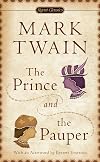
The Prince and the Pauper; A Connecticut Yankee in King Arthur's Court (Signet Classics) by Mark Twain
Mark Twain : the adventures of Tom Sawyer ; the adventures of Huckleberry Finn ; Mark Twain's sketches ; Mark Twain's (burlesque) autobiography ; the prince and the pauper ; a Connecticut yankee in King Authur's court by Mark Twain
Is retold in
Has the adaptation
Illustrated Classic Editions: A Connecticut Yankee in King Arthur's Court (Illustrate Classic Editions) by Mark Twain
Is abridged in
Is parodied in
Inspired
Has as a study
Has as a student's study guide
Common Knowledge
- Canonical title
- A Connecticut Yankee in King Arthur's Court
- Original title
- A Yankee at the Court of King Arthur
- Alternate titles*
- A Yankee at the Court of King Arthur
- Original publication date
- 1889
- People/Characters
- Hank Morgan the "Boss"; King Arthur; Lancelot du Lac; Merlin; Clarence; Sandy (show all 9); Guinevere; Sir Sagramor le Desirous; Morgan Le Fay
- Important places
- Camelot; Albion; Connecticut, USA; United Kingdom
- Important events
- Solar eclipse; Arthurian England; Middle Ages
- Related movies
- A Connecticut Yankee in King Arthur’s Court (1949 | IMDb); A Connecticut Yankee in King Arthur's Court (1955 | IMDb); A Connecticut Yankee in King Arthur's Court (1921 | IMDb); A Connecticut Yankee in King Arthur's Court (1989 | IMDb); A Connecticut Yankee in King Arthur's Court (1970 | IMDb); A Connecticut Yankee in King Arthur's Court (1952 | IMDb) (show all 8); A Connecticut Yankee in King Arthur's Court (1978 | IMDb); A Connecticut Yankee in King Arthur's Court (1954 | IMDb)
- First words
- "Camelot—Camelot," said I to myself. "I don’t seem to remember hearing of it before. Name of the asylum, likely."
- Quotations
- There never was such a country for wandering liars; and they were of both sexes.
- Last words
- (Click to show. Warning: May contain spoilers.)He was getting up his last "effect"; but he never finished it.
- Original language
- Inglés; English
*Some information comes from Common Knowledge in other languages. Click "Edit" for more information.
Classifications
Statistics
- Members
- 13,138
- Popularity
- 598
- Reviews
- 152
- Rating
- (3.70)
- Languages
- 21 — Catalan, Czech, Danish, English, Estonian, Finnish, French, German, Galician, Greek, Hebrew, Hungarian, Italian, Lithuanian, Polish, Portuguese, Romanian, Russian, Spanish, Swedish, Turkish
- Media
- Paper, Audiobook, Ebook
- ISBNs
- 534
- UPCs
- 4
- ASINs
- 333