On This Page
Description
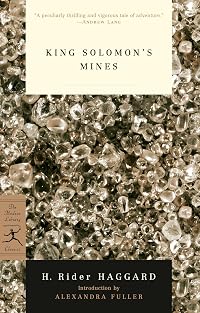
H. Rider Haggard's King Solomon's Mines tells of a group of adventurers journeying into unexplored Africa in order to find the missing brother of one of the party. The book became an immediate bestseller after publication in 1885. At the time large parts of Africa remained unexplored by Europeans and the book captured the imagination of the public..
Tags
Recommendations



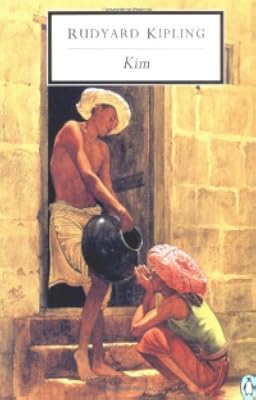


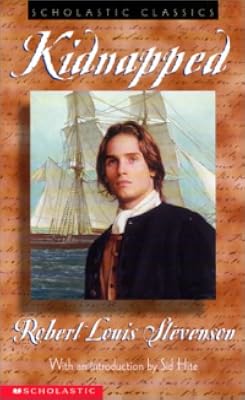


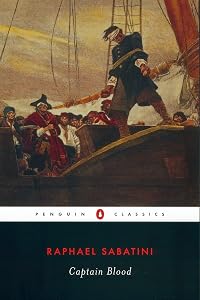
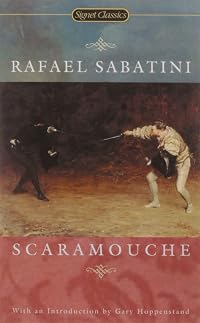
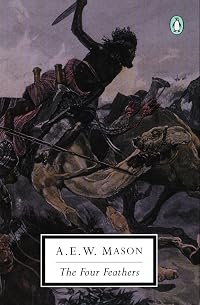


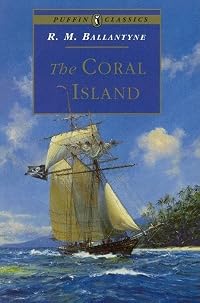

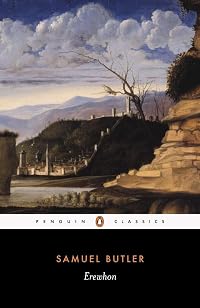




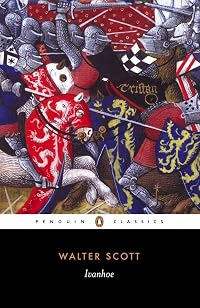
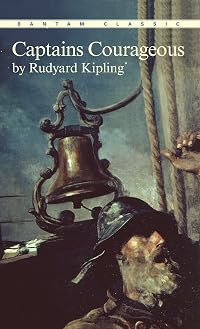
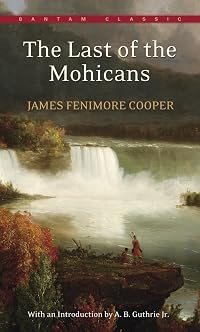

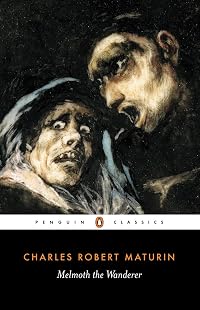
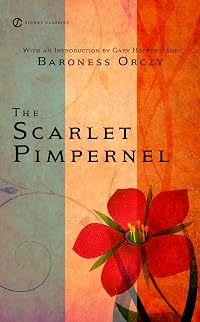
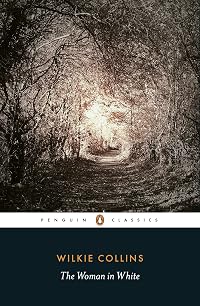

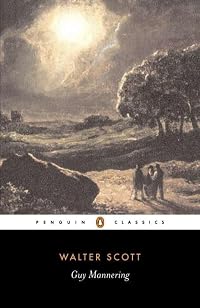




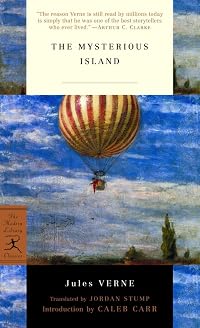
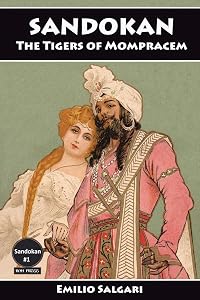
Member Recommendations
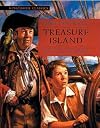
souloftherose King Solomon's Mines was written as a result of a wager between H. Rider Haggard and his brother on whether he could write a novel half as good as R. L. Stevenson's Treasure Island. Why not read them both and decide for yourself?
70

cbl_tn These novels have some similar plot elements.
30
Member Reviews
This is an old fashioned adventure yarn and its hero, Alan Quatermain, is a direct ancestor of Indiana Jones. I'm not going to claim that Haggard even at his best is the same order of classic as the best by Charles Dickens, the Brontes, George Eliot or Thomas Hardy. But like fellow Victorians Arthur Conan Doyle or Robert Louis Stevenson or Rudyard Kipling, Haggard really could spin a good yarn. Ten of his books are on my bookshelves. I gobbled those up in my teens and most I remember very, very well even decades later. My favorite of his novels involved Ayesha, known as She-Who-Must-Be-Obeyed, especially the book Wisdom's Daughter. King Solomon's Mines is his most famous novel though, probably helped by the film of that title. It does show more have humor, some unforgettable scenes and images, and lots of adventure and daring do. Yet I could list several novels by Haggard I liked better. And I think that has to do with Quatermain himself, the epitome of the "Great White Hunter" with the kind of casual racism of the age and glory in bagging game you might expect. I prefer Haggard's Eric, the Viking from Eric Brighteyes. Or Olaf from The Wanderer's Necklace. Or his Odysseus from his Homer homage written with Andrew Lang, The World's Desire. And above all his indomitable Ayesha, one of the great heroines of Victorian literature. So while this is Haggard's best known work, I don't think it's necessarily his best or the one a contemporary reader would enjoy the most. show less
If nothing else reading classics such as this reminds us how far we have come since the Victorian society in which this book is set. For one thing, there can't be a square mile of land on earth that hasn't been thoroughly mapped and almost as thoroughly explored. Nowadays in order to make a treasure hunt realistic it would have to be set on a distant planet or deep under the sea. Also, the way in which people of colour are portrayed is now far different from the noble savages and humble servants of this book. I think it is good to look back now and then to what is not that long ago. It doesn't hurt that this is a cracking good adventure story.
Alan Quatermain is an elephant hunter in southern Africa who manages to get by financially but show more never gets wealthy. He meets Sir Henry Curtis who is searching for his brother who came to Africa to look for the fabled mines of King Solomon and has not been heard from in two years. Sir Henry asks Quatermain to accompany him on his search promising him a share of any treasure they find. Quatermain agrees although he thinks the likelihood of surviving, let alone finding treasure, is slight because Sir Henry promises to set up a fund to support Quatermain's son regardless of the outcome.
This book is on the 1001 Books to Read before you Die list and I can understand why since it was one of the first adventure stories. It's an easy read and diverting if you can ignore the elephant slaughter and the bloody deaths that are depicted. show less
Alan Quatermain is an elephant hunter in southern Africa who manages to get by financially but show more never gets wealthy. He meets Sir Henry Curtis who is searching for his brother who came to Africa to look for the fabled mines of King Solomon and has not been heard from in two years. Sir Henry asks Quatermain to accompany him on his search promising him a share of any treasure they find. Quatermain agrees although he thinks the likelihood of surviving, let alone finding treasure, is slight because Sir Henry promises to set up a fund to support Quatermain's son regardless of the outcome.
This book is on the 1001 Books to Read before you Die list and I can understand why since it was one of the first adventure stories. It's an easy read and diverting if you can ignore the elephant slaughter and the bloody deaths that are depicted. show less
One of the classics in the genre – and when you start a review with something like that you're acknowledging that it hasn't necessarily travelled well. By modern standards, King Solomon's Mines is tame – less thrills-and-spills than a modern adventure, and with prose that is pared right back while still admitting all those old-fashioned Victorian flourishes.
But it is very quick to read and not without some humour. Author H. Rider Haggard is trying to overreach himself sometimes with his prose, and it becomes clumsy, but the workmanlike nature of the writing becomes a blessing: not only does it allow for pace, but it also suits our narrator, the elephant-hunter Allan Quatermain who is "more accustomed to handle a rifle than a pen" show more (pg. 6). Quatermain himself was a bit of a surprise: I expected a grizzled, larger-than-life adventurer (as you would expect, and as Sean Connery portrayed him in The League of Extraordinary Gentlemen), but Haggard's Quatermain states from the off that he is "a timid man, and don't like violence, and am pretty sick of adventure" (pg. 7); "a bit of a coward" (pg. 223). He isn't – by modern standards, at least – but it is an interesting approach. I don't know if it's better or worse, but it's interesting.
More importantly, King Solomon's Mines has served as a durable mould for the genre of adventure fiction – exotic landscapes, treasure hunts, perilous caverns and lost worlds – that to this day can excite with the same basic model that Rider Haggard demonstrated well over a century ago. The book's influence is huge (not least on Indiana Jones, which every review of the book is obliged to mention) and if its footprint is less immediately tangible than its self-identified rival, R. L. Stevenson's Treasure Island, it is still there.
With its old-fashioned style and its complete counterpoint to modern social mores – featuring big-game hunting, for example, and some – ah – dated attitudes to race and colonialism (all reviews are also obliged to mention this) – it can be a hard sell nowadays. But, mark you, there are diamonds in the mine. show less
But it is very quick to read and not without some humour. Author H. Rider Haggard is trying to overreach himself sometimes with his prose, and it becomes clumsy, but the workmanlike nature of the writing becomes a blessing: not only does it allow for pace, but it also suits our narrator, the elephant-hunter Allan Quatermain who is "more accustomed to handle a rifle than a pen" show more (pg. 6). Quatermain himself was a bit of a surprise: I expected a grizzled, larger-than-life adventurer (as you would expect, and as Sean Connery portrayed him in The League of Extraordinary Gentlemen), but Haggard's Quatermain states from the off that he is "a timid man, and don't like violence, and am pretty sick of adventure" (pg. 7); "a bit of a coward" (pg. 223). He isn't – by modern standards, at least – but it is an interesting approach. I don't know if it's better or worse, but it's interesting.
More importantly, King Solomon's Mines has served as a durable mould for the genre of adventure fiction – exotic landscapes, treasure hunts, perilous caverns and lost worlds – that to this day can excite with the same basic model that Rider Haggard demonstrated well over a century ago. The book's influence is huge (not least on Indiana Jones, which every review of the book is obliged to mention) and if its footprint is less immediately tangible than its self-identified rival, R. L. Stevenson's Treasure Island, it is still there.
With its old-fashioned style and its complete counterpoint to modern social mores – featuring big-game hunting, for example, and some – ah – dated attitudes to race and colonialism (all reviews are also obliged to mention this) – it can be a hard sell nowadays. But, mark you, there are diamonds in the mine. show less
You can think of this as basically a comic book for middle-aged Victorians, simply substituting Superman's superpowers for what Mark Ames so memorably termed the "White God" factor - weathered Anglo badass strolls into a savage land, uses his superior Caucasianosity to kick ass/get rich/fuck local women/own the joint, and departs with some ripping good yarns to regale the chaps back 'ome with over a pint. However, it's worth reminding yourself that this was the book that actually invented all these tropes, so when you're about to laugh out loud over the corniness of scenes like the one where the protagonist uses the prediction of an eclipse to terrify the ignorant tribesmen with White People Magic, just keep in mind that nobody had ever show more thought to do that before this 1885 blockbuster. Every cliché was once new.
Most negative reviews of this book seem to focus on that aspect, and what they see as the book's colonialist racism. While you can argue about what a truly progressive way to write an adventure story about Englishmen in Darkest Africa would be, decanting the Kipling and removing the Cecil Rhodes, I confess I didn't see the portrayal of native tribesmen as that bad. Let me repeat that the book was published in 1885; in that context, this is about the most enlightened tale you could expect. Feel free to make your own comparisons to Edgar Rice Burroughs' Tarzan, or Joseph Conrad's Heart of Darkness, or heck, even Tintin, but to be honest it's no worse than Indiana Jones, and should be looked at more in the vein of something like Robert Louis Stevenson's Treasure Island, which it was written to compete with. I have no doubt that the English really did expect something like this from their authors.
However, if you can get past the sometimes patronizing references to Africans, you're in for a treat: it's got a dying old-timer with a faded treasure map, a band of noble adventurers setting off on an impossible quest, dangerous big game hunting, deadly deserts, impassable mountain peaks, a forgotten civilization of powerful warriors, a mysterious native companion who turns out to be a king trying to reclaim his rightful throne, action-packed battle scenes, an evil witch, a doomed love affair, secret caves full of diamonds, and Our Hero ending up safe and sound after the adventure of a lifetime. It's the kind of story that was destined to sell zillions of copies, because no matter the century people will always want these kinds of adolescent stories. I wouldn't waste too much time trying to overanalyze it. show less
Most negative reviews of this book seem to focus on that aspect, and what they see as the book's colonialist racism. While you can argue about what a truly progressive way to write an adventure story about Englishmen in Darkest Africa would be, decanting the Kipling and removing the Cecil Rhodes, I confess I didn't see the portrayal of native tribesmen as that bad. Let me repeat that the book was published in 1885; in that context, this is about the most enlightened tale you could expect. Feel free to make your own comparisons to Edgar Rice Burroughs' Tarzan, or Joseph Conrad's Heart of Darkness, or heck, even Tintin, but to be honest it's no worse than Indiana Jones, and should be looked at more in the vein of something like Robert Louis Stevenson's Treasure Island, which it was written to compete with. I have no doubt that the English really did expect something like this from their authors.
However, if you can get past the sometimes patronizing references to Africans, you're in for a treat: it's got a dying old-timer with a faded treasure map, a band of noble adventurers setting off on an impossible quest, dangerous big game hunting, deadly deserts, impassable mountain peaks, a forgotten civilization of powerful warriors, a mysterious native companion who turns out to be a king trying to reclaim his rightful throne, action-packed battle scenes, an evil witch, a doomed love affair, secret caves full of diamonds, and Our Hero ending up safe and sound after the adventure of a lifetime. It's the kind of story that was destined to sell zillions of copies, because no matter the century people will always want these kinds of adolescent stories. I wouldn't waste too much time trying to overanalyze it. show less
Well. This has plenty of value as a historical artifact - ancestor of Indiana Jones and all the other pulp adventure fiction like it - but it's so tremendously racist and misogynist that I really can't see the value in reading it for entertainment, not when there are so many things now that are so much better.
I found a free Kindle download for Allan Quatermain, this novel's sequel, and started reading it. When I realized it was a sequel, I dug this off the shelf it's been on for years and years, and finally gave it a read. And wow, was it fun! It's also completely surprising that it works: The narrator and main character, hunter Quatermain himself, is 55 years old at the start of the book, and describes himself at various point as "rather timid", "abhorrent of violence", and "a bit of a coward". But despite that, he leads Sir Henry Curtis and Captain Good, two chance-met British companions and a crew of hired natives into the heart of Africa, in hopes of finding Curtis's brother, who'd gone off some time before in search of a vast, rumored show more treasure. A marvelous pulp adventure is the result.
This book was written over 100 years ago, so it's inevitable that some of its assumptions and attitudes won't sit comfortably with modern readers. But I that that, for it's time, it's actually quite progressive. The white colonials develop respect for, and genuine friendship with, one of the natives with whom they travel. There's even an interracial relationship, to which Quatermain objects, but only for the trouble it would cause were the couple to return to England.
I kick myself for not reading this years ago. It was a true delight. show less
This book was written over 100 years ago, so it's inevitable that some of its assumptions and attitudes won't sit comfortably with modern readers. But I that that, for it's time, it's actually quite progressive. The white colonials develop respect for, and genuine friendship with, one of the natives with whom they travel. There's even an interracial relationship, to which Quatermain objects, but only for the trouble it would cause were the couple to return to England.
I kick myself for not reading this years ago. It was a true delight. show less
They don't write books like this any more, and that is both a good and a bad thing.
You have to keep telling yourself that this book was written a LONG time ago, since it is a pretty safe bet that something in this book will offend virtually any modern reader. I found myself shaking my head in disbelief and laughing sort of the same way I used to laugh while watching Archie Bunker--except that Archie was an anachronism even during his first run on TV, and Alan Quartermain is quite enlightened for his time. Not that different from reading Edgar Rice Burroughs, really.
IF you can get past that, and I hope that you can, this is a fantastic adventure novel. Absolutely top shelf---how did I miss this one? Full of heroic characters, dastardly show more villains, complex plots and schemes, hair-raising adventures, creepy settings, epic battles and something that I did not expect----humor. This book is laugh out loud funny even while telling a straight forward adventure yarn in the classic style. A style it pretty much invented, I might say, just as I think that it is no stretch to say that without Alan Quartermain there would be no Indiana Jones. In fact the whole vibe of the movie borrows quite a bit from Haggard's style.
I have already bought a ticket for the remaining books in the series. show less
You have to keep telling yourself that this book was written a LONG time ago, since it is a pretty safe bet that something in this book will offend virtually any modern reader. I found myself shaking my head in disbelief and laughing sort of the same way I used to laugh while watching Archie Bunker--except that Archie was an anachronism even during his first run on TV, and Alan Quartermain is quite enlightened for his time. Not that different from reading Edgar Rice Burroughs, really.
IF you can get past that, and I hope that you can, this is a fantastic adventure novel. Absolutely top shelf---how did I miss this one? Full of heroic characters, dastardly show more villains, complex plots and schemes, hair-raising adventures, creepy settings, epic battles and something that I did not expect----humor. This book is laugh out loud funny even while telling a straight forward adventure yarn in the classic style. A style it pretty much invented, I might say, just as I think that it is no stretch to say that without Alan Quartermain there would be no Indiana Jones. In fact the whole vibe of the movie borrows quite a bit from Haggard's style.
I have already bought a ticket for the remaining books in the series. show less
Members
- Recently Added By
Lists

The Guardian's 1000 Novels Everyone Must Read
1,005 works; 547 members

1001 Books You Must Read Before You Die
1,448 works; 1,134 members
501 Must-Read Books
529 works; 72 members

Best Historical Fiction
620 works; 261 members

Read the book and saw the movie
1,170 works; 195 members

Best Adventure Stories
66 works; 15 members

Unread books
1,063 works; 87 members

1,001 BYMRBYD Concensus
723 works; 27 members

Western World's Greatest Books - Project Gutenberg
295 works; 15 members

Newark Public Library's 1904 List of a Thousand of the Best Novels
95 works; 5 members

Books with Noble Titles
179 works; 11 members

Page Turners
185 works; 11 members

Africa
109 works; 8 members

Welcome to Ruritania!
22 works; 5 members

Books Read in 2023
5,547 works; 145 members

Authors from England
147 works; 4 members
Most Popular Books Tagged Africa
35 works; 3 members

CCE 1000 Good Books List
1,033 works; 12 members

Books Set In Africa
81 works; 4 members

Books Read in 2020
4,379 works; 124 members

The Art of Manliness' 100+ Books Every Man Should Read
108 works; 2 members

DigitalDreamDoor top 300
300 works; 4 members

Before Austen Comes Aesop
318 works; 9 members

Children's Literature, Briefly Historical Fiction Reading List
44 works; 4 members
The League of Extraordinary Gentlemen
87 works; 4 members
Works Referenced in The League of Extraordinary Gentlemen
122 works; 6 members

KayStJ's to-read list
1,616 works; 11 members
Novels of Great Adventures
34 works; 6 members

Fiction with Men's Given Names in the Title
302 works; 11 members
Author Information

285+ Works 18,927 Members
Sir Henry Rider Haggard (1856-1925) is best remembered for his 34 adventure fantasy novels set in exotic locations. As a child, Haggard, whose father was an English barrister, was considered dim-witted and was inclined to daydreaming. His parents ended his formal education when he was seventeen, and he was sent to work in South Africa, where his show more imagination was inspired by the people, animals, and jungle. He became close friends with authors Rudyard Kipling and Andrew Lang. Haggard's most popular books are King Solomon's Mines (1886) and She (1887). He also wrote short stories, as well as nonfiction on topics such as gardening, English farming, and rural life, interests which led to duties on government commissions concerned with land maintenance. For his literary contributions and his government service, Haggard was knighted in 1912. Several of Haggard's novels have been filmed. She was filmed in 1965, starring Ursula Andress. King Solomon's Mines was filmed with Stewart Granger and Deborah Kerr in 1950, and again with Richard Chamberlain and Sharon Stone in 1985. Also, the novel Allan Quatermain was filmed as Allan Quatermain and the Lost City of Gold with Richard Chamberlain and Sharon Stone in 1986. (Bowker Author Biography) show less
Some Editions
Awards and Honors
Notable Lists
Series

Belongs to Publisher Series
Laurel Leaf Library (4548)
Xabarín (31)
Henry Rider Haggard (Band 05)
Tus libros (6)
Geração Público (7)
Imprint Society (1970)
Club Joven Bruguera (25)
El País Aventuras (22)
Grandes Novelas de Aventuras (XXXI)
Dean's Classics (49)
Collins Classics (545)
Puffin Story Books (111)
Airmont Classics (140)
Work Relationships
Is contained in
Complete Works of Henry Rider Haggard Set 7: (Hunter Quatermain's Story, Jess, King Solomon's Mines) by H. Rider Haggard
Adventure Novels: King Solomon's Mines, Prisoner of Zenda, Under the Red Robe, The Lost World, Beau Geste (Collins Classics) by George MacDonald Fraser
H. RIDER HAGGARD Ultimate Collection: 60 Works in One Volume (Allan Quatermain Series, Ayesha Series, Lost World Novels, Short Stories, Essays & Autobiography): ... The People of the Mist, The Ghost Kings… by H. Rider Haggard
Contains
Is a retelling of
Is an adaptation of
Has the adaptation
Is abridged in
Has as a student's study guide
Common Knowledge
- Canonical title
- King Solomon's Mines
- Original title
- King Solomon's Mines
- Original publication date
- 1885
- First words
- Introduction: Now that this book is printed, and about to be given to the world, a sense of its shortcomings, both in style and contents, weighs very heavily upon me.
It is a curious thing that at my age - fifty-five last birthday - I should find myself taking up a pen to try to write a history. - Last words
- (Click to show. Warning: May contain spoilers.)There is a steamer going on Friday, and I really think that I must take Curtis at his word, and sail by her for England, if it is only to see you, Harry, my boy, and to look after the printing of this history, which is a task that I do not like to trust to anybody else.
Allan Quatermain - Original language
- English
Classifications
Statistics
- Members
- 6,249
- Popularity
- 1,985
- Reviews
- 141
- Rating
- (3.61)
- Languages
- 24 — Catalan, Chinese, Czech, Danish, Dutch, English, Estonian, Finnish, French, German, Galician, Greek, Hebrew, Hungarian, Italian, Malay, Norwegian (Bokmål), Norwegian, Polish, Russian, Spanish, Swahili, Swedish, Portuguese (Portugal)
- Media
- Paper, Audiobook, Ebook
- ISBNs
- 477
- UPCs
- 2
- ASINs
- 184