
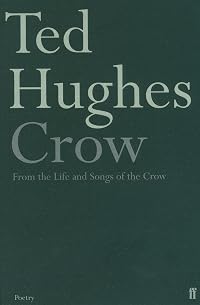
Crow: From the Life and Songs of the Crow
by Ted Hughes
On This Page
Description
Compendium of poems which powerfully explores the realm of primeval consciousness.Tags
Recommendations











Member Reviews
Ted Hughes combines primal human storytelling, cultural myths, and violence to create some of the most startling poetry that I've ever read. His themes of deception, fear, blood, and physical love (not to be confused with emotional love) touch the centre of human existence, giving the reader a profound sense of unease combined with familiarity.
Crow imagery dominates the collection, drawing motifs from Isles and Native American mythology, and Hughes proves his deep understanding of this dichotomous character. Crow is at once the father who births the world, the child who molds his surroundings through curiosity, and a primal source of destruction. He can be seen as a being that is the universe itself, but also a being that strives show more against the being that created him, which implies that the nature of existence is circular/cyclical in nature; Crow is doomed to repeat his actions in the same way that mythological characters are doomed to repeat themselves throughout varying tellings of their stories through the ages. show less
Crow imagery dominates the collection, drawing motifs from Isles and Native American mythology, and Hughes proves his deep understanding of this dichotomous character. Crow is at once the father who births the world, the child who molds his surroundings through curiosity, and a primal source of destruction. He can be seen as a being that is the universe itself, but also a being that strives show more against the being that created him, which implies that the nature of existence is circular/cyclical in nature; Crow is doomed to repeat his actions in the same way that mythological characters are doomed to repeat themselves throughout varying tellings of their stories through the ages. show less
Creo que es la primera vez que consigo entender un poema. Pero antes he tenido que volver a Janet Malcolm por los remordimientos de disfrutar una lectura de Ted Hughes, el odioso. Tales han sido las informaciones que copan algunas críticas literarias.
Este cuervo es el precedente del cuervo de Max Porter, pero con la diferencia que este curaba y el de Hughes aguanta con todo lo que le echen antes de llegar a curarnos. El cuervo de Hughes soporta todo lo que dios le envía, y además le gana. A él y a la muerte y al sufrimiento. Riéndose de todo, incluido él mismo. El cuervo de Hughes es el aguante con el que podemos sobrellevar esta vida, aunque nosotros no podamos ganarle a la muerte, como él hace.
Dicen que esta es una obra muy show more influenciada por la de su suicidada esposa, Sylvia Plath. Así que lo siguiente es la obra completa de Plath. show less
Este cuervo es el precedente del cuervo de Max Porter, pero con la diferencia que este curaba y el de Hughes aguanta con todo lo que le echen antes de llegar a curarnos. El cuervo de Hughes soporta todo lo que dios le envía, y además le gana. A él y a la muerte y al sufrimiento. Riéndose de todo, incluido él mismo. El cuervo de Hughes es el aguante con el que podemos sobrellevar esta vida, aunque nosotros no podamos ganarle a la muerte, como él hace.
Dicen que esta es una obra muy show more influenciada por la de su suicidada esposa, Sylvia Plath. Así que lo siguiente es la obra completa de Plath. show less
A powerful work in which every poem reads like a howl of anguish from the earth's very bowels of despair, Crow is a bloody, brutal and beautiful collection. Published in 1970, six years after Hughes' first wife, Sylvia Plath, committed suicide, and one year after his second wife, Assia Wevill, also committed suicide (and killed their four-year old daughter at the same time), the book is shot through with imagery of death, blood, destruction, foulness and blackness. The sequence features the character of Crow, a quasi-mythological beast who stands as both a pseudo-deity and also a domesticated, everyday figure (in a way reminding me of Geryon from Anne Carson's re-telling of the Hercules myth, Autobiography of Red). The unspeakable show more tragedy in Hughes' life bears fruit in the imagery he conjures here, so gory and despairing it is almost comic.
In "A Kill", Crow is "nailed down by his own ribs"; in "Crow and Mama" we learn that "When Crow cried his mother's ear / scorched to a stump". In "Crow Blacker Than Ever" we find him "nailing Heaven and Earth together" but "the agony did not diminish." It goes on. Man is "a walking abbatoir"; a dog is a "bulging filterbag"; Man's soul is given to him by Crow from "the Worm, God's only son", while in "A Bedtime Story" (perhaps my favourite poem from this collection), the weary conclusion is that "Creation had failed again." In Hughes' alternative creation myth, humans are destructive, filthy parasites; God sleeps while Crow laughs, or cries, or chews the flesh of the Creator. And yet from time to time these large-scale, mythical images will be interrupted by (no less horrifying) imagery from human life: in "Crow's Account of Saint George", he "runs dumb-faced from the house / Where his wife and children lie in their blood." The suggestion, ultimately, is that while there are aspects of the human and the frail within even the most potent myths, there are too elements of the mythological in our everyday lives.
In Crow, the elemental power of Hughes' poetry finds its darkest vision.
Grown so wise grown so terrible
Sucking death's mouldy tits. show less
In "A Kill", Crow is "nailed down by his own ribs"; in "Crow and Mama" we learn that "When Crow cried his mother's ear / scorched to a stump". In "Crow Blacker Than Ever" we find him "nailing Heaven and Earth together" but "the agony did not diminish." It goes on. Man is "a walking abbatoir"; a dog is a "bulging filterbag"; Man's soul is given to him by Crow from "the Worm, God's only son", while in "A Bedtime Story" (perhaps my favourite poem from this collection), the weary conclusion is that "Creation had failed again." In Hughes' alternative creation myth, humans are destructive, filthy parasites; God sleeps while Crow laughs, or cries, or chews the flesh of the Creator. And yet from time to time these large-scale, mythical images will be interrupted by (no less horrifying) imagery from human life: in "Crow's Account of Saint George", he "runs dumb-faced from the house / Where his wife and children lie in their blood." The suggestion, ultimately, is that while there are aspects of the human and the frail within even the most potent myths, there are too elements of the mythological in our everyday lives.
In Crow, the elemental power of Hughes' poetry finds its darkest vision.
Grown so wise grown so terrible
Sucking death's mouldy tits. show less
A murder of Crows*
Crow - From the life & songs of the Crow.
by Ted Hughes.
"From Gods nightmare, Crow is created and God, who feels pity for this ugly little creature, shows him around Creation. But Crow gets involved, plays about and more often then not messes things up. So God gets fed up with him. "
Crow sloughs off persona after persona, Crow is Bran, Crow is Arddu the dark one. He is Chronos the emasculator, Oedipus , Mans advocate & Gods conscience. At one and the same time creator and destroyer, giver and negator, he who dupes others and is always duped himself.
This was the fourth book (adult) of poetry by Ted Hughes, and is easily the most bleak & disturbing. By ransacking the worlds folklore, the poet creates a figure that show more strides omnipresent through his own personal mythology, laying to waste all it perceives, including itself. Although this started as a Project for the American artist Leonard Baskin, it easily transcends it's original purpose & Crow re-appears as Shaman.
This is Crow as deicide, for ever tripping over it's own chaos, this is Crow as victim, cowering in it's own shadow.
As I have already said, this is bleak and very disturbing, but what I haven't said is how very, very funny it is. The humour is black, black as Crow.
A. Alvarez wrote in the Observer, "Each fresh encounter with despair becomes the occasion for a separate, almost funny, story in which natural forces and creatures, mythic figures, even parts of the body, act out their special roles, each endowed with its own irrepressible life. With Crow, Hughes joins the select band of survivor-poets whose work is adequate to the destructive reality we inhabit".
http://parrishlantern.blogspot.co.uk/2010/08/murder-of-crows.html show less
Crow - From the life & songs of the Crow.
by Ted Hughes.
"From Gods nightmare, Crow is created and God, who feels pity for this ugly little creature, shows him around Creation. But Crow gets involved, plays about and more often then not messes things up. So God gets fed up with him. "
Crow sloughs off persona after persona, Crow is Bran, Crow is Arddu the dark one. He is Chronos the emasculator, Oedipus , Mans advocate & Gods conscience. At one and the same time creator and destroyer, giver and negator, he who dupes others and is always duped himself.
This was the fourth book (adult) of poetry by Ted Hughes, and is easily the most bleak & disturbing. By ransacking the worlds folklore, the poet creates a figure that show more strides omnipresent through his own personal mythology, laying to waste all it perceives, including itself. Although this started as a Project for the American artist Leonard Baskin, it easily transcends it's original purpose & Crow re-appears as Shaman.
This is Crow as deicide, for ever tripping over it's own chaos, this is Crow as victim, cowering in it's own shadow.
As I have already said, this is bleak and very disturbing, but what I haven't said is how very, very funny it is. The humour is black, black as Crow.
A. Alvarez wrote in the Observer, "Each fresh encounter with despair becomes the occasion for a separate, almost funny, story in which natural forces and creatures, mythic figures, even parts of the body, act out their special roles, each endowed with its own irrepressible life. With Crow, Hughes joins the select band of survivor-poets whose work is adequate to the destructive reality we inhabit".
http://parrishlantern.blogspot.co.uk/2010/08/murder-of-crows.html show less
Roberto Bolaño’s novel The Savage Detectives chronicled a literary movement named “the Visceral Realists.” Crow: from the Life and Songs of the Crow by Ted Hughes offers the reader a kind of visceral realism. The poetry cycle recounts the life and times of Crow, a folkloric character, comedian and trickster. The collection ranges across various types of poems: fairy tales, lullabies, legends, comedic shtick, and parody. Like the crows one sees everyday, Crow scrabbles in waste, carrion, and garbage. He is a scavenger, appropriating things, a collector of junk. The poem titles bear this out, “Oedipus Crow,” “Crow Tyrannosaurus,” and “Crow Tries the Media.”
Crow sleazes amidst a corrupted version of Biblical events from show more Adam and Eve to the Crucifixion; he struggles to exist against the merciless attacks of a Sadean Mother Goddess. As Camille Paglia wrote in Sexual Personae: Art and Decadence from Nefertiti to Emily Dickinson, “Sade’s demonic mother nature is the bloodiest goddess since Asiatic Cybele. … She is Darwin’s nature, red in tooth and claw.” Hughes masterfully balances brutal violence with dark comedy. Crow is poetic anarchism, raw and unflinching. The literary equivalent of a sternum punch or the opening riffs of the Sex Pistols “Anarchy in the U.K.,” Crow acts like Johnny Rotten, attacking respectable idols and traditional institutions with an amorphous insatiable rage and glee. Harpo Marx as re-imagined by the Marquis de Sade.
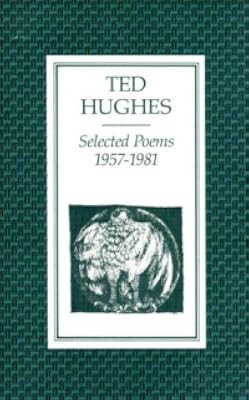
In addition to the volcanic poetry within, the Faber edition includes seven poems not in the original 1970 edition. The front cover of this short book has a marvelous illustration by Leonard Baskin, Crow rampant, legs muscular trunks supporting an obscene mass with a beaked head peeking out.
http://driftlessareareview.com/2011/11/20/crow-from-the-life-and-songs-of-the-cr... show less
Crow sleazes amidst a corrupted version of Biblical events from show more Adam and Eve to the Crucifixion; he struggles to exist against the merciless attacks of a Sadean Mother Goddess. As Camille Paglia wrote in Sexual Personae: Art and Decadence from Nefertiti to Emily Dickinson, “Sade’s demonic mother nature is the bloodiest goddess since Asiatic Cybele. … She is Darwin’s nature, red in tooth and claw.” Hughes masterfully balances brutal violence with dark comedy. Crow is poetic anarchism, raw and unflinching. The literary equivalent of a sternum punch or the opening riffs of the Sex Pistols “Anarchy in the U.K.,” Crow acts like Johnny Rotten, attacking respectable idols and traditional institutions with an amorphous insatiable rage and glee. Harpo Marx as re-imagined by the Marquis de Sade.
In addition to the volcanic poetry within, the Faber edition includes seven poems not in the original 1970 edition. The front cover of this short book has a marvelous illustration by Leonard Baskin, Crow rampant, legs muscular trunks supporting an obscene mass with a beaked head peeking out.
http://driftlessareareview.com/2011/11/20/crow-from-the-life-and-songs-of-the-cr... show less
as a lover of poetry/ whose voice and cadence had been marked/ by whitman ("my girl be at ease with me/ "for I am walt whitman, as gay and/ lusty as nature,") i was amazed and/ fitfully shocked when during my college/ cold war days i found an image in/ a crow where everything the crow owned/ was owned by death including the/ "whole rainy, stony earth" including/ "all of space" then the voice asked/ "Who is stronger than hope?" and/ death answered again, same with/ stronger than will, love, life, and/ then the last lines in ted hughes/ 'examination at the womb-door' from/ his volume "crow"/ /"But who is stronger than Death?/
Me, evidently,/ Pass, Crow."/
Me, evidently,/ Pass, Crow."/
I rarely read poetry, but I enjoyed this strange little book by Ted Hughes. It's full of dark imagery, violence and unexpected humour. The poems read like myths of the origins of the world, except that at the middle of them all is Crow, this anarchic, chaotic, ugly, violent figure, playing tricks on God and turning creation upside-down.
I was reminded of the Anansi figure in West Indian Folk Tales, himself of course of West African origin. I suspect Hughes drew on a lot of mythological sources in these poems, many of which I am blissfully unaware of, but it didn't seem to matter - even in the poems where I wasn't sure what he was driving at, I was pleased by the rhythm of the language, somehow different in each poem but forming a show more coherent whole.
There's a lot more you could say about these poems - you could probably do a whole English Literature course on them - but I don't want to go that deep. I'm happy for now just to have discovered that rare thing for me, poetry that I can truly enjoy. I'll keep this on my shelf and probably re-read from time to time, if only to try to understand why this worked for me and so much other poetry doesn't. show less
I was reminded of the Anansi figure in West Indian Folk Tales, himself of course of West African origin. I suspect Hughes drew on a lot of mythological sources in these poems, many of which I am blissfully unaware of, but it didn't seem to matter - even in the poems where I wasn't sure what he was driving at, I was pleased by the rhythm of the language, somehow different in each poem but forming a show more coherent whole.
There's a lot more you could say about these poems - you could probably do a whole English Literature course on them - but I don't want to go that deep. I'm happy for now just to have discovered that rare thing for me, poetry that I can truly enjoy. I'll keep this on my shelf and probably re-read from time to time, if only to try to understand why this worked for me and so much other poetry doesn't. show less
Members
- Recently Added By
Lists

Bibliography for Among Others
159 works; 15 members

20th Century Literature
1,161 works; 55 members

Poetry Corner
187 works; 15 members

Books Read in 2016
4,666 works; 197 members

Every book Aretha Garry reads
9 works; 1 member
Author Information

150+ Works 13,860 Members
Ted Hughes was born on August 17, 1930 in England and attended Cambridge University, where he became interested in anthropology and folklore. These interests would have a profound effect on his poetry. In 1956, Hughes married famed poet Sylvia Plath. He taught at the University of Massachusetts at Amherst from 1957 until 1959, and he stopped show more writing altogether for several years after Plath's suicide in 1963. Hughes's poetry is highly marked by harsh and savage language and depictions, emphasizing the animal quality of life. He soon developed a creature called Crow who appeared in several volumes of poetry including A Crow Hymn and Crow Wakes. A creature of mythic proportions, Crow symbolizes the victim, the outcast, and a witness to life and destruction. Hughes's other works also created controversy because of their style, manner, and matter, but he has won numerous honors, including the Somerset Maugham Award in 1960, and the Queen's Medal for Poetry in 1974. His greatest honor came in 1984, when he was named Poet Laureate of England. Ted Hughes died in 1998. (Bowker Author Biography) show less
Awards and Honors
Distinctions
Work Relationships
Inspired
Common Knowledge
- Canonical title
- Crow: From the Life and Songs of the Crow
- Original publication date
- 1970
- Dedication
- In Memory of Assia and Shura
- First words
- Black was the without eye / Black the within tongue / Black was the heart / Black the liver, black the lungs / Unable to suck in the light / Black the blood in its loud tunnel / Black the bowels packed in furnace / Black too ... (show all)the muscles / Striving to pull out into the light / Black the nerves, black the brain / With its tombed visions / Black also the soul, the huge stammer / Of the cry that, swelling, could not / Pronounce its sun.
- Last words
- (Click to show. Warning: May contain spoilers.)Sit on my finger, sing in my ear, O littleblood.
Classifications
Statistics
- Members
- 1,097
- Popularity
- 23,133
- Reviews
- 21
- Rating
- (4.00)
- Languages
- 5 — English, German, Multiple languages, Spanish, Swedish
- Media
- Paper, Audiobook, Ebook
- ISBNs
- 21
- ASINs
- 9