Hypatia
by Charles Kingsley
On This Page
Description
One of Charles Kingsley's most popular novels, Hypatia is a fictionalized account of the life and murder of Hypatia, once considered the greatest living mathematician in the Greco-Roman world. Hypatia focuses on the religious issues surrounding her murder, and is a brilliant yet dark portrait of the passing of old faiths in Greece and Rome.Tags
Recommendations

















Member Recommendations
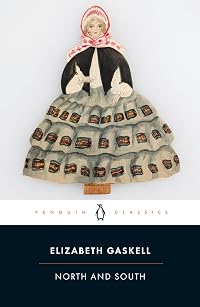
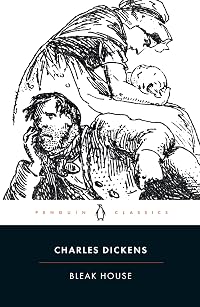
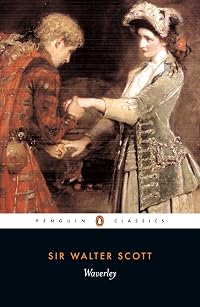
Iudita Another work of fiction based on the life of Hypatia. The writing is absolutley beautiful.
Member Reviews
"Have I not an intellect, a taste, a reason? I could appreciate what she said.—Why should not my faculties be educated? Why am I only to be shut out from knowledge? There is a Christian Gnosis as well as a heathen one. [...] Is not my very craving for knowledge a sign that I am capable of it?" (131)
Hypatia, the late Roman-era Alexandrian mathematician, is often called an early female scientist, so it seemed like it behooved me to read the novel about her by Charles Kingsley, a man who did write two proper "scientist novels" (Two Years Ago and The Water-Babies). In terms of my project on Victorian scientists, I needn't've bothered. Hypatia as Kingsley tells it might be a mathematician and a philosopher, but she is no scientist-- she show more is never shown observing the world or engaging in experiment. Mostly the focus is (as in the above quotation, from a young Christian monk who wants to study under her) on her moral instruction.
In terms of reading a good book, I needn't've bothered, either. It was supposedly Queen Victoria's favorite Kingsley novel, which surely correlates to why I dislike it: it's boring and rambly and Kingsley never really makes anyone who doesn't care about hating Catholics care about what's going on. There are a couple good jokes (I don't know why he threw a gang of murderous Vikings into the mix, but I love it), but on the whole, it's one of those books where masses of pages go by and you don't know what's printed on them because you don't care to. This could be the material for a good novel, but alas, it is not. show less
Hypatia, the late Roman-era Alexandrian mathematician, is often called an early female scientist, so it seemed like it behooved me to read the novel about her by Charles Kingsley, a man who did write two proper "scientist novels" (Two Years Ago and The Water-Babies). In terms of my project on Victorian scientists, I needn't've bothered. Hypatia as Kingsley tells it might be a mathematician and a philosopher, but she is no scientist-- she show more is never shown observing the world or engaging in experiment. Mostly the focus is (as in the above quotation, from a young Christian monk who wants to study under her) on her moral instruction.
In terms of reading a good book, I needn't've bothered, either. It was supposedly Queen Victoria's favorite Kingsley novel, which surely correlates to why I dislike it: it's boring and rambly and Kingsley never really makes anyone who doesn't care about hating Catholics care about what's going on. There are a couple good jokes (I don't know why he threw a gang of murderous Vikings into the mix, but I love it), but on the whole, it's one of those books where masses of pages go by and you don't know what's printed on them because you don't care to. This could be the material for a good novel, but alas, it is not. show less
For a book that started so well, I was mightily disappointed with the progression and ending of this one. Charles Kingsley does a good job showing the corruption of the catholic church in the 5th century but he completely gets Hypatia wrong. Being a christian he is obsessed with belief, and I think the whole point is that Hypatia's life was devoted to mathematics and astronomy, to finding proofs for reality rather than justification for belief. He has her completely frazzled because she can't convince any of the gods, particularly Appolo or Aphrodite to manifest themselves to her. She is lead astray by the men in her life because she will do anything to get the people to return to worshiping the gods she adors. He even uses the most show more interesting character in the book, Raphael Oben-Ezra, a skeptical Jew who converts to christianity because he falls in love with a pure woman, to use logic to convince Hypatia that Jesus is god. Then he throws in what is supposed to be a lovely miracle at the end. He also flits over the destruction of the library at Alexandria. Pity. show less
Hypatia is a dark, religious, philosophic, and historical novel, bearing a warning in its preface to potential readers of its tragic content. It is set mainly in Alexandria, in the fourth and fifth centuries A.D., at a time when the city was a centre for academia. Hypatia is pagan, believing in the classical gods, and their tradition, but she is a scholar also, teaching and studying philosophy and mathematics, searching for truth. She is also virtuous, and despite her pagan ways is marked out above the rest of the citizens, Christian, Jewish, and the other pagans, who admire her for her numerous qualities. The story deals with the strife between the early church, the pagans, the Roman Empire, and other citizens of Alexandria. There are show more several politcal and religious conflicts, amongst which Hypatia must try to do the right thing. The book has plenty of messages in it, and a sad end, but there are happy parts too, and it is exciting in places, as well serious. The story is based mainly on real characters, and loosely on historical events, but of course is partly invention to make it an interesting and complete story. show less
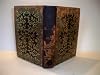
age wear and cover beginning to separate (tape repairs) - "Oxford Edition" - no record found of this ed. - scarce
Ratings
Members
- Recently Added By
Lists

Fifty Representative Historical Novels
50 works; 2 members

once upon a time ~ ancient world
46 works; 7 members

150 Best Novels Selected by Brander Matthews (1883)
150 works; 7 members
Author Information

137+ Works 7,722 Members
Charles Kingsley, a clergyman of the Church of England, who late in his life held the chair of history at Cambridge University, wrote mostly didactic historical romances. He put the historical novel to new use, not to teach history, but to illustrate some religious truth. Westward Ho! (1855), his best-known work, is a tale of the Spanish main in show more the days of Queen Elizabeth I. Hypatia: New Foes with Old Faces (1853) is the story of a pagan girl-philosopher who was torn to pieces by a Christian mob. The story is strongly anti-Roman Catholic.. Hereward the Wake, or The Watchful Hereward the Wake, or The Watchful (1866) is a tale of a Saxon outlaw. The Water-Babies (1863), written for Kingsley's youngest child, "would be a tale for children were it not for the satire directed at the parents of the period," said Andrew Lang. Alton Locke (1850) and Yeast (1851) reflect Kingsley's leadership in "muscular Christianity" and his dramatization of social issues. (Bowker Author Biography) show less
Some Editions
Awards and Honors
Series
Belongs to Publisher Series
Work Relationships
Is contained in
Contains
Is abridged in
One hundred best novels condensed: 3 of 4 see note: Adam Bede; Tess of the D'Urbervilles; Don Quixote; East Lynne; Count of Monte Cristo; Paul and Virginia; Tom Brown's School Days; Waverley; Dombey and Son; Romola; Legend of Sleepy Hollow; Last of the Mohicans; Wreck of the "Grosvenor"; Right of Way; Coniston; Far from the Madding Crowd; Woman in White; Deemster; Waterloo; Hypatia; Kidnapped; Oliver Twist; Gil Blas; Peg Woffington; Virginians by Edwin Atkins Grozier
Common Knowledge
- Original publication date
- 1853
- People/Characters
- Hypatia of Alexandria
- Important places
- Alexandria, Egypt; Egypt
Classifications
Statistics
- Members
- 254
- Popularity
- 127,757
- Reviews
- 4
- Rating
- (3.35)
- Languages
- 5 — English, Finnish, German, Italian, Spanish
- Media
- Paper, Audiobook, Ebook
- ISBNs
- 38
- ASINs
- 33