On This Page
Description
L. M. Boston's thrilling and chilling tales of Green Knowe, a haunted manor deep in an overgrown garden in the English countryside, have been entertaining readers for half a century. There are three children: Toby, who rides the majestic horse Feste; his mischievous little sister, Linnet; and their brother, Alexander, who plays the flute. The children warmly welcome Tolly to Green Knowe… even though they've been dead for centuries. But that's how everything is at Green Knowe. The ancient show more manor hides as many stories as it does dusty old rooms. And the master of the house is great-grandmother Oldknow, whose storytelling mizes present and past with the oldest magic in the world. show lessTags
Recommendations

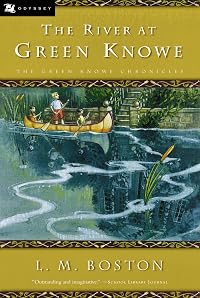

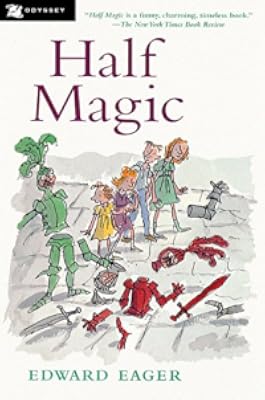
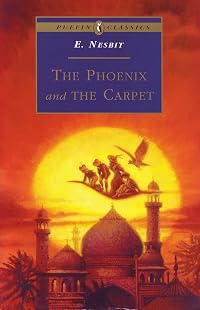
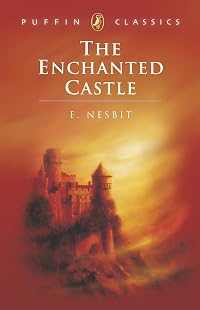
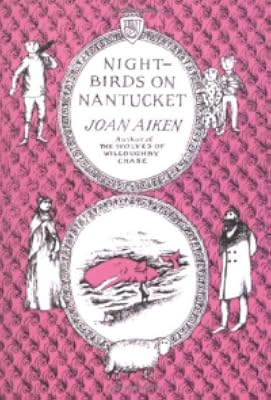

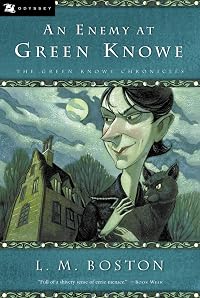
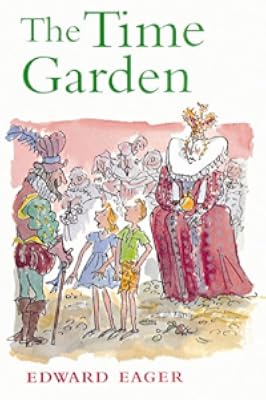
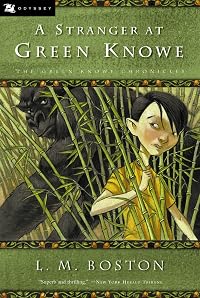
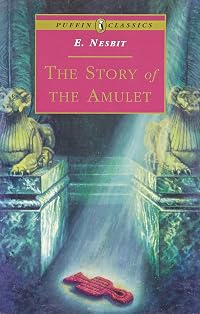



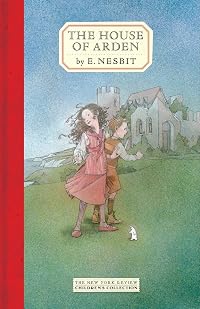
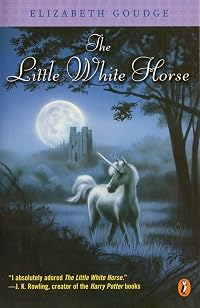
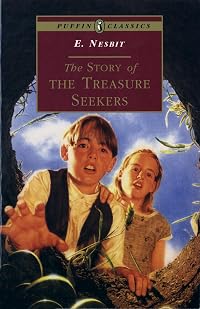
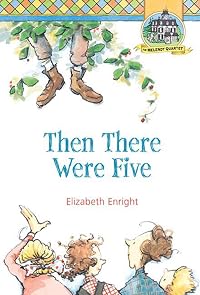
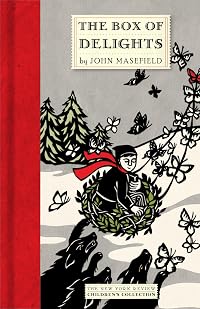
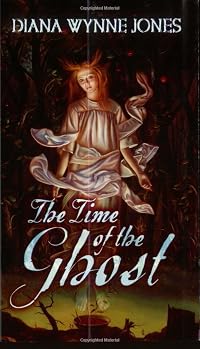
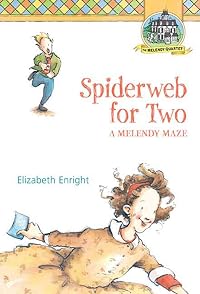
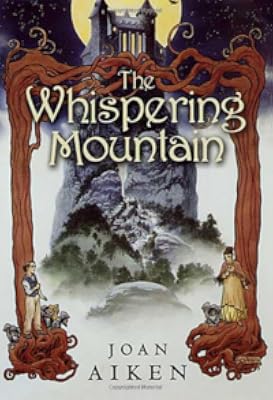





Member Recommendations
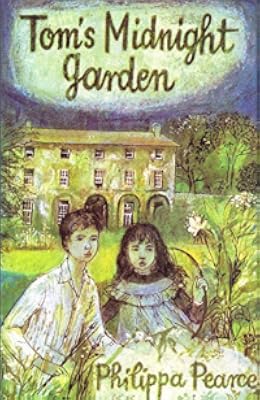
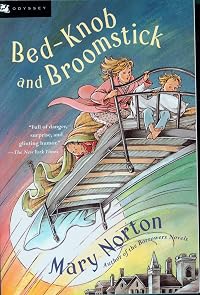
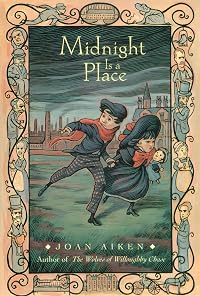
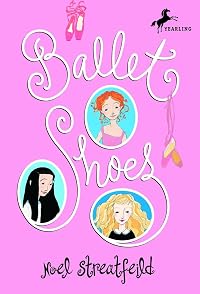
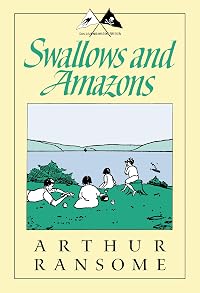
souloftherose Both are charming old-fashioned children's stories with elements of magical realism
50

Member Reviews
L.M. Boston, who lived for many years in a twelfth-century manor house that is reputed to be the oldest continually inhabited residence in Britain, has a stronger sense of place than any author I have ever encountered, and Green Knowe itself - the setting (clearly inspired by her own home) for her six interrelated children's novels, beginning with this one, first published in 1954, and concluding with her 1976 The Stones of Green Knowe - comes alive in her stories, almost as a character in its own right. Boston, who published her first book at the age of sixty-two - if ever something was worth the wait! - draws the reader immediately into her narrative, and into her world, in The Children of Green Know, following young Toseland (Tolly) show more Oldknow as he approaches his ancestral home, "Green Noah," for the first time, on a Christmas visit to the great-grandmother he has never met. Here he discovers a place where the past - his family's past - is not quite done, and the ghosts of his ancestors - particularly, of Toby (another Toseland), Alexander and Linnet, three young Oldknows from the seventeenth century - are not at rest.
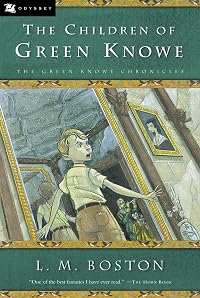
A heady feeling of almost immediate involvement, a sense of being drawn in, and slowly engulfed by an atmosphere of enchantment and mystery, is powerfully evoked here, in the text itself - which begins: "A little boy was sitting in the corner of a railway carriage looking out at the rain, which was splashing against the windows and blotching downward in an ugly, dirty way. He was not the only person in the carriage, but the others were strangers to him. He was alone as usual" - and in the artwork as well. Although very happy indeed that the Green Knowe books are again available, and well aware that new cover artwork plays a role in their continuing appeal for today's young readers - the series, after being out of print for many years, was reprinted here in the states beginning in 2002, with new cover artwork by Brett Helquist - I believe that the original cover art by Peter Boston (the author's son), best captures that sense of being drawn into a magical landscape. Here we have Tolly, holding a lantern aloft, as Boggis (Green Knowe's factotum) rows him toward the ancient house, which, standing like a sentinel in the midst of the seasonal flood, with every window lit, waits to welcome him home. And what a home it is! Boston's descriptions are lovely, really capturing the beauty of the place, and her characters (whether living or ghostly) terribly real, making The Children of Green Knowe one of the most compelling works of children's fiction I have ever read. I do not know, all told, that its subtle eldritch enchantment with ensnare ever reader, as it did me, when I first read it a few years ago (how I wish I'd discovered these books when still a child!), but for those who are lucky enough to find their way into its secret heart, it is an experience like no other! show less
A heady feeling of almost immediate involvement, a sense of being drawn in, and slowly engulfed by an atmosphere of enchantment and mystery, is powerfully evoked here, in the text itself - which begins: "A little boy was sitting in the corner of a railway carriage looking out at the rain, which was splashing against the windows and blotching downward in an ugly, dirty way. He was not the only person in the carriage, but the others were strangers to him. He was alone as usual" - and in the artwork as well. Although very happy indeed that the Green Knowe books are again available, and well aware that new cover artwork plays a role in their continuing appeal for today's young readers - the series, after being out of print for many years, was reprinted here in the states beginning in 2002, with new cover artwork by Brett Helquist - I believe that the original cover art by Peter Boston (the author's son), best captures that sense of being drawn into a magical landscape. Here we have Tolly, holding a lantern aloft, as Boggis (Green Knowe's factotum) rows him toward the ancient house, which, standing like a sentinel in the midst of the seasonal flood, with every window lit, waits to welcome him home. And what a home it is! Boston's descriptions are lovely, really capturing the beauty of the place, and her characters (whether living or ghostly) terribly real, making The Children of Green Knowe one of the most compelling works of children's fiction I have ever read. I do not know, all told, that its subtle eldritch enchantment with ensnare ever reader, as it did me, when I first read it a few years ago (how I wish I'd discovered these books when still a child!), but for those who are lucky enough to find their way into its secret heart, it is an experience like no other! show less
This is a hard one for me to review. I think if you read it as a child, it's going to have a really strong pull - it speaks to something about what it is to be a small, imaginative child, particularly a small, imaginative, only child, that I don't think I've ever seen represented in prose before. It's a favorite book of a close friend of mine, who read it when young, but I didn't read it for the first time until I was almost 30. It doesn't have the same pull for me - I don't really see how it could.
It's a relatively free-form story, almost a "sandbox" story in the way we talk about video games where characters can explore environments at will and at their own pace. Predominantly, it's about a young boy arriving to stay with his show more great-grandmother at Christmas, and exploring the house and grounds that have been in his family for over 400 years. He and the great-grandmother strike up a special relationship, and she tells him about a trio of his ancestors who lived as happy children in the same house. They died in the Great Plague, and soon, by playing with their toys and engaging in their games, the boy realizes that their ghosts are still there.
This is not a scary book, although there are one or two dark moments. The ghost children are kind presences, and the overall tone is a dreamy one that pushes gently toward whimsy. The protagonist, Tolly, is fascinated by everything he sees; his mind goes into overdrive as he imagines how his ghostly relatives were inspired by the same house, the same gardens, the same topiaries. He leaves sugar cubes for a legendary horse in the stable and pretends that a ceramic mouse is alive in his pocket. It isn't really a question whether or not he's dreaming, or whether or not the children are really there - it's all kind of a blur, without a lot of boundaries, and mostly we are simply aware that both Tolly and his grandmother are pleased by what they experience. There is a great love of the natural world, too; does it really matter if the squirrel and the mole and the hare that Tolly sees are the same ones those long-ago children named and tamed? No, it doesn't - everything is in its place and all's right with the world.
I'll be honest and say that I, personally, usually prefer a children's book with just a little bit more to it. I don't mind the "sandbox" idea of drifting without a really defined plot, but I think it would work better for me with some slightly more contrasting characters involved. The most enjoyable bits of the book, to me, are the rare ones where the gardener, Boggis, brings his somewhat earthy pragmatism into the "airy" world Tolly inhabits (and which his grandmother supports). There's a gentle conflict of personalities there that is very appealing without being abrasive in any way. Having one, more central character exhibit a stronger down-to-earth perspective, or even a dry sense of humor, would have punctured some of the "fairy tale"-ness that, for me, simply goes on too long without tonal variation. I can see how other people might like that undisturbed "golden glow," though.
Happily, I think the final quarter moves the story from merely good to very good, at least for me. The magic (or whatever you wish to call it) is at its height, and there's a sequence of genuine terror, offset by the joy of a Christmas Day that includes feeding all the animals who find their homes on the grounds. At that point I'm content to let the book be as dreamy and sweet as it wants to be without any further complaint: after all, it's Christmas! show less
It's a relatively free-form story, almost a "sandbox" story in the way we talk about video games where characters can explore environments at will and at their own pace. Predominantly, it's about a young boy arriving to stay with his show more great-grandmother at Christmas, and exploring the house and grounds that have been in his family for over 400 years. He and the great-grandmother strike up a special relationship, and she tells him about a trio of his ancestors who lived as happy children in the same house. They died in the Great Plague, and soon, by playing with their toys and engaging in their games, the boy realizes that their ghosts are still there.
This is not a scary book, although there are one or two dark moments. The ghost children are kind presences, and the overall tone is a dreamy one that pushes gently toward whimsy. The protagonist, Tolly, is fascinated by everything he sees; his mind goes into overdrive as he imagines how his ghostly relatives were inspired by the same house, the same gardens, the same topiaries. He leaves sugar cubes for a legendary horse in the stable and pretends that a ceramic mouse is alive in his pocket. It isn't really a question whether or not he's dreaming, or whether or not the children are really there - it's all kind of a blur, without a lot of boundaries, and mostly we are simply aware that both Tolly and his grandmother are pleased by what they experience. There is a great love of the natural world, too; does it really matter if the squirrel and the mole and the hare that Tolly sees are the same ones those long-ago children named and tamed? No, it doesn't - everything is in its place and all's right with the world.
I'll be honest and say that I, personally, usually prefer a children's book with just a little bit more to it. I don't mind the "sandbox" idea of drifting without a really defined plot, but I think it would work better for me with some slightly more contrasting characters involved. The most enjoyable bits of the book, to me, are the rare ones where the gardener, Boggis, brings his somewhat earthy pragmatism into the "airy" world Tolly inhabits (and which his grandmother supports). There's a gentle conflict of personalities there that is very appealing without being abrasive in any way. Having one, more central character exhibit a stronger down-to-earth perspective, or even a dry sense of humor, would have punctured some of the "fairy tale"-ness that, for me, simply goes on too long without tonal variation. I can see how other people might like that undisturbed "golden glow," though.
Happily, I think the final quarter moves the story from merely good to very good, at least for me. The magic (or whatever you wish to call it) is at its height, and there's a sequence of genuine terror, offset by the joy of a Christmas Day that includes feeding all the animals who find their homes on the grounds. At that point I'm content to let the book be as dreamy and sweet as it wants to be without any further complaint: after all, it's Christmas! show less
I do love Children of Green Knowe - I like Tolly, and enjoy his adventures. The matter-of-fact way magic just sort of happens is lovely. I also love the descriptions - the everyday English countryside, and all the bits of secret around Green Knowe. And a lovely ending, after one very scary scene. I know how it ends - I've read it probably a dozen times over the years - and I still hold my breath and shiver in that dark night.
A boy comes to live with his great-grandmother in the ancestral family home and makes friends with the ghosts of three children who live there, too. I love this series (a re-read for me, and Charlie's first time - this was our bedtime read for the past few weeks); Tolly is such a great character, as is Mrs. Oldknow, and Boggis, and the children, and the story as a whole is so wonderfully, quietly magical.
An exquisitely written, wholly involving book, as interesting for adults as for children. It is a ghost story - but eerie, rather than frightening. I was fortunate to have a classroom teacher read this to me when I was about 9 years old, and I've read it many times since, especially around Christmas time. Just remarkably beautiful -- I think you won't find better writing anywhere, for any age.
The Children of Green Knowe is an elegantly written children's novel that centres on a boy named Tolly - estranged from his father and his new stepmother, he is sent to live with his great grandmother in his family's ancestral home. He is fascinated by the story of Toby, Alexander and Linnet (children antecedents who died in the 1700s during the Great Plague) and is eventually befriended by their ghosts. Tolly learns the history of the children and uncovers the secrets behind Green Noah (the demonic remnant of a gypsy curse).
The Children of Green Knowe is a beautiful evocation of English Arcadia - after the implied negligence of his parents Tolly is given back his innocence by the English countryside and emotionally renewed by the care show more of his grandmother and by his friendship with the ghosts.
Toby, Alexander and Linnet represent the spirit of a richer, more 'authentic' England - invisible to all but a select few. As his Grandmother says, 'you will see them when they've come to know you'.
The novel is brimming with the same cheerful, English fantasy that characterises the works of C.S Lewis and T.H White: it left me with a nostalgic yearning for an English childhood I never experienced. I wanted to feed starlings and then enjoy tea and bun by the fire; or enjoy a picnic in the snow with a tiny hedgehog in my pocket. Sady, both ambitions remain unfulfilled. show less
The Children of Green Knowe is a beautiful evocation of English Arcadia - after the implied negligence of his parents Tolly is given back his innocence by the English countryside and emotionally renewed by the care show more of his grandmother and by his friendship with the ghosts.
Toby, Alexander and Linnet represent the spirit of a richer, more 'authentic' England - invisible to all but a select few. As his Grandmother says, 'you will see them when they've come to know you'.
The novel is brimming with the same cheerful, English fantasy that characterises the works of C.S Lewis and T.H White: it left me with a nostalgic yearning for an English childhood I never experienced. I wanted to feed starlings and then enjoy tea and bun by the fire; or enjoy a picnic in the snow with a tiny hedgehog in my pocket. Sady, both ambitions remain unfulfilled. show less
Weird, weird book. I'm looking forward to reading what others have to say about it.
First off (and it's not the book's fault) for some reason I was expecting a kid's time-travel fantasy, a la Tom's Midnight Garden or something like. That didn't happen.
Instead, it was a beautifully written but strangely, strangely plotted novel where almost nothing happens. I have no idea what the market for this book is/was. The protagonist is a boy who actually gets excited about sitting in a rocking horse for half an hour at a time, and yet any child for whom that occupation would actually appeal would be years too young to follow this story.
Here's what happens, no real spoilers because nothing actually takes place: a boy goes to a house and show more gradually gets to know the ghosts who live there. Or (perhaps I've read too many adult novels, I am 53 after all) is he simply going mad, along with his mad great-grandmother? Are the events that happen real, a shared delusion, or are they kind of unintentionally gas-lighting each other?
(You can see from my issues above that the book is too sophisticated (and dull) for the "riding horsie" set).
There's a hint of a plot (a tragic curse!) but it doesn't take place until 80% of the way through, doesn't make sense, and is shortly wrapped up.
And yet the writing is wonderful, so long as you're not particularly interested in interesting events happening in an exciting order. Here's a lovely paragraph of Tolly's first visit to the dreary local church:
"the first impression that he received was the mixed smell of incense and clammy mold, with the mold predominating. There were a few other people there, dingy, unromantic townsfolk, no children at all. The church was battered and dank, festooned with cobwebs round the windows, carpeted like a kitchen with brown coconut matting and bleakly lit with electric light ... there was a huge picture hanging on the wall on his left that was so horrifying that he kept one hand up to the side of his face like a blinker in case he should see it by accident."
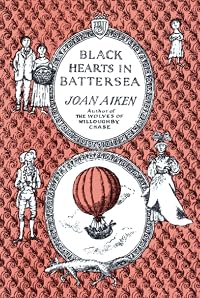
I mean, you couldn't ask for a clearer description. I see that church! But without pacing and a plot, and without a sense that the author was aware that her cast seemed congenitally insane, it's all a bit unsettling. (It doesn't help that I've just read Joan Aiken's Black Hearts in Battersea, which is very well-plotted, lively, and bursting with vivid characters.)
This is a nitpick, but it also troubles me that a very elderly lady lives alone in a lovely old manor house with apparently no servants (just an outside gardener/handyman/cliché named Boggis), or are we meant to infer them as well? Weird book!
(Note: 5 stars = amazing, wonderful, 4 = very good book, 3 = decent read, 2 = disappointing, 1 = awful, just awful. I'm fairly good at picking for myself so end up with a lot of 4s). show less
First off (and it's not the book's fault) for some reason I was expecting a kid's time-travel fantasy, a la Tom's Midnight Garden or something like. That didn't happen.
Instead, it was a beautifully written but strangely, strangely plotted novel where almost nothing happens. I have no idea what the market for this book is/was. The protagonist is a boy who actually gets excited about sitting in a rocking horse for half an hour at a time, and yet any child for whom that occupation would actually appeal would be years too young to follow this story.
Here's what happens, no real spoilers because nothing actually takes place: a boy goes to a house and show more gradually gets to know the ghosts who live there. Or (perhaps I've read too many adult novels, I am 53 after all) is he simply going mad, along with his mad great-grandmother? Are the events that happen real, a shared delusion, or are they kind of unintentionally gas-lighting each other?
(You can see from my issues above that the book is too sophisticated (and dull) for the "riding horsie" set).
There's a hint of a plot (a tragic curse!) but it doesn't take place until 80% of the way through, doesn't make sense, and is shortly wrapped up.
And yet the writing is wonderful, so long as you're not particularly interested in interesting events happening in an exciting order. Here's a lovely paragraph of Tolly's first visit to the dreary local church:
"the first impression that he received was the mixed smell of incense and clammy mold, with the mold predominating. There were a few other people there, dingy, unromantic townsfolk, no children at all. The church was battered and dank, festooned with cobwebs round the windows, carpeted like a kitchen with brown coconut matting and bleakly lit with electric light ... there was a huge picture hanging on the wall on his left that was so horrifying that he kept one hand up to the side of his face like a blinker in case he should see it by accident."
I mean, you couldn't ask for a clearer description. I see that church! But without pacing and a plot, and without a sense that the author was aware that her cast seemed congenitally insane, it's all a bit unsettling. (It doesn't help that I've just read Joan Aiken's Black Hearts in Battersea, which is very well-plotted, lively, and bursting with vivid characters.)
This is a nitpick, but it also troubles me that a very elderly lady lives alone in a lovely old manor house with apparently no servants (just an outside gardener/handyman/cliché named Boggis), or are we meant to infer them as well? Weird book!
(Note: 5 stars = amazing, wonderful, 4 = very good book, 3 = decent read, 2 = disappointing, 1 = awful, just awful. I'm fairly good at picking for myself so end up with a lot of 4s). show less
Members
- Recently Added By
Lists

Favorite Childhood Books
1,651 works; 519 members
1001 Children's Books You Must Read Before You Grow Up
774 works; 101 members

Best Children's Books You've Read
197 works; 75 members

Christmas Books
370 works; 40 members

School Library Journal - 2012 Top 100 Children's Novels
68 works; 8 members
Mensa for Kids Excellence in Reading Award Program (Grades 4-6)
64 works; 9 members

Satori Smiles Children's Book List
262 works; 7 members
Honey For a Child's Heart
1,152 works; 25 members

Books with Colourful Titles
171 works; 8 members
Ghosts
278 works; 18 members

Before Austen Comes Aesop
318 works; 9 members

Book Worlds We'd Like To Visit
322 works; 158 members
Books We Love to Reread
688 works; 297 members

Five star books
1,767 works; 110 members

Books Read in 2015
3,299 works; 129 members

Houses and Buildings as Characters in Fiction
182 works; 29 members

Books Read in 2020
4,379 works; 124 members

A Rainbow of Books: Colors in the Title
570 works; 24 members

Used books to buy next
565 works; 1 member

Books About Boys
175 works; 15 members

Geek Dad Read to Your Kids Additions List
66 works; 4 members

Books We Loved As Children
603 works; 253 members
Author Information

28+ Works 5,579 Members
Some Editions
Awards and Honors
Awards
Distinctions
Series

Belongs to Publisher Series
Work Relationships
Is contained in
Has the adaptation
Has as a commentary on the text
Common Knowledge
- Canonical title*
- Die Kinder von Green Knowe
- Original title
- The Children of Green Knowe
- Original publication date
- 1954
- People/Characters
- Toseland "Tolly"; Mrs Oldknow; Mr Boggis; Toby Oldknow; Alexander Oldknow; Linnet Oldknow (show all 7); Feste
- Related movies
- The Children of Green Knowe (1986 | IMDb)
- Dedication
- To my son
- First words
- A little boy was sitting in the corner of a railway carriage looking out at the rain, which was splashing against the windows and blotching downwards in an ugly, dirty way.
- Last words
- (Click to show. Warning: May contain spoilers.)"And your father has written that he wants you to learn to ride."
- Original language
- English
*Some information comes from Common Knowledge in other languages. Click "Edit" for more information.
Classifications
- Genres
- Fiction and Literature, Children's Books, Kids, Fantasy
- DDC/MDS
- 823.914 — Literature & rhetoric English & Old English literatures English fiction 1900- 1901-1999 1945-1999
- LCC
- PZ7 .B6497 .C — Language and Literature Fiction and juvenile belles lettres Fiction and juvenile belles lettres Juvenile belles lettres
- BISAC
Statistics
- Members
- 1,827
- Popularity
- 11,935
- Reviews
- 44
- Rating
- (4.09)
- Languages
- 5 — Afrikaans, Dutch, English, German, Swedish
- Media
- Paper, Audiobook, Ebook
- ISBNs
- 34
- ASINs
- 24