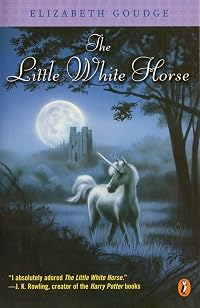
The Little White Horse
by Elizabeth Goudge
On This Page
Description
In 1842, thirteen-year-old orphan Maria Merryweather arrives at her ancestral home in an enchanted village in England's West Country, where she discovers it is her destiny to right the wrongs of her ancestors and end an ancient feud.Tags
Recommendations




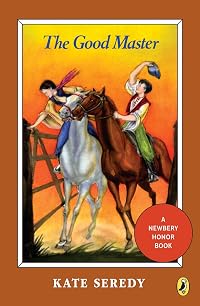
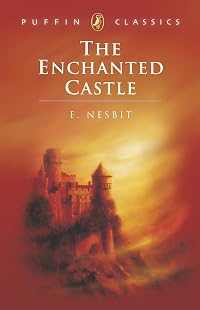
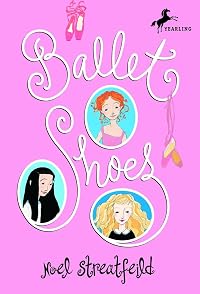
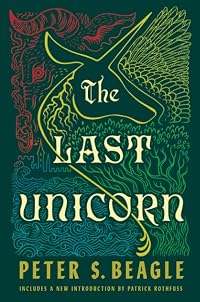
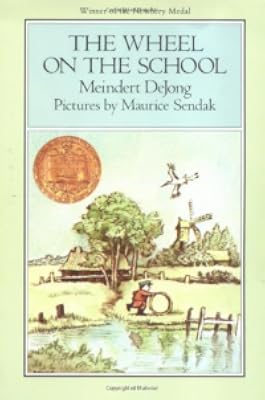
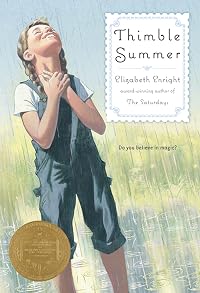
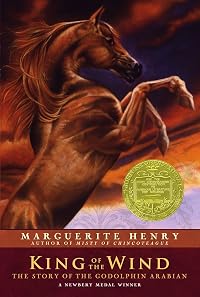

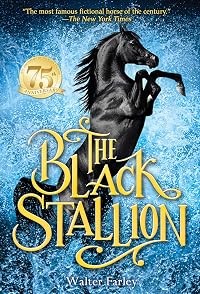
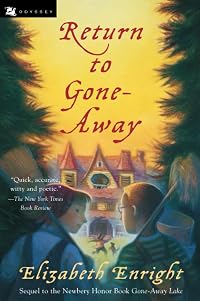
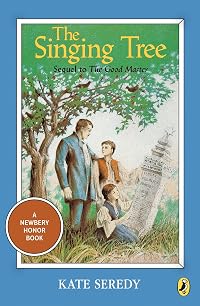


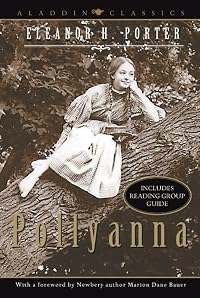
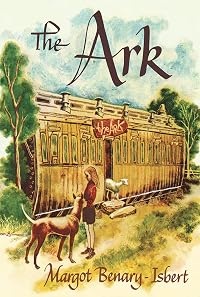




Member Recommendations
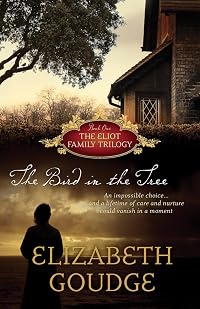
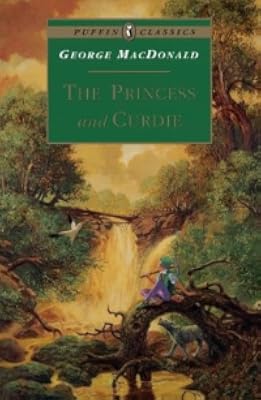
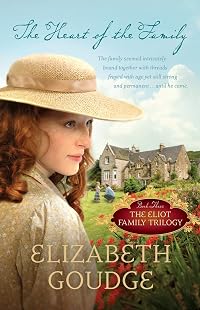
Litrvixen While "The Little Garden" has no magic elements I always think of them as similar since they both involve orphan girls who has to live with an unhappy relative in their big sprawling mansion,and by the end they have helped make the house and inhabitants happy again.
30



Member Reviews
A particular kind of classic children's literature in which nothing too terrible happens, much is resolved, and you know from the first page that everyone is a very nice sort of person and all will end happily for them. And in between there are sometimes mysterious creatures and unexplained things and that's perfectly fine. Many adults would hate this book, but anyone who read it in childhood probably still loves it. It's that kind of book. I suspect it would irritate the shit out of Seanan McGuire, of Wayward Children fame, and anyone who longs for snark above earnestness but to me it's a cozy blanket of a book and a comfort in dark times.
4.5 stars! If you want to see where C.S. Lewis got his writing style for the Chronicles of Narnia, along with plenty of ideas for tone, characters, and scenes, this is the book to read. What is super frustrating and disappointing to me is that Lewis never credits Elizabeth Goudge for being his inspiration. As a matter of fact, she actually credits him as being an influence on her, despite writing The Little White Horse first! This was published in 1946, and Lewis didn’t publish The Lion, The Witch, and the Wardrobe until 1950. I suspect Lewis read this book, patterned his own writing style after Goudge’s, and then never gave her any credit (that I can find, and I searched long and hard for a mention of her anywhere, even in show more passing).
But when, as a reader, you encounter the internalized misogyny that Goudge peppers throughout the plot of The Little White Horse, you start to get a clearer picture of what might be going on here. I think Goudge is deferring to Lewis because he’s a man. She allowed him to take all the credit, and sold herself short. I wish I could go back in time and tell her that she’s worth far more than that! (And also tell her how annoying the misogyny in this book is, and request that she make a few edits.)
Problematic aspects aside, this story has so many delightful things in it. It reminded me a little of The Secret Garden. It’s truly a wish fulfillment sort of tale, with plenty of things children long for. A brave heroine, a castle-like manor, a tiny tower room with a door only a child can fit through, one’s very own pony, a whole host of other friendly and magnificent animals, delicious food descriptions, interesting characters with complex backstories, and the list goes on! Imagine the best dream you had as a child, convert it to story form, and you’d get this book.
Goudge also laboriously and lovingly describes everything. While this may seem a little tedious to an adult reader, I’ve found that kids love this quality in a bedtime story because it allows them to get a clear picture of everything, regardless of how strong their imaginative muscles may or may not be. Any kid, even nowadays, would be super into this book if it was read aloud to them.
Were I to have read this book as a child, it would’ve definitely been a favorite! I would say that it’s definitely worth reading. Just be ready to have some conversations about misogyny if you read it to your kids. For those wondering how much misogyny is present, I would say it’s about on the same level as The Chronicles of Narnia, perhaps a smidge more. And much like Narnia, there is an emphasis on Christianity within the story, so that’s important to know going in, too. show less
But when, as a reader, you encounter the internalized misogyny that Goudge peppers throughout the plot of The Little White Horse, you start to get a clearer picture of what might be going on here. I think Goudge is deferring to Lewis because he’s a man. She allowed him to take all the credit, and sold herself short. I wish I could go back in time and tell her that she’s worth far more than that! (And also tell her how annoying the misogyny in this book is, and request that she make a few edits.)
Problematic aspects aside, this story has so many delightful things in it. It reminded me a little of The Secret Garden. It’s truly a wish fulfillment sort of tale, with plenty of things children long for. A brave heroine, a castle-like manor, a tiny tower room with a door only a child can fit through, one’s very own pony, a whole host of other friendly and magnificent animals, delicious food descriptions, interesting characters with complex backstories, and the list goes on! Imagine the best dream you had as a child, convert it to story form, and you’d get this book.
Goudge also laboriously and lovingly describes everything. While this may seem a little tedious to an adult reader, I’ve found that kids love this quality in a bedtime story because it allows them to get a clear picture of everything, regardless of how strong their imaginative muscles may or may not be. Any kid, even nowadays, would be super into this book if it was read aloud to them.
Were I to have read this book as a child, it would’ve definitely been a favorite! I would say that it’s definitely worth reading. Just be ready to have some conversations about misogyny if you read it to your kids. For those wondering how much misogyny is present, I would say it’s about on the same level as The Chronicles of Narnia, perhaps a smidge more. And much like Narnia, there is an emphasis on Christianity within the story, so that’s important to know going in, too. show less
When orphaned young Maria Merryweather arrives at Moonacre Manor, she feels as if she's entered Paradise. Her new guardian, her uncle Sir Benjamin, is kind and funny; the Manor itself feels like home right away; and every person and animal she meets is like an old friend. But there is something incredibly sad beneath all of this beauty and comfort--a tragedy that happened years ago, shadowing Moonacre Manor and the town around it--and Maria is determined to learn about it, change it, and give her own life story a happy ending. But what can one solitary girl do?
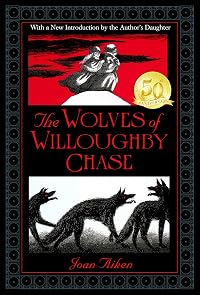
Lovely as always. It does remind me, in some ways, of Aiken's Wolves series - the same sort of mildly fantastic adventures, by amazingly competent children. But it's less funny and more...sweet? And deep, and touching. All the little mysteries, leading up to the big one; all the correspondences, the Sun and Moon Merryweathers and Wrolf and the little white horse - lovely. The insistence on "ladylike behavior" for Maria gets a little annoying at times, but it was probably just about invisible when the book was written in 1946. The descriptions - of the house, of the land, of the animals and birds, and especially of the food - are gorgeous and very convincing. This is one of the books that make me need to eat something while I read it show more (though not nearly as much as they do!). And the root of the solution is so simple, and so hard - control of oneself and one's behavior. It is a gorgeous story - I've read it half a dozen times and will probably do it as many times again, or more. show less
Book two of my nostalgic journey through my favourite childhood books is now complete, and with no hesitation at all I add it to my favourites as an adult, too. This is one of those tales that will stay with you for life, and I know as a young'n this was my favourite book of all time along with one other that will be reviewed at a later date. It's been a while since I last read it and the details were beginning to get a little fuzzy, and as such had forgotten over half of the book, but it's absolutely wonderful. And here's why.
The novel revolves around little Maria Merryweather, who relocates to the colourful and jovial Moonacre Valley to live within Moonacre Manor. Despite growing up with London and its luxuries, Maria finds herself show more more at home than she ever was in London, and soon grows to love everyone and everything within the Valley. And yet she is thrust into the midst of an ancient feud, and takes it upon herself to restore peace to the valley, and Maria usually gets her own way!
Elizabeth Goudge is the absolute queen of adjectives. Her descriptions are rich and delicious and are described so vividly that everything just jumps off of the page. Absolutely everything is described to the fullest of its potential; the clothes, the people, the animals, the nature, and even the moon itself. Even as a character is telling a fairy tale within the book, the inception-like story within the story tells itself so wonderfully and with such elegance and vigour that it just leaps off of the page and feels like it's being planted in your mind forever. It is in this way that most of the characters are developed. We get to see their facial expressions and body language, and truly feel their emotions and understand their innermost thoughts. It's just oozing with richness and elegance.
The story itself is delightful. It's full of heroes, noble steeds, baddies, magic, ancient feuds, good, bad, and everything inbetween. It's a lovely little fairy tale, and despite the magic within it there is a hint of reality and almost a moral to the story. Within everyone there are good traits and bad traits, and this is shown even in the "baddies" of the novel, who are shown to have good humour and honour. The good guys are proud and sometimes greedy. It's just refreshing to see the grey area within people instead of "everything about this person is good" and "everything about this person is bad". The use of colour to depict people and places is a nice little metaphor and a good way to predict what's to come.
Of course, as in every story, it does have its faults. It's quite a sexist book. For example, Maria's ancestor is being too proud and silly because she didn't forgive her husband for marrying her for the inheritance instead of love. And women are taught not to be curious or outspoken, and are told never to be aggravating or argue with their husbands, even if they are being utterly revolting in their speech. One particular example would be when a man throws all of his fiancées precious flowers and telling her she didn't deserve to marry him, and yet it was the woman who was blamed for being silly for not forgiving him and caring too much about the flowers. And Maria gets married at 14 or 15, which is wrong in the eyes of society today. All of this can be put down to the era in which it was set, though, which was the year 1842. It was acceptable for girls or 14 of 15 to be married in that era, I believe.
Overall, this is a wonderful tale that will stay with you for years, and despite its faults it is a delightful little novel. I give it my highest recommendation. show less
The novel revolves around little Maria Merryweather, who relocates to the colourful and jovial Moonacre Valley to live within Moonacre Manor. Despite growing up with London and its luxuries, Maria finds herself show more more at home than she ever was in London, and soon grows to love everyone and everything within the Valley. And yet she is thrust into the midst of an ancient feud, and takes it upon herself to restore peace to the valley, and Maria usually gets her own way!
Elizabeth Goudge is the absolute queen of adjectives. Her descriptions are rich and delicious and are described so vividly that everything just jumps off of the page. Absolutely everything is described to the fullest of its potential; the clothes, the people, the animals, the nature, and even the moon itself. Even as a character is telling a fairy tale within the book, the inception-like story within the story tells itself so wonderfully and with such elegance and vigour that it just leaps off of the page and feels like it's being planted in your mind forever. It is in this way that most of the characters are developed. We get to see their facial expressions and body language, and truly feel their emotions and understand their innermost thoughts. It's just oozing with richness and elegance.
The story itself is delightful. It's full of heroes, noble steeds, baddies, magic, ancient feuds, good, bad, and everything inbetween. It's a lovely little fairy tale, and despite the magic within it there is a hint of reality and almost a moral to the story. Within everyone there are good traits and bad traits, and this is shown even in the "baddies" of the novel, who are shown to have good humour and honour. The good guys are proud and sometimes greedy. It's just refreshing to see the grey area within people instead of "everything about this person is good" and "everything about this person is bad". The use of colour to depict people and places is a nice little metaphor and a good way to predict what's to come.
Of course, as in every story, it does have its faults. It's quite a sexist book. For example, Maria's ancestor is being too proud and silly because she didn't forgive her husband for marrying her for the inheritance instead of love. And women are taught not to be curious or outspoken, and are told never to be aggravating or argue with their husbands, even if they are being utterly revolting in their speech. One particular example would be when a man throws all of his fiancées precious flowers and telling her she didn't deserve to marry him, and yet it was the woman who was blamed for being silly for not forgiving him and caring too much about the flowers. And Maria gets married at 14 or 15, which is wrong in the eyes of society today. All of this can be put down to the era in which it was set, though, which was the year 1842. It was acceptable for girls or 14 of 15 to be married in that era, I believe.
Overall, this is a wonderful tale that will stay with you for years, and despite its faults it is a delightful little novel. I give it my highest recommendation. show less
This is my all-time favourite children's book. My copy, much read, dates back to when I was twelve, and has illustrations which are very-badly coloured in. When I picked it up recently to write a recommendation for a friend it was 3 chapters later before I could put it down.
Set in Devon in the 19th century, it tells the story of Maria, an orphan who moves from a dull London existence to Moonacre Manor, to live with her guardian. All is not entirely well in the valley - the Black Men guard the coast fiercely, and have been known to take lambs from the village of Silverydew. Maria and her new friend Robin set out to put things right.
Goudge, as always in her books, details the minutiae of everyday life which creates security and comfort, show more with vivid descriptions of place, texture, taste, character. Her animals are particularly good - they are strong and interactive characters without being unduly anthropomorphic. Some of Goudge's best characters are members of the Anglican clergy, and she writes about moral fortitude and integrity with a delicacy of understanding and perception which, in a cynical age, I find genuinely uplifting.
Its suitability for the iPod generation is questionable, but it's worth a try! show less
Set in Devon in the 19th century, it tells the story of Maria, an orphan who moves from a dull London existence to Moonacre Manor, to live with her guardian. All is not entirely well in the valley - the Black Men guard the coast fiercely, and have been known to take lambs from the village of Silverydew. Maria and her new friend Robin set out to put things right.
Goudge, as always in her books, details the minutiae of everyday life which creates security and comfort, show more with vivid descriptions of place, texture, taste, character. Her animals are particularly good - they are strong and interactive characters without being unduly anthropomorphic. Some of Goudge's best characters are members of the Anglican clergy, and she writes about moral fortitude and integrity with a delicacy of understanding and perception which, in a cynical age, I find genuinely uplifting.
Its suitability for the iPod generation is questionable, but it's worth a try! show less
When you expect a horse, you see a horse, because a unicorn doesn't fit your concept of reality. In this fantasy, Goudge plays around with reality and expectations in such a way that along with the characters in the story, the reader isn't always sure what is fantasy and what is reality. It's a fantasy, but if magic doesn't fit within your weltanschauung, maybe it's simply a historical romance. Maria comes with her governess to live with a distant uncle, only to find that she is heir to the estate, as long as she can mediate a village feud. She does so, and in the process restores broken relationships and forges one of her own. By way of reference, Little White Horse won the Carnegie medal in 1947 (the UK equivalent to the Newbery show more Medal), and JK Rowling has stated in interviews that this was a favorite book growing up. show less
Members
- Recently Added By
Lists

Favorite Childhood Books
1,651 works; 515 members

Best Children's Books You've Read
197 works; 75 members
1001 Children's Books You Must Read Before You Grow Up
774 works; 101 members

Read the book and saw the movie
1,170 works; 192 members
Children's Fantasy
73 works; 10 members

Favorite Animal Fiction
359 works; 156 members

Carnegie Medal books I've read (shortlist and winners)
86 works; 17 members

Classics you know you should have read but probably haven't
421 works; 407 members

1940s
221 works; 25 members
Honey For a Child's Heart
1,152 works; 25 members

Hayao Miyazaki's 50 Recommended Children's Books
48 works; 6 members

Children's Chapter Books from 1940s, ...
77 works; 4 members

Satori Smiles Children's Book List
262 works; 7 members
Ambleside Books
459 works; 18 members

Books with Colourful Titles
171 works; 8 members

Carnegie Medal Winners In Order
85 works; 1 member

A Rainbow of Books: Colors in the Title
570 works; 24 members

CCE 1000 Good Books List
1,033 works; 12 members

Frequently sought stories - Name that Book group
149 works; 11 members

al.vick-wishlist-YA
127 works; 3 members

Unicorns -- children's/young adult fiction
77 works; 5 members

Best books read in the first half of 2012
38 works; 6 members

Ambleside Y3
36 works; 1 member

Children's Literature 1900 - 1950 in order
413 works; 8 members

Books Read in 2021
5,361 works; 114 members

EGBERTINA'S List of childhood books worthy of merit or unspeakable delight
155 works; 7 members

Ambleside Year 3
47 works; 1 member

Books We Loved As Children
610 works; 254 members

HMS: Make Your Child a Lover of Books, Ages 9 & up
111 works; 2 members
Author Information

65+ Works 12,476 Members
Some Editions
Awards and Honors
Series
Belongs to Publisher Series
Work Relationships
Has the adaptation
Common Knowledge
- Canonical title
- The Little White Horse
- Original title
- The Little White Horse
- Alternate titles
- The Secrets of Moonacre Valley
- Original publication date
- 1946
- People/Characters
- Maria Merryweather; Miss. Heliotrope; Marmaduke Scarlett; Zachariah; Wrolf; Wiggins (show all 14); Serena; Sir Benjamin Merryweather; Robin; Loveday Minette; Periwinkle; Louis de Fontenelle (Old Parson); Digweed; Monsieur Cocq de Noir
- Important places
- Moonacre, England, UK
- Important events
- 1842
- Related movies
- Moonacre (1994 | IMDb); The Secret of Moonacre (2008 | IMDb)
- Dedication
- Dedicated to Walter Hodges
With my thanks. - First words
- The carriage gave another lurch, and Maria Merrywether, Miss Heliotrope and Wiggins once more fell into each other's arms, sighed, gasped, righted themselves, and fixed their attention upon those objects which were for each o... (show all)f them at this trying moment the source of courage and strength.
- Quotations
- There was an oak table in the middle of the room spread with a white cloth and red-and-white breakfast china, and there was a settle by the fire and a couple of hard oak chairs, but no other furniture and no pictures or ornam... (show all)ents. But the room did not need them because of the books, which stood there upon the shelves breathing out a friendliness that seemed to furnish and ornament the room, as did its spotless neatness and cleanliness.
- Last words
- (Click to show. Warning: May contain spoilers.)He would come towards her and she would run towards him, and he would carry her upon his back away and away, she did not quite know where, but to a good place, a place where she wanted to be.
- Original language
- English
- Disambiguation notice
- The little white horse was filmed as The secret of Moonacre
Classifications
- Genres
- Fiction and Literature, Kids, Fantasy, Children's Books
- DDC/MDS
- 823.912 — Literature & rhetoric English & Old English literatures English fiction 1900- 1901-1999 1901-1945
- LCC
- PZ7 .G71 .L — Language and Literature Fiction and juvenile belles lettres Fiction and juvenile belles lettres Juvenile belles lettres
- BISAC
Statistics
- Members
- 2,934
- Popularity
- 6,143
- Reviews
- 56
- Rating
- (4.11)
- Languages
- 12 — Dutch, English, French, German, Italian, Japanese, Norwegian (Bokmål), Polish, Portuguese, Slovak, Spanish, Swedish
- Media
- Paper, Audiobook, Ebook
- ISBNs
- 60
- ASINs
- 37