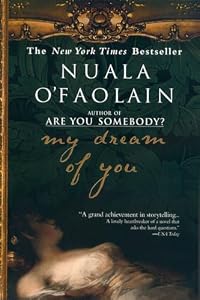
My Dream of You
by Nuala O'Faolain
On This Page
Description
Kathleen de Burca's research on the 1850s affair between an English landlord's wife and an Irish servant causes her to reconsider her own life.Tags
Recommendations




















Member Reviews
I am not a middle-age woman trying to figure out how, where and why all the good years of sex vanished. I don’t have hair the color of overcast skies, the corners of my eyes aren’t roosts for a flock of crows, my blood hasn’t been recycled through my body more times than there are stars in heaven.
But for one week, I was all of those things. For seven days, I slipped into the skin of Kathleen de Burca, the journalist on a passion-quest in Nuala O’Faolain’s debut novel My Dream of You. I felt the ache in Kathleen’s bones, the stabs to her heart, the squeeze in her lungs as she goes in search of love in the twilight. Ms. O’Faolain (who bears more than a passing resemblance to Kathleen) is to be commended for causing a show more still-this-side-of-40 male to so completely inhabit a paper-and-ink character with breasts and menopausal issues. I know Kathleen. And, after your 530-page relationship, you will, too—no matter if you’re 20, 70, Catholic, Jewish, or have hair on your chest.
Stories like Kathleen’s are too-easily dismissed with a sniff and an eye-roll as “women’s fictionâÂ? and are either anointed by Oprah or filmed as a Lifetime Television for Women movie (or both). But there is more to My Dream of You than meets the bodice-ripping eye.
This is a romance, yes; but it is one that is filled with such elegance, honesty and energy that it quickly ascends to something greater than another book for the mid-life-crisis womenâÂÂs aisle at Barnes & Noble. It is a story for any of us who have grasped at second chances, and prayed our fingers werenâÂÂt too slick with nervous sweat.
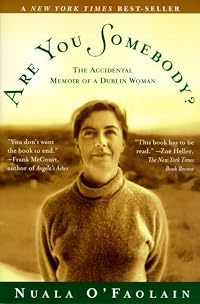
OâÂÂFaolain, a former television producer and writer for The Irish Times also went close to the bone with the character in her first book Are You Somebody?: herself. The memoir of growing up in lower-class Ireland was not as tragic-gritty as Frank McCourtâÂÂs AngelaâÂÂs Ashes, but it was no less compelling as OâÂÂFaolain described the neglect from her alcoholic mother and, later, the years spent trying to find both a career and a love life in male-dominated Irish society.
In Are You Somebody?, she writes, âÂÂA woman past the age where she might be contemplated as a sexual partner is hardly seen. She turns into a silhouette.âÂ?
This is the shadow world Kathleen inhabits when we first meet her in My Dream of You. Most of her journalism career has been spent writing for a travel magazine in London, a job which has allowed her to jet around the globe, always on the run from herself. When her best friend and colleague dies, Kathleen is suddenly cut adrift. Nearing fifty, sheâÂÂs reached the point where she starts to take a long hard look at her perpetually single life, examining past flings and committed relationships with a longing gaze. We bear with her through scenes of loveless sexâÂÂsad, painful episodes which lower her dignity as a woman. âÂÂMake it not too late!âÂ? she prays in desperation as she sets off a physical journey to Ireland and a spiritual sojourn to the soul.
She goes to Ireland in search of answers to an 1856 court case, Talbot v. Talbot, which has always intrigued her. It concerns the alleged adultery between and English landlordâÂÂs lonely wife, Marianne, and their Irish servant, Mullan. During the country's infamous Potato Famine, the two lovers cross class lines in what witnesses describe as a passionate affair. After being away from the Emerald Isle for thirty years, Kathleen travels to the scene of the crime, Ballygall, and starts poking around the long-cold ashes of the Talbot affair. But in so doing, she stokes the fires of her own memories and starts wondering, âÂÂIs it too late for true love to find me?âÂ?
Like A.S. ByattâÂÂs Possession, the book shifts between KathleenâÂÂs investigation and testimonial narratives from the Talbot trial. Kathleen begins writing her own book about the affair and itâÂÂs not hard to make the link between herself and the way she describes the 19th-century lovers: âÂÂThey must have seemed like luscious fruit to each other. Their bodies must have ripened on each other.âÂ? Or this particularly sensual paragraph:
The habitat of their passion, where they roamed like two animals on a great plain, was silence. Not perfect silenceâÂÂthere were always the sounds of the household and sounds coming in from the estate. Sheep, penned in a far yard, the creak of turf carts coming in from the bog. But the couple were habitually mute. Except that they panted and grunted when they forgot themselves in each other. Then afterwards there was peace, and silence again. And after that, she lived in a hot dream of him.
The story is given to us in language which barely has any clothes on the words. The simple language is only occasionally overwrought and just this side of cliché; but most of the sentences flow free as the River Shannon. ThereâÂÂs an undeniably compelling passion OâÂÂFaolain imparts to everything her pen touches. And I say âÂÂpenâÂ? rather than âÂÂkeyboardâÂ? because I can only imagine her writing the bookâÂÂs first draft in longhandâÂÂthatâÂÂs how intimate she makes this reading experience.
Through Marianne and Mullan, Kathleen comes to find her purpose in lifeâÂÂthe whys, wherefores and whims of sex; and through her characters, one can guess, OâÂÂFaolain reaches conclusions about her own place in the world. In this way, My Dream of You is a very wide-awake examination of one writerâÂÂs life. This is therapeutic fiction in one of its finest hours.
Is My Dream of You a perfect book (whatever that is)? Not entirely. ItâÂÂs too long for its own good and many pages are squandered on Kathleen returning to the same lovesick conclusions. But these are easy to forgive when youâÂÂve got such a remarkable character, and an author who generously heaps dollops of herself on every page. Kathleen lingers long in the memory and itâÂÂs not easy to slough off the skin in which OâÂÂFaolain has encased the readerâÂÂeven for us fortysomething males. show less
But for one week, I was all of those things. For seven days, I slipped into the skin of Kathleen de Burca, the journalist on a passion-quest in Nuala O’Faolain’s debut novel My Dream of You. I felt the ache in Kathleen’s bones, the stabs to her heart, the squeeze in her lungs as she goes in search of love in the twilight. Ms. O’Faolain (who bears more than a passing resemblance to Kathleen) is to be commended for causing a show more still-this-side-of-40 male to so completely inhabit a paper-and-ink character with breasts and menopausal issues. I know Kathleen. And, after your 530-page relationship, you will, too—no matter if you’re 20, 70, Catholic, Jewish, or have hair on your chest.
Stories like Kathleen’s are too-easily dismissed with a sniff and an eye-roll as “women’s fictionâÂ? and are either anointed by Oprah or filmed as a Lifetime Television for Women movie (or both). But there is more to My Dream of You than meets the bodice-ripping eye.
This is a romance, yes; but it is one that is filled with such elegance, honesty and energy that it quickly ascends to something greater than another book for the mid-life-crisis womenâÂÂs aisle at Barnes & Noble. It is a story for any of us who have grasped at second chances, and prayed our fingers werenâÂÂt too slick with nervous sweat.
OâÂÂFaolain, a former television producer and writer for The Irish Times also went close to the bone with the character in her first book Are You Somebody?: herself. The memoir of growing up in lower-class Ireland was not as tragic-gritty as Frank McCourtâÂÂs AngelaâÂÂs Ashes, but it was no less compelling as OâÂÂFaolain described the neglect from her alcoholic mother and, later, the years spent trying to find both a career and a love life in male-dominated Irish society.
In Are You Somebody?, she writes, âÂÂA woman past the age where she might be contemplated as a sexual partner is hardly seen. She turns into a silhouette.âÂ?
This is the shadow world Kathleen inhabits when we first meet her in My Dream of You. Most of her journalism career has been spent writing for a travel magazine in London, a job which has allowed her to jet around the globe, always on the run from herself. When her best friend and colleague dies, Kathleen is suddenly cut adrift. Nearing fifty, sheâÂÂs reached the point where she starts to take a long hard look at her perpetually single life, examining past flings and committed relationships with a longing gaze. We bear with her through scenes of loveless sexâÂÂsad, painful episodes which lower her dignity as a woman. âÂÂMake it not too late!âÂ? she prays in desperation as she sets off a physical journey to Ireland and a spiritual sojourn to the soul.
She goes to Ireland in search of answers to an 1856 court case, Talbot v. Talbot, which has always intrigued her. It concerns the alleged adultery between and English landlordâÂÂs lonely wife, Marianne, and their Irish servant, Mullan. During the country's infamous Potato Famine, the two lovers cross class lines in what witnesses describe as a passionate affair. After being away from the Emerald Isle for thirty years, Kathleen travels to the scene of the crime, Ballygall, and starts poking around the long-cold ashes of the Talbot affair. But in so doing, she stokes the fires of her own memories and starts wondering, âÂÂIs it too late for true love to find me?âÂ?
Like A.S. ByattâÂÂs Possession, the book shifts between KathleenâÂÂs investigation and testimonial narratives from the Talbot trial. Kathleen begins writing her own book about the affair and itâÂÂs not hard to make the link between herself and the way she describes the 19th-century lovers: âÂÂThey must have seemed like luscious fruit to each other. Their bodies must have ripened on each other.âÂ? Or this particularly sensual paragraph:
The habitat of their passion, where they roamed like two animals on a great plain, was silence. Not perfect silenceâÂÂthere were always the sounds of the household and sounds coming in from the estate. Sheep, penned in a far yard, the creak of turf carts coming in from the bog. But the couple were habitually mute. Except that they panted and grunted when they forgot themselves in each other. Then afterwards there was peace, and silence again. And after that, she lived in a hot dream of him.
The story is given to us in language which barely has any clothes on the words. The simple language is only occasionally overwrought and just this side of cliché; but most of the sentences flow free as the River Shannon. ThereâÂÂs an undeniably compelling passion OâÂÂFaolain imparts to everything her pen touches. And I say âÂÂpenâÂ? rather than âÂÂkeyboardâÂ? because I can only imagine her writing the bookâÂÂs first draft in longhandâÂÂthatâÂÂs how intimate she makes this reading experience.
Through Marianne and Mullan, Kathleen comes to find her purpose in lifeâÂÂthe whys, wherefores and whims of sex; and through her characters, one can guess, OâÂÂFaolain reaches conclusions about her own place in the world. In this way, My Dream of You is a very wide-awake examination of one writerâÂÂs life. This is therapeutic fiction in one of its finest hours.
Is My Dream of You a perfect book (whatever that is)? Not entirely. ItâÂÂs too long for its own good and many pages are squandered on Kathleen returning to the same lovesick conclusions. But these are easy to forgive when youâÂÂve got such a remarkable character, and an author who generously heaps dollops of herself on every page. Kathleen lingers long in the memory and itâÂÂs not easy to slough off the skin in which OâÂÂFaolain has encased the readerâÂÂeven for us fortysomething males. show less
This is a hard book to sum up with plotlines and character descriptions. It is brilliantly written, wry, compassionate. I learned about O'Faolain, the Famine, myself. Not an easy read in every way, but very much worthwhile.
May 2014: when reviewing Cecilia Ahern's A Place Called Here, I wrote:
I can't help thinking of a truly powerful novel, also by an Irish woman writer, also about a pretty screwed up woman who almost inadvertently stumbles down a path to insight and healing--[My Dream of You] by [[Nuala O’Faolain]]. The difference is profound. O’Faolain is not attempting to lead us into any great insight, she is just telling her story, but what a contrast. I was transported by the writing, the character, the story, perhaps because show more the author in that case was writing from truth, not from plot outline or metaphor. When her character screws up, it is painful. When she does herself a favour, it is a joy. Ahern's protagonist on the other hand is almost a caricature, and although in real life I would greatly sympathize with her, in the book I am merely curious. show less
May 2014: when reviewing Cecilia Ahern's A Place Called Here, I wrote:
I can't help thinking of a truly powerful novel, also by an Irish woman writer, also about a pretty screwed up woman who almost inadvertently stumbles down a path to insight and healing--[My Dream of You] by [[Nuala O’Faolain]]. The difference is profound. O’Faolain is not attempting to lead us into any great insight, she is just telling her story, but what a contrast. I was transported by the writing, the character, the story, perhaps because show more the author in that case was writing from truth, not from plot outline or metaphor. When her character screws up, it is painful. When she does herself a favour, it is a joy. Ahern's protagonist on the other hand is almost a caricature, and although in real life I would greatly sympathize with her, in the book I am merely curious. show less
Irish born Kathleen De Burca has arrived at a crossroads in her life. Nearing fifty she loses her best friend and coworker to a heart attack. As a travel writer, Kathleen has lived in London for nearly thirty years and has never married or had children. Jimmy was the closest person she could call family. But, when she is presented with the lifetime achievement award she was supposed to share with her best friend she realizes there is more to life than travel miles and exotic venues. Why not go home to Ireland? Why not research a century old crime that has long fascinated her?
So begins Kathleen's story. Her past is as complicated as her future is a blank slate. Giving up everything, she lays herself bare to the tragedies of the past; show more remembrances of long ago transgressions; all the cringe-worthy scars of yesterday. But, as she says on page 408, "Tragedies end." And so they do. Kathleen learns to pick up the pieces and face the black slate of tomorrow with a different kind of courage than it took in order to come home.
As an aside, I felt the ending gave O'Faolain room for a sequel. Just saying. show less
So begins Kathleen's story. Her past is as complicated as her future is a blank slate. Giving up everything, she lays herself bare to the tragedies of the past; show more remembrances of long ago transgressions; all the cringe-worthy scars of yesterday. But, as she says on page 408, "Tragedies end." And so they do. Kathleen learns to pick up the pieces and face the black slate of tomorrow with a different kind of courage than it took in order to come home.
As an aside, I felt the ending gave O'Faolain room for a sequel. Just saying. show less
Irish born Kathleen De Burca has arrived at a crossroads in her life. Nearing fifty she loses her best friend and coworker to a heart attack. As a travel writer, Kathleen has lived in London for nearly thirty years and has never married or had children. Jimmy was the closest person she could call family. But, when she is presented with the lifetime achievement award she was supposed to share with her best friend she realizes there is more to life than travel miles and exotic venues. Why not go home to Ireland? Why not research a century old crime that has long fascinated her?
So begins Kathleen's story. Her past is as complicated as her future is a blank slate. Giving up everything, she lays herself bare to the tragedies of the past; show more remembrances of long ago transgressions; all the cringe-worthy scars of yesterday. But, as she says on page 408, "Tragedies end." And so they do. Kathleen learns to pick up the pieces and face the black slate of tomorrow with a different kind of courage than it took in order to come home.
As an aside, I felt the ending gave O'Faolain room for a sequel. Just saying.
**Molloy's reading of My Dream of You was fantastic! ** show less
So begins Kathleen's story. Her past is as complicated as her future is a blank slate. Giving up everything, she lays herself bare to the tragedies of the past; show more remembrances of long ago transgressions; all the cringe-worthy scars of yesterday. But, as she says on page 408, "Tragedies end." And so they do. Kathleen learns to pick up the pieces and face the black slate of tomorrow with a different kind of courage than it took in order to come home.
As an aside, I felt the ending gave O'Faolain room for a sequel. Just saying.
**Molloy's reading of My Dream of You was fantastic! ** show less
Kathleen de Burca ist bereit, bis an die Grenzen zu gehen. Die Grenzen der Liebe, die sie seit Jahren vermisst. Dabei stößt sie nicht nur auf die ebenso skandalöse wie tragische Geschichte einer Amour fou, sondern vor allem auf einen Mann, der ihre Gefühle herausfordert. Vielleicht zum letzten Mal. Ein großartiger Roman über die Schmerzen der Leidenschaft und die Unbedingtheit der Liebe.
This was an interesting book about an Irish transplant travel writer in London. The story flip flops between her present life and her reflection on her past. It also flips way back to a story she's researching about an affair between an Irish groom and an English lady during the potato famine years (think mid-eighteen hundreds). I liked this book because it described a reality in Ireland that we sometime as tourists and travelers don't see about a place. It was also amazing to realize the shear amount of people who suffered, died, and immigrated. The book did tend to ramble and I think she could have cut the story down in half but it did really make you get to know the main character.
Kathleen De Burca, an Irish travel writer living in London, trows over her life there to return to Ireland and write a book. What she is chasing down is an old scandal - an affair in mid century Ireland between the wife of an English landlord and her Irish servant during the time of the Irish potato famine. Also woven into the narrative is Kathleen's own story - tragically disfunctional families, sharp-eyed feminist critiques of contemporary society, aging,, sex and friendship. A beautifully written book about longing, regret, choices and change.
Members
- Recently Added By
Author Information

11+ Works 3,461 Members
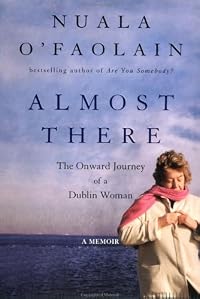
Journalist and author Nuala O'Faolain was born in 1940 and grew up in the countryside near Dublin. Before earning a postgraduate degree in English from Oxford University, she studied English as University College, Dublin and medieval English literature at the University of Hull. She had numerous jobs including a lecturer in the English department show more at University College; produced programs for Open Door, a community-access documentary department at the BBC; and produced current-affairs television programs for Radio Telifis Eirann. She started writing a weekly opinion column for The Irish Times in 1986. She wrote two memoirs, Are You Somebody? (1996) and Almost There (2003), and two novels, My Dream of You (2001) and The Story of Chicago May (2006). She died of lung cancer on May 9, 2008. (Bowker Author Biography) show less
Some Editions
Awards and Honors
Awards
Distinctions
Common Knowledge
- People/Characters
- Kathleen de Burca; Marianne Talbot; William Mallon
- Important places
- Ballygall, Dublin, Ireland
- Important events
- Irish Potato Famine
- First words
- We used to stay in bed most of the weekend, Hugo and I, when we lived in the attic of a rambling house with pinnacles and gables, among chestnut trees, on the edge of a park in south London.
- Quotations
- I felt not so much that I was going downhill as that I was dessicating. I was so empty that I blew this way and that. Happiness keeps you poised, and you do the right thing withoout effort, whereas you get things wrong when... (show all) you're struggling with lack of life. (p.438)
- Last words
- (Click to show. Warning: May contain spoilers.)And the deer did not move away until he was dead.
- Blurbers
- McCourt, Frank; O'Brien, Edna; Doyle, Roddy; Prose, Francine; Heller, Zoe; McDermott, Alice (show all 7); Toibin, Colm
Classifications
Statistics
- Members
- 1,253
- Popularity
- 19,501
- Reviews
- 18
- Rating
- (3.42)
- Languages
- 7 — Dutch, English, Finnish, French, German, Italian, Swedish
- Media
- Paper, Audiobook
- ISBNs
- 34
- ASINs
- 4