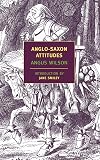
Anglo-Saxon Attitudes
by Angus Wilson
On This Page
Description
Gerald Middleton is a sixty-year-old self-proclaimed failure. Worse than that, he's "a failure with a conscience." As a young man, he was involved in an archaeological dig that turned up an obscene idol in the coffin of a seventh-century bishop and scandalized a generation. The discovery was in fact the most outrageous archaeological hoax of the century, and Gerald has long known who was responsible and why. But to reveal the truth is to risk destroying the world of cozy compromises that, show more personally as well as professionally, he has long made his own. One of England's first openly gay novelists, Angus Wilson was a dirty realist who relished the sleaze and scuffle of daily life. Slashingly satirical, virtuosically plotted, and displaying Dickensian humor and nerve, Anglo-Saxon Attitudes features a vivid cast of characters that includes scheming academics and fading actresses, big businessmen toggling between mistresses and wives, media celebrities, hustlers, transvestites, blackmailers, toadies, and even one holy fool. Everyone, it seems, is either in cahoots or in the dark, even as comically intrepid Gerald Middleton struggles to maintain some dignity while digging up a history of lies. show lessTags
Recommendations






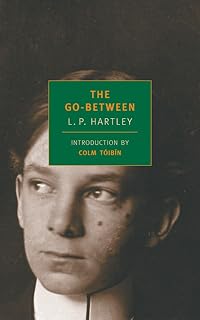
















Member Recommendations

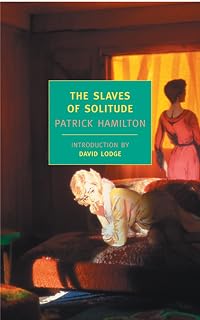
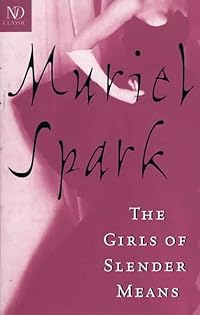
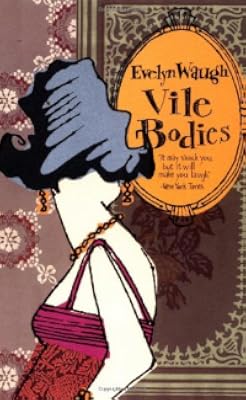
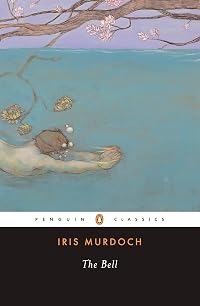
SomeGuyInVirginia Both deal with identity.

JuliaMaria In beiden Romanen geht es (u.a.) um Vater und Sohn: Der Vater hat auf seine große Liebe zugunsten einer konventionellen Ehe verzichtet. Nun steht der Sohn vor einer ähnlichen Situation: wie wird er sich verhalten, wie der Vater? In beiden Romanen wird der Vater seine ehemalige Geliebte wieder aufsuchen.

SomeGuyInVirginia For John, puddlejumper.
Member Reviews
Wilson's second novel brings together a large, complicated cast of multiply-interconnected characters (so complicated that he apparently felt it necessary to include a dramatis personae before Chapter One), with at their centre the middle-aged, middlingly successful, medievalist, Professor Gerald Middleton.
Forty years ago, on the eve of the Great War, Middleton's teacher, the late Professor Stokesay, had made a sensational find in the Suffolk tomb of an Anglo-Saxon bishop. Once seen as an isolated freak, new archaeological work on Heligoland (!) is now starting to persuade scholars that Stokesay's discovery might be part of a significant pattern. Middleton has reason to suspect that the pagan idol found in the bishop's tomb was planted show more there as a twisted practical joke by Stokesay's son, since killed in the war, but has never felt it appropriate to cause trouble by saying anything. Should he do so now?
At the same time, Middleton finds himself in possession of various confidences relating to his own family, with similar dilemmas attached to them...
A darkly-funny, morally-complex tale, with no real daylight at the end of it, but a lot of entertaining little jabs at the scholarly world and its eccentricities, and insights into 1950s English (bourgeois) society. Plenty of gay characters, but they are still mostly pushed into obscure corners of the plot and their lives are made to seem furtive and shady to the remaining characters: this isn't the brave new world of Mrs Eliot. Not quite yet, anyway. show less
Forty years ago, on the eve of the Great War, Middleton's teacher, the late Professor Stokesay, had made a sensational find in the Suffolk tomb of an Anglo-Saxon bishop. Once seen as an isolated freak, new archaeological work on Heligoland (!) is now starting to persuade scholars that Stokesay's discovery might be part of a significant pattern. Middleton has reason to suspect that the pagan idol found in the bishop's tomb was planted show more there as a twisted practical joke by Stokesay's son, since killed in the war, but has never felt it appropriate to cause trouble by saying anything. Should he do so now?
At the same time, Middleton finds himself in possession of various confidences relating to his own family, with similar dilemmas attached to them...
A darkly-funny, morally-complex tale, with no real daylight at the end of it, but a lot of entertaining little jabs at the scholarly world and its eccentricities, and insights into 1950s English (bourgeois) society. Plenty of gay characters, but they are still mostly pushed into obscure corners of the plot and their lives are made to seem furtive and shady to the remaining characters: this isn't the brave new world of Mrs Eliot. Not quite yet, anyway. show less
A comedy of manners that examines what it means to be English, though summing it up in a line is as satisfying as saying Cabaret is a musical.
The action revolves around the early 20th century excavation of a 7th century English bishop's grave and a pagan male fertility idol found in it. The protagonist, Professor Middleton, believes that its inclusion may be a hoax but for years has said nothing about it. The historical device nicely illustrates the different epochs that have gone before in the UK, and gives Wilson a pallet to sketch several different types of Englishmen found he identified in the 1950s. While each character is very different, Wilson deftly narrates the precedents that have gone into creating their very English show more attitudes.
What happens in the novel is funny, mordant, sad, ghastly, and ultimately encouraging. I’ll leave it to you to get the details for yourself.
One item that really interested me about the book was the idea that the present is the culmination of the past but always seems so removed from it, and that the leaders of each age consider their own to be the most advanced and enlightened, regardless of how badly that age might be viewed at any other time. show less
The action revolves around the early 20th century excavation of a 7th century English bishop's grave and a pagan male fertility idol found in it. The protagonist, Professor Middleton, believes that its inclusion may be a hoax but for years has said nothing about it. The historical device nicely illustrates the different epochs that have gone before in the UK, and gives Wilson a pallet to sketch several different types of Englishmen found he identified in the 1950s. While each character is very different, Wilson deftly narrates the precedents that have gone into creating their very English show more attitudes.
What happens in the novel is funny, mordant, sad, ghastly, and ultimately encouraging. I’ll leave it to you to get the details for yourself.
One item that really interested me about the book was the idea that the present is the culmination of the past but always seems so removed from it, and that the leaders of each age consider their own to be the most advanced and enlightened, regardless of how badly that age might be viewed at any other time. show less
Angus Wilson is brave. He also wrote this hilariously cynical book involving a wealthy family and its many branches and connections, all of them involved in lies.
Wonderful complexity and richness of character. To sum up in a phrase: archeological excavation uncovers adultery. The dig serves as a background for all the whacky escapades and [I suppose] must provide some kind of metaphor. Mix the pagan phallic effigies in with that unreliable central character - it is an unpretentious yet thrilling Wilson (at his best).
An awfully good book, held back to 4 stars because I wasn't emotionally engaged (when compared to the somewhat similar John Irving, Charles Dickens, or Robertson Davies--it's that kind of book). A very large cast (dauntingly large at first, but eventually you work out that everyone knows everyone else, and what those relationships are, and the book narrows its focus to a particular person/family and you realise who are the leads and who are the supports).
Not as funny as I was expecting--really, not funny at all, or at least not in the way where I would tell others "it's so funny!" because it's not. It's a slightly satiric soap-opera. I was particularly surprised by the openness with which characters' homosexuality, adultery, etc., was show more dealt with (I suppose books from the time period aren't necessarily as chaste as the movies/tv from then!) so that's also a mark in its favour. show less
Not as funny as I was expecting--really, not funny at all, or at least not in the way where I would tell others "it's so funny!" because it's not. It's a slightly satiric soap-opera. I was particularly surprised by the openness with which characters' homosexuality, adultery, etc., was show more dealt with (I suppose books from the time period aren't necessarily as chaste as the movies/tv from then!) so that's also a mark in its favour. show less
I suspect this one will gain on a second reading--it's hard for me, a late twentieth century, transplanted Australian, to really get the class issues that Wilson is, I'm pretty sure, out to examine. It's funny in places, in a very English/ironic way, and the characters are fantastic. There's not really any story, which I don't mind. And yet somehow it didn't grab me. Partly, I suspect, this is because of the ludicrously long chapters (this goes double for those particularly intellectual authors who refuse to put in any chapter breaks at all, or paragraph breaks, because, like, that would totally restrict the free-ranging wildebeest that is their genius); partly because so much of the book seems so irrelevant until very, very late; show more partly because I was expecting something else.
So obviously I am ambivalent. The introduction by Jane Smiley is much better than the usual NYRB introduction: she suggests that Wilson was trying to write a nineteenth century novel, which makes good sense of what he has done; and she points out, accurately, that many of the class references will fly over readers' heads. show less
So obviously I am ambivalent. The introduction by Jane Smiley is much better than the usual NYRB introduction: she suggests that Wilson was trying to write a nineteenth century novel, which makes good sense of what he has done; and she points out, accurately, that many of the class references will fly over readers' heads. show less
Peer pressure and class consciousness and repression of various sorts combine in this 50s set novel about a suppressed archaeology scandal coming back to bite a historian's conscience. The long arm of coincidence is deployed to keep a small but diverse cast of characters crossing and re-crossing, but despite betrayals and disappointments it ends in a state of grace. I wish I had read this years ago.
Members
- Recently Added By
Lists

The Guardian's 1000 Novels Everyone Must Read
1,005 works; 548 members

Fiction Featuring Cranky, Eccentric Old Folks
80 works; 35 members

Best of British Literature
226 works; 41 members
20th Century Literature
1,161 works; 55 members

A Good Read (Radio 4)
151 works; 1 member

Literature About Adultery
69 works; 10 members

Books I Own But Haven't Read
144 works; 2 members
Author Information

38+ Works 2,881 Members
Angus Wilson was born in Sussex, the youngest of six sons, and spent several of his childhood years in South Africa. A series of odd jobs was followed by a position in the Department of Printed Books in the British Museum, where he worked on replacing as many as possible of the 300,000 books destroyed during the bombing, and later as deputy show more superintendent of the reading room. Writing short stories on weekends, he was immediately successful. In 1955 he left the museum to become a full-time writer. James Gindin has, with some exaggeration, declared that "Angus Wilson is the best contemporary English novelist." Anglo Saxon Attitudes (1956) is a long, intricate, and witty novel that satirizes, none too gently, such sacred British institutions as the church, the universities, and Her Majesty's Government. The Middle Age of Mrs. Eliot (1958) won the James Tait Black Memorial Award for fiction in 1959. The Old Men at the Zoo (1961) is a story of conflict and conscience in a microcosm, the London Zoo in the 1970s. In Late Call (1965), a retired couple face problems of readjustment when they go to live with their widowed son. No Laughing Matter (1967) traces the fortunes of a British family throughout half a century beginning in 1912. In addition to short stories and novels, Wilson wrote Emile Zola: An Introductory Study of His Novels (1952), Tempo: The Impact of Television on the Arts (1966), The Strange Ride of Rudyard Kipling (1977), and The World of Charles Dickens (1970). (Bowker Author Biography) show less
Some Editions
Awards and Honors
Distinctions
Notable Lists
Series
Belongs to Publisher Series
Common Knowledge
- Canonical title
- Anglo-Saxon Attitudes
- Original title
- Anglo-Saxon Attitudes
- Original publication date
- 1956
- People/Characters
- Gerald Middleton; Elvira Portway; Dollie Stokesay; Canon Portway; Rose Lorimer; Larrie Rourke (show all 23); John Middleton; Robin Middleton; Ingeborg Middleton; Clarissa Crane; Professor Clun; Mrs. Clun; Theo Roberts; Jasper Stringwell-Anderson; Sir Edgar Iffley; Professor Pforzheim; Mrs. Salad; Frank Rammage; Vin Salad; Marie Helene (Middleton); Lilian Portway; Stephanie Houdet; Yves Houdet
- Important places*
- London, England, UK
- Important events*
- archaeogical excavation Melpham Bishop Eorpwald
- Epigraph
- 'What curious attitudes he goes into!'
'Not at all,' said the King. 'He's an Anglo-Saxon Messenger - and those are Anglo-Saxon attitudes. He only does them when he's happy.'
Through the Looking-Glass - Dedication
- FOR CHRIS AND PAT
- First words
- Gerald Middleton was a man of mildly but persistently depressive temperament.
- Last words
- (Click to show. Warning: May contain spoilers.)One thing was perfectly clear to him, however: whe was a time-waster.
- Blurbers
- Wilson, Edmund; Drabble, Margaret; Burgess, Anthony
*Some information comes from Common Knowledge in other languages. Click "Edit" for more information.
Classifications
Statistics
- Members
- 675
- Popularity
- 42,488
- Reviews
- 14
- Rating
- (3.65)
- Languages
- 6 — English, Finnish, French, Hungarian, Italian, Spanish
- Media
- Paper, Ebook
- ISBNs
- 15
- ASINs
- 25