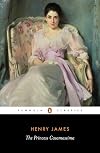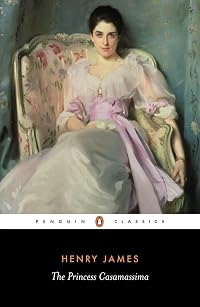
The Princess Casamassima
by Henry James
On This Page
Description
The Cambridge Edition of the Complete Fiction of Henry James provides, for the first time, a scholarly edition of a major writer whose work continues to be read, quoted, adapted and studied. Published in three volumes in 1886, The Princess Casamassima follows Hyacinth Robinson, a young London craftsman who carries the stigma of his illegitimate birth, and his French mother's murder of his patrician English father. Deeply impressed by the poverty around him, he is driven to association with show more political dissidents and anarchists including the charismatic Princess Casamassima - who embodies the problems of personal and political loyalty by which Hyacinth is progressively torn apart. This edition is the first to provide a full account of the context in which the book was composed and received. Extensive explanatory notes enable modern readers to understand its nuanced historical, cultural and literary references, and its complex textual history. show lessTags
Recommendations


















Member Recommendations
Member Reviews
6.5/10
Abandoned.
Not being able to find much point in going on, after 180-odd pages, I skimmed the rest of it, hoping it would get better. It was a vain hope, for it only became maudlin. Sometimes, it is the better part of wisdom to listen when an author writes that "it wasn't very good" and it was "rather vague", for this is exactly what James wrote of the Princess C.
There is more of Dickens and Zola in this work than there is of James: two authors he admired very much. Imitation may be the highest form of flattery, but it doesn't wash in literature.
This felt more like one huge wrestling match: tortured machinations to get things "just right" in the "anarchical world of the London poor". James only proved he knew nothing about the show more London poor and even less about anarchy and revolution as a whole. His indulgence of slumming ladies was probably the only thing he got right in this one. Indeed, it seems he lost his voice completely in this one and went chasing after the ideas of those writers he admired most: George Eliot, Charles Dickens, Emile Zola, and even masqueraded as them for a while. What a relief that he found his own voice again, after this. To have achieved so much in Roderick Hudson, his first "true" novel, and to have fallen so absurdly off course in this one! Thank goodness the wings of the dove came along to lift him up again.
To use the telephone as a metaphor, I've never hung up on James, no matter how rambling he became, for there usually seemed to be a purpose. In this one, I put the receiver down politely, but firmly. show less
Abandoned.
Not being able to find much point in going on, after 180-odd pages, I skimmed the rest of it, hoping it would get better. It was a vain hope, for it only became maudlin. Sometimes, it is the better part of wisdom to listen when an author writes that "it wasn't very good" and it was "rather vague", for this is exactly what James wrote of the Princess C.
There is more of Dickens and Zola in this work than there is of James: two authors he admired very much. Imitation may be the highest form of flattery, but it doesn't wash in literature.
This felt more like one huge wrestling match: tortured machinations to get things "just right" in the "anarchical world of the London poor". James only proved he knew nothing about the show more London poor and even less about anarchy and revolution as a whole. His indulgence of slumming ladies was probably the only thing he got right in this one. Indeed, it seems he lost his voice completely in this one and went chasing after the ideas of those writers he admired most: George Eliot, Charles Dickens, Emile Zola, and even masqueraded as them for a while. What a relief that he found his own voice again, after this. To have achieved so much in Roderick Hudson, his first "true" novel, and to have fallen so absurdly off course in this one! Thank goodness the wings of the dove came along to lift him up again.
To use the telephone as a metaphor, I've never hung up on James, no matter how rambling he became, for there usually seemed to be a purpose. In this one, I put the receiver down politely, but firmly. show less
This 1886 novel is not going to appeal to everyone. But I loved it. I love the richness and hesitancy of mid-period Henry James - note that the Black Penguin edition uses James' original 1880s text, not his later 1910s revision, which is more convoluted and obscure than the original. I also loved the beautiful,sad, and short hero, Hyacinth Robinson, a mild bookbinder blessed and burdened with an exquisite consciousness!
This is said to be the most "Dickensian" of Henry James' major novels. It certainly revels in detailing the fogs and smudges and gaslit pubs and bold "New Women" of late 19th century London. It also is a boldly political text that is quite relevant to the world in 2017, dealing with terrorism, conspiracies, and show more individuals caught up in affairs far beyond their comprehension. Parts of the book remind me of an Arthur Conan Doyle story, or the Joseph Conrad of "The Secret Agent." At the same time, it's undeniably a Jamesian novel with mysteries of motivation and gaps in the action and completely "unrealistic" dialogue between the major characters -- but if you really want "realism" I'd recommend that you stick to Anthony Trollope. show less
This is said to be the most "Dickensian" of Henry James' major novels. It certainly revels in detailing the fogs and smudges and gaslit pubs and bold "New Women" of late 19th century London. It also is a boldly political text that is quite relevant to the world in 2017, dealing with terrorism, conspiracies, and show more individuals caught up in affairs far beyond their comprehension. Parts of the book remind me of an Arthur Conan Doyle story, or the Joseph Conrad of "The Secret Agent." At the same time, it's undeniably a Jamesian novel with mysteries of motivation and gaps in the action and completely "unrealistic" dialogue between the major characters -- but if you really want "realism" I'd recommend that you stick to Anthony Trollope. show less
I chose this (early in my acquaintance with James) for the plot: Henry James does radical London. I stayed for the style…
I understand this is his ‘middle period’, without the tortuosity of his late; still with traits you either like or don’t. For me it was word-perfect – only a suspicion of waffling three-quarters through. The thing I most often dispense with in a book is description of places and objects; I read that James didn’t believe in physical description for its own sake, not unless it conveys a mood of his novel or its inhabitants. For me, there was not a word wasted in his gorgeous descriptions of a gloomy London; and there was no extraneous detail to clutter you as you fleet through the pages. Wordy? This author show more is not wordy. He spends his words on inwardness and conversations, and since I believe this is where words should be spent, I read smoothly and absorbed. He has pretty juxtapositions of words, too; sentences that make me know I have to come back and read this again. Anyway, I doubt he can do a plot I’m going to be as intrigued by.
It’s a political thriller, and has been accused of an attempt to be sensational. But revolutionary terrorism was an issue of the day, and I am so glad James decided to turn his hand to it. The ‘reluctant revolutionary’ type I know from Russian fiction, and one introduction tells me he took a real-life example in a volunteer assassin who had qualms and botched his job.
Hyacinth is torn between a love of the fine things that an unfair society creates, and sympathy for the misery of the bulk of London’s people. Perhaps these were the terms then. It seems to Hyacinth (and probably to James) that if we blow up the aristocracy we’ll be left with the ugly and vulgar. But I do not mean his working-class heroes are ugly or vulgar or stupid; they are rather fine, with a mix of the humane and the inhumanely-committed. In what tugs Hyacinth to the noble houses, this novel gave me a new insight into aristocracy-appreciation. But not because they have better people; they don’t, in the novel. Hyacinth’s attachment is about things, the artistry. His naïve ideas about noble people are shot through, and he never becomes a turncoat from his cause, he just… becomes confused.
The novel has two slumming noblewomen, who identify themselves with the people’s cause. I imagine James was more at home in writing them (though he does a fair job at everyone, if you ask me). One is awkward, endearing, genuinely selfless; the other, the princess of the title, at different times comes across as a tourist in search of sensation, a spy afraid for her class, or a real and dangerous revolutionary. It is James’ indirectness not to solve what she is – as he doesn’t solve Hyacinth’s divided loyalties.
I liked Hyacinth, the more as we go on, and his puzzles, although the terms have changed (in that the non-aristocratic world is creative, too), were meaningful to me. I liked the intelligent women, and the unsatirised eccentricity of cast like Mr Vetch and the French communist couple. I enjoy how James conceals major scenes, so that we piece them in by gradual stages after the fact, the more effectively for our imaginations. I enjoy how conversations go nowhere or speeches reach no certain conclusion, as in life.
Lastly, I want to note that James’ queer sensibilities (rampant, for instance, in ‘The Turn of the Screw’) are to be found here. I can’t be more explicit, I just decided along the way this a queer-friendly text. show less
I understand this is his ‘middle period’, without the tortuosity of his late; still with traits you either like or don’t. For me it was word-perfect – only a suspicion of waffling three-quarters through. The thing I most often dispense with in a book is description of places and objects; I read that James didn’t believe in physical description for its own sake, not unless it conveys a mood of his novel or its inhabitants. For me, there was not a word wasted in his gorgeous descriptions of a gloomy London; and there was no extraneous detail to clutter you as you fleet through the pages. Wordy? This author show more is not wordy. He spends his words on inwardness and conversations, and since I believe this is where words should be spent, I read smoothly and absorbed. He has pretty juxtapositions of words, too; sentences that make me know I have to come back and read this again. Anyway, I doubt he can do a plot I’m going to be as intrigued by.
It’s a political thriller, and has been accused of an attempt to be sensational. But revolutionary terrorism was an issue of the day, and I am so glad James decided to turn his hand to it. The ‘reluctant revolutionary’ type I know from Russian fiction, and one introduction tells me he took a real-life example in a volunteer assassin who had qualms and botched his job.
Hyacinth is torn between a love of the fine things that an unfair society creates, and sympathy for the misery of the bulk of London’s people. Perhaps these were the terms then. It seems to Hyacinth (and probably to James) that if we blow up the aristocracy we’ll be left with the ugly and vulgar. But I do not mean his working-class heroes are ugly or vulgar or stupid; they are rather fine, with a mix of the humane and the inhumanely-committed. In what tugs Hyacinth to the noble houses, this novel gave me a new insight into aristocracy-appreciation. But not because they have better people; they don’t, in the novel. Hyacinth’s attachment is about things, the artistry. His naïve ideas about noble people are shot through, and he never becomes a turncoat from his cause, he just… becomes confused.
The novel has two slumming noblewomen, who identify themselves with the people’s cause. I imagine James was more at home in writing them (though he does a fair job at everyone, if you ask me). One is awkward, endearing, genuinely selfless; the other, the princess of the title, at different times comes across as a tourist in search of sensation, a spy afraid for her class, or a real and dangerous revolutionary. It is James’ indirectness not to solve what she is – as he doesn’t solve Hyacinth’s divided loyalties.
I liked Hyacinth, the more as we go on, and his puzzles, although the terms have changed (in that the non-aristocratic world is creative, too), were meaningful to me. I liked the intelligent women, and the unsatirised eccentricity of cast like Mr Vetch and the French communist couple. I enjoy how James conceals major scenes, so that we piece them in by gradual stages after the fact, the more effectively for our imaginations. I enjoy how conversations go nowhere or speeches reach no certain conclusion, as in life.
Lastly, I want to note that James’ queer sensibilities (rampant, for instance, in ‘The Turn of the Screw’) are to be found here. I can’t be more explicit, I just decided along the way this a queer-friendly text. show less
This feels like an unusual Henry James novel, being deeply embedded in London and in revolutionary politics; spanning the social scale from shopgirl to aristocrat, and ending in high and inevitable melodrama. Hyacinth Robinson, a young artisan of unusual and tainted origins, much loved and lovable, finds himself sharing the company of a group of revolutionaries with the Princess Casamassima, a separated and titled lady who wishes to embrace the depths and profundities of the poor and socially volatile workers of Europe. This book has some of James' most sympathetically drawn characters, flawed but magnificent.
Can a person love the fine creations of culture while reviling the class disparities that make such luxuries possible? How can one decide which side to choose when you are beguiled by fine things and easy living but repulsed by the inaccessibility of this lifestyle to the greater populace (including yourself)? These are the questions faced by our young hero Hyacinth, a poor but talented man with unfortunately good taste. Not unexpectedly for a young man, these ideals become entangled in Hyacinth’s love affairs with a low-class but entertaining working girl and the beautiful title character, who has forsaken her fortune and her husband and embraced the liberation of the masses. James has perfectly portrayed the hypocrisy in which most show more educated people still live today, and the near futility of trying to absolve that hypocrisy. (As a side note, I was fascinated by his descriptions of the art of book binding, and would love to learn more about it.) show less
Started out so well, but deteriorated when the subject turned to politics and anarchy which was less interesting and detracted from what could have been a better story. The characters became less likable as the book progressed -The Bostonians, Washington Square, Portrait of a Lady were all so much better. This was more in the Wings of the Dove category on the "enjoyable book" scale. Ended up skimming the second half-rapidly.
The work is highly unique among James's oeuvre in that it addresses both revolutionary politics and the working classes. It also has a character (the Princess) who was originally portrayed in James' book Roderick Hudson as the stunning American Christina Light.
Members
- Recently Added By
Lists

Harold Bloom - The Western Canon: C. The Democratic Age
336 works; 15 members

Fiction (Mostly) in Selective Bibliography of American Literature 1775-1900
431 works; 3 members

Books mentioned in Julian Symons’ Bloody Murder
438 works; 6 members

Take Four Books
130 works; 1 member
Author Information

1,061+ Works 87,953 Members
Some Editions
Awards and Honors
Series
Belongs to Publisher Series
Work Relationships
Common Knowledge
- Canonical title
- The Princess Casamassima
- Original publication date
- 1885-1886 [serialized in the Atlantic Monthly]; 1886 [first publication in book form]
- People/Characters
- Hyacinth Robinson
- Important places
- Millbank Prison, London, England, UK
- First words
- "Oh yes, I daresay I can find the child, if you would like to see him," Miss Pynsent said; she had a fluttered wish to assent to every suggestion made by her visitor, whom she regarded as a high and rather terrible personage.
- Last words
- (Click to show. Warning: May contain spoilers.)He picked it up and carefully placed it on the mantel-shelf--keeping all to himself, with an equal prudence, the reflexion that it would certainly have served much better for the Duke.
- Original language
- Inglese
Classifications
Statistics
- Members
- 812
- Popularity
- 33,990
- Reviews
- 14
- Rating
- (3.58)
- Languages
- 8 — Catalan, English, French, German, Italian, Polish, Spanish, Swedish
- Media
- Paper, Audiobook, Ebook
- ISBNs
- 54
- ASINs
- 28