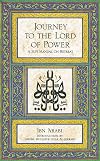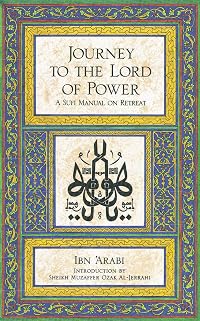
Journey to the Lord of Power: A Sufi Manual on Retreat
by Ibn-al-ʿArabī
On This Page
Description
Journey to the Lord of Power is the first English translation of Ibn 'Arabi's twelfth-century text dealing with spiritual ascent. 'Arabi, whose metaphysical teachings have had a profound influence on both the Muslim and Christian worlds, is known as one of the greatest writers of mystical love poetry of all time. Written in answer to the questions of a friend, this illuminating guide describes the evolutionary path of our higher spiritual aspirations--the quest for the ultimate reality, the show more journey toward God. It is chiefly concerned with spiritual retreat, an advanced and potentially dangerous Sufi practice that aims at the attainment of the Presence of God through absolute abandonment of the world. Realizing the imagination's deceptive power, 'Arabi warns that this form of retreat should not be undertaken except at the order of a sheikh or by one who has mastered the self. Each stage of the journey is accompanied by a temptation which can be overcome only by an unshakable desire for God. 'Arabi explains each step of the ascent leading toward human perfection. In this perilous voyage of self-discovery, the reader will encounter the Realms of the mineral, vegetable, and animal worlds, eventually reaching the Gardens and the Throne of Mercy. The traveler of the Sufi mystic path is called upon to cleanse his or her heart in order to safely reach the final destination--the Lord of Power. show lessTags
Recommendations









Member Reviews
The "retreat" (khalwa) in the subtitle of Journey to the Lord of Power is not the sort of retreat where members of a religious community join together to temporarily devote their full attentions to spiritual concerns. It is rather the anchoritic sort of withdrawal by an individual mystic from the world as a whole. This medieval Sufi epistle is centrally concerned with a particular practice of direct attainment to God, to be undertaken in solitude. Translator Rabia Terri Harris identifies such attainment with the Night Journey and Ascension of Muhammad (3). Author Ibn al-ʻArabī cautions his correspondent about the danger of the practice, insisting that it should be undertaken only under the direct supervision of a teacher (shaykh), or show more by one who has mastered his own imagination.
In Thelemic argot this prerequisite mastery would be the "perfect control of the Astral Plane" demanded of a Neophyte according to "One Star in Sight." The basic mechanism of the practice described here by al-ʻArabī seems to be fundamentally identical with that outlined as Sagitta trans Lunam or "Rising on the Planes" in Liber O. In fact, the bulk of the epistle is analogous to Crowley's survey of the hierarchy of mystical trances at the end of "The Herb Dangerous," to which Liber O refers the reader for "the results of success."
The discussion of the practice and its results is supported with some metaphysical ideas. The first of these is "renewed creation" (khalq jadid). In the appended commentary from ʻAbd al-Karīm Jīlī' (ca. 1400 C.E.) the explication of khalq jadid is redolent of Thelemic gnosis, in that it describes the "moment" (waqt) as the dialectical product of divine manifestation (zahir) and hiding (batin). A Thelemite will immediately understand these concepts to be figured by Ra-Hoor-Khuit, Nuit, and Hadit in The Book of the Law. In fact, the religious application of the manifest-hidden polarity has its root in the Quran: "He is the First and the Last, and the Manifest and the Hidden, and He has knowledge of everything" (57:3). It is very likely that the Prophet of Thelema received this concept from his Sufi instructor in Egypt. Another metaphysical notion explained here is that of the six Realms, general fields of experience within the cycle of human existence. O.T.O. initiates may be able to make a constructive comparison with the Third Triad degrees of that Order.
Furthermore, there are a couple theological points made, pendant to the main matter of the text. One of these is the distinction between saints and prophets relative to the attainments discussed here. (Continuing my effort at translation, Sufi "saints" are Masters of the Temple, and "prophets" are Magi.) The other is concerned to conserve the priority of Muhammad among the prophets, for the sake of Muslim orthodoxy.
Besides the al-ʻArabī text itself, this edition contains excerpts from the aforementioned commentary of Jīlī', a translator's preface, an introduction by a contemporary shaykh of the Jerrahi tariqa, a biographical essay on al-ʻArabī by another member of the Halveti-Jerrahi Order, and a useful glossary. It is illustrated by full-page calligraphic images of divine names, reproduced from large murals on the Grand Mosque in Busra, Turkey, originally painted in the nineteenth century. Even in black and white at less than a tenth of their original scale, these designs are very beautiful. show less
In Thelemic argot this prerequisite mastery would be the "perfect control of the Astral Plane" demanded of a Neophyte according to "One Star in Sight." The basic mechanism of the practice described here by al-ʻArabī seems to be fundamentally identical with that outlined as Sagitta trans Lunam or "Rising on the Planes" in Liber O. In fact, the bulk of the epistle is analogous to Crowley's survey of the hierarchy of mystical trances at the end of "The Herb Dangerous," to which Liber O refers the reader for "the results of success."
The discussion of the practice and its results is supported with some metaphysical ideas. The first of these is "renewed creation" (khalq jadid). In the appended commentary from ʻAbd al-Karīm Jīlī' (ca. 1400 C.E.) the explication of khalq jadid is redolent of Thelemic gnosis, in that it describes the "moment" (waqt) as the dialectical product of divine manifestation (zahir) and hiding (batin). A Thelemite will immediately understand these concepts to be figured by Ra-Hoor-Khuit, Nuit, and Hadit in The Book of the Law. In fact, the religious application of the manifest-hidden polarity has its root in the Quran: "He is the First and the Last, and the Manifest and the Hidden, and He has knowledge of everything" (57:3). It is very likely that the Prophet of Thelema received this concept from his Sufi instructor in Egypt. Another metaphysical notion explained here is that of the six Realms, general fields of experience within the cycle of human existence. O.T.O. initiates may be able to make a constructive comparison with the Third Triad degrees of that Order.
Furthermore, there are a couple theological points made, pendant to the main matter of the text. One of these is the distinction between saints and prophets relative to the attainments discussed here. (Continuing my effort at translation, Sufi "saints" are Masters of the Temple, and "prophets" are Magi.) The other is concerned to conserve the priority of Muhammad among the prophets, for the sake of Muslim orthodoxy.
Besides the al-ʻArabī text itself, this edition contains excerpts from the aforementioned commentary of Jīlī', a translator's preface, an introduction by a contemporary shaykh of the Jerrahi tariqa, a biographical essay on al-ʻArabī by another member of the Halveti-Jerrahi Order, and a useful glossary. It is illustrated by full-page calligraphic images of divine names, reproduced from large murals on the Grand Mosque in Busra, Turkey, originally painted in the nineteenth century. Even in black and white at less than a tenth of their original scale, these designs are very beautiful. show less
Viaje al Señor del Poder es la primera traducción al inglés del texto del siglo XII de Ibn 'Arabi, que trata del ascenso espiritual. 'Arabi, cuyas enseñanzas metafísicas han tenido una profunda influencia tanto en el mundo musulmán como en el cristiano, es conocido como uno de los más grandes escritores de poesía de amor místico de todos los tiempos. Escrita en respuesta a las preguntas de un amigo, esta guía iluminadora describe el camino evolutivo de nuestras aspiraciones espirituales superiores: la búsqueda de la realidad última, el viaje hacia Dios. Está principalmente relacionado con el retiro espiritual, una práctica sufi avanzada y potencialmente peligrosa que tiene como objetivo el logro de la Presencia de Dios a show more través del abandono absoluto del mundo. Al darse cuenta del poder engañoso de la imaginación, 'Arabi advierte que esta forma de retirada no debe emprenderse, excepto por orden de un jeque o por alguien que ha dominado el yo. Cada etapa del viaje está acompañada por una tentación que solo puede ser superada por un inquebrantable deseo de Dios. 'Arabi explica cada paso del ascenso hacia la perfección humana. En este peligroso viaje de autodescubrimiento, el lector encontrará los Reinos de los mundos mineral, vegetal y animal, y eventualmente llegará a los Jardines y al Trono de la Misericordia. El viajero del camino místico sufi es llamado a limpiar su corazón para alcanzar con seguridad el destino final: el Señor del Poder. -
Journey to the Lord of Power is the first English translation of Ibn 'Arabi's twelfth-century text dealing with spiritual ascent. 'Arabi, whose metaphysical teachings have had a profound influence on both the Muslim and Christian worlds, is known as one of the greatest writers of mystical love poetry of all time. Written in answer to the questions of a friend, this illuminating guide describes the evolutionary path of our higher spiritual aspirations-the quest for the ultimate reality, the journey toward God. It is chiefly concerned with spiritual retreat, an advanced and potentially dangerous Sufi practice that aims at the attainment of the Presence of God through absolute abandonment of the world. Realizing the imagination's deceptive power, 'Arabi warns that this form of retreat should not be undertaken except at the order of a sheikh or by one who has mastered the self. Each stage of the journey is accompanied by a temptation which can be overcome only by an unshakable desire for God. 'Arabi explains each step of the ascent leading toward human perfection. In this perilous voyage of self-discovery, the reader will encounter the Realms of the mineral, vegetable, and animal worlds, eventually reaching the Gardens and the Throne of Mercy. The traveler of the Sufi mystic path is called upon to cleanse his or her heart in order to safely reach the final destination-the Lord of Power. show less
Journey to the Lord of Power is the first English translation of Ibn 'Arabi's twelfth-century text dealing with spiritual ascent. 'Arabi, whose metaphysical teachings have had a profound influence on both the Muslim and Christian worlds, is known as one of the greatest writers of mystical love poetry of all time. Written in answer to the questions of a friend, this illuminating guide describes the evolutionary path of our higher spiritual aspirations-the quest for the ultimate reality, the journey toward God. It is chiefly concerned with spiritual retreat, an advanced and potentially dangerous Sufi practice that aims at the attainment of the Presence of God through absolute abandonment of the world. Realizing the imagination's deceptive power, 'Arabi warns that this form of retreat should not be undertaken except at the order of a sheikh or by one who has mastered the self. Each stage of the journey is accompanied by a temptation which can be overcome only by an unshakable desire for God. 'Arabi explains each step of the ascent leading toward human perfection. In this perilous voyage of self-discovery, the reader will encounter the Realms of the mineral, vegetable, and animal worlds, eventually reaching the Gardens and the Throne of Mercy. The traveler of the Sufi mystic path is called upon to cleanse his or her heart in order to safely reach the final destination-the Lord of Power. show less
Feb 16, 2021Spanish
Este tratado que contiene misterios divinos es una guia de iluminación para cuantos busquen la Verdad. Aquellos que quieran ser íntimos de Dios y que recorren su jardín en busca de la risa del conocimiento deben leer este libro y aprender a Ser.
May 3, 2021Spanish
Este tratado contiene misterios divinos, es una guía de iluminación para cuantos busquen la verdad. Aquellos que quieran ser íntimos de Dios, y que recorren su jardín en busca de la rosa del conocimiento, deben leer este libro y aprender a SER". -
This treatise contains divine mysteries, it is a guide of enlightenment for those who seek the truth. Those who want to be intimate with God, and who go through their garden in search of the rose of knowledge, should read this book and learn to BE.
This treatise contains divine mysteries, it is a guide of enlightenment for those who seek the truth. Those who want to be intimate with God, and who go through their garden in search of the rose of knowledge, should read this book and learn to BE.
Mar 6, 2021Spanish
VIAJE AL SEÑOR DEL PODER
EN EL NOMBRE DE DIOS
EL MAS GENEROSO, EL MAS CLEMENTE
INTRODUCCION
por
Sheikh Muzaffer Ozak al-Jerrahi
Este tratado, que contiene misterios divinos, es una
guía de iluminación para los que buscan la verdad y la
claridad. Los que desean acercarse a Dios, y pasean por
el jardín en busca del capullo de rosa del conocimiento
interior, deben leer este libro para aprender a "ser". El autor
de este libro es Ibn'Arabí, y todo el que saboree sus
palabras entrará en diálogo con él.
Su milagrosa influencia espiritual, tanto en Oriente
como en Occidente, está perfectamente clara. Le ha
enseñado a la humanidad el tawhid, la Unidad, y seguirá
iluminándola hasta el día del Juicio Final. Sus enseñanzas
del milagro de la show more Creación y su maravilloso conocimiento,
reflejado en libros como al-Fituhat al-Makkiya
(Revelaciones de La Meca"), Fusus al-hikam ("Joyas de... show less
EN EL NOMBRE DE DIOS
EL MAS GENEROSO, EL MAS CLEMENTE
INTRODUCCION
por
Sheikh Muzaffer Ozak al-Jerrahi
Este tratado, que contiene misterios divinos, es una
guía de iluminación para los que buscan la verdad y la
claridad. Los que desean acercarse a Dios, y pasean por
el jardín en busca del capullo de rosa del conocimiento
interior, deben leer este libro para aprender a "ser". El autor
de este libro es Ibn'Arabí, y todo el que saboree sus
palabras entrará en diálogo con él.
Su milagrosa influencia espiritual, tanto en Oriente
como en Occidente, está perfectamente clara. Le ha
enseñado a la humanidad el tawhid, la Unidad, y seguirá
iluminándola hasta el día del Juicio Final. Sus enseñanzas
del milagro de la show more Creación y su maravilloso conocimiento,
reflejado en libros como al-Fituhat al-Makkiya
(Revelaciones de La Meca"), Fusus al-hikam ("Joyas de... show less
Apr 29, 2024Spanish
VIAJE AL SEÑOR DEL PODER
"Este tratado, que contiene misterios divinos,
es una guía de iluminación para cuantos
busquen la Verdad. Aquellos que quieran ser
íntimos de Dios, y que recorren su jardín en
busca de la rosa del conocimiento,
deben leer este libro y aprender a "SER".
Su autor es lbn Arabi. Quien lea y entienda
sus palabras entrará en contacto con él."
Sheikh Duzafer Ozak Al-Jerrahi
"Este tratado, que contiene misterios divinos,
es una guía de iluminación para cuantos
busquen la Verdad. Aquellos que quieran ser
íntimos de Dios, y que recorren su jardín en
busca de la rosa del conocimiento,
deben leer este libro y aprender a "SER".
Su autor es lbn Arabi. Quien lea y entienda
sus palabras entrará en contacto con él."
Sheikh Duzafer Ozak Al-Jerrahi
Aug 29, 2018Spanish
> Babelio : https://www.babelio.com/livres/IbnArabi-Voyage-vers-le-maitre-de-la-puissance/20...
> Un grand classique. Le manuel de méditation du chef spirituel du soufisme.
—Pocket
> Un grand classique. Le manuel de méditation du chef spirituel du soufisme.
Jul 5, 2021 (Edited)French
Members
- Recently Added By
Author Information

206+ Works 1,523 Members
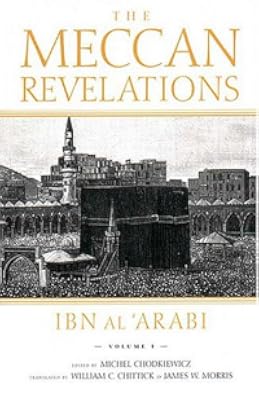
Muhammad ibn-'Ali ibn al-Arabi, also called Muhyi al-Din, was the celebrated Muslim philosopher who first formulated the esoteric mystical dimension of Islamic thought. Born in Murcia, Spain, he devoted 30 years to the study of traditional Islamic sciences in Seville. After travelling extensively in the East, he settled in Damascus, where he spent show more his last days in contemplation, teaching, and writing. Ibn al-Arabi composed two great mystical treatises, The Meccan Revelations and Wisdom of the Prophets (Fusus al-HikamFusus al-Hikam). Completed in Damascus, The Meccan Revelations is a personal encyclopedia of 560 chapters extending over all the esoteric sciences in Islam as he knew them, combined with valuable autobiographical information. Wisdom contains only 27 chapters, but, as the mature expression of ibn al-Arabi's mystical thought, it is regarded as one of the most important documents of its kind. However, he is best known for his mystical odes, wherein, like all Sufis, he expresses his longing for union with God in terms of passionate human love (in Mecca, he fell in love with a young beauty who came to personify wisdom for him). It is not clear whether his poetry is religious or erotic, an ambiguity also characteristic of the work of the great Persian lyricst Hafiz. Critics have found in ibn al-Arabi's poetry, as in most Sufi verse, elements of Muslim orthodoxy, Manichaeanism, Gnosticism, Neoplatonism, and Christianity. (Bowker Author Biography) show less
Some Editions
Common Knowledge
- Original publication date
- 1981
- Disambiguation notice
- This work is Journey to the Lord of Power: A Sufi Manual on Retreat by Ibn 'Arabi and introduced by Sheikh Muzaffer Ozak al-Jerrahi. The same isbn number is used by some library sources on another work The Unveilin... (show all)g of Love: Sufism and the Remembrance of God by Sheikh Muzaffer Ozak al-Jerrahi.
Classifications
Statistics
- Members
- 117
- Popularity
- 279,426
- Reviews
- 7
- Rating
- (4.40)
- Languages
- English, French, German, Spanish
- Media
- Paper
- ISBNs
- 9
- ASINs
- 1