
Worldly Goods: A New History of the Renaissance
by Lisa Jardine
On This Page
Description
The flowering of civilization, the rebirth of classical scholarship, and the emergence of some of the greatest artists and thinkers the world has known: this is the traditional view of the Renaissance. In this lively, provocative, and wholly absorbing new book, Lisa Jardine offers a radical new interpretation, arguing that the creation of culture during the Renaissance was inextricably tied to the creation of wealth - that the expansion of commerce spurred the expansion of thought. While show more Europe's crowned heads and merchant entrepreneurs competed with each other to acquire works of art from the leading artists of the day, vicious commercial battles were being fought over silks and spices, and over who should control the centers for international trade around the globe. The rapidly growing market for printed books - a new commodity seized upon with equal enthusiasm by investors and consumers - disseminated the "new learning" via publishing houses and printing presses across Europe, stimulating the evolution of the European intellectual tradition as much by accident as by design. Bringing this opulent epoch to life in all its material splendor and competitive acquisitiveness, Lisa Jardine examines Renaissance culture from its western borders in Christendom to its eastern reaches in the Islamic Ottoman Empire. show lessTags
Recommendations































Member Recommendations

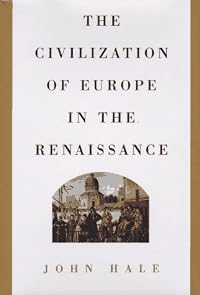
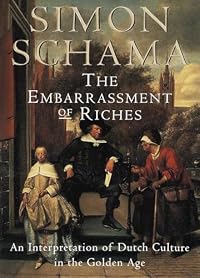
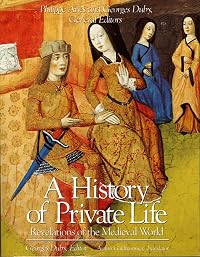
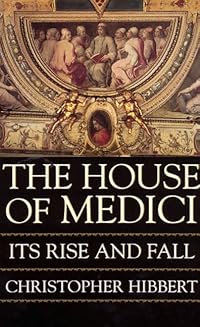
wandering_star One history, one fiction, but both covering the same territory - the rich cultural life of the Renaissance and how that played into displays of wealth and power.
Member Reviews
This fascinating book is essentially a look at how important things, and money, were in shaping what we now think of as the world of the Renaissance.
It starts with an analysis of the National Gallery Crivelli annunciation, a "meticulous visual inventory of consumer goods" from across the known world as well as a beautiful work of art - and itself a desirable possession. Renaissance artists were craftsmen for hire, working to order for the rich and powerful - and sitting at table with the tailors, musicians and other salaried members of the household. Others who fell into this category were people who would now perhaps style themselves as lifestyle consultants. You could have a man to advise you on what paintings, antiquities or books to show more buy to display your wealth and taste. You could even have someone to pre-read the books for you - Sir Philip Sidney had a private reader who annotated a copy of Livy for him with marginal notes referring to modern parallels to the events in the text, and a number of cross-references to modern works on political and military theory.
Conspicuous consumption was an essential aspect of prestige and authority, often backed up by borrowing on a massive scale. Christopher Columbus' proposal to seek a shorter route to the Indies - and therefore bypass the mark-ups which the spice traders put on their goods - was attractive to Ferdinand and Isabella because they were deeply in debt after a series of costly military campaigns. (For the weddings of two of their children in 1495, Isabella had to redeem her crown of gold and diamonds which had been pledged to raise money for the war against Granada.) And fortunes were made for entire families of bankers because they had received trading concessions in return for loans to popes or kings - the Medici wealth was based on monopolistic access to alum, vital for dyeing cloth. You could also make a fortune by having access to the right piece of information - for example, if you knew that two great houses were planning a wedding, you could stock up on fine fabrics while they were relatively cheap.
I think that since this book was published in 1996, its thesis has become much more widely accepted. But even so, Jardine finds some eye-catching links between things - consumption and discovery - and broad historical changes. The rebuilding of St Peter's Church in Rome, involving some of the greatest artists of the day including Michelangelo and Raphael, was so expensive that Pope Leo X issued a particularly grandiose indulgence, granting remission not just from sins already committed, but "purchasers and their relatives were forgiven every conceivable sin they had committed, or might commit, and exempted from all suffering in Purgatory, advancing immediately to Heaven". The indulgences were sold particularly hard in Germany, because the papacy had agreed that half the proceeds would go to paying off the debts of the Archbishop of Mainz. It was after the issue of this particular indulgence that Martin Luther nailed his theses to the church door at Wittenberg.
This is definitely a macro-history, ranging across the European continent from Scotland to the Ottoman Empire and in time across a couple of centuries. I am not sure that there was a coherent argument running all the way through it - it's more of a bag of delights, studded with interesting facts that you feel Jardine couldn't bring herself to leave out. I particularly liked the story of a map which deliberately placed the Molucca islands in the wrong place to back up Spain's territorial claim to them - and the related treaty stated that "during the time of this contract, {the Moluccas} shall be regarded as situated in such place" as shown on the map. Even that was only a bargaining chip - as soon as the claim was established the Spanish relinquished them in exchange for cash - "far more valuable to Charles, beset, in established Hapsburg fashion, by enormous debts to his bankers, than monopoly trading rights on the far side of the world". show less
It starts with an analysis of the National Gallery Crivelli annunciation, a "meticulous visual inventory of consumer goods" from across the known world as well as a beautiful work of art - and itself a desirable possession. Renaissance artists were craftsmen for hire, working to order for the rich and powerful - and sitting at table with the tailors, musicians and other salaried members of the household. Others who fell into this category were people who would now perhaps style themselves as lifestyle consultants. You could have a man to advise you on what paintings, antiquities or books to show more buy to display your wealth and taste. You could even have someone to pre-read the books for you - Sir Philip Sidney had a private reader who annotated a copy of Livy for him with marginal notes referring to modern parallels to the events in the text, and a number of cross-references to modern works on political and military theory.
Conspicuous consumption was an essential aspect of prestige and authority, often backed up by borrowing on a massive scale. Christopher Columbus' proposal to seek a shorter route to the Indies - and therefore bypass the mark-ups which the spice traders put on their goods - was attractive to Ferdinand and Isabella because they were deeply in debt after a series of costly military campaigns. (For the weddings of two of their children in 1495, Isabella had to redeem her crown of gold and diamonds which had been pledged to raise money for the war against Granada.) And fortunes were made for entire families of bankers because they had received trading concessions in return for loans to popes or kings - the Medici wealth was based on monopolistic access to alum, vital for dyeing cloth. You could also make a fortune by having access to the right piece of information - for example, if you knew that two great houses were planning a wedding, you could stock up on fine fabrics while they were relatively cheap.
I think that since this book was published in 1996, its thesis has become much more widely accepted. But even so, Jardine finds some eye-catching links between things - consumption and discovery - and broad historical changes. The rebuilding of St Peter's Church in Rome, involving some of the greatest artists of the day including Michelangelo and Raphael, was so expensive that Pope Leo X issued a particularly grandiose indulgence, granting remission not just from sins already committed, but "purchasers and their relatives were forgiven every conceivable sin they had committed, or might commit, and exempted from all suffering in Purgatory, advancing immediately to Heaven". The indulgences were sold particularly hard in Germany, because the papacy had agreed that half the proceeds would go to paying off the debts of the Archbishop of Mainz. It was after the issue of this particular indulgence that Martin Luther nailed his theses to the church door at Wittenberg.
This is definitely a macro-history, ranging across the European continent from Scotland to the Ottoman Empire and in time across a couple of centuries. I am not sure that there was a coherent argument running all the way through it - it's more of a bag of delights, studded with interesting facts that you feel Jardine couldn't bring herself to leave out. I particularly liked the story of a map which deliberately placed the Molucca islands in the wrong place to back up Spain's territorial claim to them - and the related treaty stated that "during the time of this contract, {the Moluccas} shall be regarded as situated in such place" as shown on the map. Even that was only a bargaining chip - as soon as the claim was established the Spanish relinquished them in exchange for cash - "far more valuable to Charles, beset, in established Hapsburg fashion, by enormous debts to his bankers, than monopoly trading rights on the far side of the world". show less
A very engaging and enjoyable read. Jardine discusses the rise of Renaissance art and humanist expertise in pragmatic terms. Expensive art was only possible thanks to changes in the economy - merchants were very wealthy, and thanks to new systems of banking and credit, they could afford expensive art. They bought art not just because it was pretty, but because it said something to everyone else about their civic worth, intelligence, wealth, and prestige.
I thoroughly enjoyed this book, but perhaps predictably I enjoyed most of all the discussion of the book trade. I therefore went immediately to Five Hundred Years of Printing.
Ratings
Members
- Recently Added By
Lists

Club Read's Recommended Nonfiction Written by Women
618 works; 30 members
Author Information

24+ Works 3,340 Members
Lisa Jardine was born in Oxford, England on April 12, 1944. She studied mathematics and English at university receiving a MA in the literary theory of translation from the University of Essex and a PhD from the University of Cambridge with a thesis on the scientific genius of Francis Bacon. She taught English at Warburg Institute, the University show more of Essex, Cornell University, Cambridge University, and Queen Mary and Westfield College. She wrote several books during her lifetime including Francis Bacon: Discovery and the Art of Discourse, Ingenious Pursuits, Worldly Goods, Global Interests: Renaissance Art Between East and West, and Temptation in the Archives: Essays in Golden Age Dutch Culture. Going Dutch: How England Plundered Holland's Glory won the $75,000 Cundill International Prize in History in 2009. She received a Royal Society medal for popularizing science and was appointed CBE in 2005 for her contribution and commitment to state education. She died of cancer on October 25, 2015 at the age of 71. (Bowker Author Biography) show less
Common Knowledge
- Canonical title*
- Der Glanz der Renaissance
- Original title
- Worldly Goods: A New History of the Renaissance
- Alternate titles*
- Der Glanz der Renaissance : ein Zeitalter wird entdeckt
- Original publication date
- 1996
- Important places
- Venice, Veneto, Italy; Nuremberg, Bavaria, Germany; Florence, Tuscany, Italy; Augsburg, Bavaria, Germany
- Important events
- Renaissance
- Dedication
- For my mother Rita Bronowski
- First words
- In London, as in every other European capital, springtime heralds the arrival of its cultural pilgrims, who throng Trafalgar Square and is surroundings, following trails well laid by the international tourist industry to lead... (show all) us to the supposed roots of our Western intellectual and artistic heritage.
- Last words
- (Click to show. Warning: May contain spoilers.)The world we inhabit today, with its ruthless competitiveness, fierce consumerism, restless desire for ever wider horizons, for travel discovery and innovation, a world hemmed in by the small-mindedness of petty nationalism and religious bigotry but refusing to bow to it, is a world which was made in the Renaissance.
- Blurbers
- Padgen, Anthony
- Original language
- English
*Some information comes from Common Knowledge in other languages. Click "Edit" for more information.
Classifications
- Genres
- History, Nonfiction, General Nonfiction, Art & Design
- DDC/MDS
- 940.21 — History & geography History of Europe History of Europe Europe: Renaissance, Reformation, Enlightenment, Napolean Renaissance period 1453-1517
- LCC
- CB361 .J35 — Auxiliary Sciences of History History of Civilization History of Civilization By period
- BISAC
Statistics
- Members
- 733
- Popularity
- 38,386
- Reviews
- 3
- Rating
- (3.93)
- Languages
- English, German
- Media
- Paper, Ebook
- ISBNs
- 5
- ASINs
- 2