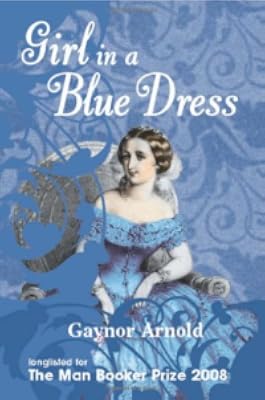
Girl in a Blue Dress
by Gaynor Arnold
On This Page
Description
"In creating my [the author's] own story of Alfred and Dorothea Gibson, I have taken a novelist's liberties as I explored an imaginative path through their relationship. . . . Inspired by "threads of Dickens's own preoccupations with things strange, romantic, and melodramatic rather than realistic ... at times, characters from his novels make a transmuted appearance as characters in his life. ... Above all, in Dorothea Gibson I have tried to give voice to the largely voiceless Catherine show more Dickens, who once requested that her letters from her husband be preserved so that 'the world may know he loved me once.' " -- Author's note. show lessTags
Recommendations













Member Recommendations

Member Reviews
As I progressed with my reading the feeling that overtook me is a feeling I seldom am in contact with - so seldom it took awhile to recognize it: I was bored. That took me by surprise. How could a book about Charles Dickens be boring?
Girl in a blue dress is fictionalization of Charles Dickens life, the story mostly told as seen through his wife´s eyes. Where did I get bored? Did I ever believe in Gaynor´s melodrama? I did not. Too much 21th century context, and too little 19th century, it is so easy to get angry on behalf of the women´situation, in any era, even today most places in the world. But any man has the right to be judged by his peers; Dickens´ lived from 1812 to 1870, his peers where 19th century. I do not even think you show more can read Dickens´behavior towards his wife as his attitude towards womens´ rights - in the end of the day, he chose a woman as executor of his will. I believe I come closer to his dilemma by asking myself how long I would stay with a drug-abusing spouse, or whether I would remove my children from a drug abusing (how much laudanum did she take?) co-parent? And whether at the time I could not be present I would find it responsible to leave the care-taking to a sober capable aunt the children know?
How a minor author (Dickens will still be a name when Gaynor is all but forgotten) dears doing the moral laundering on behalf of a great writer is beyond me. But I gained one important thing from reading this book; what it made me realize, is that when melodrama turns in on itself, does not carry a greater issue than laundering your underwear in public, it does not stir neither the greater feelings, nor engage intellectually. An insight that puts Dickens´ books in perspective: Their most important trait is not the melodrama; Dickens chose the most difficult form of melodrama as carrier for serious social critic - and succeeded (when I grew up loving Dickens´ books, they were dismissed by literary critics as nothing more than reader friendly melodramas.) Dickens could read his fellow beings and paint their characters precisely in a few strokes, in words that would be read with joy, relished and remembered. He created some of the world's best-known fictional characters and is regarded as the greatest novelist of the Victorian era. His works enjoyed unprecedented popularity during his lifetime, but it is only in the 20th century that scholars and critics have recognized him as the literary genius he is. By contrast, Gaynor chooses the form of melodrama as carrier of a portrait of a great author - making his most striking feature abusiveness. Do I believe she has captured his portrait through this dull repetitive story that "girl in a blue dress" is? The only thing I believe in is the vantage point; the story as seen through the eyes of a woman we know next to nothing about. What we see is not Mrs. Dickens, it is an opportunistic Gaynor who is longlisted for the Booker prize - by a book that will be forgotten - because neither opportunistic borrowing of a great name, being politically correct in the 21th century, being bound to your own prejudices, or to what is "in" in any century, is enough for a book to survive their time. show less
Girl in a blue dress is fictionalization of Charles Dickens life, the story mostly told as seen through his wife´s eyes. Where did I get bored? Did I ever believe in Gaynor´s melodrama? I did not. Too much 21th century context, and too little 19th century, it is so easy to get angry on behalf of the women´situation, in any era, even today most places in the world. But any man has the right to be judged by his peers; Dickens´ lived from 1812 to 1870, his peers where 19th century. I do not even think you show more can read Dickens´behavior towards his wife as his attitude towards womens´ rights - in the end of the day, he chose a woman as executor of his will. I believe I come closer to his dilemma by asking myself how long I would stay with a drug-abusing spouse, or whether I would remove my children from a drug abusing (how much laudanum did she take?) co-parent? And whether at the time I could not be present I would find it responsible to leave the care-taking to a sober capable aunt the children know?
How a minor author (Dickens will still be a name when Gaynor is all but forgotten) dears doing the moral laundering on behalf of a great writer is beyond me. But I gained one important thing from reading this book; what it made me realize, is that when melodrama turns in on itself, does not carry a greater issue than laundering your underwear in public, it does not stir neither the greater feelings, nor engage intellectually. An insight that puts Dickens´ books in perspective: Their most important trait is not the melodrama; Dickens chose the most difficult form of melodrama as carrier for serious social critic - and succeeded (when I grew up loving Dickens´ books, they were dismissed by literary critics as nothing more than reader friendly melodramas.) Dickens could read his fellow beings and paint their characters precisely in a few strokes, in words that would be read with joy, relished and remembered. He created some of the world's best-known fictional characters and is regarded as the greatest novelist of the Victorian era. His works enjoyed unprecedented popularity during his lifetime, but it is only in the 20th century that scholars and critics have recognized him as the literary genius he is. By contrast, Gaynor chooses the form of melodrama as carrier of a portrait of a great author - making his most striking feature abusiveness. Do I believe she has captured his portrait through this dull repetitive story that "girl in a blue dress" is? The only thing I believe in is the vantage point; the story as seen through the eyes of a woman we know next to nothing about. What we see is not Mrs. Dickens, it is an opportunistic Gaynor who is longlisted for the Booker prize - by a book that will be forgotten - because neither opportunistic borrowing of a great name, being politically correct in the 21th century, being bound to your own prejudices, or to what is "in" in any century, is enough for a book to survive their time. show less
I liked this book better than I thought I would going in. I knew nothing of the story of Charles Dickens' marriage to Catherine, so I found the story interesting and surprising. It provided a good portrait of marriage in the Victorian era, particularly one so public, as Dickens was well-known throughout their marriage. To me the most compelling part of the story was the way we peeked into the minds of both main characters and began understanding the marriage from each of their perspectives. It seems that the marriage was doomed to fail with so many factors working against them - Dickens' harsh, insecure childhood; Dodo's privileged background which was so different; too many children; a famous husband who called himself ' The One and show more Only' and who felt his duties to the public; a husband continually searching for a younger partner; most importantly, a lack of real knowledge of each other at the time of their marriage. I also found Dodo's adulation of her husband believable (considering who he was and given the era), but quite tragic. I think the flashback style works well. The book makes me want to go read a biography of Dickens. Well done. show less
The thinly-disguised story of Catherine Dickens, wife of the famous author, is at the heart of this unpretentious, unassuming story.
The celebrated author Alfred Gibbons has died, leaving England in mourning. His estranged wife, Dorothy (or “Dodo”) sits at home as the funeral and reading of the will take place. As she sits, she looks back on her twenty-year-plus marriage to “the One and Only,” and “The Great Original.” An invitation to visit Queen Victoria, as well to her sister Sissy and the actress Wilhelmina Rickets, leads to another series of reflections on her marriage.
It’s a quiet novel, simple yet complicated in many ways. There’s not much action, certainly not in the present day, but there’s a certain show more gentleness of language that makes this book compellingly readable. Dodo, despite her shy, retiring ways, is a likeable heroine, strong in the ways a “typical” Victorian woman wasn’t supposed to be. In addition, I enjoyed the way the characters interacted with one another: Dodo’s daughter Kitty, the son-in-law who is obsessed with money; but most of all, Alfred Gibson himself: control freak, obsessed with keeping poverty at bay (even when he was in his most successful period), and eagerness to change the truth when it suits him. I get the feeling that Gibson isn’t supposed to be likeable, but he’s charismatic enough that the people around him tend to overlook his flaws. The only one who realizes who Gibson really was is, ironically, Dodo.
To the modern reader, Victorian England is a strange place—all those customs regarding mourning are simply mind-boggling. Dorothy’s world is one that’s strictly defined by traditions and conventions, and Dodo’s story is that of a woman who isn’t afraid to bend the rules a bit. In all, an excellent novel, worthy of having been longlisted for the Booker Prize. show less
The celebrated author Alfred Gibbons has died, leaving England in mourning. His estranged wife, Dorothy (or “Dodo”) sits at home as the funeral and reading of the will take place. As she sits, she looks back on her twenty-year-plus marriage to “the One and Only,” and “The Great Original.” An invitation to visit Queen Victoria, as well to her sister Sissy and the actress Wilhelmina Rickets, leads to another series of reflections on her marriage.
It’s a quiet novel, simple yet complicated in many ways. There’s not much action, certainly not in the present day, but there’s a certain show more gentleness of language that makes this book compellingly readable. Dodo, despite her shy, retiring ways, is a likeable heroine, strong in the ways a “typical” Victorian woman wasn’t supposed to be. In addition, I enjoyed the way the characters interacted with one another: Dodo’s daughter Kitty, the son-in-law who is obsessed with money; but most of all, Alfred Gibson himself: control freak, obsessed with keeping poverty at bay (even when he was in his most successful period), and eagerness to change the truth when it suits him. I get the feeling that Gibson isn’t supposed to be likeable, but he’s charismatic enough that the people around him tend to overlook his flaws. The only one who realizes who Gibson really was is, ironically, Dodo.
To the modern reader, Victorian England is a strange place—all those customs regarding mourning are simply mind-boggling. Dorothy’s world is one that’s strictly defined by traditions and conventions, and Dodo’s story is that of a woman who isn’t afraid to bend the rules a bit. In all, an excellent novel, worthy of having been longlisted for the Booker Prize. show less
I enjoyed this fictionalized look at the Dickens' marriage. Dodo's gradual shift from timidity to relative strength made sense to me. Even thought they spent 10 years apart, Alfred's influence over Dodo's demeanor was still well in force; when he died, she was finally able to freely ferret out the truth of their life together without fear of his anger or interference. The children were also liberated from the fear of taking sides against their father if they should contact their mother. From what I've read about Dickens (admittedly little), he really was a troubled man, haunted by his poverty-stricken childhood, and he did treat his wife Catherine terribly. This novel made me want to learn more about them both.
This book is subtitled " A novel inspired by the life and marriage of Charles Dickens". It is told from the point of view of Charles Dickens's wife and I suppose would be considered historical fiction. However, the author takes wide liberties with the "truth". She even changes the names of the characters, making the book about Alfred and Dorothea Gibson rather than Charles and Catherine Dickens. Of course this leaves me wondering through the whole book "did that really happen?".
I hope not, because this is a horrifying picture of Charles Dickens and marriage in the 1800s. "Dorothea Gibson" marries "Alfred" at a young age - totally, blindly in love and unequipped to run a household or deal with her manic husband. She has 8 children in show more quick succession and loses two of them. Alfred is emotionally abusive and manipulative and ends up banishing Dorothea to a small, cramped apartment and separating her from her children while her sister remains in Alfred's house, running the home and raising the children. He takes up with a young actress while all the time publicly blaming his wife for the failure of their marriage.
Dorothea obviously suffers from depression and exhaustion (probably post-partum depression) and Alfred is unable and unwilling to support her or consider what her body and mind have gone through in bearing him 8 children. There is a feminist aspect to this book, as Dorothea begins to come into her own after Alfred's death, but I didn't find it totally convincing.
This book was long-listed for the Man Booker prize and the Orange prize. I found that a bit surprising since I thought a lot of the dialogue was pretty unsatisfying. In fact, I almost put down the book after the first chapter because I was so annoyed! But in the end, I became pretty absorbed in the story. I don't like what happened and I wish I could sort out fact from fiction more easily, but it was an interesting and engaging book to read. Because it's a quick read, I would say it's worth the time. show less
I hope not, because this is a horrifying picture of Charles Dickens and marriage in the 1800s. "Dorothea Gibson" marries "Alfred" at a young age - totally, blindly in love and unequipped to run a household or deal with her manic husband. She has 8 children in show more quick succession and loses two of them. Alfred is emotionally abusive and manipulative and ends up banishing Dorothea to a small, cramped apartment and separating her from her children while her sister remains in Alfred's house, running the home and raising the children. He takes up with a young actress while all the time publicly blaming his wife for the failure of their marriage.
Dorothea obviously suffers from depression and exhaustion (probably post-partum depression) and Alfred is unable and unwilling to support her or consider what her body and mind have gone through in bearing him 8 children. There is a feminist aspect to this book, as Dorothea begins to come into her own after Alfred's death, but I didn't find it totally convincing.
This book was long-listed for the Man Booker prize and the Orange prize. I found that a bit surprising since I thought a lot of the dialogue was pretty unsatisfying. In fact, I almost put down the book after the first chapter because I was so annoyed! But in the end, I became pretty absorbed in the story. I don't like what happened and I wish I could sort out fact from fiction more easily, but it was an interesting and engaging book to read. Because it's a quick read, I would say it's worth the time. show less
This book is the thoughts and reflections of Dorothea Gibson, estranged wife (and now widow) of the sensational Victorian novelist Alfred Gibson. In the days following the public mourning and hysteria of Alfred's funeral, Dorothea sits in the rooms in which she's been a virtual prisoner for the ten years since their seperation and recalls the Alfred she once knew and loved.
As a young woman she can't help but fall for the extrovert, larger than life character who charms her with his theatrical gestures. She marries him despite her parents' reservations. Yet it doesn't take her long to realise that Alfred will never really be hers. His enthusiasm for her is replaced with equal ardour by enthusiasms for various people throughout their show more married life, and Dorothea soon realises that his love for her has faded, like her looks and figure once the children start to come. Like many Victorian women must have been, she is exhausted and weakened by almost constant pregnancy. But even without this she could never compete with Alfred's two greatest passions - his love of writing and his love of fame. The more the Gibsons move up the ladder of society, the more popular they become, the more Dorothea loses him.
The Gibsons are very loosely based on the marriage of Charles and Catherine Dickens, though Arnold is keen to stress in her afterword that the characters and events are works of fiction. On the whole I'm enjoying this book, the narrative is even and it's an interesting portrait of a marriage from the female point of view - an angle that novels at the time rarely took.
There are points at the beginning of the book where the flashback set up is clunky (her daughter urging her to tell the story, yet again, of how she first met her husband), but this awkwardness disappears after the first 60 pages or so and the flashbacks become much more integral. There are also points where I feel Arnold shows off her research to the detriment of the narrative flow. At one point Dorothea worries over an audience with Queen Victoria because she's only wearing light mourning and she knows the Queen is a stickler for decorum. Yet during the scene her dress is not mentioned at all. In fact the whole scene is clunky and unnecessary, I get the feeling it's a set piece Arnold just didn't want to let go of. There's another scene at Westminster Abbey later on that I also feel adds nothing to the narrative.
The reader is aware of the marriage becoming increasingly unhappy but not in detail, and I found this a little frustrating as I could only get a grasp of the state of the relationship in brief, flashback snatches. Obviously Arnold has a lot of ground to cover - Alfred and Dorothea's marriage lasts 20 years - but I would have hoped for a little more emphasis on their 8 children, if only so that the deaths of two could be felt more keenly rather than be passed over in a few paragraphs. As it is, I felt more moved over Dorothea's realisation that her husband has moved to a seperate bedroom and they will never sleep together again than the death of a child.
Much is made of the idea that following the breakdown of the marriage, Alfred does not so much lie about Dorothea's abilities as a wife and mother, rather he convinces himself that what he says is the truth by creating his own version of events and replacing real memories with them. I spent so much time considering Alfred as a fabulist that it seemed natural to me to wonder about Dorothea's own version of events and how objectively accurate they really are. At first hinted at, this notion slowly comes to fruition as she's reunited with her estranged children and they each have their own memories of the marriage to add. Towards the end of the book one conversation with her son Eddie in particular confirms her views and causes some events to be seen in a new light. To me, the whole book turns on this conversation and a subsequent one with the woman Dorothea believes to have been her husband's mistress and to have caused the breakdown of their marriage. Suddenly I could see that everyone, not just Dorothea, had been a victim and had been effectively bullied by this remarkable, complex man.
Girl in a Blue Dress is a remarkable portrait of a stifled marriage and effective in evoking the limitations place on women in Victorian times. It also gives hints at a fascinating, complex character in the person of Alfred Gibson, and shows the effects such a man has on his family throughout his life. He holds his family under his spell even after Dorothea has left the household, but there is hope in the end as following his death Dorothea's children are freed from his spell and come back to know their mother better. It's quite a "feminine" book compared to many I usually read, but sometimes you can leave the path you've been walking along for so long and find some pleasant surprises. show less
As a young woman she can't help but fall for the extrovert, larger than life character who charms her with his theatrical gestures. She marries him despite her parents' reservations. Yet it doesn't take her long to realise that Alfred will never really be hers. His enthusiasm for her is replaced with equal ardour by enthusiasms for various people throughout their show more married life, and Dorothea soon realises that his love for her has faded, like her looks and figure once the children start to come. Like many Victorian women must have been, she is exhausted and weakened by almost constant pregnancy. But even without this she could never compete with Alfred's two greatest passions - his love of writing and his love of fame. The more the Gibsons move up the ladder of society, the more popular they become, the more Dorothea loses him.
The Gibsons are very loosely based on the marriage of Charles and Catherine Dickens, though Arnold is keen to stress in her afterword that the characters and events are works of fiction. On the whole I'm enjoying this book, the narrative is even and it's an interesting portrait of a marriage from the female point of view - an angle that novels at the time rarely took.
There are points at the beginning of the book where the flashback set up is clunky (her daughter urging her to tell the story, yet again, of how she first met her husband), but this awkwardness disappears after the first 60 pages or so and the flashbacks become much more integral. There are also points where I feel Arnold shows off her research to the detriment of the narrative flow. At one point Dorothea worries over an audience with Queen Victoria because she's only wearing light mourning and she knows the Queen is a stickler for decorum. Yet during the scene her dress is not mentioned at all. In fact the whole scene is clunky and unnecessary, I get the feeling it's a set piece Arnold just didn't want to let go of. There's another scene at Westminster Abbey later on that I also feel adds nothing to the narrative.
The reader is aware of the marriage becoming increasingly unhappy but not in detail, and I found this a little frustrating as I could only get a grasp of the state of the relationship in brief, flashback snatches. Obviously Arnold has a lot of ground to cover - Alfred and Dorothea's marriage lasts 20 years - but I would have hoped for a little more emphasis on their 8 children, if only so that the deaths of two could be felt more keenly rather than be passed over in a few paragraphs. As it is, I felt more moved over Dorothea's realisation that her husband has moved to a seperate bedroom and they will never sleep together again than the death of a child.
Much is made of the idea that following the breakdown of the marriage, Alfred does not so much lie about Dorothea's abilities as a wife and mother, rather he convinces himself that what he says is the truth by creating his own version of events and replacing real memories with them. I spent so much time considering Alfred as a fabulist that it seemed natural to me to wonder about Dorothea's own version of events and how objectively accurate they really are. At first hinted at, this notion slowly comes to fruition as she's reunited with her estranged children and they each have their own memories of the marriage to add. Towards the end of the book one conversation with her son Eddie in particular confirms her views and causes some events to be seen in a new light. To me, the whole book turns on this conversation and a subsequent one with the woman Dorothea believes to have been her husband's mistress and to have caused the breakdown of their marriage. Suddenly I could see that everyone, not just Dorothea, had been a victim and had been effectively bullied by this remarkable, complex man.
Girl in a Blue Dress is a remarkable portrait of a stifled marriage and effective in evoking the limitations place on women in Victorian times. It also gives hints at a fascinating, complex character in the person of Alfred Gibson, and shows the effects such a man has on his family throughout his life. He holds his family under his spell even after Dorothea has left the household, but there is hope in the end as following his death Dorothea's children are freed from his spell and come back to know their mother better. It's quite a "feminine" book compared to many I usually read, but sometimes you can leave the path you've been walking along for so long and find some pleasant surprises. show less
One of the best books I have read this year, I applaud the strong characters, the story that is simultaneously heartbreaking and endearing, and the well-crafted prose that make this book unforgettable. Gaynor Arnold does something that hasn't been done, giving a voice to a woman largely forgotten, who feared that she would be a mere footnote in the life of her husband, and gives her the chance to be her own person and tell her own story. All of the characters are believable, from the larger-than-life, charismatic Alfred Gibson (Charles Dickens) to his precocious children and his wife, who in her grief is both silent (publicly) and outspoken (privately).Arnold's fictionalized version of the story Charles Dickens and his wife Catherine show more seamlessly becomes the heart-breaking story Dorothea "Dodo" and Alfred Gibson. Written from the cast-off wife's perspective, Dodo draws the reader in from the very beginning of her story, one which is largely unrecognized by a Public that hangs on every word of her husband. Over the course of their lengthy and secretive courtship, Dodo kept every letter written to her by her future husband, and over the course of the ten years between her 'banishment' and Alfred's death, she continues to re-read the letters and relive the love as it was in the beginning. When Alfred dies, Dodo must cope with her deep loss yet again, as she is not welcome at the funeral; it is here that Arnold's narrative begins, immediately following Alfred's death.One of the most compelling aspects of the story is Arnold's strong characterizations. Dodo's hopeful love, her desperate attempts to keep her marriage alive, and the anguish she feels following the death of her one true love are all expressed in completely honest, believable and heartfelt. It is clear that Arnold spent much time painting the portrait of Dodo, but she did not neglect the important supporting characters, composed of her servant Mrs. Wilson, her loyal friend Mr. O'Rourke and her children, particularly her daughter Kitty. The mother-daughter relationship is as well-crafted as that between husband and wife, and much of the tension the between all the children and their mother expresses, from the first moment they interact, the underlying love that will ultimately cancel out all of the uncomfortability of the situation. Dodo's love, which persists even in the wake of scandal and heartbreak, champions the power of language and the ability to love someone unconditionally. show less
Members
- Recently Added By
Lists

Booker Prize
491 works; 62 members

Man Booker Prize Longlist 2008
13 works; 2 members
Author Information

5 Works 515 Members
Gaynor Arnold brings the same empathy and social worker's insight to Lying Together that she previously shone on the marriage of Charles Dickens in Girl in a Blue Dress. Versatile and provocative, her new collection confirms the arrival of a natural storyteller with a rich understanding of the human heart.
Awards and Honors
Work Relationships
Is contained in
Common Knowledge
- Canonical title
- Girl in a Blue Dress
- Original publication date
- 2008
- People/Characters
- Alfred Gibson; Dorothea Millar Gibson (DoDo); Sissy Millar; Wilhelmina Ricketts; Michael O'Rourke; Wilson (show all 8); Kitty Gibson; Victoria, Queen of the United Kingdom
- Important places
- London, England, UK
- Dedication
- For my mother
a great storyteller - First words
- My husband's funeral is today.
- Last words
- (Click to show. Warning: May contain spoilers.)And I start to write.
Classifications
Statistics
- Members
- 483
- Popularity
- 63,110
- Reviews
- 28
- Rating
- (3.51)
- Languages
- English, Lithuanian, Polish
- Media
- Paper, Audiobook, Ebook
- ISBNs
- 18
- ASINs
- 8