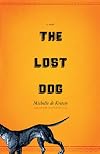
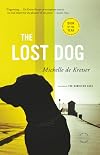
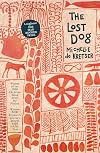
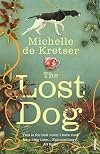
The Lost Dog
by Michelle de Kretser
On This Page
Description
Tom Loxley, an Indian-Australian professor, is less concerned with finishing his book on Henry James than with finding his dog, who is lost in the Australian bush. Joining his daily hunt is Nelly Zhang, an artist whose husband disappeared mysteriously years before Tom met her. Although Nelly helps him search for his beloved pet, Tom isn't sure if he should trust this new friend. Tom has preoccupations other than his book and Nelly and his missing dog, mainly concerning his mother, who is show more suffering from the various indignities of old age. He is constantly drawn from the cerebral to the primitive -- by his mother's infirmities, as well as by Nelly's attractions. The Lost Dog makes brilliant use of the conventions of suspense and atmosphere while leading us to see anew the ever-present conflicts between our bodies and our minds, the present and the past, the primal and the civilized. show lessTags
Recommendations






















Member Recommendations
Member Reviews
The lost dog of the title is the framework on which the rest of this novel hangs. Tom Locksley has borrowed a remote house in the Australian bush belonging to his friend Nelly Zhang while he finishes his book on Henry James. As he prepares to leave and head back to the city his dog runs into the bush after an animal and becomes lost. The novel follows the Tom over the next two weeks as he searches for his dog and deals at the same time with the increasing realisation that his elderly mother can no longer cope on her own. Interwoven with this is the story of Tom's own origins in India: the son of the British Arthur Locksley, a hard-drinking somewhat ineffectual man, and Iris de Sousa, of mixed Portuguse and Indian descent. Expected to show more marry a European at all costs, in her thirties Iris is forced to set her sights on the initially unprepossessing Arthur, but in post-independence India Arthur's Englishness is no longer the asset it would once have been. And also interwoven is the story of the Tom's more recent relationship with the artist Nelly Zhang and the group of artists who cluster around her.
In particular I enjoyed the story of Iris and Arthur's marriage, and Tom's own childhood in India and then Australia, which illustrate the changing attitudes of the post-colonial world. But I found Tom's obsession with Nelly Zhang and her art a little tedious: I couldn't see her attraction at all. The book flits backwards and forwards constantly in time and place which means it can be a little difficult to place a particular event, but it was full of beautiful vignettes which I would have loved to quote if I hadn't listened to it on audiobook. So overall, a well-written and interesting novel dealing with questions of identity and belonging, but which fell short of being a great read for me. show less
In particular I enjoyed the story of Iris and Arthur's marriage, and Tom's own childhood in India and then Australia, which illustrate the changing attitudes of the post-colonial world. But I found Tom's obsession with Nelly Zhang and her art a little tedious: I couldn't see her attraction at all. The book flits backwards and forwards constantly in time and place which means it can be a little difficult to place a particular event, but it was full of beautiful vignettes which I would have loved to quote if I hadn't listened to it on audiobook. So overall, a well-written and interesting novel dealing with questions of identity and belonging, but which fell short of being a great read for me. show less
Tom Loxley has gotten away from the city, staying at a friend's house in the bush, in order to finish writing his book on Henry James. On his last morning there, while untying his dog, a wallaby bounds past, and the dog follows.
Tom swooped for the rope, and clawed at air. On the hillside above the track, the dog was swallowed by leaves.
In that one moment, a whole train of events is uncovered. Tom is trying to search for his dog, deal with his ageing and needy mother Iris, and her fraught relationship with her sister in law Audrey. At the same time, we also are learning the story of Nelly Zhang, Tom's friend who owns the house in the bush, and who is a talented artist.
It was quite a lyrical, poetical read. I often had to re-read show more sentences - not sure if this was because I just wasn't getting them (I'm a straightforward sort of person, poetry can confuse me), or if she was deliberately writing with a certain ambiguity, forcing me to re-read sentences and wonder just which way they should parse...
The language is like her characters, who are multifaceted, complex beings, hard to pin down to a particular reading at times. Nelly in particular plays with the idea of being Chinese, emphasising her asian heritage almost to the point sometimes of parody, disconcerting Tom. Tom himself is Eurasian - his mother is Indian - but has westernised himself to the point of being a academic studying Henry James.
Also grotesquely fascinating to me (because I have met many of these in my life) is Audrey, Tom's aunt. Tom's father Arthur dies soon after they move to Australia, and Tom and Iris end up living in the annex of Audrey (Arthur's younger sister) for many years.
Audrey was always quick to extend what she called a helping hand; and, finding it grasped, to detect exploitation. Muggins here; a soft touch: so she described herself. Debit and credit were computed with decimal precision, each benign gesture incurring a debt of gratitude that could never be paid in full.
de Kretser has captured the beauty and the terror of the Australian bush, but has also captured the (almost unnamed) city of Melbourne as well. And there's one scathing but bitchily brilliant scene with Tom sitting around with other academics to choose a shortlist of people to interview for an upcoming position. Tom doesn't come out glowing either, on his personal shortlist is the as-yet-unpublished student of a highly regarded Jamesian scholar, and he's hoping for a quote from this scholar to adorn his new book.
The plot of The Lost Dog could be quite hard to pin down at times, since it jumps around in time and locale. It's part of the multilayered and slow reveal of all the plot elements, but at times I just felt plain lost myself, much like the eponymous and unnamed dog.
I feel like I have barely scratched the surface of this dense, but marvellous, book. show less
Tom swooped for the rope, and clawed at air. On the hillside above the track, the dog was swallowed by leaves.
In that one moment, a whole train of events is uncovered. Tom is trying to search for his dog, deal with his ageing and needy mother Iris, and her fraught relationship with her sister in law Audrey. At the same time, we also are learning the story of Nelly Zhang, Tom's friend who owns the house in the bush, and who is a talented artist.
It was quite a lyrical, poetical read. I often had to re-read show more sentences - not sure if this was because I just wasn't getting them (I'm a straightforward sort of person, poetry can confuse me), or if she was deliberately writing with a certain ambiguity, forcing me to re-read sentences and wonder just which way they should parse...
The language is like her characters, who are multifaceted, complex beings, hard to pin down to a particular reading at times. Nelly in particular plays with the idea of being Chinese, emphasising her asian heritage almost to the point sometimes of parody, disconcerting Tom. Tom himself is Eurasian - his mother is Indian - but has westernised himself to the point of being a academic studying Henry James.
Also grotesquely fascinating to me (because I have met many of these in my life) is Audrey, Tom's aunt. Tom's father Arthur dies soon after they move to Australia, and Tom and Iris end up living in the annex of Audrey (Arthur's younger sister) for many years.
Audrey was always quick to extend what she called a helping hand; and, finding it grasped, to detect exploitation. Muggins here; a soft touch: so she described herself. Debit and credit were computed with decimal precision, each benign gesture incurring a debt of gratitude that could never be paid in full.
de Kretser has captured the beauty and the terror of the Australian bush, but has also captured the (almost unnamed) city of Melbourne as well. And there's one scathing but bitchily brilliant scene with Tom sitting around with other academics to choose a shortlist of people to interview for an upcoming position. Tom doesn't come out glowing either, on his personal shortlist is the as-yet-unpublished student of a highly regarded Jamesian scholar, and he's hoping for a quote from this scholar to adorn his new book.
The plot of The Lost Dog could be quite hard to pin down at times, since it jumps around in time and locale. It's part of the multilayered and slow reveal of all the plot elements, but at times I just felt plain lost myself, much like the eponymous and unnamed dog.
I feel like I have barely scratched the surface of this dense, but marvellous, book. show less
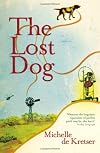
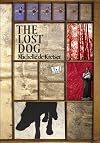
The Lost Dog has a voice to die for. The phrase 'jewelled prose' came to mind: there's hardly a sentence, and probably not a paragraph, without a glowing adjective, a finely cut phrase, a many-faceted image or a sharply glittering epigram, though I don't think you'd find any extended metaphors as laboured as that one. I was so captivated by the prose that I'd reached about the halfway point before I started to wonder if there was a plot; fortunately, just about then Michelle De Kretser started to give clues about where the book was heading. I remember someone saying of the movie Stand By Me that almost everything in it was there to allow the movie to get away with the one moment of tenderness between two boys. It's not quite that simple show more with The Lost Dog -- in fact, there's nothing simple about this book -- but after all its playing with time, its ruminations about modernism and post-colonialism, its playing around with references to Henry James (the point-of-view character, Tom, has just finished writing a book on James when this book opens and he loses his dog), it gives us climactic moments affirming simple human/animal realities. (The beautiful cover was designed by LibraryThing member Ampersand Duck, who had clearly read the book. The book I borrowed is hardcover and a pleasure to hold in the hand.)
[http://homepage.mac.com/shawjonathan/iblog/] show less
[http://homepage.mac.com/shawjonathan/iblog/] show less
Tom Loxley is a divorced, childless, Jamesian scholar who is stalled at the end of writing his book. He takes his dog to a friend's cabin in the bush in order to find the inspiration to finish but on a long tramp with the dog, the dog runs away and doesn't return. Tom's sometimes frantic and sometimes desultory search for his lost dog then weaves in and out of the other plot threads, flashbacks all: his childhood in India and then Australia, his marriage and its ultimate failure, his sexually frustrated obsession with his artist friend Nelly Zhang, and (the only non-flashback) of his mother's aging diminishment.
There are a wealth of themes weaving throughout the tale. There's that of the immigrant and the outcast; there's familial duty show more and the inheritance of the past. Loss and redemption as well as desire and denial play their own enormous roles as the story builds to its climax. Despite the small action guiding the story, the search for the dog keeps the reader engaged and slightly tensed wanting an outcome even as Tom's life up until the loss of his dog unfolds slowly and with great deliberation reflecting the alternating hope and futility of the search itself.
The writing here is often times dense and rich in meaning with de Kretser showing her deftness with apt metaphors. Her descriptions are minute and startlingly accurate, a decided strength in a story with such an insubstantial plot driving the tale. If there's a weakness here, it's in the characters. Tom himself is hard to like, aimless and as stuck in his life as the conclusion of his scholarly research. Nelly Zhang is eccentric but stand-offish, even to the reader, exploiting her racial identity when it suits. And the long intervening amounts of text between when hints of mystery and understanding are dropped and when their threads are finally reintroduced into the story can induce a sense of frustration in a reader more accustomed to a straightforward writing style. But even with these considerations, it is clear that de Kretser is an accomplished and stylish writer. In the end, while I found it hard to sympathize or care for any of the characters, I wanted to know what happened to the dog, was impressed by the calibre of the prose, and amazed by the dexterity of keeping all the disparate plots going and ultimately interconnected. I look forward to reading de Kretser's other works. show less
There are a wealth of themes weaving throughout the tale. There's that of the immigrant and the outcast; there's familial duty show more and the inheritance of the past. Loss and redemption as well as desire and denial play their own enormous roles as the story builds to its climax. Despite the small action guiding the story, the search for the dog keeps the reader engaged and slightly tensed wanting an outcome even as Tom's life up until the loss of his dog unfolds slowly and with great deliberation reflecting the alternating hope and futility of the search itself.
The writing here is often times dense and rich in meaning with de Kretser showing her deftness with apt metaphors. Her descriptions are minute and startlingly accurate, a decided strength in a story with such an insubstantial plot driving the tale. If there's a weakness here, it's in the characters. Tom himself is hard to like, aimless and as stuck in his life as the conclusion of his scholarly research. Nelly Zhang is eccentric but stand-offish, even to the reader, exploiting her racial identity when it suits. And the long intervening amounts of text between when hints of mystery and understanding are dropped and when their threads are finally reintroduced into the story can induce a sense of frustration in a reader more accustomed to a straightforward writing style. But even with these considerations, it is clear that de Kretser is an accomplished and stylish writer. In the end, while I found it hard to sympathize or care for any of the characters, I wanted to know what happened to the dog, was impressed by the calibre of the prose, and amazed by the dexterity of keeping all the disparate plots going and ultimately interconnected. I look forward to reading de Kretser's other works. show less
Without going into plot, etc, The Lost Dog appealed to me on many levels, especially de Kretser's exploration of aging and modernity. On page 116, Nelly notes ..."doesn't setting out to reject the past guarantee you'll never be free of it? It's like being modern means walking with a built-in limp." I found this statement to be very perceptive. The author's use of imagery, especially that of the neon "Skipping Girl Pure Malt Vinegar" sitting there, alone, blacked out, unappreciated really hit me, and summed up something I've been feeling for a long time. The author states (on page 226)re the vinegar girl: "In acquiring mythic status she had become more and less than the product she embodied: a servant of the market who exceeded the show more commodity that bore her name. Once an emblem of modernity, she had fallen out of fashion and into a life of her own." For some reason, the truth built around this image resonated with me. Modernity is truly an ambivalent state (and state of mind as well) , and it seemed to me that this is one of the points de Kretser was trying to make. I also found her understanding of Iris's aging and the effects it had on Iris and Tom very engaging and thought provoking.
There is a lot more to this book that I won't go into here, certainly, and it is very much worth reading and pondering. The writing is incredibly good and this was definitely a character-driven novel which holds the reader through the end. I couldn't put it down once started, and I'd definitely recommend it.
4/5 stars show less
There is a lot more to this book that I won't go into here, certainly, and it is very much worth reading and pondering. The writing is incredibly good and this was definitely a character-driven novel which holds the reader through the end. I couldn't put it down once started, and I'd definitely recommend it.
4/5 stars show less
If I didn’t feel a need to finish every book I start, I would have given up on Michelle de Kretzer’s The Lost Dog by around page 50. The book begins with Tom Loxley, a writer who has just finished his manuscript on Henry James, taking his dog out for an ill-fated walk in the Australian bush. From there, we jump to his memories of meeting his friend Nelly, his parents’ history of meeting and marrying, and the Loxley family’s move from India to Australia. Flashbacks are nested into flashbacks, and the present day occasionally interrupts. I was sure this would be one of those books that substitutes puffed-up descriptive language, obscure metaphors, a nonlinear style, and edgy talk of how people’s shit smells (I’m not kidding) show more for coherent storytelling, compelling characters, and imagery a reader can hold onto.
But then, somewhere in the middle of the second chapter, something changed. The narrative settled down a bit, with fewer shifts between characters and time lines. The significant characters started to take shape, and I had to know what was going to happen.
There are some wonderfully poignant moments in this book, particularly between Tom and his mother. De Kretser's with detail also comes through in her descriptions. Her words painted as clear a picture in my mind as any painting could.
See my complete review at my blog show less
But then, somewhere in the middle of the second chapter, something changed. The narrative settled down a bit, with fewer shifts between characters and time lines. The significant characters started to take shape, and I had to know what was going to happen.
There are some wonderfully poignant moments in this book, particularly between Tom and his mother. De Kretser's with detail also comes through in her descriptions. Her words painted as clear a picture in my mind as any painting could.
See my complete review at my blog show less
Wonderfully rich writing is on display here, filled with minute observations of life. The story jumps around in time alarmingly which seems to be a regular part of this writer's style. I found it a bit hard to like the aimless main character Tom who plods through his issues wearily, and he doesn't seem all that convincingly male either. There is more interest in the life of the enigmatic artist Nelly, and how the themes of her life become artwork. The lost dog holds the story together, and I guess Tom is a bit of a lost dog himself. A lot of interesting points are made but not expanded upon, for example how we would go to any length to save a dog, but don't care much for sheep, cattle and elderly people (which explains why you have to show more read it to the end, in order to find out what happens to the dog!) show less
Members
- Recently Added By
Lists

Booker Prize
491 works; 62 members

Man Booker Prize Longlist 2008
13 works; 2 members

Animals in the Title
498 works; 11 members

Australian Women's Writing 2003 - 2014
49 works; 3 members
Talk Discussions
Past Discussions
Discussion: The Lost Dog, by Michelle de Kretser (NO SPOILERS) in Orange January/July (February 2011)
Author Information

10+ Works 2,185 Members
Michelle de Kretser is an editor who lives in Melbourne, Australia. This is her first novel. (Publisher Provided) Michelle de Kretser was born on November 11, 1957 in Sri Lanka. She was educated at Methodist College, Colombo,[2] and in Melbourne and Paris. She worked as an editor for travel guides company Lonely Planet, and while on a sabbatical show more in 1999, wrote and published her first novel, The Rose Grower. Her second novel, published in 2003, The Hamilton Case was winner of the Tasmania Pacific Prize, the Encore Award (UK) and the Commonwealth Writers Prize (Southeast Asia and Pacific). Her third novel, The Lost Dog, was published in 2007. It was one of 13 books on the long list for the 2008 Man Booker Prize for fiction. From 1989 to 1992 she was a founding editor of the Australian Women's Book Review. Her fourth novel, Questions of Travel, won several awards, including the 2013 Miles Franklin Award, the Australian Literature Society Gold Medal (ALS Gold Medal), and the 2013 Prime Minister's Literary Awards for fiction. It was also shortlisted for the 2014 Dublin Impac Literary Award. She won the 2018 Miles Franklin Literary Award for her novel The Life to Come In 2015 her title, Springtime, made the shortlist for the Australian Book Designers Association Award. She will also be taking part in the winter reading series, Writers on Mondays when she visits Victoria University in September 2015. She is the author of The Life to Come, published in September 2017. (Publisher Provided) show less
Awards and Honors
Awards
Common Knowledge
- Original publication date
- 2007
- Important places
- Australia; Melbourne, Victoria, Australia; Victoria, Australia
- Epigraph
- The whole of anything cannot be told.
Henry James, Notebooks - Dedication
- For Gus, of course
- First words
- Afterwards, he would remember paddocks stroked with light.
- Last words
- (Click to show. Warning: May contain spoilers.)Tom said, 'I won't let you fall.'
Classifications
Statistics
- Members
- 377
- Popularity
- 83,148
- Reviews
- 14
- Rating
- (3.38)
- Languages
- English, Italian
- Media
- Paper, Audiobook, Ebook
- ISBNs
- 18
- ASINs
- 6