On This Page
Description
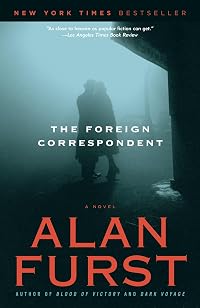
Fiction. Suspense. Thriller. Historical Fiction. HTML:From Alan Furst, whom The New York Times calls “America’s preeminent spy novelist,” comes an epic story of romantic love, love of country, and love of freedom–the story of a secret war fought in elegant hotel bars and first-class railway cars, in the mountains of Spain and the backstreets of Berlin. It is an inspiring, thrilling saga of everyday people forced by their hearts’ passion to fight in the war against tyranny.By show more 1938, hundreds of Italian intellectuals, lawyers and journalists, university professors and scientists had escaped Mussolini’s fascist government and taken refuge in Paris. There, amid the struggles of émigré life, they founded an Italian resistance, with an underground press that smuggled news and encouragement back to Italy. Fighting fascism with typewriters, they produced 512 clandestine newspapers. The Foreign Correspondent is their story.
Paris, a winter night in 1938: a murder/suicide at a discreet lovers’ hotel. But this is no romantic traged–it is the work of the OVRA, Mussolini’s fascist secret police, and is meant to eliminate the editor of Liberazione, a clandestine émigré newspaper. Carlo Weisz, who has fled from Trieste and secured a job as a foreign correspondent with the Reuters bureau, becomes the new editor.
Weisz is, at that moment, in Spain, reporting on the last campaign of the Spanish civil war. But as soon as he returns to Paris, he is pursued by the French Sûreté, by agents of the OVRA, and by officers of the British Secret Intelligence Service. In the desperate politics of Europe on the edge of war, a foreign correspondent is a pawn, worth surveillance, or blackmail, or murder.
The Foreign Correspondent is the story of Carlo Weisz and a handful of antifascists: the army officer known as “Colonel Ferrara,” who fights for a lost cause in Spain; Arturo Salamone, the shrewd leader of a resistance group in Paris; and Christa von Schirren, the woman who becomes the love of Weisz’s life, herself involved in a doomed resistance underground in Berlin.
The Foreign Correspondent is Alan Furst at his absolute best–taut and powerful, enigmatic and romantic, with sharp, seductive writing that takes the reader through darkness and intrigue to a spectacular denouement. show less
Tags
Recommendations








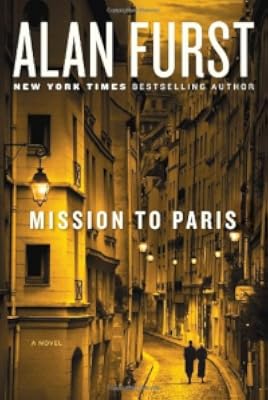

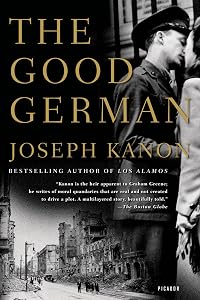

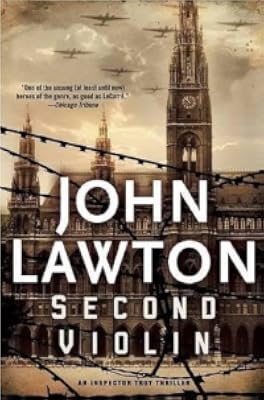
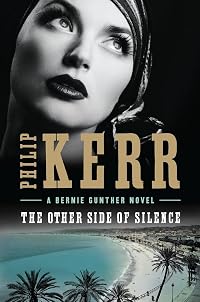

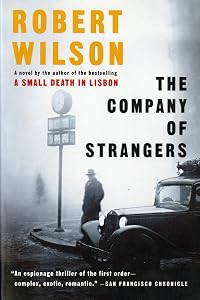
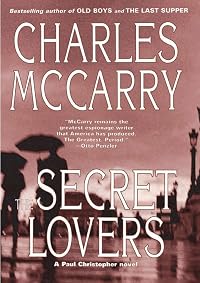
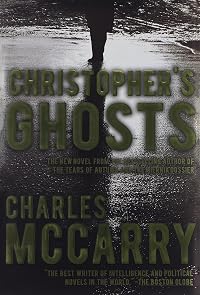
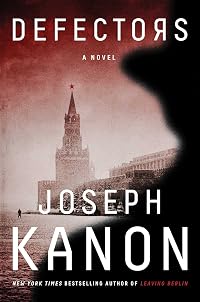
Member Recommendations

karatelpek Italy, prewar, intrigue.
Member Reviews
I wouldn't call Furst's World War II-era spy novels page turners, but they are addictive. In this one, Carlo Weisz is an Italian ex-pat living in Paris, working as a journalist for the Reuters news service, and secretly writing and editing an anti-fascist newspaper distributed covertly in Italy. As if that isn't enough, the Italian secret police are trying to put an end to the underground newspaper and British Intelligence has plans for him. Even the Paris police are interested him and his fellow Italian ex-pats when the editor of Liberazione and his mistress, the wife of a prominent Frenchman, are brutally murdered in an act made to look like murder-suicide. And finally, Carlo's German girlfriend won't leave Germany despite her show more anti-Hitler activities putting her in danger.
There's a lot going on in this book, yet Furst takes his usual pace laying out the story, giving readers a feel of life in 1940 Europe, from the civil war in Spain, to fascist Italy, life-as-usual Paris, and tense Berlin. The civilian-enlisted-as-spy, painstakingly researched and recreated settings are Furst's stock-in-trade, yet the stories never feel old or repetitive. Carlo is an engaging protagonist trying to do the right thing for his homeland, and Furst is a skilled storyteller, a perfect combination. show less
There's a lot going on in this book, yet Furst takes his usual pace laying out the story, giving readers a feel of life in 1940 Europe, from the civil war in Spain, to fascist Italy, life-as-usual Paris, and tense Berlin. The civilian-enlisted-as-spy, painstakingly researched and recreated settings are Furst's stock-in-trade, yet the stories never feel old or repetitive. Carlo is an engaging protagonist trying to do the right thing for his homeland, and Furst is a skilled storyteller, a perfect combination. show less
An immersive visit to pre-war Europe, our stay begins and ends in Paris 1938/39. Alan Furst is a master of mood, and setting scenes so vividly that you can hear the sounds of the city and smell the food in the café. He writes with a level of detail that had me eagerly cross referencing period styles of men’s cologne, Parisian jazz orchestras, and Italian short story authors, listening to my 1930s playlist as I read!
This tale of a small group of anti-Fascist Italian emigrés, and their efforts to undermine Il Ducé’s regime in any way, however trivial, takes us by way of Reuter’s Paris bureau correspondent Carlo Weisz’s day job to the Spanish Civil War; the German invasion of Prague; Berlin at the time of Hitler’s ‘Pact of show more Steel’ with Mussolini; and the dangerous back alleyways of dockside Genoa - as the sun sets on the eve of Europe’s nightmare.
Weisz is the covert columnist ‘Palestrina’ - part of the underground editorial board of the banned ‘Liberazione’ newspaper. The day to day travails of his paranoid group of patriots in exile from their home country is a central part of the story. The French secret police aren’t much bothered about their Italian counterparts...until they are! The British secret service might scratch your back if you scratch theirs... Nobody can be trusted, and nobody will even know you were ever there... A thoroughly enjoyable and authentic experience of the dark storm clouds of war gathering. show less
This tale of a small group of anti-Fascist Italian emigrés, and their efforts to undermine Il Ducé’s regime in any way, however trivial, takes us by way of Reuter’s Paris bureau correspondent Carlo Weisz’s day job to the Spanish Civil War; the German invasion of Prague; Berlin at the time of Hitler’s ‘Pact of show more Steel’ with Mussolini; and the dangerous back alleyways of dockside Genoa - as the sun sets on the eve of Europe’s nightmare.
Weisz is the covert columnist ‘Palestrina’ - part of the underground editorial board of the banned ‘Liberazione’ newspaper. The day to day travails of his paranoid group of patriots in exile from their home country is a central part of the story. The French secret police aren’t much bothered about their Italian counterparts...until they are! The British secret service might scratch your back if you scratch theirs... Nobody can be trusted, and nobody will even know you were ever there... A thoroughly enjoyable and authentic experience of the dark storm clouds of war gathering. show less
Complex and sophisticated, Furst's novel adeptly communicates the claustrophobic feeling of Europe, and of France's Italian émigré community in particular, just before the outbreak of the war. His is not at all sympathetic of the fascist status quo, like other authors I've read. I'm sure some reviewers would call the novel 'timely.' I'll just say that it is a reminder that we are constantly negotiating a slippery slope, where the freedoms we take for granted are really an illusion, gone at the drop of a hat. I was totally unprepared for the ending.
Carlo Weisz is the foreign correspondent in question, a refugee from Trieste now covering the coming war for Reuters Paris. Weisz also is active in an Italian resistance group publishing Liberazione, a revived paper originally crushed by the Italian fascists, now smuggled into Italy, printed by sympathisers and distributed by hand. It becomes clear Mussolini's secret police, the OVRA, have targeted Liberazione and Weisz's group come under threat. Weisz, too, for reasons personal and patriotic, becomes involved in efforts to undermine the National Socialists, after renewing an affair with Christa Zameny, now married to a Prussian in Berlin. The narrative follows the threads of various activities, slowly revealing in miniature the overall show more clandestine efforts to oppose fascism in Europe 1938-39.
The familiar Furst study of Hitchcock's Everyman caught up in extreme circumstances, and as with Alfie's protagonists, the Everyman (and Woman) here is primer inter pares, not James Bond but clearly not a typical example of resourcefulness, personal initiative, or nerve. Nevertheless, Furst weaves an engaging history lesson amid the wide-ranging action, and invites meditation on the place of the individual in history.
//
The question arises: To what extent is the outcome of this war, of any war, influenced by these espionage efforts? Similar question with respect to individual efforts in battle, dilemma besetting individual soldiers when asked to defend a hopeless position or follow dubious orders, whether the war at large is steered one way or another. Suspect it cannot be answered in the individual case, but trusted that overall it can tip the balance. Layered on that: the personal meaning arising from one's choice to uphold personal ideals, translating principles into action, irrespective of the outcome.
Tempting to portray Furst as telling the same archetypal story repeatedly, in different guise and across various milieux. It is comforting, and somehow fittingly realistic in that we know the overarching outcome, what is unknown are the particulars attending this or that person, one or another mission or event. Perhaps a restatement of the above question on individual efficacy.
The simple map as frontispiece finally made clear to me that the Arrondissements of Paris are arranged in a clockwise spiral, not concentric circles. The Brasserie Heininger awaits customers in the 4th. show less
The familiar Furst study of Hitchcock's Everyman caught up in extreme circumstances, and as with Alfie's protagonists, the Everyman (and Woman) here is primer inter pares, not James Bond but clearly not a typical example of resourcefulness, personal initiative, or nerve. Nevertheless, Furst weaves an engaging history lesson amid the wide-ranging action, and invites meditation on the place of the individual in history.
//
The question arises: To what extent is the outcome of this war, of any war, influenced by these espionage efforts? Similar question with respect to individual efforts in battle, dilemma besetting individual soldiers when asked to defend a hopeless position or follow dubious orders, whether the war at large is steered one way or another. Suspect it cannot be answered in the individual case, but trusted that overall it can tip the balance. Layered on that: the personal meaning arising from one's choice to uphold personal ideals, translating principles into action, irrespective of the outcome.
Tempting to portray Furst as telling the same archetypal story repeatedly, in different guise and across various milieux. It is comforting, and somehow fittingly realistic in that we know the overarching outcome, what is unknown are the particulars attending this or that person, one or another mission or event. Perhaps a restatement of the above question on individual efficacy.
The simple map as frontispiece finally made clear to me that the Arrondissements of Paris are arranged in a clockwise spiral, not concentric circles. The Brasserie Heininger awaits customers in the 4th. show less
A thriller set in the days just before the 2nd World War mostly following the character Carlo Weisz an Italian newspaper reporter for Reuters and his own clandestine anti-fascist newspaper called 'Liberazione'. The editor for 'Liberazione' is assassinated by agents of the 'OVRA' a secret intelligence network of the Italian dictator Mussolini while Weisz is in Spain covering the civil war on the Republican side. On his return Weisz accepts the job as Liberazione's new editor. As OVRA continues to menace Liberazione's staff the French and British intelligence agencies themselves get in on the action. Meanwhile Weisz's other employer Reuters is also keeping him busy sending him off to Germany where Weisz gets a first hand look at Hitler's show more nazi regime as it gears up for the coming world war. He also reacquaints himself with a former german girlfriend as deadset against her regime as he is of Mussolini's fascists. This book is written in an engaging and intelligent style. Although a thriller Furst is in control of his material the entire way. It is insightful as to the times and is not overpaced. It is suspenseful until the very end. A very good read. show less
Our hero Carlo Weisz is from Trieste, the symbolic meeting point of Germanic, Slavic, and Romance people. It suits the novel that spans all these regions of Europe and includes cool side notes like King Zog in Albania and the OVRA. Its a shame Furst is now only writing about war time France, as his pre-war novels that cover all of Europe are the best.
I’ve heard good things about Alan Furst’s spy novels. They’re set almost exclusively in the pre-WWII “rise of fascism” era or during WWII itself and contain immersive detail about the events, politics, and general life of the time period. I like spy novels. I like WWII history. From the sounds of things, it should be just the type of thing to float my boat. Or trip my trigger. Or tickle my pickle. Take your pick. So when I selected The Foreign Correspondent (Furst’s 2006 entry in his Night Soliders series, now 11 books strong) as one of my audio book reads for my trip down to Orlando last month, I expected to be treated to a riveting tale of WWII espionage, intrigue, and danger.
But I wasn’t.
Oh, there was espionage, show more intrigue, and danger—just not enough of it to make the tale riveting. Actually, it was kind of boring. The historical aspect was well done and quite interesting, but the plot moved sluggishly, and I kept waiting for a rise in action that never came. Guess it was a good thing I wasn’t holding my breath. Let me tell you a little bit about the plot so you can see what I mean.
The protagonist is one Carlo Weisz, a foreign correspondent for the Reuters news agency during the Spring of 1939. He’s also an Italian émigré living in Paris, one of the many artists, professors, and intellectuals that were forced to flee Italy when Mussolini and his blackshirts took power. He and his émigré friends operate one of the many émigré newspapers in Paris, writing propaganda against the Fascisti regime and covertly distributing it back within Italy. When the editor of the magazine is killed by the Italian secret police, Carlo agrees to take on the editorial duties. In the meantime, he makes several trips to reporting assignments around the region for Reuters—hot button locales like Spain, Prague, and even Germany itself. War is looming, the Germans and the Italians have allied themselves in war, and the only question is which spark is going to set off the European powder keg—stuff that makes for entertaining newsprint if nothing else.
Carlo’s travels have two primary outcomes. They put him in contact with an old lover, a German countess who is involved in resistance activities against the Nazis. They also get him noticed by the British Secret Service. Carlo helps both parties (the former willingly, the latter only with heavy-handed coercion). He helps his lady by smuggling secret documents out of Germany. He helps the British by writing the biography of an Italian colonel that fought in Spain against Franco and his fascists. Somewhere along the line he tries to convince the lady to leave Germany, but no dice. By the time she’s willing to go, it’s too late for her to leave legally and Carlo can’t get her out himself. Therefore he appeals to the Brits for help. They strike a deal—Carlo will make an appearance in Italy to rally the home team and increase production on their magazine. The Brits will exfiltrate the girl. They huddle, break, and go off to take care of business.
The whole time I kept expecting the slowly mounting tension to explode, to finally get to the high point of the novel where the shit hits the fan, everyone’s running for their lives, and feats of derring-do save the day. Well, maybe not derring-do. This ain’t a James Bond flick. But something, y’know? In the end Carlo goes to Italy for a while, has a few tense moments when he believes he’s being followed by the secret police (but isn’t), and then hitches a ride home with some Swedes. When he gets to Paris his lady love is waiting for him, and it’s happily ever after—except for that whole impending war thing.
That was my problem with the book overall. Nothing really happens. Oh, there’s enough subtle intrigue and foreboding to give an old lady a heart attack, but nothing ever comes of it. It’s just… kind of boring. Then again, maybe that’s the point. Spycraft isn’t all excitement and shootouts and naked chicks. Real spycraft is long periods of tedious boredom punctuated by heart-racing fear. Given his attention to historical detail, I guess it’s not surprising that Furst’s novel was more realistic than most—even if it made for a less entertaining book. And really, how much derring-do can you expect from a journalist whose idea of “fighting back” against fascist oppression is writing some whiny articles?
What The Foreign Correspondent lacks in excitement, though, it makes up for with nearly everything else. The novel is amazingly-well researched. Furst crafts realistic (if somewhat boring) characters and an immersive historical setting using style and language that are measured, understated, and elegant. I could almost imagine I was back in Paris with Carlo and the rest of the gang. It was a lot like being thrown into the DeLorean and burning rubber back in time to punch Mussolini in the face. Or write nasty articles about him. Same thing.
The Foreign Correspondent wasn’t the most exciting book I’ve ever read, but it had enough of a silver lining to make me glad that I read it nonetheless. That’s why I give it three stars. show less
But I wasn’t.
Oh, there was espionage, show more intrigue, and danger—just not enough of it to make the tale riveting. Actually, it was kind of boring. The historical aspect was well done and quite interesting, but the plot moved sluggishly, and I kept waiting for a rise in action that never came. Guess it was a good thing I wasn’t holding my breath. Let me tell you a little bit about the plot so you can see what I mean.
The protagonist is one Carlo Weisz, a foreign correspondent for the Reuters news agency during the Spring of 1939. He’s also an Italian émigré living in Paris, one of the many artists, professors, and intellectuals that were forced to flee Italy when Mussolini and his blackshirts took power. He and his émigré friends operate one of the many émigré newspapers in Paris, writing propaganda against the Fascisti regime and covertly distributing it back within Italy. When the editor of the magazine is killed by the Italian secret police, Carlo agrees to take on the editorial duties. In the meantime, he makes several trips to reporting assignments around the region for Reuters—hot button locales like Spain, Prague, and even Germany itself. War is looming, the Germans and the Italians have allied themselves in war, and the only question is which spark is going to set off the European powder keg—stuff that makes for entertaining newsprint if nothing else.
Carlo’s travels have two primary outcomes. They put him in contact with an old lover, a German countess who is involved in resistance activities against the Nazis. They also get him noticed by the British Secret Service. Carlo helps both parties (the former willingly, the latter only with heavy-handed coercion). He helps his lady by smuggling secret documents out of Germany. He helps the British by writing the biography of an Italian colonel that fought in Spain against Franco and his fascists. Somewhere along the line he tries to convince the lady to leave Germany, but no dice. By the time she’s willing to go, it’s too late for her to leave legally and Carlo can’t get her out himself. Therefore he appeals to the Brits for help. They strike a deal—Carlo will make an appearance in Italy to rally the home team and increase production on their magazine. The Brits will exfiltrate the girl. They huddle, break, and go off to take care of business.
The whole time I kept expecting the slowly mounting tension to explode, to finally get to the high point of the novel where the shit hits the fan, everyone’s running for their lives, and feats of derring-do save the day. Well, maybe not derring-do. This ain’t a James Bond flick. But something, y’know? In the end Carlo goes to Italy for a while, has a few tense moments when he believes he’s being followed by the secret police (but isn’t), and then hitches a ride home with some Swedes. When he gets to Paris his lady love is waiting for him, and it’s happily ever after—except for that whole impending war thing.
That was my problem with the book overall. Nothing really happens. Oh, there’s enough subtle intrigue and foreboding to give an old lady a heart attack, but nothing ever comes of it. It’s just… kind of boring. Then again, maybe that’s the point. Spycraft isn’t all excitement and shootouts and naked chicks. Real spycraft is long periods of tedious boredom punctuated by heart-racing fear. Given his attention to historical detail, I guess it’s not surprising that Furst’s novel was more realistic than most—even if it made for a less entertaining book. And really, how much derring-do can you expect from a journalist whose idea of “fighting back” against fascist oppression is writing some whiny articles?
What The Foreign Correspondent lacks in excitement, though, it makes up for with nearly everything else. The novel is amazingly-well researched. Furst crafts realistic (if somewhat boring) characters and an immersive historical setting using style and language that are measured, understated, and elegant. I could almost imagine I was back in Paris with Carlo and the rest of the gang. It was a lot like being thrown into the DeLorean and burning rubber back in time to punch Mussolini in the face. Or write nasty articles about him. Same thing.
The Foreign Correspondent wasn’t the most exciting book I’ve ever read, but it had enough of a silver lining to make me glad that I read it nonetheless. That’s why I give it three stars. show less
Members
- Recently Added By
Published Reviews
...this time around Furst has produced a curiously inert book that is missing both the percussive drive of more commercial spy novels and the fully realized characters of le Carré and Greene. It is an honest effort — Furst is too good a writer and too professional to offer anything less — and it has its pleasures, but they are served dutifully and without great vigor. No one will ask for show more a second helping of Carlo Weisz. show less
added by mysterymax
Lists

In or About the 1930s
198 works; 27 members

Best Espionage (Fiction)
55 works; 20 members
Best Spy Fiction
153 works; 102 members

Best Noir Fiction
160 works; 14 members

Books You Bought in 2013
35 works; 3 members

Books Read in 2023
5,547 works; 145 members

Paris, City of Lights
103 works; 17 members

Books about the Spanish Civil War
57 works; 3 members

Italian adventures
21 works; 1 member

Books about World War II
241 works; 22 members
Author Information

Furst received a B.A. from Oberlin College in 1962 and an M.A. from Penn State in 1967. Before becoming a full-time novelist, Furst worked in advertising and wrote magazine articles, most notably for Esquire, and as a columnist for the International Herald Tribune His early novels (1976-1983) achieved limited success. However, the 1988 publication show more of Night Soldiers inspired by a 1984 trip to Eastern Europe on assignment for Esquire revitalized his career. It was the first of his highly original novels about espionage in Europe before and during the Second World War. Born in New York on February 20, 1941, he lived for long periods in France, especially Paris where he was awarded a Fulbright teaching fellowship. In 2011, the Tulsa Library Trust in Tulsa, Oklahoma selected Furst to receive its Helmerich Award, a literary prize given annually to honor a distinguished author's body of work He also made The New York Times Best Seller List in 2012 with his title The Mission to Paris and Midnight in Europe in 2014. Furst again made the New York Times Bestseller in 2016 with his novel a Hero of France. (Publisher Provided) Alan Furst is an American author of spy novels. He was born in New York City on February 20, 1941, and was raised on the Upper West Side of Manhattan. Furst received a B.A. from Oberlin College in 1962 and an M.A. from Penn State in 1967. His novels are set just prior to and during the Second World War. Titles include: Night Soldiers, Kingdom of Shadows (which won the 2001 Hammett Prize), Blood of Victory, Spies of the Balkans and Mission to Paris. In 2011, the Tulsa Library Trust in Tulsa, Oklahoma, selected Furst to receive its Helmerich Award, a literary prize given annually to honor a distinguished author's body of work. Furst made The New York Times Best Seller List in 2012 with his title The Mission to Paris and Midnight in Europe in 2014. Furst again made the New York Times Bestseller in 2016 with his novel A Hero of France. (Bowker Author Biography) show less

Alan Furst is a LibraryThing Author, an author who lists their personal library on LibraryThing.
Some Editions
Awards and Honors
Awards
Distinctions
Series

Belongs to Publisher Series
Common Knowledge
- Canonical title
- The Foreign Correspondent
- Original title
- The Foreign Correspondent
- Original publication date
- 2006
- People/Characters
- Carlo Weisz; Mr. Brown; S. Kolb; Arturo Salamone; Christa Zameny; Count Janos Polanyi (show all 7); Colonel Ferrara
- Important places
- Paris, France; Genoa, Liguria, Italy; Charlottenburg, Berlin, Germany; Marseille, Bouches-du-Rhône, Provence-Alpes-Côte d'Azur, France
- Epigraph
- By the late winter of 1938, hundreds of Italian intellectuals had fled Mussolini's fascist government and had found uncertain refuge in Paris. There, amid the struggles of emigre life, they founded an Italian Resistance, with... (show all) a clandestine press that smuggled news and encouragement back to Italy. Fighting fascism with typewriters, they produced over five hundred journals and newspapers.
- First words
- In Paris, the last days of autumn; a gray, troubled sky at daybreak, the fall of twilight at noon, followed, at seven-thirty, by slanting rains and black umbrellas as the people of the city hurried home past the bare trees.
- Blurbers
- Cox, James
- Original language
- English
Classifications
- Genres
- Fiction and Literature, Historical Fiction, General Fiction, Mystery
- DDC/MDS
- 813.54 — Literature & rhetoric American literature in English American fiction in English 1900-1999 1945-1999
- LCC
- PS3556 .U76 .F67 — Language and Literature American literature American literature Individual authors 1961-
- BISAC
Statistics
- Members
- 1,401
- Popularity
- 16,865
- Reviews
- 35
- Rating
- (3.77)
- Languages
- 8 — Catalan, Danish, Dutch, English, French, Italian, Portuguese, Spanish
- Media
- Paper, Audiobook, Ebook
- ISBNs
- 35
- ASINs
- 6