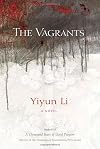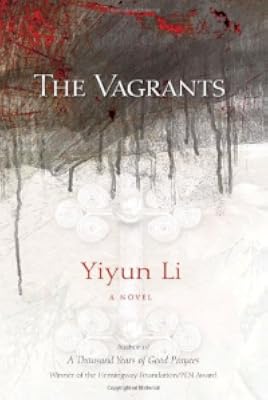
The Vagrants
by Yiyun Li
On This Page
Description
In 1979 Muddy River, a provincial Chinese city, the Gu family struggles to deal with the imminent loss of their daughter, Gu Shan, about to be executed as a counterrevolutionary, while their neighbors deal with the realities of life in China.Tags
Recommendations











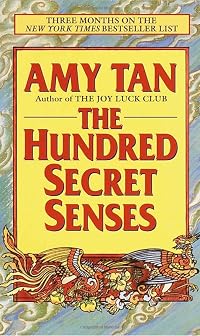
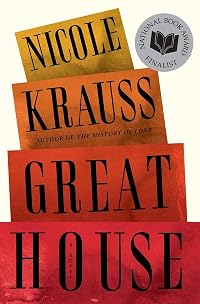
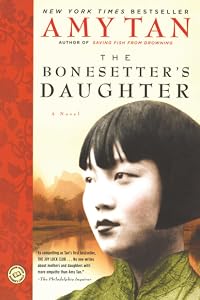
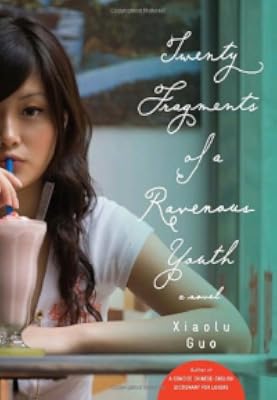

Member Recommendations
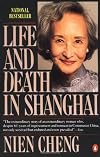
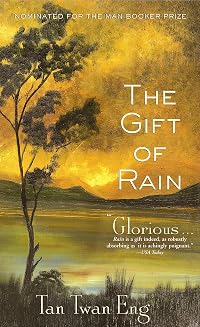
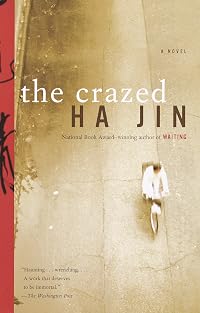
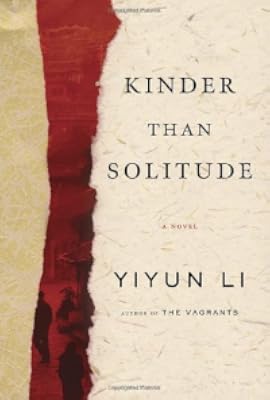
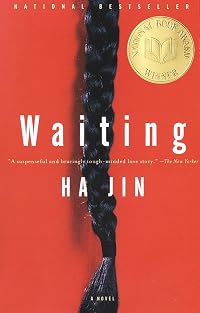
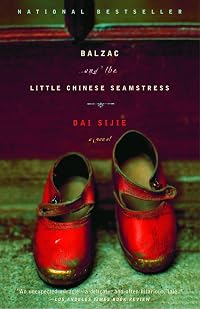
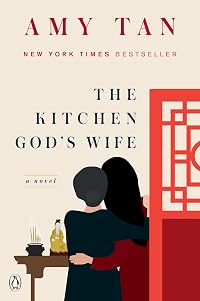
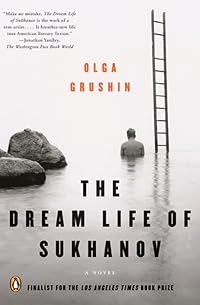
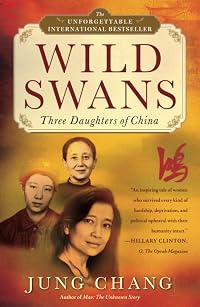
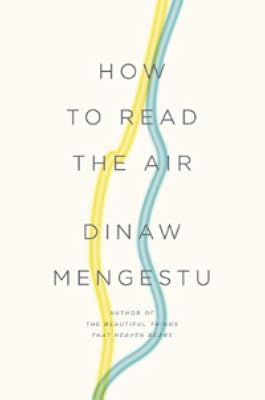
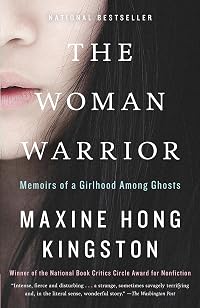
Limelite Nonfiction memoir of the Cultural Revolution by a woman who suffered through it. Another excellent personal memoir on this subject is "The Secret Piano: from Mao’s Labor Camps to Bach’s Goldberg Variations" by the concert pianist, Zhu Xiao-Mei. Both these autobiographical accounts underscore and give credence to "The Vagrants."
Member Reviews
This novel is set in 1979 provincial China, at a time when the Democratic Wall Movement in Beijing was gaining momentum in the aftermath of the Cultural Revolution. As the book open the residents of Muddy River are preparing for the denunciation rally and execution of local counter-revolutionary Gu Shan. Several different family units are connected by this one woman: Teacher Gu and Mrs Gu (Gu Shan’s parents), the Huas (vagrant beggars who have taken in orphaned girls in the past), Bashi (a sociopathic outcast), Nini (a 12-year-old girl who was born with a deformed hand and foot), Tong (a young boy who is eager to learn), Jailin (the tubercular leader of the underground movement), Wu Kai (the state’s beautiful and charismatic radio show more announcer) and her husband Wu Han (son of politically connected parents).
Li has crafted a work that is both disturbing and luminous. She weaves the threads of these individuals into a fabric of a nation in turmoil. Whom to trust? When to lie? How to survive – spiritually, emotionally, and physically? The stories of these residents of Muddy River depict courage, sacrifice, cunning, fear, survival, and love. There are some truly horrific scenes of depravity and violence here. But there are also scenes of tenderness and caring.
I can’t say that I “liked” the book – it’s too disturbing for that. But I’m glad I read it, and I’ll be thinking about it for a long time. show less
Li has crafted a work that is both disturbing and luminous. She weaves the threads of these individuals into a fabric of a nation in turmoil. Whom to trust? When to lie? How to survive – spiritually, emotionally, and physically? The stories of these residents of Muddy River depict courage, sacrifice, cunning, fear, survival, and love. There are some truly horrific scenes of depravity and violence here. But there are also scenes of tenderness and caring.
I can’t say that I “liked” the book – it’s too disturbing for that. But I’m glad I read it, and I’ll be thinking about it for a long time. show less
5 stars! A stunning novel. Takes place in China in the late 1970s. A young woman is to be executed for her ideologic opposition to the oppressive cultural revolution. It is about humans being human — what people do and say to protect their own interests — but they all believe in different ways to accomplish this. Some believe it is best to go along with whatever they’re told, to be obedient at all costs. But even this is not a sureproof method. Others believe they must stand up to oppression, to speak out against. Others try to manipulate the system, and their fellow citizens. They are all powerless and yet all wield a segment of the power. Their actions are part of the web.
In the late 1970's in Muddy River, China, a young woman, Shan, is executed for being a counter-revolutionary. The Vagrants portrays the effect her execution has on a diverse cast of vividly drawn, mostly sympathetic characters.
For Shan's parents, Teacher Gu and Mrs. Gu, their daughter's execution results in a reversal of their roles, as Mrs. Gu takes a more activist role to try to make sense of their daughter's senseless death. The unwitting actions of Tong, a lonely and bewildered seven year old boy searching for his missing dog, cause his father to be beaten into a vegetative state by the state authorities. Kai, a celebrity radio announcer who lives a privileged life, risks everything, including her infant son, to expose the injustice show more of Shan's death; Kai's husband Han is the party official who arranged for the removal of Shan's kidneys while she was still alive for transplant to an elderly dignatary. The vagrants of the title are Mr. and Mrs. Hua who have settled in Muddy River to earn their living as street sweepers and trash collectors for recycle. Over the years, they rescued seven unwanted female babies who had been abandoned to die, and raised them as their own daughters, until one day the state decided they were unsuitable parents and removed the girls from the Hua's home.
This may sound like just a soap opera with an exotic setting. It's not. These, and the many other characters we meet, are deeply and truly drawn. Their stories are very real and the conditions of daily life in China at the time appear to be authentically drawn. This is a beautiful, but sad, book. show less
For Shan's parents, Teacher Gu and Mrs. Gu, their daughter's execution results in a reversal of their roles, as Mrs. Gu takes a more activist role to try to make sense of their daughter's senseless death. The unwitting actions of Tong, a lonely and bewildered seven year old boy searching for his missing dog, cause his father to be beaten into a vegetative state by the state authorities. Kai, a celebrity radio announcer who lives a privileged life, risks everything, including her infant son, to expose the injustice show more of Shan's death; Kai's husband Han is the party official who arranged for the removal of Shan's kidneys while she was still alive for transplant to an elderly dignatary. The vagrants of the title are Mr. and Mrs. Hua who have settled in Muddy River to earn their living as street sweepers and trash collectors for recycle. Over the years, they rescued seven unwanted female babies who had been abandoned to die, and raised them as their own daughters, until one day the state decided they were unsuitable parents and removed the girls from the Hua's home.
This may sound like just a soap opera with an exotic setting. It's not. These, and the many other characters we meet, are deeply and truly drawn. Their stories are very real and the conditions of daily life in China at the time appear to be authentically drawn. This is a beautiful, but sad, book. show less
It's 1979, Chairman Mao has been dead for a few years, and a counter-revolution is bubbling up. In the provincial city of Muddy River, the citizens are called to a ceremony to denounce one of their own, a young woman named Gu Shan, prior to her execution, for counter-revolutionary activities. Shan had already been tried once and sentenced to jail time, but her retrial several years later ended with a death sentence. Dragged onstage by two guards, she appears frail and almost catatonic, her throat covered with bloody bandages. We learn that her vocal cords have been cut to prevent her from making a public statement. Later we learn that this is not the only horror she experiences: her kidneys were harvested for transplant into a party show more leader (the actual reason for her retrial and death sentence), and her body is brutally desecrated after her execution.
Shan's life and death stand at the center of this novel as the author reveals the effect on the people of Muddy River. There are her parents, Teacher Gu and his wife; the Huas, a childless vagrant couple who has taken in abandoned girls, only to have them snatched away by government plans; Nini, a 12-year old born with a deformed face, hand, and leg, the unloved third daughter in a family of six girls; Bashi, a spoiled, socially awkward outcast teenager with a history of pestering little girls; Tong, a young boy who dreams of winning the red scarf and becoming a party hero; Wu Kai, beautiful former actress, now a news reader who is assigned to speak at the denunciation ceremony; and her adoring husband, Wu Han, a rising government official who has gotten a boost from his parents, prominent party members. All of these people are in some way touched by Gu Shan and her tragic ending, their individual stories all in some way overlapping. Her parents, of course, suffer the greatest loss, and their marriage is tested as Teacher Gu tries to get on with life and follow the rules while his wife's grief propels her towards reckless decisions. Others whose crimes may be as slight as having been in the wrong place at the wrong time suffer the same (or worse) consequences as those organizing a protest denouncing Gu Shan's fate.
This is not an easy read. Yijun Li does an incredible job of depicting the constant state of paranoia in which citizens of Communist China lived, never quite sure who to trust or what they could or could not say. It's a cruel reminder of the dehumanization of totalitarian regimes, and a reminder to us all of how lucky we are to live in a democracy and that we must be vigilant to preserve it in the face of radical political ideologies. show less
Shan's life and death stand at the center of this novel as the author reveals the effect on the people of Muddy River. There are her parents, Teacher Gu and his wife; the Huas, a childless vagrant couple who has taken in abandoned girls, only to have them snatched away by government plans; Nini, a 12-year old born with a deformed face, hand, and leg, the unloved third daughter in a family of six girls; Bashi, a spoiled, socially awkward outcast teenager with a history of pestering little girls; Tong, a young boy who dreams of winning the red scarf and becoming a party hero; Wu Kai, beautiful former actress, now a news reader who is assigned to speak at the denunciation ceremony; and her adoring husband, Wu Han, a rising government official who has gotten a boost from his parents, prominent party members. All of these people are in some way touched by Gu Shan and her tragic ending, their individual stories all in some way overlapping. Her parents, of course, suffer the greatest loss, and their marriage is tested as Teacher Gu tries to get on with life and follow the rules while his wife's grief propels her towards reckless decisions. Others whose crimes may be as slight as having been in the wrong place at the wrong time suffer the same (or worse) consequences as those organizing a protest denouncing Gu Shan's fate.
This is not an easy read. Yijun Li does an incredible job of depicting the constant state of paranoia in which citizens of Communist China lived, never quite sure who to trust or what they could or could not say. It's a cruel reminder of the dehumanization of totalitarian regimes, and a reminder to us all of how lucky we are to live in a democracy and that we must be vigilant to preserve it in the face of radical political ideologies. show less
Harsh beginning. On the first page we learn that a young woman charged with being a counterrevolutionary in Communist china will die that day. "Everybody dies" is the refrain of a father too afraid of the consequences to mourn in the traditional manner. The execution of 28-year-old Gu Shan is the center around which the inhabitants of Muddy River go about their joyless existence.
This desolate cast of characters starts out being a jumble of names, but personalities emerge and become real people. Like anywhere else in time or place, individuals can be ignorant, depraved, and sometimes courageous. Author Yiyun Li introduces the reader to all these types and more in this look into China's political history.
There is great intensity in this show more grim book. Just don't expect relief from the tragedy of a dark story of fear and repression. show less
This desolate cast of characters starts out being a jumble of names, but personalities emerge and become real people. Like anywhere else in time or place, individuals can be ignorant, depraved, and sometimes courageous. Author Yiyun Li introduces the reader to all these types and more in this look into China's political history.
There is great intensity in this show more grim book. Just don't expect relief from the tragedy of a dark story of fear and repression. show less
One characteristic of post-revolution Chinese literature that pervades is the utter sense of hopelessness of the regimes oppressiveness and yet individuals cannot help but to pursue their ideal of humanity: free thought, desire, ambition, loyalty, love, family--ideals forbidden by society. They suffer, they are waylaid, they find ways, one life touches another and ripples throughout the village of Muddy River, when Gu Shan is executed for being a counter-revolutionary. Each act by each person touched on the morning of Gu Shan's execution reverberates to fill the pond with rippling agitation, and ultimately, continuous failure, though the sparks of life and hope continue to bubble beneath the surface. Finally they will erupt in Tiananmen show more Square, but this book is the prequel to the simmering masses' final uprising that forever changes the People's Republic into something more livable. show less
The Vagrants by Yiyun Li is a powerful story set during the aftermath of the Cultural Revolution in China, as the Democracy Wall was erected in Beijing and how one girl's death in a rural town serves as a catalyst for a nascent democracy movement of their own.
Li creates many believable and fully-realised characters to populate her rural town and she develops each one as their stories occasionally overlap owing to the execution of a counter-revolutionary; it is this execution that galvanises the town into action but at the same time causes brutal repression and arrests. The atmosphere after the Cultural Revolution, during the Democracy Movement, is expertly captured in The Vagrants and the grim realities of standing up for what you show more believe in - the human cost - is addressed.
Powerful but ultimately grim, the novel details well life with oppression interspersed with some humour, even when the conclusion is foregone. show less
Li creates many believable and fully-realised characters to populate her rural town and she develops each one as their stories occasionally overlap owing to the execution of a counter-revolutionary; it is this execution that galvanises the town into action but at the same time causes brutal repression and arrests. The atmosphere after the Cultural Revolution, during the Democracy Movement, is expertly captured in The Vagrants and the grim realities of standing up for what you show more believe in - the human cost - is addressed.
Powerful but ultimately grim, the novel details well life with oppression interspersed with some humour, even when the conclusion is foregone. show less
Members
- Recently Added By
Published Reviews
ThingScore 100
“The Vagrants” begins on March 21, 1979 — the spring equinox — which is this careful writer’s way of telling us that a long winter of privation and darkness may be giving way, at last, to the blossomings of spring. It is set in one of the new nowhere towns of Mao Zedong’s China, 700 miles from Beijing, a bare, rationed place of small factories and overcrowded shacks laid out in show more anonymous rows. Eighty thousand people live in Muddy River, essentially migrants from the countryside, and, almost in the manner of a documentary filmmaker, shooting in black and white, Li homes in on a few typical souls whose names alone give you something of the settlement’s flavor: Old Hua, Teacher Gu, a dog called Ear, a deformed 12-year-old girl called Nini and a teenage boy as brutish and unassimilated as the name he brandishes, “Bashi.” All are victims of a crippled society that has effectively outlawed humanity and made innocence a crime. show less
added by kidzdoc
Lists

2008-2012 Notable Books for Adults
127 works; 10 members

Five star books
1,767 works; 110 members

International IMPAC Dublin Literary Award
179 works; 6 members

BBC World Book Club
267 works; 5 members

Llibres que he llegit el 2025
81 works; 2 members

World Book Club (BBC World Service)
212 works; 1 member
Author Information

29+ Works 4,603 Members
Some Editions
Awards and Honors
Awards
Distinctions
Notable Lists
Series
Belongs to Publisher Series
Keltainen kirjasto (438)
Common Knowledge
- Canonical title
- The Vagrants
- Original title
- The Vagrants
- Original publication date
- 2009
- People/Characters
- Gu Shan; Teacher Gu; Tong; Nini; Bashi; Old Hua (show all 8); Kwen; Kai
- Important places
- Modderrivier China
- Important events
- Cultural Revolution
- Epigraph
- The mass and majesty of this world, all
That carries weight and always weighs the same
Lay in the hands of others; they were small
And could not hope for help and no help came:
What their foes l... (show all)iked to do was done, their shame
Was all the worst could wish; they lost their pride
And died as men before their bodies died.
—W.H. Auden, "The Shield of Achilles" - Dedication
- For my parents
- First words
- The day started before sunrise, on March 21, 1979, when Teacher Gu woke up and found his wife sobbing quietly into her blanket.
- Last words
- (Click to show. Warning: May contain spoilers.)Heaven's door is narrow and allows only one hero at a time, but those going down to hell, Kwen said, always travel in pairs, hand in hand.
- Blurbers
- Patchett, Ann; McCann, Colum; Freudenberger, Nell; Bloom, Amy; Davies, Peter Ho
Classifications
- Genres
- Fiction and Literature, General Fiction, Historical Fiction
- DDC/MDS
- 813.6 — Literature & rhetoric American literature in English American fiction in English 2000-
- LCC
- PL2946 .Y59 .V34 — Language and Literature Languages and literatures of Eastern Asia, Africa, Oceania Languages of Eastern Asia, Africa, Oceania Chinese language and literature Chinese literature Individual authors and works
- BISAC
Statistics
- Members
- 915
- Popularity
- 29,459
- Reviews
- 44
- Rating
- (3.86)
- Languages
- 14 — Catalan, Czech, Danish, Dutch, English, Finnish, French, German, Italian, Japanese, Norwegian (Bokmål), Portuguese, Spanish, Swedish
- Media
- Paper, Audiobook, Ebook
- ISBNs
- 39
- ASINs
- 6