On This Page
Description
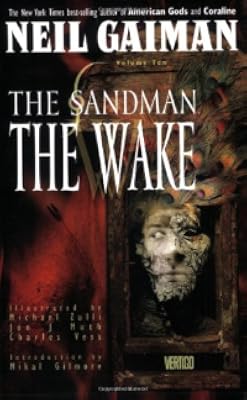
In the final Sandman tales from issues #70-75 of the acclaimed series, Morpheus makes the ultimate decision between change and death. As one journey for the Endless ends, another begins for the Lord of Dreams and his family. It's a wake in which friends and loved ones, relatives and rivals, fleeting lovers and immortal enemies gather to pay their respects and to mourn their loss.Tags
Recommendations

Member Reviews
It was a sad and deeply nostalgic first few volumes, even when there wasn't any actual recapitulations going on. It's the nature of a wake, or a waking from a dream. It was the letdown, the reminiscence, the transition that made these so powerful.
Death is not the end, and indeed, it is not the end at all, but the waking from the dream.
Pure poetry.
Of course the remaining volumes do much the same, especially the last with our very own Shakespeare, with Prospero breaking his staff. Ah yes, the strings become clear now, don't they?
Excellent and beautiful writing, all of it.
Death is not the end, and indeed, it is not the end at all, but the waking from the dream.
Pure poetry.
Of course the remaining volumes do much the same, especially the last with our very own Shakespeare, with Prospero breaking his staff. Ah yes, the strings become clear now, don't they?
Excellent and beautiful writing, all of it.
The Basics
This being the tenth volume of The Sandman, it’s hard to write about this without ultimately spoiling anyone. A lot of things have changed via the ending of the previous volume, and Gaiman is wrapping things up and saying some goodbyes.
My Thoughts
This is a weird review to write. I’ve been spending the last, several years, since I got into Gaiman, reading my way through The Sandman. As a result, this was pretty bittersweet. Dream has changed forms, and the title of this volume, The Wake, rings true. Everyone who ever knew Morpheus is showcased here, with glad and sour memories of him mixing all together in this big bowl of emotions. It was hard not to feel a pang, because this clearly wasn’t just his goodbye. It was for show more the reader, as well, and it was felt.
The last comic that rounds out the entire series really was a nice touch. It was Gaiman returning to the storyline that made The Sandman so famous in the literary crowd with a play on William Shakespeare’s The Tempest and the playwright’s life, his mission to write plays for Morpheus. In wrapping that subplot up, he manages to do the same for the series as a whole, and it makes for a lovely final farewell to Dream and his realm.
I wish I knew what else to say, but this volume was short and mostly nostalgic for someone who’s been working through the series as I have. It’s sort of a personal journey, ending something so big like this, and not something I can critique the merits of with anything other than the verbal equivalent of a sad smile. I do still have Endless Nights ahead of me. That’s a comfort.
Final Rating
5/5 show less
This being the tenth volume of The Sandman, it’s hard to write about this without ultimately spoiling anyone. A lot of things have changed via the ending of the previous volume, and Gaiman is wrapping things up and saying some goodbyes.
My Thoughts
This is a weird review to write. I’ve been spending the last, several years, since I got into Gaiman, reading my way through The Sandman. As a result, this was pretty bittersweet. Dream has changed forms, and the title of this volume, The Wake, rings true. Everyone who ever knew Morpheus is showcased here, with glad and sour memories of him mixing all together in this big bowl of emotions. It was hard not to feel a pang, because this clearly wasn’t just his goodbye. It was for show more the reader, as well, and it was felt.
The last comic that rounds out the entire series really was a nice touch. It was Gaiman returning to the storyline that made The Sandman so famous in the literary crowd with a play on William Shakespeare’s The Tempest and the playwright’s life, his mission to write plays for Morpheus. In wrapping that subplot up, he manages to do the same for the series as a whole, and it makes for a lovely final farewell to Dream and his realm.
I wish I knew what else to say, but this volume was short and mostly nostalgic for someone who’s been working through the series as I have. It’s sort of a personal journey, ending something so big like this, and not something I can critique the merits of with anything other than the verbal equivalent of a sad smile. I do still have Endless Nights ahead of me. That’s a comfort.
Final Rating
5/5 show less
I must preface that the writing below is very much stream of consciousness, and as Post-Completion as could be written. Thus, many of my thoughts have not fully digested. But nonetheless, I will document my initial reaction upon conclusion:
Well. I have completed the #1-#75 (vol 1-10) original run of The Sandman and....it is so incredibly bittersweet. One of the most wondrous bit of fiction I have ever read, and most definitely Gaiman at his finest. I know that it is not entirely the end; I have Endless Nights, Overture, Dream Hunters, and several other spin-offs--what joy! Yet I cannot bring myself to read them at the moment. I think I will sit with this story--this glorious story of stories, for the rest of the day--well, at least for show more the rest of the afternoon.
I felt such a connection to each and every character, and our guide, Morpheus, most of all. In the final issue, Shakespeare says he is reflected in each of his characters; and I believe in a recent interview for the Netflix adaptation, if I’m not mistaken, Gaiman had similar sentiments about Dream and the rest of his cast of characters. Anyways, I know I am not Writer nor Creator. But even as Reader I feel as if I was Morpheus. I was Hob and Delirium and Lucifer; I was Death and I was Rose. The depth and range of the human experience--soul-- that Gaiman revealed in this lovely feat of creation was astounding to behold. If I were perhaps more crafty--and of Greater Power--maybe I would find a way for every reread to feel like the first time; to relive its profound unfolding and its wistful closure--Oh, how I wish it! But I must persevere. The Tale will live on--in fact, it will bend and twist and change; it will branch off and evolve. But ever the phoenix, it will start anew; for don’t Great Stories always return to their original forms? show less
Well. I have completed the #1-#75 (vol 1-10) original run of The Sandman and....it is so incredibly bittersweet. One of the most wondrous bit of fiction I have ever read, and most definitely Gaiman at his finest. I know that it is not entirely the end; I have Endless Nights, Overture, Dream Hunters, and several other spin-offs--what joy! Yet I cannot bring myself to read them at the moment. I think I will sit with this story--this glorious story of stories, for the rest of the day--well, at least for show more the rest of the afternoon.
I felt such a connection to each and every character, and our guide, Morpheus, most of all. In the final issue, Shakespeare says he is reflected in each of his characters; and I believe in a recent interview for the Netflix adaptation, if I’m not mistaken, Gaiman had similar sentiments about Dream and the rest of his cast of characters. Anyways, I know I am not Writer nor Creator. But even as Reader I feel as if I was Morpheus. I was Hob and Delirium and Lucifer; I was Death and I was Rose. The depth and range of the human experience--soul-- that Gaiman revealed in this lovely feat of creation was astounding to behold. If I were perhaps more crafty--and of Greater Power--maybe I would find a way for every reread to feel like the first time; to relive its profound unfolding and its wistful closure--Oh, how I wish it! But I must persevere. The Tale will live on--in fact, it will bend and twist and change; it will branch off and evolve. But ever the phoenix, it will start anew; for don’t Great Stories always return to their original forms? show less
Well that was well done. We also got some nice closure on some things and of course a tale or two to round things out.
"The Wake" follows Dream's family as they prepare to say goodbye along with others.
I thought this was great. Gaiman does a great job and has shown us before that the Endless can often "die" and another form of them comes about. We know that the Despair we have known in this series, was not the first, and even know that Delirium has changed over time. Even so, the Endless family in their own way miss him and go about making the preparations that they need to do when one of them dies. As many of the characters we have known start to fall asleep, they find themselves in the Dreaming and say their own goodbyes to Dream.
We show more also of course get the former Daniel Hall as the new Dream. I liked this character and could have read more issues about him. We know that he is the new Dream, but seems more careful, hesitant of hurting people's feelings. He does a kind thing for Lyta. I think Dream (the former) would have hard shrugged about her.
Matthew was a stand-in for readers I think. The readers who are angry about Dream's death and refusing to deal with someone new. I loved Matthew's last words for Dream.
And of course we don't get to read Death's words for Dream, but we are left with the feelings of those that heard it.
The writing was sad, but also joyful at times, with many seeing Death not as an end, but as another thing that is going to come to pass for all of us. I did think it was pretty funny that Gaiman decides to not show us the new Dream sitting down with his family. We are left with an illustration of them all in the hall, waiting for him though.
After "The Wake" we do get other stories, we get to see Hob with a new girlfriend at a renaissance faire called "An Epilogue, Sunday Mourning". There's a story "Exiles" following a man in China who was cast out by the Emperor due to what his son has done. And then we end with William Shakespeare in "The Tempest". Dream appears in all of these stories, and the story taking place in China we get our two versions of Dream.
The flow was great though the "Exiles" story dragged a bit for me. I also had a hard time reading some of the text. I really need to get a magnifying glass.
The end came with a whimper, not with a bang. show less
"The Wake" follows Dream's family as they prepare to say goodbye along with others.
I thought this was great. Gaiman does a great job and has shown us before that the Endless can often "die" and another form of them comes about. We know that the Despair we have known in this series, was not the first, and even know that Delirium has changed over time. Even so, the Endless family in their own way miss him and go about making the preparations that they need to do when one of them dies. As many of the characters we have known start to fall asleep, they find themselves in the Dreaming and say their own goodbyes to Dream.
We show more also of course get the former Daniel Hall as the new Dream. I liked this character and could have read more issues about him. We know that he is the new Dream, but seems more careful, hesitant of hurting people's feelings. He does a kind thing for Lyta. I think Dream (the former) would have hard shrugged about her.
Matthew was a stand-in for readers I think. The readers who are angry about Dream's death and refusing to deal with someone new. I loved Matthew's last words for Dream.
A lot of sorrow. A little regret. And the memory of the coolest, strangest, most infuriating boss, friend...boss...I ever had. That's what.
And of course we don't get to read Death's words for Dream, but we are left with the feelings of those that heard it.
The writing was sad, but also joyful at times, with many seeing Death not as an end, but as another thing that is going to come to pass for all of us. I did think it was pretty funny that Gaiman decides to not show us the new Dream sitting down with his family. We are left with an illustration of them all in the hall, waiting for him though.
After "The Wake" we do get other stories, we get to see Hob with a new girlfriend at a renaissance faire called "An Epilogue, Sunday Mourning". There's a story "Exiles" following a man in China who was cast out by the Emperor due to what his son has done. And then we end with William Shakespeare in "The Tempest". Dream appears in all of these stories, and the story taking place in China we get our two versions of Dream.
The flow was great though the "Exiles" story dragged a bit for me. I also had a hard time reading some of the text. I really need to get a magnifying glass.
The end came with a whimper, not with a bang. show less
The world gathers in the Dreaming to bid farewell to a point of view.
And now we see what happens After. This is a much quieter volume than any that has come before. It's sombre and introspective, and it's not about moving forward so much as saying goodbye. That's not to say that there are no developments and no growth; Dream, in particularly, changes a great deal over the course of this story, both literally and because we learn more about his past through his former lovers' reminiscences. The focus, however, is on the farewells. We see how each of the characters is dealing with the aftermath of The Kindly Ones, and we ourselves are given a chance to say goodbye both to Morpheus and to his unusual family.
However, the wake itself isn't show more the end. It does provide us with all the closure we really need, but there are also three stories at the end that tie up a few other loose ends and give us some further insight into everything we've just read. We see Hob one final time. We return to a Soft Place in the company of a disgraced bureaucrat . And we watch Shakespeare discharge his debt to Dream.
While I enjoyed Hob's story very much, the other two weren't entirely perfect. I can take or leave the courtier in the desert, and Shakespeare's story drags a little now that I'm so familiar with it. There's one line, though, right near the end, that makes the whole thing worthwhile. It just throws Morpheus into relief. I find myself reconsidering his entire story in light of this one tiny piece of information. The story was deep to begin with, but this one line raises the water level to a whole new height.
Highly recommended, but you really should read the rest of the series first. show less
And now we see what happens After. This is a much quieter volume than any that has come before. It's sombre and introspective, and it's not about moving forward so much as saying goodbye. That's not to say that there are no developments and no growth; Dream, in particularly, changes a great deal over the course of this story, both literally and because we learn more about his past through his former lovers' reminiscences. The focus, however, is on the farewells. We see how each of the characters is dealing with the aftermath of The Kindly Ones, and we ourselves are given a chance to say goodbye both to Morpheus and to his unusual family.
However, the wake itself isn't show more the end. It does provide us with all the closure we really need, but there are also three stories at the end that tie up a few other loose ends and give us some further insight into everything we've just read. We see Hob one final time. We return to a Soft Place in the company of a disgraced bureaucrat . And we watch Shakespeare discharge his debt to Dream.
While I enjoyed Hob's story very much, the other two weren't entirely perfect. I can take or leave the courtier in the desert, and Shakespeare's story drags a little now that I'm so familiar with it. There's one line, though, right near the end, that makes the whole thing worthwhile. It just throws Morpheus into relief. I find myself reconsidering his entire story in light of this one tiny piece of information. The story was deep to begin with, but this one line raises the water level to a whole new height.
Highly recommended, but you really should read the rest of the series first. show less
The blurb on the back claims that "THE WAKE is the tenth and penultimate [sic] volume in THE SANDMAN LIBRARY." However, this is in fact the last — and it's great. I think it could've done without the last story though. Was Gaiman drawing a parallel between himself and Shakespeare there, or at least in regard to The Sandman? It just seemed a bit forced.
And so the saga concludes – and continues. The epilogue of the Sandman series deals with legacy, expectation, loss… but perhaps most of all with forgiveness and mercy. Less a story per se, and more a gentle mediation where we drift between snippets of conversation at Morpheus’ wake and follow the new Dream in the last hours before metting with his family, this is a contemplative read full of cameo appearances from the whole series. Several of the people condemned by Morpheus along the way are released, given peace. The whole thing is more lyrical and still than anything else.
But in the stories that make up the end of this voulme, we also get other ambiences. The chapter about Hob at the reneassance fair, where he come sto terms show more with the darker sides of his own past, is profound and human, but also probably the funniest in the whole series. The ambience as we return to the soft place in the Gobi desert is surreal, steep and angular (don’t you just love how the bridge comes about!), giving us another perspective again on the difference between the old and the new Dream.
Cursing in church a nit now: To me, the weakest chain in this link is the story about Shakespeare writing the Tempest. It’s Gaiman flaunting his biographical knowledge again, and even though the speculation around why Dream would want exactly that play is interesting, I guess i’m just not interested in Shakespeare’s personal life to really take this to my heart.
All in all, a more than worthy conclusion to an amazing series. I for one think it’s Gaiman’s finest. In my humble opinion, none of his prose is quite up to par with this achievement. show less
But in the stories that make up the end of this voulme, we also get other ambiences. The chapter about Hob at the reneassance fair, where he come sto terms show more with the darker sides of his own past, is profound and human, but also probably the funniest in the whole series. The ambience as we return to the soft place in the Gobi desert is surreal, steep and angular (don’t you just love how the bridge comes about!), giving us another perspective again on the difference between the old and the new Dream.
Cursing in church a nit now: To me, the weakest chain in this link is the story about Shakespeare writing the Tempest. It’s Gaiman flaunting his biographical knowledge again, and even though the speculation around why Dream would want exactly that play is interesting, I guess i’m just not interested in Shakespeare’s personal life to really take this to my heart.
All in all, a more than worthy conclusion to an amazing series. I for one think it’s Gaiman’s finest. In my humble opinion, none of his prose is quite up to par with this achievement. show less
Members
- Recently Added By
Lists

NPRs your picks: top 100 Sci-Fi/Fantasy books
297 works; 80 members

Slipstream or Interstitial Fiction
160 works; 19 members

Best Pern Books
79 works; 11 members

Books I've Read More Than Once
602 works; 49 members

Speculative Fiction to Read
706 works; 32 members

Books Read in 2012
816 works; 31 members

Books Read in 2019
4,052 works; 108 members

Books Read in 2022
5,166 works; 112 members

Books Read in 2023
5,547 works; 145 members

Overdue Podcast
806 works; 9 members
Talk Discussions
Past Discussions
The Sandman Volume 10: The Wake in Sandman (December 2013)
Author Information

Neil Gaiman was born in Portchester, England on November 10, 1960. He worked as a journalist and freelance writer for a time, before deciding to try his hand at comic books. Some of his work has appeared in publications such as Time Out, The Sunday Times, Punch, and The Observer. His first comic endeavor was the graphic novel series The Sandman. show more The series has won every major industry award including nine Will Eisner Comic Industry Awards, three Harvey Awards, and the 1991 World Fantasy Award for best short story, making it the first comic ever to win a literary award. He writes both children and adult books. His adult books include The Ocean at the End of the Lane, which won a British National Book Awards, and the Locus Award for Best Fantasy Novel for 2014; Stardust, which won the Mythopoeic Award as best novel for adults in 1999; American Gods, which won the Hugo, Nebula, Bram Stoker, SFX, and Locus awards; Anansi Boys; Trigger Warning: Short Fictions and Disturbances; and The View from the Cheap Seats: Selected Nonfiction, which is a New York Times Bestseller. His children's books include The Day I Swapped My Dad for Two Goldfish; Coraline, which won the Elizabeth Burr/Worzalla, the BSFA, the Hugo, the Nebula, and the Bram Stoker awards; The Wolves in the Walls; Odd and the Frost Giants; The Graveyard Book, which won the Newbery Award in 2009 and The Sandman: Overture which won the 2016 Hugo Awards Best Graphic Story. (Bowker Author Biography) show less
All Editions
Awards and Honors
Awards
Series

Work Relationships
Is contained in
Contains
Is an abridged version of
Has as a reference guide/companion
Has as a supplement
Common Knowledge
- Canonical title
- The Sandman: The Wake
- Alternate titles
- The Sandman Vol. 10: The Wake
- Original publication date
- 1997-02
- People/Characters
- Dream (Morpheus & Daniel); Death of the Endless; Delirium of the Endless; Desire of the Endless; Despair of the Endless; Destiny of the Endless (show all 13); Destruction of the Endless; Hippolyta Hall; Hob Gadling; Anne Hathaway (Anne Shakespeare); William Shakespeare; Thessaly; Calliope
- Important places
- The Dreaming; Stratford-upon-Avon, Warwickshire, England, UK
- Important events
- Death of Morpheus
- Dedication
- This book is for Dave McKean, as a small token of thanks.
I do not know what Sandman would have been without Dave, as our public face - creating the covers, the typefaces, the design, all that - and my hardest critic. - First words
- And it came to pass that a messenger was sent our to each member of the family.
- Quotations
- Entropy and Optimism: the twin forces that make the universe go around.
I like the way colors taste. Except I don't like crimsons...or turquoises... especially when they put their heads into their shells and won't play, and when you break their shells to let them out, they die...
Thou look'st passing fair, milady, excepst thou manglest the Queen's good English and your tits are hanging out.
And then, fighting to stay asleep, wishing it would go on forever, sure that once the dream was over, it would never come back, ... you woke up.
I am prince of stories, Will, but I have no story of my own. Nor shall I ever. - Last words
- (Click to show. Warning: May contain spoilers.)Anne Shakespeare died in 1623, at the age of sixty-seven, the same year the first "folio" collection of her late husband's plays was published.
- Original language
- English
Classifications
- Genres
- Graphic Novels & Comics, Fiction and Literature, Horror
- DDC/MDS
- 741.5973 — Arts & recreation Drawing & decorative arts Drawing Comic books, graphic novels, fotonovelas, cartoons, caricatures, comic strips History, geographic treatment, biography North American United States (General)
- LCC
- PN6728 .S26 .G35 — Language and Literature Literature (General) Literature (General) Collections of general literature Comic books, strips, etc.
- BISAC
Statistics
- Members
- 5,122
- Popularity
- 2,689
- Reviews
- 69
- Rating
- (4.45)
- Languages
- 9 — Czech, English, French, German, Italian, Polish, Spanish, Turkish, Portuguese (Portugal)
- Media
- Paper, Ebook
- ISBNs
- 36
- ASINs
- 15