On This Page
Description
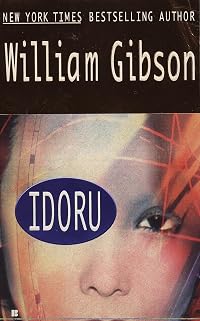
21st century Tokyo, after the millennial quake. Neon rain. Light everywhere blowing under any door you might try to close. Where the New Buildings, the largest in the world, erect themselves unaided, their slow rippling movements like the contractions of a sea-creature . . . Colin Laney is here looking for work. He is an intuitive fisher for patterns of information, the "signature" an individual creates simply by going about the business of living. But Laney knows how to sift for the show more dangerous bits. Which makes him useful-to certain people. Chia McKenzie is here on a rescue mission. She's fourteen. Her idol is the singer Rez, of the band Lo/Rez. When the Seattle chapter of the Lo/Rez fan club decided that he might be in trouble in Tokyo, they sent Chia to check it out. Rei Toei is the idoru-the beautiful, entirely virtual media star adored by all Japan. Rez has declared that he will marry her. This is the rumor that has brought Chia to Tokyo. True or not, the idoru and the powerful interests surrounding her are enough to put all their lives in danger . . . show lessTags
Recommendations






Member Reviews
Cyberpunk, and Gibson's cyberpunk in particular, is defined by a gritty, tactile, future. The brands, the computers, the specificity of object and place serve to make good cyberpunk dense and hard. This is not good cyberpunk, rather, to borrow an image from the book, it's a lacquered full-scale replica of a cyberpunk novel. All the surfaces are there; the AI love story, the post-modern technological mercenaries, simulated realities, and philosophical musings on a plastic celebrity culture, but when you lean on it, there's nothing underneath. But hey, Gibson on his worst day is still better than the Baen back catalog.
After Sprawl trilogy, Virtual Light is an odd duck—still Gibson, but focusing his camera on different things, with different aspect ratios. Idoru turns back a bit, and you feel like you’re somewhere between. Reading all of these books is a game of “what did he get right? What is still Science Fiction?” Two characters go to a love hotel to use their Internet because it will be behind a VPN, and as a reader I shrug, sure, good idea. But this book was written before any of that was a thing. Hotels with Internet, VPNs, etc. Did Gibson invent it? Does it even matter now? How does the book still work when some things are so antiquated as to be laughable, some things are just reality now, and some things are scifi? Same great writing. show more Recommended. show less
I have a vague sense that this is the most well-regarded of Gibson's post-Sprawl books, mostly because the Idoru of the title anticipates the current use of virtual pop-stars in Japan, though how well the two things map to each other I don't know. Personally, I think that it's the best novel he's ever written, and he's never written a bad one, not because of his predictive powers but because of a sideways emotional hook at the end. Gibson's smooth polished surface cool resists real depth of empathy. One tends to admire or like his characters than truly care about them. However, my enduring memory of the first time I read this was terrible concern for Chia, vulnerable, innocent, but definitely not stupid, off on her own in the big bad show more world, but I had forgotten about Zona Rosa, and for once I left a Gibson novel with, as usual, a shimmering brain, but also deeply moved.
Idoru is slightly less Elmore Leonardy than Virtual Light. What it reminded me of, more than anything, was a Richard Stark novel. Like Stark, Gibson never wastes a word, a sentence or even a chapter. Everything is precision-tooled, hand-crafted, old school workmanship. It's lean, taut, tight and fast, all the more admirable for the way it evokes a version of the future and deals with cutting edge ideas of technology and pop-culture and wraps them around the double-braided plot in a trim, elegant and concise thriller. show less
Idoru is slightly less Elmore Leonardy than Virtual Light. What it reminded me of, more than anything, was a Richard Stark novel. Like Stark, Gibson never wastes a word, a sentence or even a chapter. Everything is precision-tooled, hand-crafted, old school workmanship. It's lean, taut, tight and fast, all the more admirable for the way it evokes a version of the future and deals with cutting edge ideas of technology and pop-culture and wraps them around the double-braided plot in a trim, elegant and concise thriller. show less
End-of- 21st century Tokyo.
Three interconnected lives.
The story.
"Colin Laney is here looking for work. He is an intuitive fisher for patterns of information, the "signature" an individual creates simply by going about the business of living. But Laney knows how to sift for the dangerous bits. Which makes him useful - to certain people.
Chia McKenzie is here on a rescue mission. She's fourteen. Her idol is the singer Rez, of the band Lo/Rez. When the Seattle chapter of the Lo/Rez fan club decided that he might be in trouble in Tokyo, they sent Chia to check it out.
Rei Toei is the idoru - the beautiful, entirely virtual media star adored by all Japan. Rez has declared that he will marry her. This is the rumor that has brought Chia to show more Tokyo. True or not, the idoru and the powerful interests surrounding her are enough to put all their lives in danger."
That's basically the plot. If you think that sounds interesting you're going to love it. If that's not your kind of book, well... the book was not just about the plot. Gibson said that Colin Laney's ability to "identify nodal points" and find patterns in seemingly non-related data is similar to the author's own ability to "predict" the future based on the present. "Laney’s node-spotter function is some sort of metaphor for whatever it is that I actually do. There are bits of the literal future right here, right now, if you know how to look for them. Although I can’t tell you how; it’s a non-rational process." Now that is what I loved most about Idoru. Every single thing that happens in this book, even all the things that don't happen, that merely exist, that just are - the bits and pieces that constitute this world - are so believable. Every new element of this universe Gibson has created feels instantly real. You will exclaim, over and over "But of course the future's going to be like this!" And because the future in this book is not so distant - merely at the end of the present century - you can identify along with Gibson the first signs of what is to come in the world around you. It's not something imaginary, it's here already. This is not some figment of one brilliant/lunatic author's imagination - this must be how things will be for our children's children, right? Loved the story, loved the characters and loved the technology. There are also many popular culture references, which are always a plus in my book. (For example, the protagonist goes to a Franz Kafka-themed club, where each room is decorated according to a different story of Kafka's) Only two little warnings if you plan on reading Idoru. One: some paragraphs might be tricky at first, usually because you're not familiar with the equipment introduced or with the invented terms for the new technologies. Go back to them if necessary, don't skip things or you might miss out on important story elements. Two: a fascinating part of the book was, for me, the description of the new gadgets and apparatuses, products of the scientific progress that has been achieved in the last decades of the century; how computers will look in the near-future, what will they be able to do, how software will evolve, how the music industry or the different companies will use this technology, how advertisements will be made, etcetera. For me, being a music freak, writing for a music blog online, not being able to live without my laptop, loving to try out new software, constantly downloading the latest updates for pc programs, and appreciating pop culture references, this book combined all my interests. Which is probably why I enjoyed it so much. If you have no interest in all these things mentioned, then you're probably not going to love the book. You might appreciate the writer's talent or might enjoy the plot twists or (what look like, but don't feel like) sci-fi elements, but I don't think you're going to love it. I described it the best I could. Now just ask yourself: are you a computer/music nerd? show less
Three interconnected lives.
The story.
"Colin Laney is here looking for work. He is an intuitive fisher for patterns of information, the "signature" an individual creates simply by going about the business of living. But Laney knows how to sift for the dangerous bits. Which makes him useful - to certain people.
Chia McKenzie is here on a rescue mission. She's fourteen. Her idol is the singer Rez, of the band Lo/Rez. When the Seattle chapter of the Lo/Rez fan club decided that he might be in trouble in Tokyo, they sent Chia to check it out.
Rei Toei is the idoru - the beautiful, entirely virtual media star adored by all Japan. Rez has declared that he will marry her. This is the rumor that has brought Chia to show more Tokyo. True or not, the idoru and the powerful interests surrounding her are enough to put all their lives in danger."
That's basically the plot. If you think that sounds interesting you're going to love it. If that's not your kind of book, well... the book was not just about the plot. Gibson said that Colin Laney's ability to "identify nodal points" and find patterns in seemingly non-related data is similar to the author's own ability to "predict" the future based on the present. "Laney’s node-spotter function is some sort of metaphor for whatever it is that I actually do. There are bits of the literal future right here, right now, if you know how to look for them. Although I can’t tell you how; it’s a non-rational process." Now that is what I loved most about Idoru. Every single thing that happens in this book, even all the things that don't happen, that merely exist, that just are - the bits and pieces that constitute this world - are so believable. Every new element of this universe Gibson has created feels instantly real. You will exclaim, over and over "But of course the future's going to be like this!" And because the future in this book is not so distant - merely at the end of the present century - you can identify along with Gibson the first signs of what is to come in the world around you. It's not something imaginary, it's here already. This is not some figment of one brilliant/lunatic author's imagination - this must be how things will be for our children's children, right? Loved the story, loved the characters and loved the technology. There are also many popular culture references, which are always a plus in my book. (For example, the protagonist goes to a Franz Kafka-themed club, where each room is decorated according to a different story of Kafka's) Only two little warnings if you plan on reading Idoru. One: some paragraphs might be tricky at first, usually because you're not familiar with the equipment introduced or with the invented terms for the new technologies. Go back to them if necessary, don't skip things or you might miss out on important story elements. Two: a fascinating part of the book was, for me, the description of the new gadgets and apparatuses, products of the scientific progress that has been achieved in the last decades of the century; how computers will look in the near-future, what will they be able to do, how software will evolve, how the music industry or the different companies will use this technology, how advertisements will be made, etcetera. For me, being a music freak, writing for a music blog online, not being able to live without my laptop, loving to try out new software, constantly downloading the latest updates for pc programs, and appreciating pop culture references, this book combined all my interests. Which is probably why I enjoyed it so much. If you have no interest in all these things mentioned, then you're probably not going to love the book. You might appreciate the writer's talent or might enjoy the plot twists or (what look like, but don't feel like) sci-fi elements, but I don't think you're going to love it. I described it the best I could. Now just ask yourself: are you a computer/music nerd? show less
Alison Shires, glimpsed first as animated headshots, five months into his time at Slitscan, had been an rather ordinarily attractive girl murmuring her stats to imagined casting directors, agents, someone, anyone.
Kathy Torrance had watched his face, as he watched the screen. "'Babed out' yet, Laney? allergic reaction to cute? First symptoms are a sort of underlying irritation, a resentment, a vague but persistent feeling that you're being gotten at, taken advantage of . . . "
The teenagers in this book are totally at home on the net. Fourteen-year-old Chia is a member of the Seattle chapter of the Lo/Rez fan club, whose fellow fangirls send her to Japan to stay with a member of the Tokyo chapter and try to find out the truth behind the show more rumours that rock start Rez is planning to marry an idoru, a virtual singer who is projected as a hologram and does not actually exist. Quantitative analyst Laney, who has a talent for finding nodes of relevant information among the undifferentiated mass of data on the net, is also in Tokyo having been hired by Lo/Rez's management to investigate the same thing. Chia finds herself in big trouble before she even gets off the plane, while Laney's previous employers, the producers of a muckraking TV show about celebrities called Slitscan, haven't finished with him yet .
In this book, the equivalent of The Bridge is the The Walled City, a virtual copy of the Walled City of Kowloon, an online community set apart from the net, which you can't visit without an invitation and where the rules of the net do not apply. The nanotech buildings of the real Tokyo that are mentioned in "Virtual Light" are really quite odd and I can see why people who aren't used to them find them unnerving.
If anything I liked this even more than "Virtual Light", as it goes into more depth about the consequences of the new virtual reality technology on various groups in society, such as fangirls, unsociable teenage boys and the criminal underworld. show less
Kathy Torrance had watched his face, as he watched the screen. "'Babed out' yet, Laney? allergic reaction to cute? First symptoms are a sort of underlying irritation, a resentment, a vague but persistent feeling that you're being gotten at, taken advantage of . . . "
The teenagers in this book are totally at home on the net. Fourteen-year-old Chia is a member of the Seattle chapter of the Lo/Rez fan club, whose fellow fangirls send her to Japan to stay with a member of the Tokyo chapter and try to find out the truth behind the show more rumours that rock start Rez is planning to marry an idoru, a virtual singer who is projected as a hologram and does not actually exist. Quantitative analyst Laney, who has a talent for finding nodes of relevant information among the undifferentiated mass of data on the net, is also in Tokyo having been hired by Lo/Rez's management to investigate the same thing. Chia finds herself in big trouble before she even gets off the plane, while Laney's previous employers, the producers of a muckraking TV show about celebrities called Slitscan, haven't finished with him yet .
In this book, the equivalent of The Bridge is the The Walled City, a virtual copy of the Walled City of Kowloon, an online community set apart from the net, which you can't visit without an invitation and where the rules of the net do not apply. The nanotech buildings of the real Tokyo that are mentioned in "Virtual Light" are really quite odd and I can see why people who aren't used to them find them unnerving.
If anything I liked this even more than "Virtual Light", as it goes into more depth about the consequences of the new virtual reality technology on various groups in society, such as fangirls, unsociable teenage boys and the criminal underworld. show less
While Neuromancer begins in the Chiba City underworld, Idoru takes us to the center of digital pop culture in Tokyo, where virtual stars vie for attention from virtual communities of fans. The jacked-in keyboard cowboys of Neuromancer seem passé in a world in which aging rock star Rez of the band Lo/Rez wants to marry personality construct.
Idoru is the second volume of Gibson’s Bridge trilogy, but the connection to the bridge community is tenuous. Gibson trades in Chevette, his bike messenger heroine of Virtual Light, for Chia Pet, a 14-year-old Lo/Rez fan girl from Seattle. Chia doesn’t have Chevette’s street cool, but he has enough gumption to learn from her mistakes as she navigates the dangerous pop scene in Tokyo.
Idoru is the second volume of Gibson’s Bridge trilogy, but the connection to the bridge community is tenuous. Gibson trades in Chevette, his bike messenger heroine of Virtual Light, for Chia Pet, a 14-year-old Lo/Rez fan girl from Seattle. Chia doesn’t have Chevette’s street cool, but he has enough gumption to learn from her mistakes as she navigates the dangerous pop scene in Tokyo.
He is like Chandler or Hammett : he keeps you engaged in the story, but ultimately it’s his capacity to flesh this future world out that keeps you reading. This a bit dated in 2023 -kind of old (cyberpunk having a short shelf life) but not impossibly so.
There is this contraband smuggling character that is annoying from her first appearance till the end, so points off from me for that.
There’s a cool body guard to the rock star in the story -I could see Dave Bautista owning that role.
Overall, fun ride…
There is this contraband smuggling character that is annoying from her first appearance till the end, so points off from me for that.
There’s a cool body guard to the rock star in the story -I could see Dave Bautista owning that role.
Overall, fun ride…
Members
- Recently Added By
Published Reviews
ThingScore 75
Gibson's latest future no longer has the shocking power of a decade ago, but it is more cleverly politicised, and as fast, witty and lovingly painted as ever.
added by andyl
Lists

Best Science Fiction Novels
816 works; 430 members

sandstone78's AI Reading List
34 works; 4 members

Books tagged unread
41 works; 1 member

Unread books
1,063 works; 87 members
Author Information

82+ Works 95,912 Members
William Gibson was born on March 17, 1948 in Conway, South Carolina. He dropped out of high school and moved to Canada, where he eventually graduated from the University of British Columbia in 1977. He is the author of Mona Lisa Overdrive, The Peripheral, and Neuromancer, which won the Phillip K. Dick Award, the Hugo Award, and the Nebula Award. show more He also wrote the screenplay for the film Johnny Mnemonic. (Bowker Author Biography) show less
Some Editions
Series

Work Relationships
Is contained in
Has as a commentary on the text
Common Knowledge
- Canonical title
- Idoru
- Original title
- Idoru
- Original publication date
- 1996-09
- People/Characters
- Colin Laney; Keith Blackwell; Rei Toei; Shinya Yamazaki; Rez (member of Lo/Rez); Chia Pet McKenzie (show all 7); Lo (member of Lo/Rez)
- Important places
- Tokyo, Japan; Japan; SeaTac
- Dedication
- for
CLAIRE - First words
- After Slitscan, Laney heard about another job from Rydell, the night security man at the Chateau.
- Quotations
- "I like your computer," she said. "It looks like it was made by Indians or something."
Chia looked down at her sandbenders. Turned off the red switch. "Coral," she said. "These are turquoise. The ones that look like iv... (show all)ory are the inside of a kind of nut. Renewable."
"The rest is silver?"
"Aluminum," Chia said. "They melt old cans they dig up on the beach cast it in sand molds. These panels are micarta. That's linen with this resin in it." - Last words
- (Click to show. Warning: May contain spoilers.)And if they do, Chia thought, hearing the hiss of the Espressomatic, I'll go there.
- Original language
- English
Classifications
Statistics
- Members
- 6,235
- Popularity
- 1,994
- Reviews
- 51
- Rating
- (3.65)
- Languages
- 16 — Czech, Danish, English, Estonian, French, German, Greek, Hungarian, Italian, Japanese, Polish, Russian, Spanish, Swedish, Turkish, Portuguese (Portugal)
- Media
- Paper, Audiobook, Ebook
- ISBNs
- 48
- ASINs
- 9