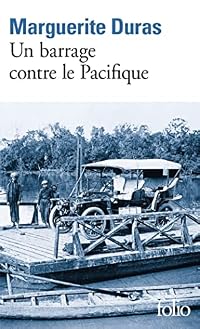
The Sea Wall
by Marguerite Duras
On This Page
Description
"A French widow uses her savings to buy land along the Vietnamese coast, but she and her two children must struggle to survive, because each year's flood tides destroy their crops"Tags
Recommendations









































Member Reviews
Un barrage contre le Pacifique (English: The Sea Wall) is essential reading for readers interested in Marguerite Duras. It is an autobiographical novel about the author's youth in French Indo-China, particularly that part of Cambodia, now part of Vietnam. The author appears in the novel as Suzanne, who lives on a concession with her Mother and older brother Joseph.
From the earliest parts of the novel, the theme of decay dominates the story. Everything around the family is old, or broken or flawed. The books opens with Joseph's purchase of an old horse. The animal is so old and weak that it dies in a matter of days. This episode is followed by episodes about the family's ancient car, and, most importantly, the concession which Mother had show more leased, which turned out to be the worst plot of land in the district, as it is inundated most of the year. Only the bungalow, where they live remains dry. Mother was assigned to this useless plot of land by corrupt officials.
The economic decay surrounding the family lowers their status, and makes them vulnerable. The son of a wealthy Chinese merchant, Mr Jo, makes use of this weakness by approaching the family, and showing his interest in the young Suzanne. He gives her expensive presents, but wants something in return:
"Demain vous aurez votre phonographe, dit M. Jo. Dès demain. Un magnifique VOIX DE SON MAÎTRE. Ma petite Suzanne chérie, ouvrez une seconde et vous aurez votre phono."
The novel dwells upon the final days of colonial power in French Indo-China, as decay and corruption spread, while the status of the white colonists erodes, and wealthy Asians, particularly the Chinese begin to manisfest themselves. In autobiographical writing, published many years after the novel, Duras declared that the nationality of Mr Jo was Chinese. Likely, "Jo" is the francophone form of the Chinese name Zhou.
Despite the air of decay in colonial society, Suzanne and Joseph find freedom and release in the lush wilderness of the forest that surrounds their concession.
The novel build up slowly, and dwells long on a limited number of motives, to bring each to full bearing upon the story. show less
From the earliest parts of the novel, the theme of decay dominates the story. Everything around the family is old, or broken or flawed. The books opens with Joseph's purchase of an old horse. The animal is so old and weak that it dies in a matter of days. This episode is followed by episodes about the family's ancient car, and, most importantly, the concession which Mother had show more leased, which turned out to be the worst plot of land in the district, as it is inundated most of the year. Only the bungalow, where they live remains dry. Mother was assigned to this useless plot of land by corrupt officials.
The economic decay surrounding the family lowers their status, and makes them vulnerable. The son of a wealthy Chinese merchant, Mr Jo, makes use of this weakness by approaching the family, and showing his interest in the young Suzanne. He gives her expensive presents, but wants something in return:
"Demain vous aurez votre phonographe, dit M. Jo. Dès demain. Un magnifique VOIX DE SON MAÎTRE. Ma petite Suzanne chérie, ouvrez une seconde et vous aurez votre phono."
The novel dwells upon the final days of colonial power in French Indo-China, as decay and corruption spread, while the status of the white colonists erodes, and wealthy Asians, particularly the Chinese begin to manisfest themselves. In autobiographical writing, published many years after the novel, Duras declared that the nationality of Mr Jo was Chinese. Likely, "Jo" is the francophone form of the Chinese name Zhou.
Despite the air of decay in colonial society, Suzanne and Joseph find freedom and release in the lush wilderness of the forest that surrounds their concession.
The novel build up slowly, and dwells long on a limited number of motives, to bring each to full bearing upon the story. show less
Beautifully written book with vivid yet bleak descriptions of French colonial Indochina- rampant corruption, abject poverty, racism, prostitution, you name it. Not a lot of action, but highly developed characters and sense of time and place.
Décidément, je n’accroche pas aux livres de Marguerite Duras. J’espérais, avec ce livre, trouver quelque chose de différent, de plus accessible. C’est vrai que le sujet est intéressant, et que, même si je savais bien que la colonisation n’avait pas été une histoire d’ascension sociale mirifique pour tous, surtout dans les zones de colonisation de masse, je n’imaginais pas une situation aussi noire, aussi désespérée, aussi irrémédiable. Cela fait de ce roman un témoignage particulièrement intéressant, c’est un point de vue, une expérience de la colonisation qui a déserté notre discours historiographique et nos manuels d’histoire, ce qui nous laisse avec l’éternelle vision réductrice de la show more colonisation (à l’image de beaucoup d’autres épisodes historiques, qui subissent un traitement similaire), qui empêche de comprendre car elle masque sa complexité.
Mais cette réalité historique est agrémentée d’une histoire qui au mieux me laisse assez indifférente, au pire me met mal à l’aise. La situation de la mère est certes difficile et on comprend son aigreur ; les enfants qui ne se voient pas d’avenir ne sont pas mieux lotis. Mais ramener toute cette difficulté à vivre à des histoires de mariages arrangés et de fille offerte au plus offrant, je n’ai pas réussi à m’en accommoder. Cela finit par trop empiéter sur le contexte, et à le parasiter entièrement, rendant au final la lecture de ce livre indigeste.
Encore une fois, j’ai la sensation d’être passée à côté d’une œuvre. J’entrevois ce qui peut en faire le succès critique, mais je n’arrive pas à être touchée, à ressentir l’émotion voulue, et je reste en marge. Tant pis pour moi. show less
Mais cette réalité historique est agrémentée d’une histoire qui au mieux me laisse assez indifférente, au pire me met mal à l’aise. La situation de la mère est certes difficile et on comprend son aigreur ; les enfants qui ne se voient pas d’avenir ne sont pas mieux lotis. Mais ramener toute cette difficulté à vivre à des histoires de mariages arrangés et de fille offerte au plus offrant, je n’ai pas réussi à m’en accommoder. Cela finit par trop empiéter sur le contexte, et à le parasiter entièrement, rendant au final la lecture de ce livre indigeste.
Encore une fois, j’ai la sensation d’être passée à côté d’une œuvre. J’entrevois ce qui peut en faire le succès critique, mais je n’arrive pas à être touchée, à ressentir l’émotion voulue, et je reste en marge. Tant pis pour moi. show less
Jan 4, 2016French
Un superbe roman qui dépeint la réalité d'une famille de pauvres paysans improvisés, attirés puis déçus par l'aventure coloniale. Marguerite DURAS écrit sans filtre, sans ornement pour plonger ses lecteurs dans le quotidien, les difficultés, les espoirs, les illusions de Joseph, Suzanne et leur mère. Cette pauvre mère qui s'enlise dans la folie est particulièrement touchante, notamment par sa volonté farouche de lutter contre la Nature et les Hommes, et aussi par son impuissance à retenir ses enfants qui ne rêvent que d'une vie meilleure.
Aug 28, 2014French
Relata la vida en Indochina de la peculiar familia formada por Suzanne, una seductora adolescente, su madre y su hermano Joseph. La madre, una mujer abatida por la vida y que ha intentado en vano cultivar una concesión que todos los años es invadida por el Pacífico, sólo tiene un deseo: casar a Suzanne con Jo, el poco atractivo hijo de un acaudalado especulador de terrenos: un joven feo pero rico, tan rico como para permitir a la madre reconstruir los diques y saldar sus numerosas deudas.
May 24, 2010Spanish
> Babelio : https://www.babelio.com/livres/Duras-Un-barrage-contre-le-Pacifique/8367
> FNAC, (Frédérique, le 10/2/2023) : Les 20 livres à lire dans sa vie
> D'une facture romanesque relativement classique, l'ancrage des personnages de ce roman dans le réel préfigure cependant cette "écriture de l'indicible" qui marquera plus tard la singularité de l'écrivain. Un barrage contre le Pacifique inaugure une série de romans d'inspiration autobiographique ayant pour cadre le Vietnam. Le récit s'articule autour du personnage de la mère, une femme qui, dans sa lutte contre la misère, brave à s'en rendre folle les obstacles infranchissables qui se présentent à elle. À l'image du titre, les ambitions, aussi nobles soient-elles, ne show more peuvent être que démesurées et toute tentative s'avère inéluctablement vouée à l'échec. Lorsque tout finit par être rongé, sali, violé, c'est aller au-delà de la souffrance, au-delà du pathétique. Car la douleur est sans fond, la perte est définitive, aucune trace de compassion dans ce roman de l'irrémédiable. Une oeuvre qui n'émeut pas mais qui bouleverse, parce qu'elle exprime le réel à l'état brut dans la trivialité de la concupiscence, dans la perte de toute émotion, dans l'acharnement à vouloir survivre malgré les autres.
—Lenaïc Gravis et Jocelyn Blériot, Amazon.fr show less
> FNAC, (Frédérique, le 10/2/2023) : Les 20 livres à lire dans sa vie
> D'une facture romanesque relativement classique, l'ancrage des personnages de ce roman dans le réel préfigure cependant cette "écriture de l'indicible" qui marquera plus tard la singularité de l'écrivain. Un barrage contre le Pacifique inaugure une série de romans d'inspiration autobiographique ayant pour cadre le Vietnam. Le récit s'articule autour du personnage de la mère, une femme qui, dans sa lutte contre la misère, brave à s'en rendre folle les obstacles infranchissables qui se présentent à elle. À l'image du titre, les ambitions, aussi nobles soient-elles, ne show more peuvent être que démesurées et toute tentative s'avère inéluctablement vouée à l'échec. Lorsque tout finit par être rongé, sali, violé, c'est aller au-delà de la souffrance, au-delà du pathétique. Car la douleur est sans fond, la perte est définitive, aucune trace de compassion dans ce roman de l'irrémédiable. Une oeuvre qui n'émeut pas mais qui bouleverse, parce qu'elle exprime le réel à l'état brut dans la trivialité de la concupiscence, dans la perte de toute émotion, dans l'acharnement à vouloir survivre malgré les autres.
—Lenaïc Gravis et Jocelyn Blériot, Amazon.fr show less
Jan 28, 2019 (Edited)French
Ratings
Members
- Recently Added By
Lists

1950s
340 works; 22 members

Les 50 meilleurs livres de langue française de 1900 à aujourd’hui
69 works; 2 members

Take Four Books
131 works; 1 member
Talk Discussions
Past Discussions
Duras: The Sea Wall in Author Theme Reads (January 2014)
1914: Duras - The Sea Wall in Literary Centennials (January 2014)
Author Information

221+ Works 18,751 Members
Marguerite Duras was born in Gia-Dinh, Indochina on April 4, 1914. After attending school in Saigon, she moved to Paris, France to study law and political science. After graduation, she worked as a secretary in the French Ministry of the Colonies until 1941. During World War II, she joined the Resistance and published her first books. After the show more liberation, she became a member of the French Communist Party, and though she later resigned, she always described herself as a Marxist. Her first book, Les Impudents, was published in 1943. During her lifetime, she wrote more than 70 novels, plays, screenplays and adaptations. Her novels include The Sea Wall, The Lover, The Lover from Northern China, The War, and That's All. In 1959, she wrote her first film scenario, Hiroshima, Mon Amour, and has since been involved in a number of other films, including India Song, Baxter, Vera Baxter, Le Camion (The Truck), and The Lover. She died on March 4, 1996 at the age of 81. (Bowker Author Biography) show less
Some Editions
Awards and Honors
Series
Belongs to Publisher Series
Work Relationships
Has as a student's study guide
Common Knowledge
- Canonical title
- The Sea Wall
- Original title
- Un barrage contre le Pacifique
- Original publication date
- 1950
- People/Characters
- Suzanne; La mere; Joseph
- Important places
- French Indochina
- Dedication*
- Für Robert
- First words*
- Alle drei hatten den Kauf des Pferdes für eine gute Idee gehalten.
- Last words*
- (Click to show. Warning: May contain spoilers.)Man hörte sie in den Hütten leise lärmen.
- Original language*
- Français
*Some information comes from Common Knowledge in other languages. Click "Edit" for more information.
Classifications
- Genres
- General Fiction, Fiction and Literature
- DDC/MDS
- 843.912 — Literature & rhetoric French & related literatures French fiction 1900- 20th Century 1900-1945
- LCC
- PQ2607 .U8245 .B313 — Language and Literature French, Italian, Spanish and Portuguese literatures French literature Modern literature 1900-1960
- BISAC
Statistics
- Members
- 638
- Popularity
- 45,153
- Reviews
- 6
- Rating
- (3.89)
- Languages
- 16 — Catalan, Danish, Dutch, English, Estonian, French, German, Hebrew, Italian, Japanese, Norwegian (Bokmål), Portuguese, Slovenian, Spanish, Swedish, Turkish
- Media
- Paper, Ebook
- ISBNs
- 37
- ASINs
- 7