
On This Page
Description
For over 40 years, Carlos Castaneda's The Teachings of Don Juan has inspired audiences to expand their world view beyond traditional Western forms. Originally published as Castaneda's master's thesis in anthropology, Teachings documents Castaneda's supposed apprenticeship with a Yaqui Indian sorcerer, don Juan Matus. Dividing the work into two sections, Castaneda begins by describing don Juan's philosophies, then continues with his own reflections.Tags
Recommendations

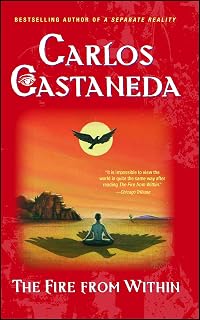










Member Recommendations

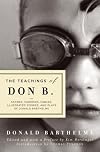
The Teachings of Don B.: Satires, Parodies, Fables, Illustrated Stories, and Plays of Donald Barthelme by Donald Barthelme
bertilak "The Teachings of Don B.: A Yankee Way of Knowledge"
Member Reviews
If I were rating this book based on Part One alone, I'd probably give it 3-4 stars. The narrative about Castaneda's experience with Don Juan is interesting, well-written, and insightful. The prose is readable, the imagery is vivid, and the experiences seem real.
I think a lot of critics have questioned this book's value as an anthropological text, the author's lack of objectivity, whether any of this is "true" and so on, so I didn't expect much in that regard. Even with these lowered expectations, I was disappointed by the analysis in Part Two and gave up reading it.
Castaneda generalizes his personal experience with Don Juan to define an archetypal "man of knowledge" and attempts to deconstruct this system of understanding and living in show more the world and becoming a fully developed human being. Whether Castaneda's analysis is correct, I didn't buy it and stopped reading. I guess it may be possible to verify these observations for one's self, but I don't know many people in the position to find an appropriate teacher. And wanton, unsupervised use of Datura, at least, is a decidedly bad idea. show less
I think a lot of critics have questioned this book's value as an anthropological text, the author's lack of objectivity, whether any of this is "true" and so on, so I didn't expect much in that regard. Even with these lowered expectations, I was disappointed by the analysis in Part Two and gave up reading it.
Castaneda generalizes his personal experience with Don Juan to define an archetypal "man of knowledge" and attempts to deconstruct this system of understanding and living in show more the world and becoming a fully developed human being. Whether Castaneda's analysis is correct, I didn't buy it and stopped reading. I guess it may be possible to verify these observations for one's self, but I don't know many people in the position to find an appropriate teacher. And wanton, unsupervised use of Datura, at least, is a decidedly bad idea. show less
Well, I’ve finally found the combination of dope and spirituality I’ve been looking for in works such as The Joyous Cosmology by Alan Watts, The Doors of Perception and Heaven and Hell by Aldous Huxley, and why I perused the works (I inherited a full set of books from my late uncle) of Thomas Merton (I found him distasteful in that he hid behind God on every other page and esp. after reading his poem God of Death putting his Islamophobia plain). I do have Confessions of an English Opium-Eater by Thomas De Quincy still sitting on my reading table. However, I have been universally disappointed by all the previously mentioned works, and as mentioned in the Teachings Don Juan, they failed in that they forgot what they saw and heard show more while under the influence thus failing to achieve knowledge of the trip. Now, I’m not a big dope fiend but I do occasionally indulge (legally) though I rarely experience out of the ordinary for the commonalities of the experience(s). As for the truthfulness or accuracy of the drug trips in this book, well, there may be room for doubt.
Some of my favorite quotes dealing with the trippy part are:
“The difficulty of the ingredients,” he proceeded suddenly, “makes the smoke mixture one of the most dangerous substances I know. No one can prepare it without being coached. It is deadly poisonous to anyone except the smoke’s protégé! Pipe and mixture ought to be treated with intimate care. And the man attempting to learn must prepare himself by leading a hard, quiet life. Its effects are so dreadful that only a very strong man can stand the smallest puff. Everything is terrifying and confusing at the outset, but every new puff makes things more precise.” [pg.69]
And:
[…] I told him I could see in the dark.
He stared at me for a long time without saying a word; if he did speak, perhaps I did not hear him, for I was concentrating on my new, unique ability to see in the dark. I could distinguish the very minute pebbles in the sand. At moments everything was so clear it seemed to be early morning, or dusk. Then it would get dark; then it would clear again. Soon I realized that the brightness corresponded to my heart’s diastole, and the darkness to its systole. The world changed from bright to dark to bright again with every beat of my heart.
I was absorbed in this discovery when the same strange sound that I had heard before became audible again. My muscles stiffened. [pg.98]
Lastly:
The sound of my voice did not project out, but hit the roof of my palate, bounced back in to [sic] my throat, and echoed to and fro between them. The echo was soft and musical, and seemed to have wings that flapped inside my throat. Its touch soothed me. I followed its back-and-forth movements until it had vanished. [pg.96]
This work purports (more on that later) to be a “true” record in the form of a young anthropologist student’s (Carlos Casteneda’s) diary documenting his time spent learning as an acolyte of a Yaqui (a Native American ethnic group in Mexico where this story takes place) shaman named Don Juan in the text. For the most part, this book is very readable, and the narrative moves at a good pace. This is not a boring book granted most of the action is contained in the shamanistic drug trips of its protagonist culminating in a “battle” with a disguised witch. I enjoyed the first section of the book.
The second section, however, is not really good reading, it’s an analysis of the previous text and the logical structuring of the basis of Don Juan’s teachings. It is somewhat interesting but can be skipped as the tone of this last part of the book is whiplash from vibrant descriptive content to a very dry scholarly and analytical blandness. Don’t get me wrong, it does help to clarify some aspects of the previous section, but it does detract a little from the reading experience of the first three-fourths of the book.
Are there tidbits of wisdom in this book? A few, I guess.
“Is the smoke the best possible ally for everybody?”
“It’s not the same for everybody. Many fear it and won’t touch it, or even get close to it. The smoke is like everything else; it wasn’t made for all of us.” [pg.68]
There’s even a little advice for the majority of people on the internet:
“No! I’m never angry at anybody! No human being can do anything important enough for that. You get angry at people when you feel that their acts are important. I don’t feel that way any longer.” [pg.72]
I might share a little personal sentiment here in the context of the net.
And then hilariously (and smartly):
I followed him. He walked around the house, making a complete clockwise circle. He stopped at the porch and circled the house again, this time going counterclockwise and again returning to the porch. He stood motionless for some time, and then sat down.
I was conditioned to believe that everything he did had some meaning. I was wondering about the significance of circling the house when he said, “Hey! I have forgotten where I put it.” [pg.77]
Would I recommend this book? Well, first, this book is considered entirely fictional for good reason which I was aware of when I dove in. However, I still found the main text of the book (the first section) compelling and interesting. This is despite the book being nowhere near factual when it comes to anything concerning the Yaqui people of Mexico. The shamanistic beliefs represented in the narrative are (admittedly by the author) based on Toltec shamanic beliefs (according to Wikipedia). There are also several other books published that refute the anthropological truth of the work.
So, would I still recommend this book? Yes, I liked it and taking this as a work of fiction does lessen the impact a little, but it was a fun read, at least to me. However, remember that datura is definitely toxic, and knowing that this book is entirely fiction, DO NOT take this book as a guide to consuming such a dangerous plant. Otherwise, this book is interesting as a hero’s journey of a young, educated skeptic into the “non-ordinary reality” of sorcery via the ritual consumption of peyote buttons, hallucinogenic mushrooms, and bits of the deadly datura plant.
“The desire to learn is not ambition,” he said. “It is our lot as men to want to know, but to seek the devil’s weed is to bid for power, and that is ambition, because you are not bidding to know. Don’t let the devil’s weed blind you. She has hooked you already. She entices men and gives them a sense of power; she makes them feel they can do things that no ordinary man can. But that is her trap. And, the next thing, the path without a heart will turn against men and destroy them. It does not take much to die, and to seek death is to seek nothing.” [pg.161] show less
Some of my favorite quotes dealing with the trippy part are:
“The difficulty of the ingredients,” he proceeded suddenly, “makes the smoke mixture one of the most dangerous substances I know. No one can prepare it without being coached. It is deadly poisonous to anyone except the smoke’s protégé! Pipe and mixture ought to be treated with intimate care. And the man attempting to learn must prepare himself by leading a hard, quiet life. Its effects are so dreadful that only a very strong man can stand the smallest puff. Everything is terrifying and confusing at the outset, but every new puff makes things more precise.” [pg.69]
And:
[…] I told him I could see in the dark.
He stared at me for a long time without saying a word; if he did speak, perhaps I did not hear him, for I was concentrating on my new, unique ability to see in the dark. I could distinguish the very minute pebbles in the sand. At moments everything was so clear it seemed to be early morning, or dusk. Then it would get dark; then it would clear again. Soon I realized that the brightness corresponded to my heart’s diastole, and the darkness to its systole. The world changed from bright to dark to bright again with every beat of my heart.
I was absorbed in this discovery when the same strange sound that I had heard before became audible again. My muscles stiffened. [pg.98]
Lastly:
The sound of my voice did not project out, but hit the roof of my palate, bounced back in to [sic] my throat, and echoed to and fro between them. The echo was soft and musical, and seemed to have wings that flapped inside my throat. Its touch soothed me. I followed its back-and-forth movements until it had vanished. [pg.96]
This work purports (more on that later) to be a “true” record in the form of a young anthropologist student’s (Carlos Casteneda’s) diary documenting his time spent learning as an acolyte of a Yaqui (a Native American ethnic group in Mexico where this story takes place) shaman named Don Juan in the text. For the most part, this book is very readable, and the narrative moves at a good pace. This is not a boring book granted most of the action is contained in the shamanistic drug trips of its protagonist culminating in a “battle” with a disguised witch. I enjoyed the first section of the book.
The second section, however, is not really good reading, it’s an analysis of the previous text and the logical structuring of the basis of Don Juan’s teachings. It is somewhat interesting but can be skipped as the tone of this last part of the book is whiplash from vibrant descriptive content to a very dry scholarly and analytical blandness. Don’t get me wrong, it does help to clarify some aspects of the previous section, but it does detract a little from the reading experience of the first three-fourths of the book.
Are there tidbits of wisdom in this book? A few, I guess.
“Is the smoke the best possible ally for everybody?”
“It’s not the same for everybody. Many fear it and won’t touch it, or even get close to it. The smoke is like everything else; it wasn’t made for all of us.” [pg.68]
There’s even a little advice for the majority of people on the internet:
“No! I’m never angry at anybody! No human being can do anything important enough for that. You get angry at people when you feel that their acts are important. I don’t feel that way any longer.” [pg.72]
I might share a little personal sentiment here in the context of the net.
And then hilariously (and smartly):
I followed him. He walked around the house, making a complete clockwise circle. He stopped at the porch and circled the house again, this time going counterclockwise and again returning to the porch. He stood motionless for some time, and then sat down.
I was conditioned to believe that everything he did had some meaning. I was wondering about the significance of circling the house when he said, “Hey! I have forgotten where I put it.” [pg.77]
Would I recommend this book? Well, first, this book is considered entirely fictional for good reason which I was aware of when I dove in. However, I still found the main text of the book (the first section) compelling and interesting. This is despite the book being nowhere near factual when it comes to anything concerning the Yaqui people of Mexico. The shamanistic beliefs represented in the narrative are (admittedly by the author) based on Toltec shamanic beliefs (according to Wikipedia). There are also several other books published that refute the anthropological truth of the work.
So, would I still recommend this book? Yes, I liked it and taking this as a work of fiction does lessen the impact a little, but it was a fun read, at least to me. However, remember that datura is definitely toxic, and knowing that this book is entirely fiction, DO NOT take this book as a guide to consuming such a dangerous plant. Otherwise, this book is interesting as a hero’s journey of a young, educated skeptic into the “non-ordinary reality” of sorcery via the ritual consumption of peyote buttons, hallucinogenic mushrooms, and bits of the deadly datura plant.
“The desire to learn is not ambition,” he said. “It is our lot as men to want to know, but to seek the devil’s weed is to bid for power, and that is ambition, because you are not bidding to know. Don’t let the devil’s weed blind you. She has hooked you already. She entices men and gives them a sense of power; she makes them feel they can do things that no ordinary man can. But that is her trap. And, the next thing, the path without a heart will turn against men and destroy them. It does not take much to die, and to seek death is to seek nothing.” [pg.161] show less
Unlike many others I found nothing of value in this book. For a long time, I felt as if I missed something, since so many people enjoy it. However, after critical consideration I can't help but concluding that this book may offer some reflections on life, but not a system that is capable of finding truth. Don Juan' s system is not open for criticism, judging fRom his incapability to answer some justified answers. It is not a system which is in constant reflection about its core assumptions and methods. It is a system that is only to be understood, when accepted and when played by its rules, and therefore of no objective value when looking for tRuth. The same could be said for science, but the difference is that science should by show more definition be open to change and inclarity and unreasonable assumptions are not tolerated. Don Juan has a system, there is some sort of logic in it, but it is a flawed system because it is based on myths without explaining how these myths work, and without systematically testing if there are other explanations for the experienced special phenomenona. This is the main prolem with Don Juan, not so much with the writer (who seems to be able to remain some sense of objectivity), but because this book is about Don Juans system it is also a problem of the topic of the book. In the end I was just frustrated and annoyed with his person and I was happy when I finished reading. This book might be inspiring for some, but not for me. show less
Ho letto Castaneda tanti anni fa, come parte delle classiche esperienze adolescenziali dell'epoca in cui ero adolescente, e avrei considerata chiusa la pratica se non fosse stato per il gruppo di lettura che coordino per conto della biblioteca del mio paese. Insomma che una sera una della partecipanti, a cui toccava l'onere di scegliere il prossimo libro da leggere, disse che non aveva in mente un titolo, ma un argomento, vale a dire certe forme di spiritualità alternative, come quelle di cui parla Coelho oppure Redfield. Dato che non ci sarebbe nessuno dei due senza Castaneda, ne ho proposto la lettura, in particolare per il libro in questione, che presenta il primo approccio dell'antropologo con lo sciamanesimo e la spiritualità show more alternativa.
Il libro ha due grossi punti deboli, uno relativo alla scrittura, e l'altro relativo al contenuto.
La scrittura risente del fatto che il libro nasce come resoconto di una esperienza scientifica, ed è in pratica il materiale per la tesi in antropologia di Castaneda, e ciò rende ostica la lettura, a causa delle categorizzazioni e dello stile per appunti.
L'altro limite è relativo al contenuto. Castaneda è stato apprendista dello sciamano don Juan, che ha intrapreso con lui il percorso, mediato dall'uso di piante allucinogene, per trasformarlo in un uomo di sapere. Ma Castaneda ha rinunciato all'apprendistato, fermato da quello che don Juan gli aveva descritto come il primo nemico dell'uomo di sapere, cioè la paura. Pertanto la sua esperienza è incompleta e lacunosa, e, in gran parte non compresa. E Castaneda descrive questa sua esperienza incompleta, e questa ha la pretesa di essere la base di una comprensione della spiritualità sciamanica. La sensazione però leggendo gli insegnamenti di don Juan, è che questa conoscenza sia riservata, cioè che l'iniziato non ne debba parlare, e pertanto Castaneda si dimostra, proprio perché ne parla, un adepto incompleto, non titolato a descrivere di questa esperienza, e questo inficia tutta la costruzione che si è fatta su tutto ciò. show less
Il libro ha due grossi punti deboli, uno relativo alla scrittura, e l'altro relativo al contenuto.
La scrittura risente del fatto che il libro nasce come resoconto di una esperienza scientifica, ed è in pratica il materiale per la tesi in antropologia di Castaneda, e ciò rende ostica la lettura, a causa delle categorizzazioni e dello stile per appunti.
L'altro limite è relativo al contenuto. Castaneda è stato apprendista dello sciamano don Juan, che ha intrapreso con lui il percorso, mediato dall'uso di piante allucinogene, per trasformarlo in un uomo di sapere. Ma Castaneda ha rinunciato all'apprendistato, fermato da quello che don Juan gli aveva descritto come il primo nemico dell'uomo di sapere, cioè la paura. Pertanto la sua esperienza è incompleta e lacunosa, e, in gran parte non compresa. E Castaneda descrive questa sua esperienza incompleta, e questa ha la pretesa di essere la base di una comprensione della spiritualità sciamanica. La sensazione però leggendo gli insegnamenti di don Juan, è che questa conoscenza sia riservata, cioè che l'iniziato non ne debba parlare, e pertanto Castaneda si dimostra, proprio perché ne parla, un adepto incompleto, non titolato a descrivere di questa esperienza, e questo inficia tutta la costruzione che si è fatta su tutto ciò. show less
Semi-abandoned. (Read in earnest for 160 pages, skimmed the last 80 pages)
Forward
I don’t normally take time to explain why I read the books I do, but this is a special case. This book, and this author, have serious credibility problems. You can Google all the gory details, but suffice it to say that on original publication (1968), this book was passed off as the nonfictional notes of UCLA Anthropology graduate student Carlos Castaneda. It supposedly details his studies under a Yaqui Indian shaman named Don Juan (seriously?) from 1960 to 1966. Since then, Castaneda has admitted that no Don Juan really exists; he is a literary amalgam of assorted people Castaneda supposedly did meet. Some other elements in the book have also been show more discredited. Peyote doesn't grow where Castaneda says it does, and certain beliefs and practices he attributes to the Yaqui Indians of Mexico are not authentic.
So why read this book? Well, in the early 1970's this book had a minor cult following, and one of its enthusiasts was a friend of my parents, who told me on several occasions when I was a teenager how great it is, and how I should read it. I spotted this copy in a bookstore about ten years ago, and thought I might see what all the fuss was. Knowing now of its dubious veracity, I still wanted to read it, out of curiosity.
If we're going to do this thing, let’s try to get something out of it
The easy route would be to make fun of the book for all its New Agey hoopla. I could rip on it in a humorous way that would get a bunch of votes, but that seems a bit pointless. Instead, I wanted to examine it to see what had captivated so many readers.
The most profound thing I found here was Don Juan explaining that there were four challenges a mind must overcome to become "learned":
1- overcome fear
2- overcome certainty
3- avoid the seduction of power
4- maintain intellectual curiosity
I like that second one "overcome certainty"; that's not half bad. George W. Bush could have used a bit of that. Are these the only four things? Could there be a better item on the list? Maybe, but these are good ideas in principle. All the profound-sounding hoodoo in the delivery was a bit overdone, but every successful religion has an element of showmanship, doesn't it?
So what else did this book have?
Not much. Most of it is accounts of Castaneda and Don Juan picking around in the Sonoran desert for hallucinogenic plants (some of the botanical information herein is inaccurate, I’m told) …cutting them up, drying them, preparing them for ingestion, and recording the ensuing hallucinations. A lot of this could have been edited out, unless of course the book is intended as a guide to help readers go out and do the same.
Three hallucinogenics are experimented with: Peyote, Jimson Weed, and "The Smoke" (not sure what drug is being referred to here, but it is a hallucinogenic indigenous to the Sonoran Desert, if that helps)
Mescalito (Peyote) Jon Juan anthropomorphizes Peyote, describing him as a semi-transparent dog (that's “caninomorphizing”, isn’t it?) named Mescalito, who is also a teacher. Mescalito teaches by showing you things... I can follow that, to a certain extent. Castaneda dreams the dog drinks water, and he can see the water being absorbed into the dog's blood and coursing through its body. Later, Castaneda and the dog telepathically manipulate each other's limbs to put on a sort of interactive puppet show. When Castaneda wakes up, Don Juan tells him that when he was high, he pissed on the neighbor's dog. It’s an odd mix of mysticism and frat boy antics.
"The Devil's Weed" (Jimson Weed) is anthropomorphized to a woman, who makes the user feel powerful and ambitious, and who also makes Castaneda literally see red... as in his vision is tinted red. I don't know about all that. There were no freaky hallucinations here, so I lost interest.
"The Smoke" Whatever drug that was, Castaneda had a bad trip on it. He describes feeling "outside of [his] body", and later Don Juan tells him the "The Smoke" can be used to turn oneself into a crow.
Given the credibility problems above, I wonder whether the hallucinations in this book were real hallucinations or made-up hallucinations. That’s a weird distinction to be thinking about isn’t it? …Because hallucinations come from one's mind, and making things up comes from one's mind too, so it seems anything you could make up, you could hallucinate... so is it really possible to create a "counterfeit" hallucination? The only difference is that the “real” hallucination requires mind-altering drugs, and the “fake” hallucination is the volitional product of a sober mind… which is weird, because those tend to be the exact opposite definitions we would apply to anything else (i.e. hallucinated things are fake, and things you have to work for are real). Way out, man.
What’s it all mean?
Getting back to my original mission with this book, it came out in 1968 when a lot of young people in the Western industrialized world were just starting to experiment with psychadelic drugs. For as fun and novel as this might have been, I can imagine there would also be some apprehension attached to it as well… you’re messing with your body, you may be doing something illegal, the drugs aren’t regulated or certified for safety, and they don’t come with any instructions except the word-of-mouth direction of one’s peers. This book seems to provide an authoritative-sounding wise old mentor in Don Juan, who guides Castaneda, and by extension the reader, through the experimentation, all the way providing assurances that these drugs have been time-tested in the native culture of the Yaqui. I think that must have been comforting to some... however ill-founded that comfort actually was.
I don’t know how much of the writing reflects true, actual Yaqui Indian culture. To the extent that it does, that is interesting too. It doesn’t seem like Castaneda is really trying to teach the reader anything along those lines, but something may be learned by indirect exposure. Like a lot of unfamiliar religions, it seems sort of mystical to me. That is to say that even though it might hide a complex belief system with internal logic and coherence, I am too unversed in it to appreciate those things. All I see are questions answered with questions, seemingly-contradictory statements, and vague parables with no obvious point. For people well-versed in that belief system, it may provide comfort and a cosmology which helps them make sense of life, but I’m too outside of it to know. Unfortunately, it seems like a certain segment of modern Western industrialized society grooves on superficially-grasped foreign philosophies, which it makes its own in the form of mysticism and “New Age” beliefs. That’s a little embarrassing to me, because it seems to reject traditional Western religions in favor of something just as eager to take your money and keep you ignorant, but with none of the pageantry, tradition, and sense of cultural belonging that the Old School religions offer. If “New Age” stuff floats your boat, I apologize, but to me it seems like a [n even] worse deal than the traditional religions.
By far my favorite part of this book:
After being away for two months, Carlos returns to Don Juan’s home, to find him in a cast with a broken foot. “How did you break your foot?”, he asks, and Don Juan explains that he had used ancient secret medicines to turn himself into a crow. While sitting on a branch, he had suddenly been attacked by a blackbird… but it wasn’t just any blackbird; a woman who lived in the area was a witch, and she had turned herself into the blackbird. With his foot broken as a crow, he found his regular foot broken, when he turned back into a man. By attacking him when they were both in animal form, Don Juan explained, this witch had started a mortal feud which had to end in one of their deaths; he had to kill her now. That was what he had been contemplating when Carlos showed up.
“How will you kill her?”, Carlos asked, “with witchcraft?”
“Don’t be an idiot”, Don Juan replied. show less
Forward
I don’t normally take time to explain why I read the books I do, but this is a special case. This book, and this author, have serious credibility problems. You can Google all the gory details, but suffice it to say that on original publication (1968), this book was passed off as the nonfictional notes of UCLA Anthropology graduate student Carlos Castaneda. It supposedly details his studies under a Yaqui Indian shaman named Don Juan (seriously?) from 1960 to 1966. Since then, Castaneda has admitted that no Don Juan really exists; he is a literary amalgam of assorted people Castaneda supposedly did meet. Some other elements in the book have also been show more discredited. Peyote doesn't grow where Castaneda says it does, and certain beliefs and practices he attributes to the Yaqui Indians of Mexico are not authentic.
So why read this book? Well, in the early 1970's this book had a minor cult following, and one of its enthusiasts was a friend of my parents, who told me on several occasions when I was a teenager how great it is, and how I should read it. I spotted this copy in a bookstore about ten years ago, and thought I might see what all the fuss was. Knowing now of its dubious veracity, I still wanted to read it, out of curiosity.
If we're going to do this thing, let’s try to get something out of it
The easy route would be to make fun of the book for all its New Agey hoopla. I could rip on it in a humorous way that would get a bunch of votes, but that seems a bit pointless. Instead, I wanted to examine it to see what had captivated so many readers.
The most profound thing I found here was Don Juan explaining that there were four challenges a mind must overcome to become "learned":
1- overcome fear
2- overcome certainty
3- avoid the seduction of power
4- maintain intellectual curiosity
I like that second one "overcome certainty"; that's not half bad. George W. Bush could have used a bit of that. Are these the only four things? Could there be a better item on the list? Maybe, but these are good ideas in principle. All the profound-sounding hoodoo in the delivery was a bit overdone, but every successful religion has an element of showmanship, doesn't it?
So what else did this book have?
Not much. Most of it is accounts of Castaneda and Don Juan picking around in the Sonoran desert for hallucinogenic plants (some of the botanical information herein is inaccurate, I’m told) …cutting them up, drying them, preparing them for ingestion, and recording the ensuing hallucinations. A lot of this could have been edited out, unless of course the book is intended as a guide to help readers go out and do the same.
Three hallucinogenics are experimented with: Peyote, Jimson Weed, and "The Smoke" (not sure what drug is being referred to here, but it is a hallucinogenic indigenous to the Sonoran Desert, if that helps)
Mescalito (Peyote) Jon Juan anthropomorphizes Peyote, describing him as a semi-transparent dog (that's “caninomorphizing”, isn’t it?) named Mescalito, who is also a teacher. Mescalito teaches by showing you things... I can follow that, to a certain extent. Castaneda dreams the dog drinks water, and he can see the water being absorbed into the dog's blood and coursing through its body. Later, Castaneda and the dog telepathically manipulate each other's limbs to put on a sort of interactive puppet show. When Castaneda wakes up, Don Juan tells him that when he was high, he pissed on the neighbor's dog. It’s an odd mix of mysticism and frat boy antics.
"The Devil's Weed" (Jimson Weed) is anthropomorphized to a woman, who makes the user feel powerful and ambitious, and who also makes Castaneda literally see red... as in his vision is tinted red. I don't know about all that. There were no freaky hallucinations here, so I lost interest.
Note: I looked up Jimson Weed in a book I have about medicinal plants, and it turns out it has high concentration of scopolamine and atropine- natural stimulants which act on the bronchial muscles, and can be useful in treating asthma, if taken at the right dose, but which can be highly toxic and even fatal if that dose is exceeded. I would strongly recommend AGAINST anybody messing around and trying to get high on it. This is not a drug to be fucked around with.
-BirdBrian
"The Smoke" Whatever drug that was, Castaneda had a bad trip on it. He describes feeling "outside of [his] body", and later Don Juan tells him the "The Smoke" can be used to turn oneself into a crow.
Given the credibility problems above, I wonder whether the hallucinations in this book were real hallucinations or made-up hallucinations. That’s a weird distinction to be thinking about isn’t it? …Because hallucinations come from one's mind, and making things up comes from one's mind too, so it seems anything you could make up, you could hallucinate... so is it really possible to create a "counterfeit" hallucination? The only difference is that the “real” hallucination requires mind-altering drugs, and the “fake” hallucination is the volitional product of a sober mind… which is weird, because those tend to be the exact opposite definitions we would apply to anything else (i.e. hallucinated things are fake, and things you have to work for are real). Way out, man.
What’s it all mean?
Getting back to my original mission with this book, it came out in 1968 when a lot of young people in the Western industrialized world were just starting to experiment with psychadelic drugs. For as fun and novel as this might have been, I can imagine there would also be some apprehension attached to it as well… you’re messing with your body, you may be doing something illegal, the drugs aren’t regulated or certified for safety, and they don’t come with any instructions except the word-of-mouth direction of one’s peers. This book seems to provide an authoritative-sounding wise old mentor in Don Juan, who guides Castaneda, and by extension the reader, through the experimentation, all the way providing assurances that these drugs have been time-tested in the native culture of the Yaqui. I think that must have been comforting to some... however ill-founded that comfort actually was.
I don’t know how much of the writing reflects true, actual Yaqui Indian culture. To the extent that it does, that is interesting too. It doesn’t seem like Castaneda is really trying to teach the reader anything along those lines, but something may be learned by indirect exposure. Like a lot of unfamiliar religions, it seems sort of mystical to me. That is to say that even though it might hide a complex belief system with internal logic and coherence, I am too unversed in it to appreciate those things. All I see are questions answered with questions, seemingly-contradictory statements, and vague parables with no obvious point. For people well-versed in that belief system, it may provide comfort and a cosmology which helps them make sense of life, but I’m too outside of it to know. Unfortunately, it seems like a certain segment of modern Western industrialized society grooves on superficially-grasped foreign philosophies, which it makes its own in the form of mysticism and “New Age” beliefs. That’s a little embarrassing to me, because it seems to reject traditional Western religions in favor of something just as eager to take your money and keep you ignorant, but with none of the pageantry, tradition, and sense of cultural belonging that the Old School religions offer. If “New Age” stuff floats your boat, I apologize, but to me it seems like a [n even] worse deal than the traditional religions.
By far my favorite part of this book:
After being away for two months, Carlos returns to Don Juan’s home, to find him in a cast with a broken foot. “How did you break your foot?”, he asks, and Don Juan explains that he had used ancient secret medicines to turn himself into a crow. While sitting on a branch, he had suddenly been attacked by a blackbird… but it wasn’t just any blackbird; a woman who lived in the area was a witch, and she had turned herself into the blackbird. With his foot broken as a crow, he found his regular foot broken, when he turned back into a man. By attacking him when they were both in animal form, Don Juan explained, this witch had started a mortal feud which had to end in one of their deaths; he had to kill her now. That was what he had been contemplating when Carlos showed up.
“How will you kill her?”, Carlos asked, “with witchcraft?”
“Don’t be an idiot”, Don Juan replied. show less
The books from Carlos Castaneda are an experiential journey in themselves : as he grows in understanding and ability over this utterly strange-seeming world he has been absorbed into, so something in us can be "switched on", a kind of second-hand - even third-hand - enlightenment, if you will. Castaneda's journey can be life-changing, even from the depths of an armchair.
This first book though, is the foggiest and dimmest of them all. At this stage, Castaneda has little or no understanding, and his account is mostly baffled reportage. Actually, the first 4 or 5 books are reportage, and are succeeded by a lengthy explanation that itself takes several more books to accomplish. The difference is that as the books progress, so the events show more begin to take on more meaning and context, even though they may leave us with dropped jaws over and over again!
For the first and only time, Castaneda - a student of anthropology - essays his own explanation for the events that have befallen him, and this takes up the last portion of this book. He argues entirely from anthropological premises, and has missed the awesome truth that he is engaged in shamanic "sorcery". Never again does he attempt to make an explanation that does not stem from his own enlightenment bubbling up from a deeper inner place, put there by his teacher Don Juan.
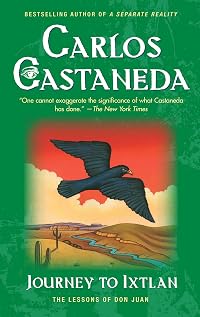
Drugs play a major part in this first journey, which probably explains why, on its release in the 1960s, it proved so popular. However, the drug aspect retreats, and by the third book (Journey To Ixtlan), has more or less disappeared. We find out much later, that they were only a device used by Don Juan Matus to alter Castaneda's "perception matrix", a necessary precursor to becoming a "man of knowledge" and acquiring "impeccability".
There is much in this first book to capture the intellect, imagination, and sense of mystery, but it is nonetheless the least satisfying. The journey could equally begin (as I did) with the second (A Separate Reality), or even the third (Journey To Ixtlan). Although the first in the series, it is the least essential. show less
This first book though, is the foggiest and dimmest of them all. At this stage, Castaneda has little or no understanding, and his account is mostly baffled reportage. Actually, the first 4 or 5 books are reportage, and are succeeded by a lengthy explanation that itself takes several more books to accomplish. The difference is that as the books progress, so the events show more begin to take on more meaning and context, even though they may leave us with dropped jaws over and over again!
For the first and only time, Castaneda - a student of anthropology - essays his own explanation for the events that have befallen him, and this takes up the last portion of this book. He argues entirely from anthropological premises, and has missed the awesome truth that he is engaged in shamanic "sorcery". Never again does he attempt to make an explanation that does not stem from his own enlightenment bubbling up from a deeper inner place, put there by his teacher Don Juan.
Drugs play a major part in this first journey, which probably explains why, on its release in the 1960s, it proved so popular. However, the drug aspect retreats, and by the third book (Journey To Ixtlan), has more or less disappeared. We find out much later, that they were only a device used by Don Juan Matus to alter Castaneda's "perception matrix", a necessary precursor to becoming a "man of knowledge" and acquiring "impeccability".
There is much in this first book to capture the intellect, imagination, and sense of mystery, but it is nonetheless the least satisfying. The journey could equally begin (as I did) with the second (A Separate Reality), or even the third (Journey To Ixtlan). Although the first in the series, it is the least essential. show less
It's unfair of me, I know, but throughout the book I was constantly annoyed with Castaneda for being such a thick-headed, reluctant student. The book could have been so much more interesting, I kept thinking, if Castaneda had really paid attention to Don Juan, followed instructions, and taken full advantage of his unique opportunity to learn Yaqui shamanism. But of course the drugs Don Juan had him taking were genuinely dangerous. I find the book dated now because of its emphasis on drugs as the primary medium for gaining occult knowledge. Current writers like the shaman Martín Prechtel, describe similar travels through the world of spirit without the use of drugs, and with a focus on spiritual healing that seems missing from Don show more Juan's teachings, at least as interpreted by Castaneda. show less
Members
- Recently Added By
Lists

Spirituality
195 works; 1 member

Best Sellers / Popular 1968
237 works; 5 members

Books Read in 2024
4,623 works; 126 members

Magic Realism
371 works; 52 members
Author Information

35+ Works 16,115 Members
Some Editions
Awards and Honors
Series

Belongs to Publisher Series
Bezige Bij pocket (64)
Work Relationships
Common Knowledge
- Canonical title
- The Teachings of Don Juan: A Yaqui Way of Knowledge
- Original title
- The Teachings of Don Juan: A Yaqui Way of Knowledge
- Original publication date
- 1968
- People/Characters
- Carlos Castaneda; don Juan Matus
- Epigraph
- Para mi solo recorrer los caminos que tienen corazon, cualquier camino que tenga corazon. Por ahi yo recorro, y la unica prueba que vale es atravesar todo su largo. Y por ahi yo recorro mirando, mirando, sin aliento. (For m... (show all)e there is only the traveling on paths that have heart, on any path that may have heart. There I travel, and the only wortwhile challenge is to traverse its full length. And there I travel looking, looking, breathlessly.)
—Don Juan
...nothing more can be attempted than to establish the beginning and the direction of an infinitely long road. The pretension of any systematic and definitive completeness would be, at least, a self-illusion. Perfection can... (show all) here be obtained by the individual student only in the subjective sense tat he communicates everything he has been able to see.
—Georg Simmel - Dedication
- For don Juan-and for the two persons who shared his sense of magical time with me
- First words
- Introduction
In the summer of 1960, while I was an anthropology student at the university of California, Los Angeles, I made several trips to the Southwest to collect information on the medicinal plants used by the Indians... (show all) of the area.
My notes on my first session with don Juan are dated June 23rd, 1961. - Last words
- (Click to show. Warning: May contain spoilers.)And the strenuous experiences I had undergone, which were so overwelming to me, were but a very small fragment of a system of logical thought from which don Juan drew meaningful inferences for his day-to-day life, a vastly complex system of beliefs in which inquiry was an experience leading to exultation.
- Original language*
- Engels
*Some information comes from Common Knowledge in other languages. Click "Edit" for more information.
Classifications
Statistics
- Members
- 4,244
- Popularity
- 3,575
- Reviews
- 44
- Rating
- (3.56)
- Languages
- 18 — Catalan, Danish, Dutch, English, Estonian, Finnish, French, German, Greek, Hungarian, Italian, Japanese, Latvian, Portuguese, Russian, Spanish, Swedish, Turkish
- Media
- Paper, Audiobook, Ebook
- ISBNs
- 98
- ASINs
- 47