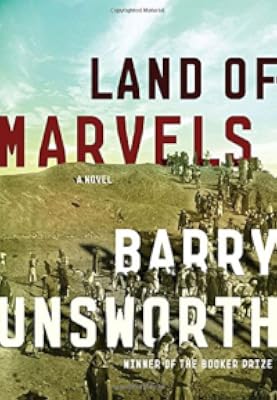
Land of Marvels
by Barry Unsworth
On This Page
Description
In this thriller set in the Middle East of 1914, Somerville, a British archaeologist, and his team are excavating a long-buried Assyrian palace when an American geologist from an oil company posing as an archaeologist arrives one day and insinuates himself into Somerville's group. But he's not the only one working undercover to stake a claim on Iraq's rich oil fields.Tags
Recommendations













Member Reviews
The Ottoman Empire was vast. It lasted from the 13th century to the 20th century. What western empire can say the same? At its height, it encompassed much of southeastern Europe, western Asia and north Africa. Science, literature, the arts flourished during what was known in Europe as the "dark ages." But like all things, it ground to its end in the early 20th century and the vultures gathered to pick the bones.
Land of Marvels is the story of events leading up to the dissolution of the Ottoman Empire on the brink of WWI, in one small corner of its holdings. It's also the story of human greeds, emotions, and blindness. Beautifully written, the story captures perfectly the multiple viewpoints of its characters without making any of them show more sound too villianous (although clearly there are some good possible villains).
The writer's use of parallelism among characters and events as well as the layers of meaning brought in by both the characters and the reader, who knows what must have happened to the region (more or less). The ending took me by surprise and was a heartbreaker in many ways.
I highly recommend it for an insightful view of a region that in some ways, never had a chance to determine its own future.
As a northwesterner, it had one bloop that stopped me in my tracks. Clearly, Unsworth isn't familiar with the history of this part of the country, but I forgive him. show less
Land of Marvels is the story of events leading up to the dissolution of the Ottoman Empire on the brink of WWI, in one small corner of its holdings. It's also the story of human greeds, emotions, and blindness. Beautifully written, the story captures perfectly the multiple viewpoints of its characters without making any of them show more sound too villianous (although clearly there are some good possible villains).
The writer's use of parallelism among characters and events as well as the layers of meaning brought in by both the characters and the reader, who knows what must have happened to the region (more or less). The ending took me by surprise and was a heartbreaker in many ways.
I highly recommend it for an insightful view of a region that in some ways, never had a chance to determine its own future.
As a northwesterner, it had one bloop that stopped me in my tracks. Clearly, Unsworth isn't familiar with the history of this part of the country, but I forgive him. show less
With the Ottoman Empire in decline and with the threat of war in the spring of 1914, British archaeologist Somerville feels the pressure of time to find something of value at the Mesopotamian site he has chosen for excavation. He is certain that the railway the Germans are building will soon reach and destroy his site. Just when items of significance start to turn up at the dig, Somerville is persuaded to add an undercover American geologist to his crew. The geologist isn't interested in archeology; he's only interested in the abundance of oil that lies not far beneath the surface. Somerville's Arab guide/scout, Jehar, will say or do anything to earn enough money to allow him to marry the beautiful young girl who's been enthralled by show more his stories. The elevation of ambition and desire over reason will lead to disaster.
Unsworth delves deeply into archeology, the history of the ancient Near East, and geology while avoiding the feel of an “information dump”. The land and its history are at the core of the novel. The characters seem more like types than like real people. None of the characters are sympathetic, except perhaps the teenage girl who is the object of Jehar's devotion. This novel nearly fails the Bechdel test. While there are three female characters, one of them never meets the other two, and the two at the archaeological site dislike each other so much that they hardly speak to each other. Unsworth's descriptive writing held my attention and leaves me interested in trying some of his award winning and nominated works. show less
Unsworth delves deeply into archeology, the history of the ancient Near East, and geology while avoiding the feel of an “information dump”. The land and its history are at the core of the novel. The characters seem more like types than like real people. None of the characters are sympathetic, except perhaps the teenage girl who is the object of Jehar's devotion. This novel nearly fails the Bechdel test. While there are three female characters, one of them never meets the other two, and the two at the archaeological site dislike each other so much that they hardly speak to each other. Unsworth's descriptive writing held my attention and leaves me interested in trying some of his award winning and nominated works. show less
In Hesiod's eighth-century Greek poem about the origin of the gods, the Theogony, the Muses boast that they know how to tell "lies like the truth." The foundation of myth, of poetry, of storytelling is the telling of lies that compel belief or, at least, the suspension of disbelief. Sometimes we tell stories to beguile others, and sometimes we manage to convince ourselves with our own storytelling. Can we ever tell the whole and unadulterated truth, or is reality always our version of it, shaped and distorted by our need for structure and meaning, by our desires and fears?
Questions like these lie behind most of Barry Unsworth's fiction. He's interested in storytelling and what compels it. He's interested in how people reconstruct events show more and find meaning in them. One of his most popular novels, Morality Play (1995), is a medieval mystery in which a band of traveling players investigate and reenact a murder. The murder mystery is a perfect genre for Unsworth, because it's about reconstructing events, telling a story that makes sense of them, finding meaning in the past.
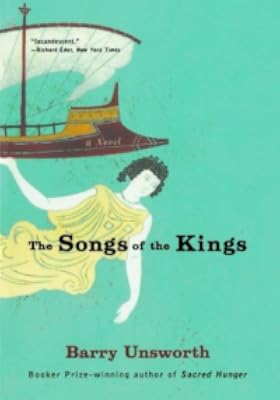
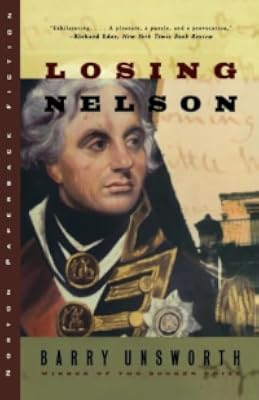
His 2004 novel, Songs of the Kings, imagines the Greek army preparing to set sail for Troy, modernizing Homer in light of the build up to the Iraq War. It's about propaganda and the manipulation of the news—about "lies like truth" and the ways in which storytelling can shape events. Unsworth is also fascinated with greed and obsession. His characters are insatiable in their desire for money or power or knowledge. In his 1999 novel Losing Nelson, the main character is obsessed with the life of Admiral Nelson, and in particular with a specific incident in Nelson's career. His obsessive research, his obsessive need to shape events into a story, ultimately consumes him. Perhaps history repeats itself because we become trapped in stories of our own devising. Perhaps stories shape reality, rather than the other way around. We tell stories about the link between Iraq and terrorism, for example, and our obsession with that story makes it so. Stories can become self-fulfilling prophecies.
Land of Marvels is set in Mesopotamia—modern Iraq—in 1914, on the eve of the First World War. John Somerville in an archaeologist excavating what he hopes will prove to be a significant Assyrian site. Meanwhile, the German railroad is inching its way toward him, and he becomes convinced that it will destroy his work. Complicating matters is the intrigue of international investors who are prospecting for oil in the region, and making plans for how the Ottoman Empire will be divvied up after a war that seems increasingly inevitable. It's vintage Unsworth in its historical setting and its obsession with storytelling, and with obsession itself. Somerville is obsessed both with reconstructing the Assyrian past and with the looming threat of the railroad. That obsession shapes Somerville's narrative. In various ways, several characters in the book become convinced by their own stories, and those stories shape events.
There are big themes in Land of Marvels, about history and the rise and fall of empires, but it's a relatively small book. It moves quickly, both because of the excitement and suspense it generates and because, at times, it feels insufficiently fleshed out. I was left wanting more. The novel seems to rush headlong to its inevitable conclusion. For me, it lacked the texture and atmosphere and vividness of character that I find in some of my favorite "historical novels," like J.G. Farrell's The Siege of Krishnapur or Louis de Bernière's Captain Corelli's Mandolin. Unsworth, like his protagonist Somerville, seemed too obsessed with how things would come crashing down.
Unsworth is a skilled writer who can speak volumes in small and carefully-wrought scenes, but the novel, being a literate version of an historical thriller, suffered slightly from heavy-handed exposition—the bane of thriller writers. How does the author provide the reader with important historical background information? He has the archaeologist explain it to his assistant, who has convenient gaps in his or her knowledge. Unsworth occasionally falls prey himself to this unfortunate convention of the historical thriller, and I was distracted as I read by the annoying echo in the back of my head of Dan Brown explaining the Fibonacci sequence.
Land of Marvels is a flawed novel, but it's also a compelling read, and definitely a cut above ordinary historical thrillers. show less
Questions like these lie behind most of Barry Unsworth's fiction. He's interested in storytelling and what compels it. He's interested in how people reconstruct events show more and find meaning in them. One of his most popular novels, Morality Play (1995), is a medieval mystery in which a band of traveling players investigate and reenact a murder. The murder mystery is a perfect genre for Unsworth, because it's about reconstructing events, telling a story that makes sense of them, finding meaning in the past.
His 2004 novel, Songs of the Kings, imagines the Greek army preparing to set sail for Troy, modernizing Homer in light of the build up to the Iraq War. It's about propaganda and the manipulation of the news—about "lies like truth" and the ways in which storytelling can shape events. Unsworth is also fascinated with greed and obsession. His characters are insatiable in their desire for money or power or knowledge. In his 1999 novel Losing Nelson, the main character is obsessed with the life of Admiral Nelson, and in particular with a specific incident in Nelson's career. His obsessive research, his obsessive need to shape events into a story, ultimately consumes him. Perhaps history repeats itself because we become trapped in stories of our own devising. Perhaps stories shape reality, rather than the other way around. We tell stories about the link between Iraq and terrorism, for example, and our obsession with that story makes it so. Stories can become self-fulfilling prophecies.
Land of Marvels is set in Mesopotamia—modern Iraq—in 1914, on the eve of the First World War. John Somerville in an archaeologist excavating what he hopes will prove to be a significant Assyrian site. Meanwhile, the German railroad is inching its way toward him, and he becomes convinced that it will destroy his work. Complicating matters is the intrigue of international investors who are prospecting for oil in the region, and making plans for how the Ottoman Empire will be divvied up after a war that seems increasingly inevitable. It's vintage Unsworth in its historical setting and its obsession with storytelling, and with obsession itself. Somerville is obsessed both with reconstructing the Assyrian past and with the looming threat of the railroad. That obsession shapes Somerville's narrative. In various ways, several characters in the book become convinced by their own stories, and those stories shape events.
There are big themes in Land of Marvels, about history and the rise and fall of empires, but it's a relatively small book. It moves quickly, both because of the excitement and suspense it generates and because, at times, it feels insufficiently fleshed out. I was left wanting more. The novel seems to rush headlong to its inevitable conclusion. For me, it lacked the texture and atmosphere and vividness of character that I find in some of my favorite "historical novels," like J.G. Farrell's The Siege of Krishnapur or Louis de Bernière's Captain Corelli's Mandolin. Unsworth, like his protagonist Somerville, seemed too obsessed with how things would come crashing down.
Unsworth is a skilled writer who can speak volumes in small and carefully-wrought scenes, but the novel, being a literate version of an historical thriller, suffered slightly from heavy-handed exposition—the bane of thriller writers. How does the author provide the reader with important historical background information? He has the archaeologist explain it to his assistant, who has convenient gaps in his or her knowledge. Unsworth occasionally falls prey himself to this unfortunate convention of the historical thriller, and I was distracted as I read by the annoying echo in the back of my head of Dan Brown explaining the Fibonacci sequence.
Land of Marvels is a flawed novel, but it's also a compelling read, and definitely a cut above ordinary historical thrillers. show less
I chose to read this book because I once dreamed of becoming an archaeologist, and having lived in the region, I was especially interested in the early history of the search for oil. Let me start out by saying that the book is definitely a better read than the flap copy might lead you to believe. The narrative focus on this small group works extremely well, and serves to underscore the myriad of competing interests focused on the region at the time.
Unsworth is a skilled writer, and all of the characters (no matter how unlikeable) are fully drawn and add value to the story. The main problem I had was that I really just couldn't get myself to like any of the characters, despite their backstories. Even when I found their actions completely show more understandable, I still didn't really feel that invested in the outcomes. In the end, the utter futility of the entire enterprise was crystal clear, lending itself so well to disturbing comparisons to the current situation in Iraq.
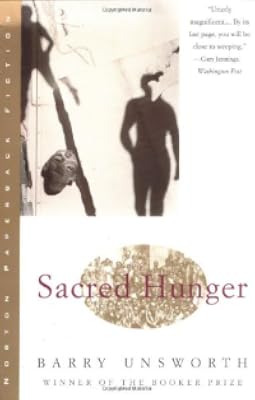
This was a solid read, 3.5 stars for me just because I never felt that emotional connection to the characters. I will certainly look for Unsworth's Booker Prize winning Sacred Hunger to read. show less
Unsworth is a skilled writer, and all of the characters (no matter how unlikeable) are fully drawn and add value to the story. The main problem I had was that I really just couldn't get myself to like any of the characters, despite their backstories. Even when I found their actions completely show more understandable, I still didn't really feel that invested in the outcomes. In the end, the utter futility of the entire enterprise was crystal clear, lending itself so well to disturbing comparisons to the current situation in Iraq.
This was a solid read, 3.5 stars for me just because I never felt that emotional connection to the characters. I will certainly look for Unsworth's Booker Prize winning Sacred Hunger to read. show less
Can't really fault this book. Other reviewers seem to dislike the slow pace at the beginning but, for me, this just added to the depth and set up the themes brilliantly. In fact there was a slight danger of slipping into farce when the momentum started to get going in earnest towards the end but this was cleverly avoided. The theme of falsehood and truth was given a thorough workout on many, many different levels - international relations, historical, personal relationships, war, politics (I could go on). One of my favourite reads of the past few years.
Land of Marvels grows on you. Its pace is rather slow, sort of like the times it is evoking. It takes place in 1914, just before what we come to know as World War I starts, in Mesopotamia, or what we now know as Iraq. In some respects it reminds me of Agatha Christie's Middle East novels, which made me like it quite a bit.
This book tells three stories and how they intertwine with ironic and tragic results – the story of the search for oil and the big money and power behind that search, an archaeologist’s search for proof of Assyrian occupation at the archaeological site that is the location for most of the novel, and the story of a local man who is in love and wants to marry a young girl.
I liked the tension of this book. Everybody show more is on edge. Things will explode soon. Somerville’s wife Edith is unhappy in her marriage, Somerville is distracted and distant because of his all-consuming desire to find something, anything, that will make him a famous in the world of archaeology. Elliott, geologist posing as an archaeologist is consumed with finding proof of huge oil deposits and is playing off Germany and Britain against one another. Somerville’s assistant is in love with a brash “modern” young woman and they can’t wait to get back to England and the beginning of their lives together. Britain’s empirical and old-fashioned view of the world is on display as it decays and is threatened by America. Jehar, a local thief and con artist is in love with a young girl and desperate to win her in marriage. There are railway politics behind the scenes, British, Turkish, and German, that heighten the tension and may affect what happens at the archaeological site.
It really took me half of the book to figure out what was going on. The ending is quick and explosive and ties all the stories together satisfactorily. I loved the irony of how the book ends.
I thought the language was uneven. There are very lyrical passages describing the oil fields and the geology of the region, yet the characters are occasionally two-dimensional and stereotyped. But then there is a brilliant scene or insight into a character that moves the story forward.
The Assyrian and Babylonian history was exhaustive and somewhat confusing. I did like Somerville's wild assumptions of how things happened to explain what he found at the site and how he twisted history to suit his needs. His love for what he did clouded any objective interpretation of what he found.
The novel is billed as a prelude to America’s foray into Iraq after 9-11, and you can stretch to see it. Oil does become the change agent of the 20th Century, and the search for that oil changes everything. show less
This book tells three stories and how they intertwine with ironic and tragic results – the story of the search for oil and the big money and power behind that search, an archaeologist’s search for proof of Assyrian occupation at the archaeological site that is the location for most of the novel, and the story of a local man who is in love and wants to marry a young girl.
I liked the tension of this book. Everybody show more is on edge. Things will explode soon. Somerville’s wife Edith is unhappy in her marriage, Somerville is distracted and distant because of his all-consuming desire to find something, anything, that will make him a famous in the world of archaeology. Elliott, geologist posing as an archaeologist is consumed with finding proof of huge oil deposits and is playing off Germany and Britain against one another. Somerville’s assistant is in love with a brash “modern” young woman and they can’t wait to get back to England and the beginning of their lives together. Britain’s empirical and old-fashioned view of the world is on display as it decays and is threatened by America. Jehar, a local thief and con artist is in love with a young girl and desperate to win her in marriage. There are railway politics behind the scenes, British, Turkish, and German, that heighten the tension and may affect what happens at the archaeological site.
It really took me half of the book to figure out what was going on. The ending is quick and explosive and ties all the stories together satisfactorily. I loved the irony of how the book ends.
I thought the language was uneven. There are very lyrical passages describing the oil fields and the geology of the region, yet the characters are occasionally two-dimensional and stereotyped. But then there is a brilliant scene or insight into a character that moves the story forward.
The Assyrian and Babylonian history was exhaustive and somewhat confusing. I did like Somerville's wild assumptions of how things happened to explain what he found at the site and how he twisted history to suit his needs. His love for what he did clouded any objective interpretation of what he found.
The novel is billed as a prelude to America’s foray into Iraq after 9-11, and you can stretch to see it. Oil does become the change agent of the 20th Century, and the search for that oil changes everything. show less
It’s 1914. Tensions are about to erupt in Europe. John Somerville, however, has problems of his own to worry about. He’s excavating what he believes to be a forgotten Assyrian palace in Mesopotamia, part of the gigantic Ottoman Empire. Unluckily for him, the Germans are coming with a railroad that will go right through Tell Erdek, his precious site, the excavation of which he has self-financed for three years in a desperate bid to make a name for himself. Along with him is his younger colleague, Palmer, who has a passion for ancient writing; his wife Christine, who thrives on Somerville’s enthusiasm and purity of passion; Patricia, a grad student who is at the forefront of the feminist movement and very outspoken; and Jehar, an show more Arab man who feeds Somerville information in exchange for the gold to win him the love of his life. Into this mess arrives Elliott, an American geologist masquerading as an archaeologist to gain information about oil. Every character’s loyalties are tested as tensions escalate not only between European powers but at the excavation site itself.
I’d heard, before starting this book, that others really struggled with it, abandoning it and giving it away. I thought it was going to be terrible. Once again, I put it off. When I finally did read it, I could see in some cases what those who disliked this book thought about it. For one thing, it’s quite political. A lot of time is spent discussing the importance of the oil and the conflicts between the countries who are racing to get it. Nor are all the characters likeable. Christine spends time feeling disdainful towards Patricia because she is too outspoken. The mere idea that women could vote shocks Christine, who desires nothing more than to spend her life supporting a powerful and influential man. Can you tell that Christine made me gag a little? Okay, a lot.
On the bright side, though, despite its faults I found myself loving the book. I have to say being an aspiring historian and secret fan of the exciting part of archaeology really helped me in that. If I didn’t feel as excited about Somerville’s discovery as he did, the book would have totally fallen flat for me. There is something fascinating about pulling history out of the ground and this is just what Somerville is doing and what he’s passionate about. How could I not love a guy like him? This is even if he is a bit uncertain about himself, especially given that it’s hard to blame him. As soon as he realized that there was something amazing down there, I was hooked.
I also found this book incredibly politically relevant. I’m often irritated that so many of the problems in the Middle East have to do with European powers stepping in and carving up arbitrary countries for their own benefit. Here we have a novel that is set just as this is happening; we have a character who is unearthing the enthralling past of these areas which are now war-torn from intervention and internal turmoil and conflict. And hardly for the last time, it is all about oil. While set firmly in the past, this book also sheds light on how we got to this point in history ourselves. I think it also shows how our disregard for history leads us to repeat the mistakes we have made over and over again.
In conclusion, this is definitely a book worth reading. I highly recommend it, especially to those who love history and/or secretly wish they could be on Time Team. While I wait for that day to come, I’ll be seeking out more of Barry Unsworth’s works.
http://chikune.com/blog/?p=1249 show less
I’d heard, before starting this book, that others really struggled with it, abandoning it and giving it away. I thought it was going to be terrible. Once again, I put it off. When I finally did read it, I could see in some cases what those who disliked this book thought about it. For one thing, it’s quite political. A lot of time is spent discussing the importance of the oil and the conflicts between the countries who are racing to get it. Nor are all the characters likeable. Christine spends time feeling disdainful towards Patricia because she is too outspoken. The mere idea that women could vote shocks Christine, who desires nothing more than to spend her life supporting a powerful and influential man. Can you tell that Christine made me gag a little? Okay, a lot.
On the bright side, though, despite its faults I found myself loving the book. I have to say being an aspiring historian and secret fan of the exciting part of archaeology really helped me in that. If I didn’t feel as excited about Somerville’s discovery as he did, the book would have totally fallen flat for me. There is something fascinating about pulling history out of the ground and this is just what Somerville is doing and what he’s passionate about. How could I not love a guy like him? This is even if he is a bit uncertain about himself, especially given that it’s hard to blame him. As soon as he realized that there was something amazing down there, I was hooked.
I also found this book incredibly politically relevant. I’m often irritated that so many of the problems in the Middle East have to do with European powers stepping in and carving up arbitrary countries for their own benefit. Here we have a novel that is set just as this is happening; we have a character who is unearthing the enthralling past of these areas which are now war-torn from intervention and internal turmoil and conflict. And hardly for the last time, it is all about oil. While set firmly in the past, this book also sheds light on how we got to this point in history ourselves. I think it also shows how our disregard for history leads us to repeat the mistakes we have made over and over again.
In conclusion, this is definitely a book worth reading. I highly recommend it, especially to those who love history and/or secretly wish they could be on Time Team. While I wait for that day to come, I’ll be seeking out more of Barry Unsworth’s works.
http://chikune.com/blog/?p=1249 show less
Members
- Recently Added By
Lists

Middle East Fiction
179 works; 16 members

Books Read in 2016
4,666 works; 197 members
Author Information

20+ Works 6,832 Members
Barry Unsworth was born in Wingate, England on August 10, 1930. He received an undergraduate degree in English from the University of Manchester in 1951. He started out writing short stories, but soon switched to novels. His first novel, The Partnership, was published in 1966. He wrote 17 novels during his lifetime including Stone Virgin, Losing show more Nelson, The Songs of the Kings, Land of Marvels, and The Quality of Mercy. Sacred Hunger won a Booker Prize in 1992. Morality Play and Pascali's Island were both made into feature films. He died from lung cancer on June 5, 2012 at the age of 81. (Bowker Author Biography) show less
Common Knowledge
- Canonical title
- Land of Marvels
- Original publication date
- 2009-01-06
- People/Characters
- Christine; Somerville; Edith; Patricia; Jehar
- Important places
- Iraq; Mesopotamia
- Dedication
- For Aira with love.
- First words
- He knew they would come that day or the next.
- Last words
- (Click to show. Warning: May contain spoilers.)The vast territory, which had never been home to a single nation, she was to rename Iraq.
Classifications
Statistics
- Members
- 468
- Popularity
- 65,282
- Reviews
- 19
- Rating
- (3.40)
- Languages
- English
- Media
- Paper, Ebook
- ISBNs
- 10
- ASINs
- 3