
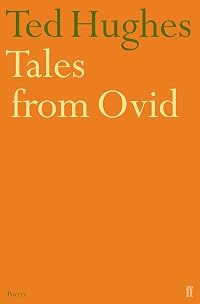
Tales from Ovid
by Ted Hughes (Translator)
On This Page
Description
Poems from Ovid's The Metamorphoses in a new translation by a British poet. They include the tragedy, Echo and Narcissus, describing Narcissus' descent into madness as "Again and again he kissed / The lips that seemed to be rising to kiss his / But dissolved, as he touched them / Into a soft splash and a shiver of ripples."Tags
Recommendations


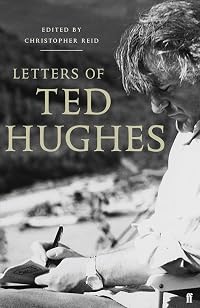






Member Reviews
https://fromtheheartofeurope.eu/metamorphoses-by-publius-ovidius-naso-translated....
Way way back 40 years ago, I studied Latin for what were then called O-levels, and one of the set texts was a Belfast-teenager-friendly translation of Ovid’s Metamorphoses. I loved it. If you don’t know, it’s a narrative poem in fifteen books re-telling classical legends, concentrating in particular on those where there is a change of shape – usually humans turned into animals, vegetables or minerals, though with other variations too. It’s breezy, vivid and sometimes funny, and it’s been a store of easily accessible ancient lore for centuries.
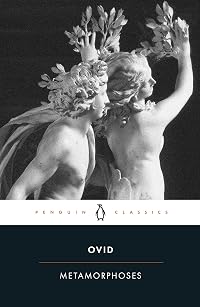
I’d always meant to get back to it properly, and it finally popped up on my list of books that I show more owned but had not yet blogged here. However, my 40-year-old copy is safely in Northern Ireland, so I acquired both the latest Penguin translation, by Stephanie McCarter, and Ted Hughes’ selection of twenty-four choice chapters, and read them – I took the McCarter translation in sequence, and then jumped across to read the relevant sections if Hughes had translated them, though he put them in a different order.
I do find Ovid fascinating. In some ways he speaks to the present day reader very directly – a lot of the emotions in the Ars Amatoria could be expressed by lovers two thousand years later. But here he’s taking material that was already very well known, the Greek and Roman classical legendarium, and repackaging it for a sophisticated audience in the greatest city in the world. The book ends (McCarter’s translation):
Where Roman power spreads through conquered lands,
I will be read on people’s lips. My fame
will last across the centuries. If poets’
prophecies can hold any truth, I’ll live.
And he did. I have been particularly struck by Ovid’s popularity among the patrons of my favourite 17th-century stuccador, Jan Christiaan Hansche. A number of his most interesting ceilings feature stories from Ovid, some of them well known, some less so. Sixteen centuries after Ovid laid down his pen, his work was still part of the standard canon of literature known to all educated Western Europeans.
So. The two translations are different and serve different purposes. McCarter’s mandate was to translate the whole of the Metamorphoses into iambic pentameter in English. She is necessarily constrained to giving us an interpretation of Ovid’s text, with all of its limitations, and confining her own original thoughts to footnotes and other supporting material.
In a very interesting introduction, she is clear about the many scenes of rape in the story. But she also makes it clear that Ovid has a lot more active female characters than are in his sources, and they get more to do. She gives some telling examples of previous translators projecting later concepts of femininity onto Ovid’s fairly unambiguous original words.
Given the contemporary debate, it’s also interesting that Ovid has several examples of gender fluidity – not really presented as a standard part of everyday life, but nonetheless as a phenomenon that happens. For Ovid, we must simply accept that someone’s current gender may not be the one that they were born with.
Ted Hughes, on the other hand, was translating favourite bits of Ovid because he had reached the stage of his career where he could do what he wanted. He could leave out all the bits he found boring (I haven’t counted, but I think he translates about only 40% of Ovid’s text), and he could add his own flourishes at will. Inevitably this makes for a more satisfactory reading experience, though it is incomplete.
Both translations bring to life Ovid’s vivid imagery, which really throws you into the narrative. For a compare and contrast passage, here is the beginning of their treatment of the story of Phaethon, the son of the Sun who crashed to disaster trying to drive his father’s chariot (a favourite topic for Hansche). I think that the differences speak for themselves:
McCarter:
The Sun’s child Phaethon equaled him in age
and mind. But Epaphus could not endure
his boasts, his smugness, and his arrogance
that Phoebus was his father and declared,
“You crazily trust all your mother says!
Your head is swollen by a phony father!”
Phaethon blushed as shame repressed his wrath.
He took these taunts to Clymene, his mother,
and told her, “Mother, to upset you more,
although I am free-spoken and quick-tempered,
I could not speak, ashamed these insults could
be uttered and that I could not refute them.
If I am truly born of holy stock,
give me a sign and claim me for the heavens!”
Wrapping his arms around his mother’s neck,
he begged—by his life, Merops’ life, his sisters’
weddings—that she give proof of his true father.
Hughes:
When Phaethon bragged about his father, Phoebus
The sun-god,
His friends mocked him.
‘Your mother must be crazy
Or you’re crazy to believe her.
How could the sun be anybody’s father?’
In a rage of humiliation
Phaethon came to his mother, Clymene.
‘They’re all laughing at me,
And I can’t answer. What can I say? It’s horrible.
I have to stand like a dumb fool and be laughed at.
‘If it’s true, Mother,’ he cried, ‘if the sun,
The high god Phoebus, if he is my father,
Give me proof.
Give me evidence that I belong to heaven.’
Then he embraced her. ‘I beg you,
‘On my life, on your husband Merops’ life,
And on the marriage hopes of my sisters,
Only give me proof that the sun is my father.’
I think I’d recommend that a reader unfamiliar with Ovid start with Hughes and then go on to McCarter to get the full story. show less
Way way back 40 years ago, I studied Latin for what were then called O-levels, and one of the set texts was a Belfast-teenager-friendly translation of Ovid’s Metamorphoses. I loved it. If you don’t know, it’s a narrative poem in fifteen books re-telling classical legends, concentrating in particular on those where there is a change of shape – usually humans turned into animals, vegetables or minerals, though with other variations too. It’s breezy, vivid and sometimes funny, and it’s been a store of easily accessible ancient lore for centuries.
I’d always meant to get back to it properly, and it finally popped up on my list of books that I show more owned but had not yet blogged here. However, my 40-year-old copy is safely in Northern Ireland, so I acquired both the latest Penguin translation, by Stephanie McCarter, and Ted Hughes’ selection of twenty-four choice chapters, and read them – I took the McCarter translation in sequence, and then jumped across to read the relevant sections if Hughes had translated them, though he put them in a different order.
I do find Ovid fascinating. In some ways he speaks to the present day reader very directly – a lot of the emotions in the Ars Amatoria could be expressed by lovers two thousand years later. But here he’s taking material that was already very well known, the Greek and Roman classical legendarium, and repackaging it for a sophisticated audience in the greatest city in the world. The book ends (McCarter’s translation):
Where Roman power spreads through conquered lands,
I will be read on people’s lips. My fame
will last across the centuries. If poets’
prophecies can hold any truth, I’ll live.
And he did. I have been particularly struck by Ovid’s popularity among the patrons of my favourite 17th-century stuccador, Jan Christiaan Hansche. A number of his most interesting ceilings feature stories from Ovid, some of them well known, some less so. Sixteen centuries after Ovid laid down his pen, his work was still part of the standard canon of literature known to all educated Western Europeans.
So. The two translations are different and serve different purposes. McCarter’s mandate was to translate the whole of the Metamorphoses into iambic pentameter in English. She is necessarily constrained to giving us an interpretation of Ovid’s text, with all of its limitations, and confining her own original thoughts to footnotes and other supporting material.
In a very interesting introduction, she is clear about the many scenes of rape in the story. But she also makes it clear that Ovid has a lot more active female characters than are in his sources, and they get more to do. She gives some telling examples of previous translators projecting later concepts of femininity onto Ovid’s fairly unambiguous original words.
Given the contemporary debate, it’s also interesting that Ovid has several examples of gender fluidity – not really presented as a standard part of everyday life, but nonetheless as a phenomenon that happens. For Ovid, we must simply accept that someone’s current gender may not be the one that they were born with.
Ted Hughes, on the other hand, was translating favourite bits of Ovid because he had reached the stage of his career where he could do what he wanted. He could leave out all the bits he found boring (I haven’t counted, but I think he translates about only 40% of Ovid’s text), and he could add his own flourishes at will. Inevitably this makes for a more satisfactory reading experience, though it is incomplete.
Both translations bring to life Ovid’s vivid imagery, which really throws you into the narrative. For a compare and contrast passage, here is the beginning of their treatment of the story of Phaethon, the son of the Sun who crashed to disaster trying to drive his father’s chariot (a favourite topic for Hansche). I think that the differences speak for themselves:
McCarter:
The Sun’s child Phaethon equaled him in age
and mind. But Epaphus could not endure
his boasts, his smugness, and his arrogance
that Phoebus was his father and declared,
“You crazily trust all your mother says!
Your head is swollen by a phony father!”
Phaethon blushed as shame repressed his wrath.
He took these taunts to Clymene, his mother,
and told her, “Mother, to upset you more,
although I am free-spoken and quick-tempered,
I could not speak, ashamed these insults could
be uttered and that I could not refute them.
If I am truly born of holy stock,
give me a sign and claim me for the heavens!”
Wrapping his arms around his mother’s neck,
he begged—by his life, Merops’ life, his sisters’
weddings—that she give proof of his true father.
Hughes:
When Phaethon bragged about his father, Phoebus
The sun-god,
His friends mocked him.
‘Your mother must be crazy
Or you’re crazy to believe her.
How could the sun be anybody’s father?’
In a rage of humiliation
Phaethon came to his mother, Clymene.
‘They’re all laughing at me,
And I can’t answer. What can I say? It’s horrible.
I have to stand like a dumb fool and be laughed at.
‘If it’s true, Mother,’ he cried, ‘if the sun,
The high god Phoebus, if he is my father,
Give me proof.
Give me evidence that I belong to heaven.’
Then he embraced her. ‘I beg you,
‘On my life, on your husband Merops’ life,
And on the marriage hopes of my sisters,
Only give me proof that the sun is my father.’
I think I’d recommend that a reader unfamiliar with Ovid start with Hughes and then go on to McCarter to get the full story. show less
I’ve always loved the Greek and Roman myths, but most traditional translations that aren’t directly aimed at children are so unreadable that I’ve honestly never been able to get into them sufficiently. Earlier this year I read a play based on Ted Hughes’ translations of Ovid, and rather enjoyed it for all that it was a strange rendition, so when I spotted this collection of Hughes’ tales from Ovid I knew I had to pick it up. Translations are tricky at the best of times, but Hughes has such a way with words that he takes Ovid’s compelling stories from the Greco-Roman mythological tradition and makes them not only readable but actually enjoyable for contemporary readers. The stories that Ovid recorded centre on themes of show more transformation (hence the title “Metamorphoses”), which I’m sure Hughes connected with as many of his own poems and stories also deal with this weighty and ever-expandable subject, and are the proviso for many of the myths that have come down through the ages because they are simply the most compelling of these ancient stories. This obviously isn’t a complete set of Ovid’s poems (please tell me there’s a book out there that has them all translated by Hughes), but this selection are a strong set, ranging from those that are readily familiar to readers to those that have the most engaging stories, which ultimately gives readers a good introduction to the subject and is sure to get them hooked! show less
*Gruesome Alert*
"Think of it.
Your expensive coiffure
With your face wrapped in it
Wrenched off like a cork, at the neck,
Your blood
Poured out over your mother and sisters,
Your pedigree carcase
Ripped by unthinking fingers
Into portions, and your blue entrails,
Tangled in thorns and draped over dusty rocks,
Tugged at by foxes."
Tales from Ovid by Ted Hughes takes 24 stories from the Metamorphoses and liberally translates them with vivid, powerful imagery. It is a rare one of these poems that doesn't contain violent and gruesome acts, albeit beautifully and lyrically rendered. Even in Pygmalion the Crestae "butchered their guests." You'll recall that these stories typically feature humans transformed by the Gods into animals, flowers, stone and show more so on (Pygmalion features the reverse). You're familiar with many of the stories in one way or another - greedy Midas wanting all he touches turned to gold, Hermaphroditas ("And there in the giddy boil/Two bodies melting into a single body/Seamless as the water"), Venus, Adonis, Atalanta, and the golden apples, etc. The stories are beautifully written and compelling, even as many of them make you squirm in discomfort.
Some critics have said Hughes selected many of the most violent and gruesome ones from the 250 or so that Ovid wrote. Ovid scholars could comment on that better than I can, but the ones he selected certainly match up well with his talents (he unfortunately died in 1998). In his hands, these ancient Greek stories come to life, threatening to reach off the page and pull you in by your expensive coiffure. show less
"Think of it.
Your expensive coiffure
With your face wrapped in it
Wrenched off like a cork, at the neck,
Your blood
Poured out over your mother and sisters,
Your pedigree carcase
Ripped by unthinking fingers
Into portions, and your blue entrails,
Tangled in thorns and draped over dusty rocks,
Tugged at by foxes."
Tales from Ovid by Ted Hughes takes 24 stories from the Metamorphoses and liberally translates them with vivid, powerful imagery. It is a rare one of these poems that doesn't contain violent and gruesome acts, albeit beautifully and lyrically rendered. Even in Pygmalion the Crestae "butchered their guests." You'll recall that these stories typically feature humans transformed by the Gods into animals, flowers, stone and show more so on (Pygmalion features the reverse). You're familiar with many of the stories in one way or another - greedy Midas wanting all he touches turned to gold, Hermaphroditas ("And there in the giddy boil/Two bodies melting into a single body/Seamless as the water"), Venus, Adonis, Atalanta, and the golden apples, etc. The stories are beautifully written and compelling, even as many of them make you squirm in discomfort.
Some critics have said Hughes selected many of the most violent and gruesome ones from the 250 or so that Ovid wrote. Ovid scholars could comment on that better than I can, but the ones he selected certainly match up well with his talents (he unfortunately died in 1998). In his hands, these ancient Greek stories come to life, threatening to reach off the page and pull you in by your expensive coiffure. show less
I've not read any other translations of Ovid and I don't know Latin, so I have little choice but to take these selections from the Metamorphoses at face value.
That value is very high: Hughes writes gripping, driving poetry that impatiently whips you along the narrative, with hardly a chance to catch your breathe sometimes. Faster paced than many a novel, there is no chance of being lulled to sleep by endless iambs here. Startling, powerful, often brutal metaphors pay no heed to shouts of "Anachronism!" and use whatever image suits Hughes' purpose. There is hardly a dull moment in the entire volume.
Anybody who thought narrative poetry was dead needs to think again: Hughes brought nature observation back to the fore-front of modern poetry show more with The Hawk in the Rain and subsequent volumes; here he rescues narrative verse from the Romantics and gives it to anybody who loves a good story.
Further - if you had no interest in the Classics before, you will after reading this.
I have to look back to Crow to find the previous volume of Hughes' poetical works that I responded to so uniformly positively. show less
That value is very high: Hughes writes gripping, driving poetry that impatiently whips you along the narrative, with hardly a chance to catch your breathe sometimes. Faster paced than many a novel, there is no chance of being lulled to sleep by endless iambs here. Startling, powerful, often brutal metaphors pay no heed to shouts of "Anachronism!" and use whatever image suits Hughes' purpose. There is hardly a dull moment in the entire volume.
Anybody who thought narrative poetry was dead needs to think again: Hughes brought nature observation back to the fore-front of modern poetry show more with The Hawk in the Rain and subsequent volumes; here he rescues narrative verse from the Romantics and gives it to anybody who loves a good story.
Further - if you had no interest in the Classics before, you will after reading this.
I have to look back to Crow to find the previous volume of Hughes' poetical works that I responded to so uniformly positively. show less
At first blush, the marriage between Ovid that most latin of poets and Ted Hughes would seem as unlikely a match as any you could imagine. Not in ability, of course, but in language and temperament.
Hughes as a poet has always seemed to me one of the most earthy, physical, and Anglo-Saxon of all contemporary poets. Classical Ovid and the dactylic hexameter (the poetic meter form used in classical epic poems such as Virgil’s Aeneid and Homer’s Odyssey and Illiad, often called the “heroic” hexameter) would seem to be polar opposite of Hughes. Yet Hughes pulls it off, creating one of the best books of poetry I have read in a very long time.
When I think of Hughes I think of poems like “February 17th” which is about a farmer show more struggling to help a still-born lamb to be delivered to save the mother. Such lines as these seem so earthy, so removed in style and substance from what we think of when we think of the heroic:
The corpse that would not come. Till it came.
And after it the long, sudden, yolk-yellow
Parcel of life
In a smoking slither of oils and soups and syrups –
And the body lay born, beside the hacked-off head.
Yet in these lines we also see what Hughes does best, perhaps better than anyone ever: he sees and gives voice to the natural and nature in a way simultaneously factual and mythic.
In Tales from Ovid, Hughes picks and chooses which of Ovid’s many stories he wants to translate and re-tell. His choices include some of the most violent and disturbing stories that Ovid wrote: ‘Echo and Narcissus,’ ‘Bacchus and Pentheus,’ and ‘Jove’s rape of Semele’. But in the same way that the language of “February 17th” transfigures the brutality and tragedy of a still-born lamb, in Hughes’s poetry even Ovid’s most violent stories and images become transcendent as in these lines from the story of Semele:
Her eyes opened wide, saw him
And burst into flame.
Her whole body lit up
With the glare
That explodes the lamp –
In that splinter of a second,
Before her blazing shape
Became a silhouette of sooty ashes
The foetus was snatched from her womb.
Ovid’s stories are of change, metamorphosis. In the late 20th and early part of the 21st century, it is a theme that seems most relevant… and obviously one that attracted Hughes the poet/prophet. But beneath the theme of change runs the deeper current of love. Ovid, even in the most violent and brutal of his stories, is always writing about love. It is after all love (sometimes broken and warped love in the form of lust and jealousy) that creates the action between the gods and the people in these familiar stories. Certainly in the late 20th and first part of the 21st century the theme of love remains as relevant as when Ovid first penned these stories centuries ago.
(This review has also been published at www.montanawriter.com) show less
Hughes as a poet has always seemed to me one of the most earthy, physical, and Anglo-Saxon of all contemporary poets. Classical Ovid and the dactylic hexameter (the poetic meter form used in classical epic poems such as Virgil’s Aeneid and Homer’s Odyssey and Illiad, often called the “heroic” hexameter) would seem to be polar opposite of Hughes. Yet Hughes pulls it off, creating one of the best books of poetry I have read in a very long time.
When I think of Hughes I think of poems like “February 17th” which is about a farmer show more struggling to help a still-born lamb to be delivered to save the mother. Such lines as these seem so earthy, so removed in style and substance from what we think of when we think of the heroic:
The corpse that would not come. Till it came.
And after it the long, sudden, yolk-yellow
Parcel of life
In a smoking slither of oils and soups and syrups –
And the body lay born, beside the hacked-off head.
Yet in these lines we also see what Hughes does best, perhaps better than anyone ever: he sees and gives voice to the natural and nature in a way simultaneously factual and mythic.
In Tales from Ovid, Hughes picks and chooses which of Ovid’s many stories he wants to translate and re-tell. His choices include some of the most violent and disturbing stories that Ovid wrote: ‘Echo and Narcissus,’ ‘Bacchus and Pentheus,’ and ‘Jove’s rape of Semele’. But in the same way that the language of “February 17th” transfigures the brutality and tragedy of a still-born lamb, in Hughes’s poetry even Ovid’s most violent stories and images become transcendent as in these lines from the story of Semele:
Her eyes opened wide, saw him
And burst into flame.
Her whole body lit up
With the glare
That explodes the lamp –
In that splinter of a second,
Before her blazing shape
Became a silhouette of sooty ashes
The foetus was snatched from her womb.
Ovid’s stories are of change, metamorphosis. In the late 20th and early part of the 21st century, it is a theme that seems most relevant… and obviously one that attracted Hughes the poet/prophet. But beneath the theme of change runs the deeper current of love. Ovid, even in the most violent and brutal of his stories, is always writing about love. It is after all love (sometimes broken and warped love in the form of lust and jealousy) that creates the action between the gods and the people in these familiar stories. Certainly in the late 20th and first part of the 21st century the theme of love remains as relevant as when Ovid first penned these stories centuries ago.
(This review has also been published at www.montanawriter.com) show less
Ted Hughes is an excellent translator. He remains true to Ovid's initial vision while adding an imagery of his own, which, rather than subtracting from it, works only to emphasize that of the original work. In fact, Hughes’ imagery is what makes this book such a powerful read; the images he creates, and their symbolism, stays with the reader long after the book has been finished.
Vivid, forceful, and direct translations of tweny-four tales selected from Ovid's 'Metamorphoses'. While not letter-perfect renderings (Hughes takes considerable liberties with Ovid's text) these poems are powerful and memorable and serve the great Latin poet well. Highly recommended
Members
- Recently Added By
Lists

Poetry Corner
187 works; 15 members
Author Information

Ted Hughes was born on August 17, 1930 in England and attended Cambridge University, where he became interested in anthropology and folklore. These interests would have a profound effect on his poetry. In 1956, Hughes married famed poet Sylvia Plath. He taught at the University of Massachusetts at Amherst from 1957 until 1959, and he stopped show more writing altogether for several years after Plath's suicide in 1963. Hughes's poetry is highly marked by harsh and savage language and depictions, emphasizing the animal quality of life. He soon developed a creature called Crow who appeared in several volumes of poetry including A Crow Hymn and Crow Wakes. A creature of mythic proportions, Crow symbolizes the victim, the outcast, and a witness to life and destruction. Hughes's other works also created controversy because of their style, manner, and matter, but he has won numerous honors, including the Somerset Maugham Award in 1960, and the Queen's Medal for Poetry in 1974. His greatest honor came in 1984, when he was named Poet Laureate of England. Ted Hughes died in 1998. (Bowker Author Biography) show less
All Editions
Some Editions
Awards and Honors
Awards
Distinctions
Work Relationships
Is an adaptation of
Common Knowledge
- Canonical title
- Tales from Ovid
- Original publication date
- 1997
- First words
- Now I am ready to tell how bodies are changed
into different bodies.
I summon the supernatural beings
Who first contrived
The transmogrifications
In the stuff of life.
You did it for your own amusement... (show all).
Descend again, be pleased to reanimate
This revival of marvels.
Reveal, now, exactly
How they were performed
From the beginning
Up to this moment. - Quotations
- Venus blessed the wedding /
That she had so artfully arranged. /
And after nine moons Pygmalion's bride /
Bore the child, Paphos, /
Who gave his name to the whole island. - Publisher's editor
- Reid, Christopher
Classifications
- Genres
- Poetry, Fiction and Literature
- DDC/MDS
- 873.01 — Literature & rhetoric Latin & Italic literatures Latin epic poetry and fiction to ca. 499, Roman period
- LCC
- PA6522 .M2 .H78 — Language and Literature Greek language and literature. Latin language and literature Roman literature Individual authors Ovid
- BISAC
Statistics
- Members
- 1,226
- Popularity
- 20,093
- Reviews
- 9
- Rating
- (4.18)
- Languages
- Dutch, English, French, Latin
- Media
- Paper, Audiobook, Ebook
- ISBNs
- 13
- ASINs
- 6