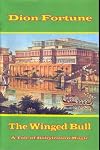
The Winged Bull
by Dion Fortune
On This Page
Description
The Winged Bull is a tale of magic and sexuality. Down on his luck, Ted Murchison invokes the Winged Bull, a god of ancient Babylon, to come to his aid. Immediately, he is drawn into a vortex of weird events in which he is asked to rescue the daughter of an old friend from the clutches of a black magician.Tags
Recommendations

















Member Recommendations
Member Reviews
Published in 1935, this straddles the territory between popular and serious fiction (or an attempt at it at least). It is best given its rating as the former because this is not great literature but rather a fascinating insight into the sexual attitudes of a long-gone era.
Put to one side the casual racism and sexism and the very binary view of what it is to be a man and a woman and enjoy a romantic adventure, albeit one built on the somewhat simple sub-Lawrentian and post-Freudian theories of its occultist psychologist author.
There is an erotic charge in at least the first third of the book and, although the romance does not quite ring true, it contains nuggets of well observed psychology some of which applies today as much to the show more 1930s. But it is the down-at-heel soldier Murchison who interests most.
This is a picture of a thirty-something who has been given a taste of life as a berserker soldier in the Great War and been disappointed ever since, finding not a 'land fit for heroes' but submission to harsh economic reality and a culture of sexual repression.
This is the sort of man who would have swelled the ranks of national socialism if he had been born a German but he is born a Briton instead and so into a very different set of class, emotional and sexual constraints.
The characters of Murchison, his slightly effeminate and manipulative boss Alick Brangwyn and the confused and passive half-sister Ursula Brangwyn create a sexual dynamic offset against the manipulations of darker forces.
The criminal is always just below the surface. Murchison could turn to crime out of economic desperation. He makes clear that he would do so to survive but his opponents are criminal by their very nature. Love redeems, of course, but he has to have the basic character for it.
Murchison is saved (rather too obviously in the final symbolism) by a form of gnostic Christanity rather than the socially dominant Christianity of (his) contemporary culture because he is taken in hand by Brangwyn the manipulative occultist and therapist.
On the other side is a sinister and evil character, Astley, no more nor less than a satirised Aleister Crowley. The attempt at a Black Mass ritual is the seedy ancestor of Dennis Wheatley's horrors - not true esotericism but mere psychic and physical thuggery.
For Fortune, the occult was just hidden spirituality of a gnostic type in which magic was a matter of the manipulation of the psychological dynamic in a sexual situation. The cause of change would be spiritual in the classic sense. Evil magicians could use that same dynamic.
The underlying theme is one of sex magick and, though never explicit and clearly undertaken within the bounds of matrimony, there is an ambiguity about whether the matrimony may actually require a church service if it is a magically charged spiritual encounter.
As you would expect in a published book of the era, the sexual magick is ritualised in the abstract and largely alluded to rather than directly presented but it is there. The theme is clear - sex is a positive force for spiritual change.
The theory is not going to persuade many twenty-first century readers - too much intellectual and social change took place in the intervening eight or so decades but it remains an interesting contribution to the occult thriller genre and still reads well. show less
Put to one side the casual racism and sexism and the very binary view of what it is to be a man and a woman and enjoy a romantic adventure, albeit one built on the somewhat simple sub-Lawrentian and post-Freudian theories of its occultist psychologist author.
There is an erotic charge in at least the first third of the book and, although the romance does not quite ring true, it contains nuggets of well observed psychology some of which applies today as much to the show more 1930s. But it is the down-at-heel soldier Murchison who interests most.
This is a picture of a thirty-something who has been given a taste of life as a berserker soldier in the Great War and been disappointed ever since, finding not a 'land fit for heroes' but submission to harsh economic reality and a culture of sexual repression.
This is the sort of man who would have swelled the ranks of national socialism if he had been born a German but he is born a Briton instead and so into a very different set of class, emotional and sexual constraints.
The characters of Murchison, his slightly effeminate and manipulative boss Alick Brangwyn and the confused and passive half-sister Ursula Brangwyn create a sexual dynamic offset against the manipulations of darker forces.
The criminal is always just below the surface. Murchison could turn to crime out of economic desperation. He makes clear that he would do so to survive but his opponents are criminal by their very nature. Love redeems, of course, but he has to have the basic character for it.
Murchison is saved (rather too obviously in the final symbolism) by a form of gnostic Christanity rather than the socially dominant Christianity of (his) contemporary culture because he is taken in hand by Brangwyn the manipulative occultist and therapist.
On the other side is a sinister and evil character, Astley, no more nor less than a satirised Aleister Crowley. The attempt at a Black Mass ritual is the seedy ancestor of Dennis Wheatley's horrors - not true esotericism but mere psychic and physical thuggery.
For Fortune, the occult was just hidden spirituality of a gnostic type in which magic was a matter of the manipulation of the psychological dynamic in a sexual situation. The cause of change would be spiritual in the classic sense. Evil magicians could use that same dynamic.
The underlying theme is one of sex magick and, though never explicit and clearly undertaken within the bounds of matrimony, there is an ambiguity about whether the matrimony may actually require a church service if it is a magically charged spiritual encounter.
As you would expect in a published book of the era, the sexual magick is ritualised in the abstract and largely alluded to rather than directly presented but it is there. The theme is clear - sex is a positive force for spiritual change.
The theory is not going to persuade many twenty-first century readers - too much intellectual and social change took place in the intervening eight or so decades but it remains an interesting contribution to the occult thriller genre and still reads well. show less
Picture this: London, some years after WW1, in the grip of a pea-souper such as we haven’t seen for goodness knows how long. Ted Murchison, ex-army officer, down on his luck, unemployed, disillusioned with God, finds himself communing wordlessly with the great winged bull in the British Museum. Outside again, the fog as thick as ever, Murchison first cries aloud in his imagination to the winged bull. Then: “Murchison stood alone in the fog-bound darkness of the forecourt of the British Museum and cried aloud, ‘Evoe, Iacchus! Io Pan, Pan! Io Pan!’ And echo answered ‘Io Pan!’ But a voice that was not an echo also answered, ‘Who is this that invokes the Great God Pan?’‿
One of my favourite first chapters of all time! The show more voice belongs to Brangwyn, an occultist and magician, who coincidentally just happens to be Murchison’s old and much-loved CO. He enlists Murchison’s help in freeing his sister from a damaging occult attachment, and sets him on a course that will either be the making or the death of him.
The novel and writing feel quite dated now; these were the days before political correctness was thought of( it was first published in 1936), but if you can cope with that aspect, which seems to touch on so many parts of the life between these covers, especially the roles designated to male and female, the book is revealing and informative. Ideas we now attribute to Graham Handcock and others are mentioned here, and there are many fascinating glimpses into Dion Fortune’s teachings and magickal practice.
I did find the constant on/off tension between Murchison and Brangwyn’s sister Ursula ( the name Ursula Brangwyn must have been deliberately chosen by Fortune to parallel the ideas of D.H. Lawrence in Women In Love; ie the right of a woman to choose her mate), slightly annoying at times, and – for me at least – stretched a little too far. Murchison often seems too sulky and untouchable, even though we’re allowed to see events through his eyes and know his reasons, and the sleazy characters who are out to get their hands on Ursula for the purposes of performing a Black Mass resemble caricatures. But there are some interesting insights to be gained - The Winged Bull is well worth a read, and one of the first pagan fiction classics. show less
One of my favourite first chapters of all time! The show more voice belongs to Brangwyn, an occultist and magician, who coincidentally just happens to be Murchison’s old and much-loved CO. He enlists Murchison’s help in freeing his sister from a damaging occult attachment, and sets him on a course that will either be the making or the death of him.
The novel and writing feel quite dated now; these were the days before political correctness was thought of( it was first published in 1936), but if you can cope with that aspect, which seems to touch on so many parts of the life between these covers, especially the roles designated to male and female, the book is revealing and informative. Ideas we now attribute to Graham Handcock and others are mentioned here, and there are many fascinating glimpses into Dion Fortune’s teachings and magickal practice.
I did find the constant on/off tension between Murchison and Brangwyn’s sister Ursula ( the name Ursula Brangwyn must have been deliberately chosen by Fortune to parallel the ideas of D.H. Lawrence in Women In Love; ie the right of a woman to choose her mate), slightly annoying at times, and – for me at least – stretched a little too far. Murchison often seems too sulky and untouchable, even though we’re allowed to see events through his eyes and know his reasons, and the sleazy characters who are out to get their hands on Ursula for the purposes of performing a Black Mass resemble caricatures. But there are some interesting insights to be gained - The Winged Bull is well worth a read, and one of the first pagan fiction classics. show less
About the author: Dion Fortune is the pen name of Violet Firth. Born in Llandudno, Wales, in 1890, she showed some strong psychic tendencies early. She decided on nursing early on. Psychology became an early interest. Freudian. But she soon saw through the Viennese Tweedle-Dee and turned to what Freud would call: 'the black tide of occultism' for inspiration.
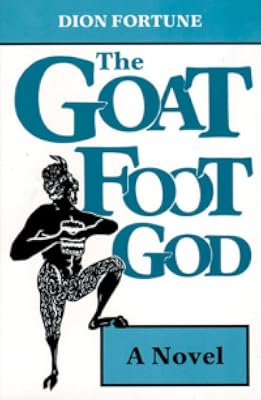
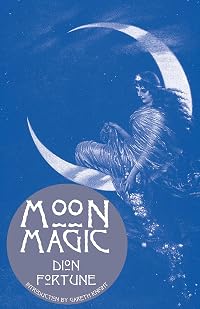
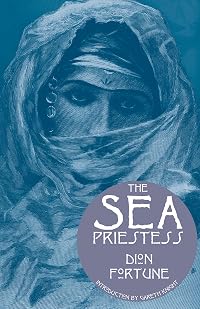
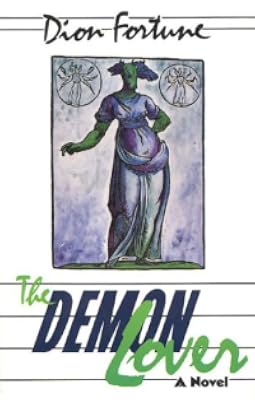
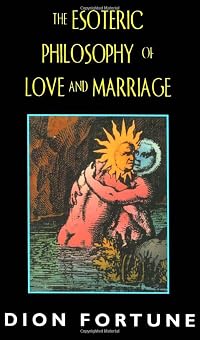
She began life as a Christian Scientist (funny name), dabbled with Theosophy, and finally was welcomed into the loving arms of the Golden Dawn Society wherein she became an initiate and received the hieratic name of Deo Non Fortuna (from God, not from Chance), which soon became her pen name, Dion Fortune. In 1922 she formed The Society of Inner Light and didn't look back. She wrote show more some penetrating studies of the occult sciences including: PSYCHIC SELF DEFENSE, THE MYSTICAL QABALAH, THROUGH THE GATES OF DEATH, ESOTERIC PHILOSOPHY OF LOVE AND MARRIAGE. Her fiction includes: THE DEMON LOVER, THE WINGED BULL, THE GOAT FOR GOD, MOON MAGIC, THE SEA PRIESTESS THE SECRETS OF DR. TAVERNER.
She was married to, and divorced from, T. Penry Evans, M.D. She died in London in January, 1946. The Society of Inner Light still operates in England. And her name is not forgotten by those who have ears to hear and eyes to see. show less
She began life as a Christian Scientist (funny name), dabbled with Theosophy, and finally was welcomed into the loving arms of the Golden Dawn Society wherein she became an initiate and received the hieratic name of Deo Non Fortuna (from God, not from Chance), which soon became her pen name, Dion Fortune. In 1922 she formed The Society of Inner Light and didn't look back. She wrote show more some penetrating studies of the occult sciences including: PSYCHIC SELF DEFENSE, THE MYSTICAL QABALAH, THROUGH THE GATES OF DEATH, ESOTERIC PHILOSOPHY OF LOVE AND MARRIAGE. Her fiction includes: THE DEMON LOVER, THE WINGED BULL, THE GOAT FOR GOD, MOON MAGIC, THE SEA PRIESTESS THE SECRETS OF DR. TAVERNER.
She was married to, and divorced from, T. Penry Evans, M.D. She died in London in January, 1946. The Society of Inner Light still operates in England. And her name is not forgotten by those who have ears to hear and eyes to see. show less
no cover, orange
Ratings
Members
- Recently Added By
Author Information

79+ Works 6,158 Members
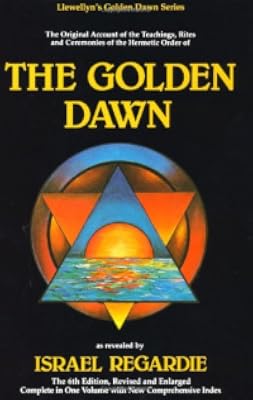
Dion Fortune (born Violet Mary Firth, 1890-1946), founder of the Society of the Inner Light, is recognized as one of the most luminous figures of 20th century esoteric thought. A prolific writer, pioneer psychologist, powerful psychic, and spiritualist, she dedicated her life to the revival of the Western Mystery Tradition. She was also a member show more of the Order of the Golden Dawn, whose members included A. E. Waite, Aleister Crowley, and W. B. Yeats. show less
Classifications
Statistics
- Members
- 165
- Popularity
- 196,877
- Reviews
- 4
- Rating
- (3.74)
- Languages
- English
- Media
- Paper, Ebook
- ISBNs
- 9
- ASINs
- 4