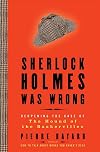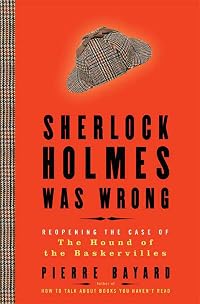
Sherlock Holmes was Wrong: Re-opening the Case of the "Hound of the Baskervilles"
by Pierre Bayard
On This Page
Description
Eliminate the impossible, Sherlock Holmes said, and whatever is left must be the solution. But, as Pierre Bayard finds in this dazzling reinvestigation of The Hound of the Baskervilles, sometimes the master missed his mark. Using the last thoughts of the murder victim as his key, Bayard unravels the case, leading the reader to the astonishing conclusion that Holmes-and, in fact, Arthur Conan Doyle-got things all wrong: The killer is not at all who they said it was.Part intellectual show more entertainment, part love letter to crime novels, and part crime novel in itself, Sherlock Holmes Was Wrong turns one of our most beloved stories delightfully on its head. Examining the many facets of the case and illuminating the bizarre interstices between Doyle's fiction and the real world, Bayard demonstrates a whole new way of reading mysteries: a kind of "detective criticism" that allows readers to outsmart not only the criminals in the stories we love but also the heroes-and sometimes even the writers. show lessTags
Recommendations




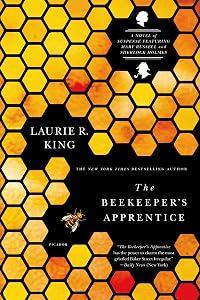


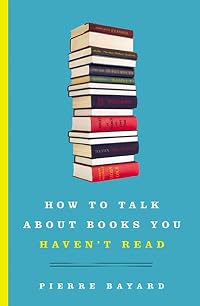


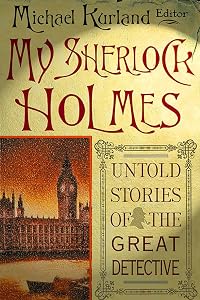
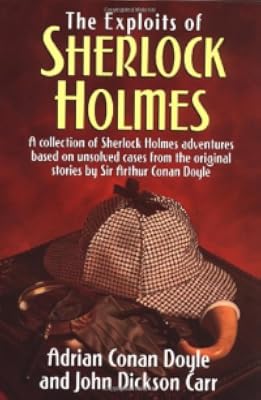






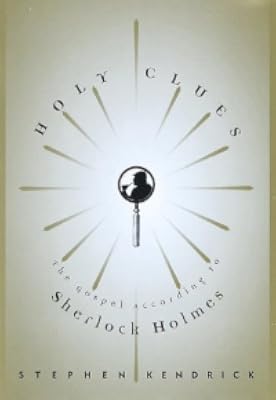



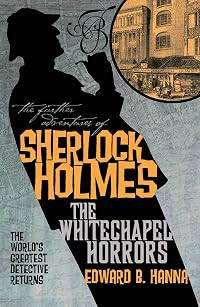
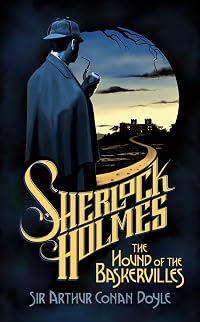

Member Recommendations

PuddinTame These are both readable, intelligent readings into the text of works, asking questions that I am sometimes embarrassed to admit never occurred to me. Both authors have other books along the same lines.
Member Reviews
I'm really very much not a fan of **Sherlock Holmes Was Wrong: Reopening the Case of The Hound of the Baskervilles** by *Pierre Bayard*. Spoilers ahead, though I won't spoil the proposed solution to the Baskerville case.
The book's premise is this: Doyle was so tilted by having to bring back Sherlock Holmes that he didn't correctly solve this case, because he was busy writing an evil-associated, incompetent, absent Holmes. The author proposes an alternate resolution, and shows plenty of sources for his judgement of both Doyle and Holmes. This part of the book is fine! Speculating about other plausible interpretations of a story, and addressing inconsistencies is fun! I enjoyed the speculation, and the solution.
The problem is – well, show more this would have made a fine essay. Or, you know, do what everybody else is doing and write fan fiction. Instead, the author decided he was a fancy, intellectual scholar with his own school of literature interpretation. So, before in true detective style we get a grand reveal in the end, we have to sit through a long, rambling, and condescending retelling of what the author thinks of literature. Y'know, generally. Points for style because he teasers his other books (he did a similar book on the Roger Ackroyd murder by Agatha Christie), complete with "you'll have to buy them to find out my solution".
I tend to trust translators, so I'd like to place the blame for the Doylian, pretentious and condescending tone with the author. Funnily enough, the translator doesn't only add the customary required footnotes, but also corrects the author's opinions where appropriate: Bayard bases parts of his argument and comparison on associations provided by the French translation that aren't present in the English original.
So all things considered: A good idea that would have been enjoyable if it didn't take itself so goddamn seriously. Write some fanfic, dude. show less
The book's premise is this: Doyle was so tilted by having to bring back Sherlock Holmes that he didn't correctly solve this case, because he was busy writing an evil-associated, incompetent, absent Holmes. The author proposes an alternate resolution, and shows plenty of sources for his judgement of both Doyle and Holmes. This part of the book is fine! Speculating about other plausible interpretations of a story, and addressing inconsistencies is fun! I enjoyed the speculation, and the solution.
The problem is – well, show more this would have made a fine essay. Or, you know, do what everybody else is doing and write fan fiction. Instead, the author decided he was a fancy, intellectual scholar with his own school of literature interpretation. So, before in true detective style we get a grand reveal in the end, we have to sit through a long, rambling, and condescending retelling of what the author thinks of literature. Y'know, generally. Points for style because he teasers his other books (he did a similar book on the Roger Ackroyd murder by Agatha Christie), complete with "you'll have to buy them to find out my solution".
I tend to trust translators, so I'd like to place the blame for the Doylian, pretentious and condescending tone with the author. Funnily enough, the translator doesn't only add the customary required footnotes, but also corrects the author's opinions where appropriate: Bayard bases parts of his argument and comparison on associations provided by the French translation that aren't present in the English original.
So all things considered: A good idea that would have been enjoyable if it didn't take itself so goddamn seriously. Write some fanfic, dude. show less
Gosh, this book is an absurd flight-of-fancy, irritatingly smug, and sits at the opposite end of the literary theory spectrum to myself. It is also, incidentally, well-written and coherent within its own framework.
Bayard adopts the viewpoint of the 19th century school of literary theory (somewhat back in vogue) that characters can have a life beyond the page. He argues forcefully for the fact that we all play some role in bringing characters to life, interpreting the gaps and lacunae in the author's descriptions and bringing our own biases with us. He takes this theory further, arguing that it is dull to accept what the author tells us, and we must instead fashion our own work out of that on the page. An intriguing theory that doesn't show more sit well with my New-Criticism-cum-New-Historicism viewpoints, but I'm willing to let other opinions stand.
Without spoiling anything, Bayard's ultimate conclusion about what really happened in The Hound of the Baskervilles is quite clever, really. He makes a convincing case that Holmes' faulty reasoning and preconceived notions led to an incorrect conclusion, and he argues forcefully that readers' love of Holmes since his conception goes beyond that of fans and a character. That, in a sense, Conan Doyle created a character who outgrew him, who outgrew the world of fiction.
Undeniably this work (in translation) would have been better as a long essay than an entire volume. The first 53 pages are a retelling of Conan Doyle's novel, which seems excessive. The section on Conan Doyle's relationship with his character is entirely filler, if interesting historically. Nevertheless, this is the book that we have, and thus it's the book I'm reviewing.
Much of your feeling on this book will depend on how you take Bayard's own attitude. Is he being wryly self-aware or does he truly believe his own argument? Evidently a lot of Goodreads reviewers are frustrated by the theorist arguing that characters experience lives we are not a part of. I suspect Bayard knows exactly what he's doing, and is having fun with his own conceit. He knows, as well as we do, that this is not possible, and that if Conan Doyle had intended for Holmes to get the case wrong, he would have made that clear. Thus, we must approach the whole work within Bayard's own framework or there is no point reading it at all.
From this point of view, the book is rather good. On reflection, even the seemingly excessive chapters (such as a deep analysis of the eponymous hound's mindset) are relevant to the central argument. This is a book that can inspire great literary debates - as indeed it has in my friendship circle - and for that we should be grateful. (Although the fact that Bayard has written three such books as this - another on Hamlet and one on Agatha Christie's Roger Ackroyd - may annoy literary elitists like myself, who would rather theorists devote themselves to exploring the texts themselves rather than making a career out of the spaces in between!)
What am I saying? If the work is one long con, it's a damn good one. If it's completely serious, it's trash. If it's somewhere in between, I suspect it's a cunning little argument that helped earn a writer some royalties, and it needn't be any more than that. show less
Bayard adopts the viewpoint of the 19th century school of literary theory (somewhat back in vogue) that characters can have a life beyond the page. He argues forcefully for the fact that we all play some role in bringing characters to life, interpreting the gaps and lacunae in the author's descriptions and bringing our own biases with us. He takes this theory further, arguing that it is dull to accept what the author tells us, and we must instead fashion our own work out of that on the page. An intriguing theory that doesn't show more sit well with my New-Criticism-cum-New-Historicism viewpoints, but I'm willing to let other opinions stand.
Without spoiling anything, Bayard's ultimate conclusion about what really happened in The Hound of the Baskervilles is quite clever, really. He makes a convincing case that Holmes' faulty reasoning and preconceived notions led to an incorrect conclusion, and he argues forcefully that readers' love of Holmes since his conception goes beyond that of fans and a character. That, in a sense, Conan Doyle created a character who outgrew him, who outgrew the world of fiction.
Undeniably this work (in translation) would have been better as a long essay than an entire volume. The first 53 pages are a retelling of Conan Doyle's novel, which seems excessive. The section on Conan Doyle's relationship with his character is entirely filler, if interesting historically. Nevertheless, this is the book that we have, and thus it's the book I'm reviewing.
Much of your feeling on this book will depend on how you take Bayard's own attitude. Is he being wryly self-aware or does he truly believe his own argument? Evidently a lot of Goodreads reviewers are frustrated by the theorist arguing that characters experience lives we are not a part of. I suspect Bayard knows exactly what he's doing, and is having fun with his own conceit. He knows, as well as we do, that this is not possible, and that if Conan Doyle had intended for Holmes to get the case wrong, he would have made that clear. Thus, we must approach the whole work within Bayard's own framework or there is no point reading it at all.
From this point of view, the book is rather good. On reflection, even the seemingly excessive chapters (such as a deep analysis of the eponymous hound's mindset) are relevant to the central argument. This is a book that can inspire great literary debates - as indeed it has in my friendship circle - and for that we should be grateful. (Although the fact that Bayard has written three such books as this - another on Hamlet and one on Agatha Christie's Roger Ackroyd - may annoy literary elitists like myself, who would rather theorists devote themselves to exploring the texts themselves rather than making a career out of the spaces in between!)
What am I saying? If the work is one long con, it's a damn good one. If it's completely serious, it's trash. If it's somewhere in between, I suspect it's a cunning little argument that helped earn a writer some royalties, and it needn't be any more than that. show less
If understood as having tongue firmly in cheek, this is the best kind of literary criticism: inventive, thoroughly, approachable, rigorously grounded in the text, and fun to read. It's possible that Bayard is serious, but given the subjects of his other works, I think we can rule that out as an impossibility.
I loved this book. For one thing, it does a better job than Holmes in discovering the true crime at the heart of "The Hound of the Baskervilles" and the true perpetrator. Moreover, it is simultaneously a serious work of criticism and theory and greatly playful, both a work of analysis and a novel itself, albeit a novel that consistents entirely of events and characters already available to the reader. The book is full of precise insights about readers and books generally, and detective fiction in particular. The crime-solving portion of the book encompasses maybe half of what is a short book, so a reader only interested in who done it might be a bit disappointed. But in what murder mystery is not the point the getting there, rather than show more the particular destination? show less
Drawing on and expanding his previous works of what he terms "detective criticism," in Sherlock Holmes Was Wrong (Bloomsbury, 2008) Pierre Bayard reopens The Hound of the Baskervilles and suggests that by a rigorous applications of Holmes' own detecting methods, the murderer was likely not the man ultimately fingered by Holmes and Watson, but someone else entirely.
A creative idea, and some of Bayard's reasoning is fun to follow and interesting to read. He makes some interesting points about the timing of the publication of Hound and Conan Doyle's ambivalence about resurrecting Holmes (perhaps reading a bit too deeply into the author's psychological state while doing so), and muses on the power of fictional characters: can they at times show more "cross the gap," as it were, and become more than just words on a page? It's no accident, I expect, that the initial epigram is a quote from Jasper Fforde.
In offering a close reading of the Hound itself, Bayard relies too heavily on a French translation of the novel, in which the translator uses canine descriptors for Holmes (thus "his eyes shining brightly in the moonlight" from the original English becomes "his eyes gleamed like a wolf's" in the French translation). Thus, Bayard's use of the translation to make a point that Conan Doyle is connecting Holmes and the Hound doesn't quite hold up.
While Bayard's plausible case for a different killer with a carefully-honed agenda makes for provocative reading, it's no less circumstantial a case than Holmes' is against the canonical murderer. Nonetheless, if you like exploring alternative interpretations of literary events, this is a book worth picking up.
http://philobiblos.blogspot.com/2011/07/book-review-sherlock-holmes-was-wrong.ht... show less
A creative idea, and some of Bayard's reasoning is fun to follow and interesting to read. He makes some interesting points about the timing of the publication of Hound and Conan Doyle's ambivalence about resurrecting Holmes (perhaps reading a bit too deeply into the author's psychological state while doing so), and muses on the power of fictional characters: can they at times show more "cross the gap," as it were, and become more than just words on a page? It's no accident, I expect, that the initial epigram is a quote from Jasper Fforde.
In offering a close reading of the Hound itself, Bayard relies too heavily on a French translation of the novel, in which the translator uses canine descriptors for Holmes (thus "his eyes shining brightly in the moonlight" from the original English becomes "his eyes gleamed like a wolf's" in the French translation). Thus, Bayard's use of the translation to make a point that Conan Doyle is connecting Holmes and the Hound doesn't quite hold up.
While Bayard's plausible case for a different killer with a carefully-honed agenda makes for provocative reading, it's no less circumstantial a case than Holmes' is against the canonical murderer. Nonetheless, if you like exploring alternative interpretations of literary events, this is a book worth picking up.
http://philobiblos.blogspot.com/2011/07/book-review-sherlock-holmes-was-wrong.ht... show less
"The main premise of detective criticism is this: many of the murders narrated in literature were not committed by the people accused by the text. In literature, as in life, the true criminals often elude the investigators and allow secondary characters to be accused and condemned. In its passion for justice, detective criticism commits itself to rediscovering the truth. If it is unable to arrest the guilty parties, it can at least clear the names of the innocent."
This is literary criticism like you've never read it. When I picked up this book, I thought it was a fan fiction approach to Sherlock Holmes. What I ended up reading was an entertaining, thought-provoking and convincing argument that Sherlock Holmes did not solve The Case of show more the Hound of the Baskervilles.
Read the full review here. show less
This is literary criticism like you've never read it. When I picked up this book, I thought it was a fan fiction approach to Sherlock Holmes. What I ended up reading was an entertaining, thought-provoking and convincing argument that Sherlock Holmes did not solve The Case of show more the Hound of the Baskervilles.
Read the full review here. show less
Egad, I say. Whatever is this? Apparently 823.912 is the Dewey number for criticism and commentary on 19th and 20th century English authors, so as I ogled my way through a shelf of books looking for Tolkien commentary, I saw things like 'The James Joyce Companion', several Agatha Christie readers, a dozen books about Dickens, and this one that caught my eye. It presents an astoundingly sound re-examination of the case and also had some essaying about the reality of fictional characters. Really, it was more like two short books mixed together. The author discussed how we psychologically enter the realm of fictional characters (which is what makes the good stories so universally appealing), and, in their own way, the fictional personas show more enter into our reality. This is more obvious with Holmes, as his methods of observation and deduction are quite handy and impressive. I have amazed people by noticing the white line where a ring has been or asking someone where they got their pantlegs wet on a sunny day. I love the human intellect. It's such a fun buddy to have around. But I digress from my point. Apparently Conan Doyle really grew to hate Holmes because the clamor for more Holmes tales took time away from what he considered his more important writings, like the White Company and all that other stuff of his that almost nobody reads. That's why he killed of Holmes at Reichenbach Falls and had to invent an anti-Holmes to carry out the murder. The public uproar was such that his publishers demanded more Holmes stories and Conan Doyle did so reluctantly, and only with the doubling of his royalties. Bayard then goes on to show how Doyle's hatred for Holmes carried into that return story, The Hound of the Baskervilles. He builds up a surprisingly strong case around Holmes errors, of which there are actually several in the corpus of stories, shows how Doyle portrayed Holmes as a feral hound himself, points out that Holmes is actually absent in person from almost the entire story, then finishes with an alternative solution that actually makes more sense than the original. I was very surprised with this book, most notably with the psychological reality of fiction part. That alone made this a fairly valuable read and explains why fantasy lovers really, really love their favorites. Or why others hate it, I suppose. The bit about Doyle was fairly old news to me, but it may not be to others, and the parsing of a fictional story was the highlight of the book in theory, but was actually not that important. It's not like Monsieur Bayard found Jimmy Hoffa's body or solved some real crime. Still, I say if your library has this book, go ahead and check it out as it is a pretty fulfilling and yet short read. Oh, Bayard also wrote Who Killed Roger Ackroyd? along the same lines, and as a minor warning he throws in a total spoiler of Christie's Towards Zero as part of his theory about the Baskerville murders. show less
Members
- Recently Added By
Lists

Best books about books
209 works; 106 members

Favorite Books Based on Sherlock Holmes Stories
20 works; 10 members

Recommend the 20 best books you've read in the last five years
2,168 works; 606 members
Author Information

31+ Works 2,469 Members
Pierre Bayard is a psychoanalyst and professor of French literature in Paris
Work Relationships
Is a commentary on the text of
Common Knowledge
- Canonical title
- Sherlock Holmes was Wrong: Re-opening the Case of the "Hound of the Baskervilles"
- Original title
- L'Affaire du Chien des Baskerville
- People/Characters
- Sherlock Holmes; John H. Watson; Arthur Conan Doyle
- Important places
- 221B Baker Street, London, England, UK; Baskerville Hall, Dartmoor, Devon, England, UK; Grimpen Mire, Dartmoor, Devon, England, UK
- Epigraph
- The barriers between reality and fiction are softer than we think; a bit like a frozen lake. Hundreds of people can walk across it, but then one evening a thin spot develops and someone falls through; the hole is frozen over ... (show all)by the following morning.
—Jasper Fforde, The Eyre Affair - Dedication
- For Guillaume
- First words
- From the chamber where she has been locked for hours, the young woman hears shouts and laughter rising from the great dining hall below.
- Last words
- (Click to show. Warning: May contain spoilers.)For it is not true that the dead are dead. In fiction as in reality, they possess a singular form of existence and continue to mingle with the living, shaping their decisions, dictating their statements and even their thoughts, imperiously demanding, with as much force and steadfastness as the living, finally to be recognized and heard.
- Original language
- French
Classifications
- Genres
- Literature Studies and Criticism, Nonfiction, Fiction and Literature
- DDC/MDS
- 823.912 — Literature & rhetoric English & Old English literatures English fiction 1900- 1901-1999 1901-1945
- LCC
- PR4622 .H63 .B3913 — Language and Literature English English Literature 19th century , 1770/1800-1890/1900
- BISAC
Statistics
- Members
- 251
- Popularity
- 129,373
- Reviews
- 16
- Rating
- (3.49)
- Languages
- 5 — English, French, German, Italian, Spanish
- Media
- Paper, Audiobook, Ebook
- ISBNs
- 16
- ASINs
- 6