
Inside the Third Reich
by Albert Speer
On This Page
Description
"Inside the Third Reich is a memoir written by Albert Speer, the Nazi Minister of Armaments from 1942 to 1945, serving as Adolf Hitler's main architect before this period. It is considered to be one of the most detailed descriptions of the inner workings and leadership of Nazi Germany but is controversial because of Speer's lack of discussion of Nazi atrocities and questions regarding his degree of awareness or involvement with them."--Tags
Recommendations


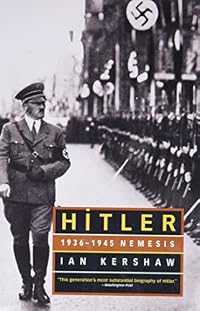




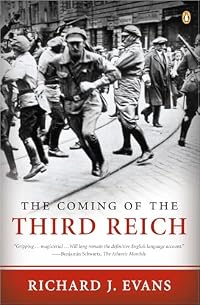


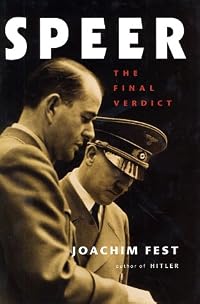
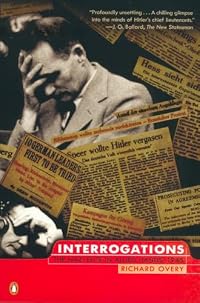






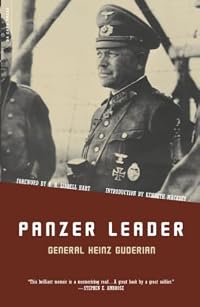

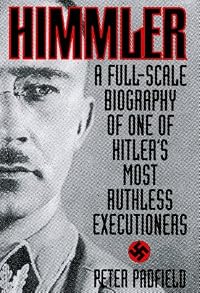
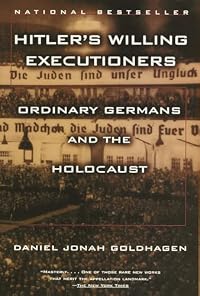

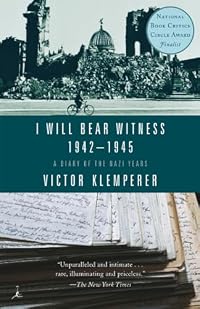



Member Recommendations


Member Reviews
Tome of a memoir, an exquisite historical document, and a profound literary achievement. The character sketches provided by Speer are illuminating in terms of insights into human psychology, moral dilemmas that wars bring about, and self-images that all human beings want to leave as their legacy. There are innumerable lines, anecdotes and passages that can keep one intellectually engaged for hours and move to explore further.
But most importantly, it leaves me wondering if it were not for those grandeur human tragedies, which are otherwise called by pretty euphemisms such as wars for national glory, liberation through peoples' revolutions or divinely sanctioned religious and racial domination, would we still still have literary show more masterpieces of such scale? show less
But most importantly, it leaves me wondering if it were not for those grandeur human tragedies, which are otherwise called by pretty euphemisms such as wars for national glory, liberation through peoples' revolutions or divinely sanctioned religious and racial domination, would we still still have literary show more masterpieces of such scale? show less
This book is definitely essential reading if you have any kind of interest at all in either WWII, or the agency which individual people can have within a totalitarian system. Inside the Third Reich is a lengthy - in my edition, seven hundred pages, not including notes, bibliography or index - memoir written by Albert Speer, focusing on the years between 1933 and 1945 when he was Hitler's architect, his Minister of Arms and Munitions, and probably one of the closest things Hitler had to a friend.
At many points it's not an easy book to read - not because Speer goes into any detail about the mass killings or the conditions in the concentration camps, but because of the detail which he goes into about the construction and requisition show more projects which formed so much of his work at the time, the repetitive ways in which he documents tea-time with Hitler. In some ways I think this is one of the most important features of the book. You get to see the sheer banality of the regime, the statistics and demographics which make up such a large chunk of the book showing off the bureaucracy of the Third Reich which was not so very different from many other western countries at the time, or since.
His observations on Hitler's personality, his initial hero-worship for him, and his gradual later disillusionment, are truly fascinating to read about. Hitler is shown, not as a madman or as an evil mastermind, but as an actual person; the descent into delusion and denial in later life is made all the more dramatic by how almost-normal he seemed in the earlier part of the book.
Speer does express regret in the book for the crimes which the Nazi regime committed, and for his part in them. This is not something which he came to realise over the course of writing his memoirs - from the Nuremberg trials, we do have footage of him striking his breast and saying mea culpa, mea maxima culpa. Something, perhaps, of a realisation of the wrongs of the regime had already occurred to him from 1944 on, as shown by his attempts to block some or all of the scorched earth policy which Hitler tried to adopt in the last few desperate months of the war.
However, I find it really and truly hard to believe that Speer was ever truly as naive and unaware as he was presented as being in the book, or that he was devoted to all the aims of Nazism with the exception of its racist ideologies. He certainly wasn't involved directly in any of the mass murder, but he did make use of slave labour in his construction projects and in the munition factories which he ran. He may have been described by others as the 'respectable Nazi'; but respectable or not, he was still a Nazi, who either found the racial policies of the regime acceptable, or capable of being ignored. Perhaps he didn't know; perhaps he didn't want to know, consciously or unconsciously. With an auto-biographical memoir of this nature and on this topic, it is hard to be certain. I think the only thing one can do is to read the book oneself, and make up one's own mind. show less
At many points it's not an easy book to read - not because Speer goes into any detail about the mass killings or the conditions in the concentration camps, but because of the detail which he goes into about the construction and requisition show more projects which formed so much of his work at the time, the repetitive ways in which he documents tea-time with Hitler. In some ways I think this is one of the most important features of the book. You get to see the sheer banality of the regime, the statistics and demographics which make up such a large chunk of the book showing off the bureaucracy of the Third Reich which was not so very different from many other western countries at the time, or since.
His observations on Hitler's personality, his initial hero-worship for him, and his gradual later disillusionment, are truly fascinating to read about. Hitler is shown, not as a madman or as an evil mastermind, but as an actual person; the descent into delusion and denial in later life is made all the more dramatic by how almost-normal he seemed in the earlier part of the book.
Speer does express regret in the book for the crimes which the Nazi regime committed, and for his part in them. This is not something which he came to realise over the course of writing his memoirs - from the Nuremberg trials, we do have footage of him striking his breast and saying mea culpa, mea maxima culpa. Something, perhaps, of a realisation of the wrongs of the regime had already occurred to him from 1944 on, as shown by his attempts to block some or all of the scorched earth policy which Hitler tried to adopt in the last few desperate months of the war.
However, I find it really and truly hard to believe that Speer was ever truly as naive and unaware as he was presented as being in the book, or that he was devoted to all the aims of Nazism with the exception of its racist ideologies. He certainly wasn't involved directly in any of the mass murder, but he did make use of slave labour in his construction projects and in the munition factories which he ran. He may have been described by others as the 'respectable Nazi'; but respectable or not, he was still a Nazi, who either found the racial policies of the regime acceptable, or capable of being ignored. Perhaps he didn't know; perhaps he didn't want to know, consciously or unconsciously. With an auto-biographical memoir of this nature and on this topic, it is hard to be certain. I think the only thing one can do is to read the book oneself, and make up one's own mind. show less
Read it but seriously keep in mind that Albert Speer is totally full of shit. He wants you to believe that he was the one kind and moralistic soul in Hitlers inner circle and that he had no real idea what was going on with the SS, the concentration camps, and so on. HAHAHA what a joke. Save it for Nuremberg. I'm sure he was arms minister for so long without knowing what was really going on...right. It's cool that he wrote this book to give us all an insight into the weird lives of all these nazis but it's a tragedy that he didn't die with the rest of them.
I want to keep my distance from a work like this because although I feel Speer is mostly an honest narrator, his clear, somewhat banal account of the Third Reich, Hitler, and his own activities read like a generic memoir, somehow perverting the madness of the time—the destruction, inhuman cruelty, and the quest for absolute power. By giving us this account, Speer affirms that for the most part the atrocities of the the Third Reich were carried out by otherwise normal, almost boring men, like himself, who were tasked with a mission and carried it out to the best of their abilities. (Speer affirms this view on page 344, when he talks of an article in The Observer that spoke of him as the leader of a highly efficient, impersonal show more technocracy.) My fear is that this is not a sufficiently emotional account to teach us anything. It gives us an inside look, yes, but it is so self absorbed that we lose the broader view of the war's effects. We miss the sufferings of millions because we are tangled in Speer's account of day-to-day travels, power struggles within the regime, and the stubborn madness of Hitler.
Could this memoir be anything else? Should it be? Probably not. I just can't help but feel that Speer's last sacrifice should be to accept alienation, where his memoirs, like his architecture, become lost to that time. show less
Could this memoir be anything else? Should it be? Probably not. I just can't help but feel that Speer's last sacrifice should be to accept alienation, where his memoirs, like his architecture, become lost to that time. show less
Extremely fascinating explanation of how an educated, apparently mild-mannered and humane German became indispensible to Hitler and the Holocaust by some kind of personal osmosis and how difficult it was to extricate himself from that system he had once admired yet always despised at least a little at some level.
Did Speer really tell the truth about his past? That question has haunted readers of his memoir Inside the Third Reich. Central to that question is the issue of what he knew about the murder of the Jews and when he knew it. Speer claimed to have learned about the Final Solution only after the war was over--and to have understood its full significance only during the final speech by Britain's chief prosecutor at Nuremberg. That speech, which included graphic descriptions of the exterminations, had a devastating effect on Speer. He acknowledged that he felt "personal guilt" for what had happened, and he accepted responsibility for it because he had been part of the Nazi regime. Indeed, he concluded that the Russians were right to demand show more the death sentence for him. As he put it some 30 years later, "How could we--just we--be allowed to remain alive after that?"
But Speer was allowed to live. His sentence, which surprised many and has been severely criticised, was determined only after significant debate among the judges. At least one of the reasons for his comparatively light sentence was the judgment that Speer had not directly participated in the extermination of the Jews. This seemed implausible at the time because Speer was one of the most powerful figures in the Nazi regime. How could he not have known? But there was no hard evidence linking Speer to the actual extermination policies, and Hitler had always been careful to tell his deputies only what they needed or wanted to know.
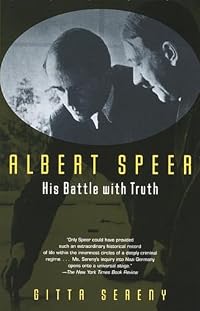
Questions about the extent of Speer's knowledge have persisted. Speer spent much of his time in Spandau writing his memoirs. Inside the Third Reich is a second, condensed version of the original 1,500-page Spandau draft. These memoirs have impressed readers with their frankness and honesty, their insightful characterisations of Hitler's inner circle, and their clarity about Speer's repentance. Yet readers have also wondered whether Speer had been fully honest. After comparing the original Spandau draft with the published version, Sereny concludes that Speer adopted an all-too-characteristic strategy of acknowledging some truths while evading others. show less
But Speer was allowed to live. His sentence, which surprised many and has been severely criticised, was determined only after significant debate among the judges. At least one of the reasons for his comparatively light sentence was the judgment that Speer had not directly participated in the extermination of the Jews. This seemed implausible at the time because Speer was one of the most powerful figures in the Nazi regime. How could he not have known? But there was no hard evidence linking Speer to the actual extermination policies, and Hitler had always been careful to tell his deputies only what they needed or wanted to know.
Questions about the extent of Speer's knowledge have persisted. Speer spent much of his time in Spandau writing his memoirs. Inside the Third Reich is a second, condensed version of the original 1,500-page Spandau draft. These memoirs have impressed readers with their frankness and honesty, their insightful characterisations of Hitler's inner circle, and their clarity about Speer's repentance. Yet readers have also wondered whether Speer had been fully honest. After comparing the original Spandau draft with the published version, Sereny concludes that Speer adopted an all-too-characteristic strategy of acknowledging some truths while evading others. show less
Fascinating account of Nazi Germany and Hitler by a very interesting person. It's quite unique memoirs coming from somebody that was very close to Hitler circle. It's well written and seemingly honest - at least, until last chapters where Speer describes his altruistic actions and I am not sure whether I can believe him. The story of young architect getting in a few years to the height of power through dictator's benevolence and his own abilities is interesting by itself. Add to that the historical background, intimate details of Reich leaders and very close connection to Hitler, and it becomes essential reading for anybody interested in Third Reich history.
Members
- Recently Added By
Lists

autobiographies, biographies & memoirs
56 works; 1 member

Publisher's Weekly NON-Fiction list - 1912 - 1975
486 works; 4 members

imperialism, war & genocide
11 works; 1 member

Best Biographies
216 works; 26 members
Author Information

30+ Works 3,915 Members
Some Editions
Awards and Honors
Series
Belongs to Publisher Series
Work Relationships
Common Knowledge
- Canonical title
- Inside the Third Reich
- Original title
- Erinnerungen
- Original publication date
- 1969; 1969 (1e édition originale allemande, Propyläen / Ullstein Verlag) (1e édition originale allemande, Propyläen / Ullstein Verlag); 1971 (1e traduction et édition française, Les grandes études contemporaines, Fayard) (1e traduction et édition française, Les grandes études contemporaines, Fayard)
- People/Characters
- Albert Speer; Eva Braun; Fritz Sauckel; Magda Goebbels; Karl Hanke; Karl Brandt (show all 9); Theodor Morell; Arno Breker; Adolf Hitler
- Important places
- Germany
- Important events
- World War II
- Related movies
- Der Untergang (2004 | IMDb)
- Epigraph*
- (Préface)
Toute autobiographie est une entreprise problématique, car elle suppose nécessairement qu'il existe une chaise sur laquelle on peut s'assoir pour contempler sa propre existence, e comparer les diffÃ... (show all)©rentes phases, en embrasser et en pénétrr l'évolution. Sans doute l'homme peut-il et doit-il se voir. Mais son regard ne peut embrasser tout son être, même à chacun des moments de son existence présente, non plus qu'appréhender son passé dans sa totalité
Karl Barth - First words
- Some of my forefathers were Swabians, some came from poor peasants of the Westerwald, others from Silesia and Westphalia.
- Last words
- (Click to show. Warning: May contain spoilers.)But in the end my feelings about it are highly skeptical.
- Publisher's editor
- Gross, Gerald
- Original language*
- Allemand
*Some information comes from Common Knowledge in other languages. Click "Edit" for more information.
Classifications
- Genres
- History, Biography & Memoir, Nonfiction, General Nonfiction
- DDC/MDS
- 943.086 — History & geography History of Europe Central Europe: Germany, Austria, Switzerland, Czech, Poland, Hungary Historical periods of Germany Germany 1866- Third Reich 1933-1945
- LCC
- DD247 .S63 .A313 — History of Europe, Asia, Africa and Oceania Germany History of Germany History By period Modern, 1519- 19th-20th centuries Revolution and Republic, 1918-
- BISAC
Statistics
- Members
- 3,016
- Popularity
- 5,855
- Reviews
- 34
- Rating
- (3.92)
- Languages
- 14 — Danish, Dutch, English, Estonian, Finnish, French, German, Italian, Norwegian (Bokmål), Polish, Portuguese, Russian, Spanish, Swedish
- Media
- Paper, Ebook
- ISBNs
- 53
- ASINs
- 50