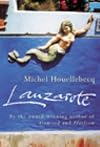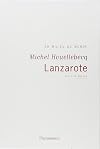
Lanzarote
by Michel Houellebecq
On This Page
Description
Realising that his New Year is probably going to be a disaster, as usual, our narrator, on impulse, walks into a travel agency to book a week in the sun. Sensitive to his limited means and dislike of Muslim countries, the travel agent suggests an island full of 21st century hedonism, set in a bizarre lunar landscape - Lanzarote. On Lanzarote, one can meet some fascinating human specimens, notably Pam and Barbara - 'non-exclusive' German lesbians - who can give rise to some interesting show more combinations. Will they succeed in seducing Rudi, the police inspector from Luxembourg, currently living in exile in Brussels? Or will he join the 'Azraelian' sect, as they prepare for humanity to be regenerated by extra-terrestrials? As for our narrator, will he consider his week's holiday on the island a success? show lessTags
Recommendations







































Member Recommendations
Member Reviews
I have no idea why this is being touted as a novel other than the opportunity to sell it at premium price to Houellebecq completists with the usual sexy picture on the front. In fact, it is just a long short story of 87 pages in quite large print and plenty of space for the margins.
Having said that (one must expect to be ripped off to some extent by the publishing industry), the story might be regarded as a nice summary of the Houllebecq world view as it stood in 2000 with all his tropes neatly lined up in a row - a sort of aide memoire for Atomised readers.
There is the miserabilist detached outlook, the forlorn attempt to escape from a dreary Paris (this time to Lanzarote), the satire, stereotyping, the anti-Muslim sentiments, the show more casual swinging sex, the natural attraction of losers to one another and a cult, a thinly disguised satire of Raelism.
The tragedy of Houllebecq's main character (expressed by the Belgian 'friend' and possibly the tragedy of Houellebecq himself then if not now) is that he wants to belong to something but whatever he belongs to has to be like him. No community can be constructed out of such a person.
It must seem so unjust (as it must have done to the Marquis de Sade or to a paedophile or a unwilling hermit) that, being as one is, the world is not as one is so that one can, indeed, belong. Sex becomes the only means of connection, requiring no need for a sharing of obligations.
It is a slight work intellectually but it is well written, had me laughing out loud in a few places, made me feel I had visited Lanzarote and even had sex on the beach with the two bisexual Lesbians ... and feel sorry for the lost possibly unintentionally paedophiliac Belgian police man.
This is Houellebecq's skill. He can bring to life nihilistic pleasures in such a way that you shed all your socially responsible nonsense briefly and indulge in a type of instinctive animal freedom that still gives you no meaning, certainly no belonging and only temporary and easily spent pleasure.
One suspects a propensity to depression moderated by bouts of sexual performance is Houllebecq's way of trying to describe life at the turn of the twenty-first century. Humans in the waiting room of non-existence from the point at which they are aware of existing.
Of course, if everyone behaved like Houellebecqian characters, then we would perhaps be in a pretty state indeed. On the other hand, perhaps more people think like Houellebecquian characters than we are all prepared to admit. Perhaps this is what a lot of men in middle age are actually like?
The book is filled out (probably some Editor pointing out that the punters ought to be given something more than a slim story to justify the price) with some very attractive pictures of Lanzarote's bleak but beautiful environment.
There is more padding with an account at the end of volcanic activity on the island in the eighteenth century. All in all, given that the draft of the 'novel' came from an unspecified earlier date, one suspects that what we have here is a polished up early draft and not much more.
Nevertheless, I can't help but like Houellebecq and his work. He tries so hard to be conventionally objectionable with his politically incorrect statement, his pornographic representations, his cold observations and his nihilism that the effect becomes almost charming. In the end, he amuses. show less
Having said that (one must expect to be ripped off to some extent by the publishing industry), the story might be regarded as a nice summary of the Houllebecq world view as it stood in 2000 with all his tropes neatly lined up in a row - a sort of aide memoire for Atomised readers.
There is the miserabilist detached outlook, the forlorn attempt to escape from a dreary Paris (this time to Lanzarote), the satire, stereotyping, the anti-Muslim sentiments, the show more casual swinging sex, the natural attraction of losers to one another and a cult, a thinly disguised satire of Raelism.
The tragedy of Houllebecq's main character (expressed by the Belgian 'friend' and possibly the tragedy of Houellebecq himself then if not now) is that he wants to belong to something but whatever he belongs to has to be like him. No community can be constructed out of such a person.
It must seem so unjust (as it must have done to the Marquis de Sade or to a paedophile or a unwilling hermit) that, being as one is, the world is not as one is so that one can, indeed, belong. Sex becomes the only means of connection, requiring no need for a sharing of obligations.
It is a slight work intellectually but it is well written, had me laughing out loud in a few places, made me feel I had visited Lanzarote and even had sex on the beach with the two bisexual Lesbians ... and feel sorry for the lost possibly unintentionally paedophiliac Belgian police man.
This is Houellebecq's skill. He can bring to life nihilistic pleasures in such a way that you shed all your socially responsible nonsense briefly and indulge in a type of instinctive animal freedom that still gives you no meaning, certainly no belonging and only temporary and easily spent pleasure.
One suspects a propensity to depression moderated by bouts of sexual performance is Houllebecq's way of trying to describe life at the turn of the twenty-first century. Humans in the waiting room of non-existence from the point at which they are aware of existing.
Of course, if everyone behaved like Houellebecqian characters, then we would perhaps be in a pretty state indeed. On the other hand, perhaps more people think like Houellebecquian characters than we are all prepared to admit. Perhaps this is what a lot of men in middle age are actually like?
The book is filled out (probably some Editor pointing out that the punters ought to be given something more than a slim story to justify the price) with some very attractive pictures of Lanzarote's bleak but beautiful environment.
There is more padding with an account at the end of volcanic activity on the island in the eighteenth century. All in all, given that the draft of the 'novel' came from an unspecified earlier date, one suspects that what we have here is a polished up early draft and not much more.
Nevertheless, I can't help but like Houellebecq and his work. He tries so hard to be conventionally objectionable with his politically incorrect statement, his pornographic representations, his cold observations and his nihilism that the effect becomes almost charming. In the end, he amuses. show less
A short, short book - like a palate cleanser - and yet Houellebecq manages to squeeze a lot into 80 pages!
I understand the author has a reputation for being scandalous and kind of puerile but this seemed mostly inoffensive if a bit schlocky almost in its attempts to be transgressive.
Houellebecq is as politically correct as any Frenchman character in the Simpsons and has a talent to describe places and situations as well as the shamelessness to insert sex scenes as cheap as those in the cheapest porn magazines letters section ... al in all a pretty entertaining little book.
The usual mix of sex and political-incorrectness from France’s second most popular export. An entertaining, albeit acquired, taste of travel writing.
Husker ikke så mye- mye sex. Fortsatt bra skrevet
Een onevenwichtige novelle waarin Houellebecq zich zowel op z'n best, als op z'n slechtst toont. Op zijn best is hij vanzelfsprekend goed, vilein, speels als een demon, prikkelend, grappig en shockerend, maar op zijn slechtst is hij in staat om je dat allemaal te doen vergeten.
Jan 24, 2018Dutch
Members
- Recently Added By
Author Information

60+ Works 23,160 Members
Michel Houellebecq's first novel, Whatever, was followed by two collections of poetry and a book of essays. He lives in Dublin. (Bowker Author Biography)
Some Editions
Series
Belongs to Publisher Series
Common Knowledge
- Canonical title*
- Lanzarote
- Original title
- Lanzarote
- Alternate titles*
- Лансароте
- Original publication date
- 2000
- Epigraph
- 'The World is medium-sized.'
- First words
- Mid-way through the afternoon on 14 December 1999, I realised that my New Year was probably going to be a disaster – as usual.
- Last words
- (Click to show. Warning: May contain spoilers.)I wasn't there when the verdict was returned.
- Original language
- French
- Disambiguation notice
- Please don't combine with works containing more than this one story!
*Some information comes from Common Knowledge in other languages. Click "Edit" for more information.
Classifications
Statistics
- Members
- 691
- Popularity
- 41,206
- Reviews
- 10
- Rating
- (3.28)
- Languages
- 15 — Danish, Dutch, English, French, German, Hebrew, Hungarian, Italian, Norwegian (Bokmål), Norwegian, Portuguese, Russian, Croatian, Spanish, Swedish
- Media
- Paper, Ebook
- ISBNs
- 37
- ASINs
- 5