On This Page
Description
The further adventures of the Quimby family as Ramona enters the third grade.Tags
Recommendations

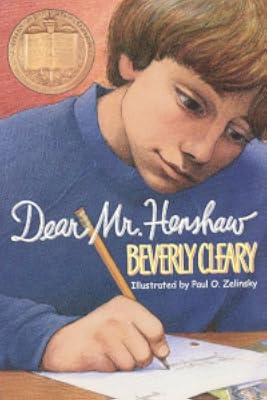
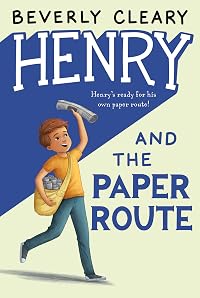

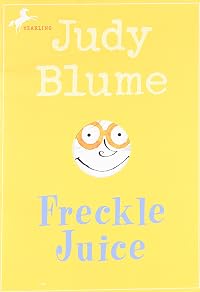
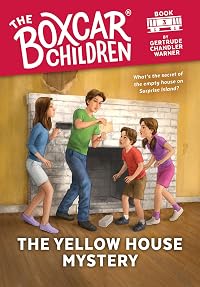


Member Recommendations
Member Reviews
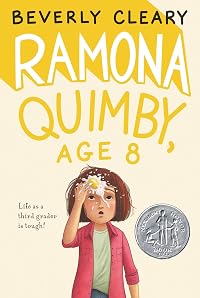
Mr. Quimby has gone back to school to become a teacher, Beezus is starting junior high, and Ramona's going to a new primary school. All the while, Mrs. Quimby must go to work every day to keep the family afloat. With everyone facing collective changes, Ramona wants to be the kind of girl her family can depend on in Ramona Quimby, Age 8 by author Beverly Cleary.
Not to say I didn't enjoy this book as a child (I got such a kick out of all the Ramona books), but I'm quite certain I enjoyed this one more, this time around.
I can't get over how well the little-things-that-are-big-things are captured in Ramona's stories. Here, we have the joy of getting a brand new, smooth, pearly pink eraser to start off the school year. The anger when some show more wise guy classmate steals that eraser! The humiliation of getting sick in school. The warmth and coziness of a family car ride home on a rainy evening. The thrill and luxury of going out for dinner at Whopperburger!
And the absolute best part of class at school: silent reading! How handy to then be able to pull out something as mature and important as "Sustained Silent Reading" after school, to avoid playing with that annoying little Willa Jean for too long. Even if... "One of these days Willa Jean was sure to catch on that [Ramona] was just reading a book, and Ramona wanted to postpone that time as long as possible."
I laughed out loud several times, I was touched along the way, and I'm as hyped as ever to be revisiting this series. show less
Not to say I didn't enjoy this book as a child (I got such a kick out of all the Ramona books), but I'm quite certain I enjoyed this one more, this time around.
I can't get over how well the little-things-that-are-big-things are captured in Ramona's stories. Here, we have the joy of getting a brand new, smooth, pearly pink eraser to start off the school year. The anger when some show more wise guy classmate steals that eraser! The humiliation of getting sick in school. The warmth and coziness of a family car ride home on a rainy evening. The thrill and luxury of going out for dinner at Whopperburger!
And the absolute best part of class at school: silent reading! How handy to then be able to pull out something as mature and important as "Sustained Silent Reading" after school, to avoid playing with that annoying little Willa Jean for too long. Even if... "One of these days Willa Jean was sure to catch on that [Ramona] was just reading a book, and Ramona wanted to postpone that time as long as possible."
I laughed out loud several times, I was touched along the way, and I'm as hyped as ever to be revisiting this series. show less
My 5yo loves listening to the Ramona books on audio (read by Stockard Channing). I loved these books when I was a kid, too. But imagine my horror when she started calling one of her toys Yard Ape because Ramona says it. In the books, Ramona calls one of her classmates Yard Ape because he teases her. His real name is Danny, but she continues to call him Yard Ape even after they become friends -- like it's an affectionate nickname. In the real world, Yard Ape is a racist slur (https://en.wiktionary.org/wiki/yard_ape).
So I had a Serious Talk with her about never calling anyone that. Ramona does a lot of things we should never do (e.g. destroying her classmate's art project, sticking burrs in her hair, ruining Beezus's birthday cake), so show more it was not difficult to convince my daughter that she shouldn't always follow Ramona's example.
Now I'm concerned as a children's librarian that this very popular classic uses a racial slur as a nickname, even though Beverly Cleary intended it in the "unruly child" sense. As I've learned, the impact is more important than the intent.
As far as I know, "yard ape" will not be a familiar insult to most kids today. It wasn't familiar to me, but when I heard the word "ape" I instantly knew I didn't want my kid (or any kid) saying that. I've learned a lot about the problems with monkeys in children's literature from the librarian and blogger Edith Campbell (https://crazyquiltedi.blog/2018/07/20/monkey-business/). The racist associations between primates and Black people are well documented.
So reader beware. All your faves are problematic. show less
So I had a Serious Talk with her about never calling anyone that. Ramona does a lot of things we should never do (e.g. destroying her classmate's art project, sticking burrs in her hair, ruining Beezus's birthday cake), so show more it was not difficult to convince my daughter that she shouldn't always follow Ramona's example.
Now I'm concerned as a children's librarian that this very popular classic uses a racial slur as a nickname, even though Beverly Cleary intended it in the "unruly child" sense. As I've learned, the impact is more important than the intent.
As far as I know, "yard ape" will not be a familiar insult to most kids today. It wasn't familiar to me, but when I heard the word "ape" I instantly knew I didn't want my kid (or any kid) saying that. I've learned a lot about the problems with monkeys in children's literature from the librarian and blogger Edith Campbell (https://crazyquiltedi.blog/2018/07/20/monkey-business/). The racist associations between primates and Black people are well documented.
So reader beware. All your faves are problematic. show less
I really felt for Ramona in this book. When her teacher calls her a show-off and uses the word "nuisance," I literally gasped out loud and just felt so bad for the poor girl! Though, as an adult, I immediately began to thinking through why the teacher would say that, but I can imagine kids reading this and thinking that is just a terrible teacher. Adding to that, it was almost too painful to see Ramona having so much responsibility put on her to make things work at the Kemps' so her dad can keep going to school and her mom can keep working. That's not even something Ramona blows up in her mind—it's basically what her parents tell her. But the indignity of Mrs. Kemp being paid while Ramona entertains her granddaughter gets under my show more skin a bit. That really just shows how connected I've gotten to this little girl, though. I've been enjoying Stockard Channing's narration throughout the series, too, and I recommend it for anyone who might be interested, young or old. show less
I loved Ramona as a kid and I love her as an adult. Remarkably, this book doesn't seem dated to me, and it's still somewhat unique in the way that the family's worries about money are known by the children as well. The parents do shield them a bit but Ramona and Beezus are aware that they all have to help out, and they understand why they don't have extravagances like eating out at restaurants that often.
There's also such incredible insight into the workings of eight-year-old Ramona's mind and her feelings (which makes it even funnier when she tells her dad, who's studying child development to be a teacher, "It's none of your business how kids think.") She's also a bit secretive (for example, when she overhears her teacher talk about show more her and doesn't tell anyone), and displays the beginnings of empathy:
Deep down inside, she felt she herself was nice all the time, but sometimes on the outside her niceness sort of - well, curdled. Then people did not understand how nice she really was. Maybe other people curdled too. (176-177)
*
Re-read July/August 2019 show less
There's also such incredible insight into the workings of eight-year-old Ramona's mind and her feelings (which makes it even funnier when she tells her dad, who's studying child development to be a teacher, "It's none of your business how kids think.") She's also a bit secretive (for example, when she overhears her teacher talk about show more her and doesn't tell anyone), and displays the beginnings of empathy:
Deep down inside, she felt she herself was nice all the time, but sometimes on the outside her niceness sort of - well, curdled. Then people did not understand how nice she really was. Maybe other people curdled too. (176-177)
*
Re-read July/August 2019 show less
Cleary manages to make on of the best defined "naughty" kids and families in children's literature. She manages to make her sympathetic and believable without encouraging the problematic behavior. Ramona grows and matures, and that's primarily how she is different from nearly every other bad kid character. This is a Newbery honor that ages well.
Q5P5
Ramona books are classics. The key to Ramona and her family's lasting power is that they are constantly in situations that transcend time- uncomfortable, awkward school days, families having hard financial times, moody sisters, kids who have to stay with other families after school. Cleary writes children so incredibly, I can remember the exact feelings she describes Ramona having as an 8 year old.
Ramona books are classics. The key to Ramona and her family's lasting power is that they are constantly in situations that transcend time- uncomfortable, awkward school days, families having hard financial times, moody sisters, kids who have to stay with other families after school. Cleary writes children so incredibly, I can remember the exact feelings she describes Ramona having as an 8 year old.
Ramona is starting third grade at a new school where she needs to ride a bus. Her sister is off to junior high, her father is switching part-time jobs and going to school to become a teacher, and her mom is still working full time. Changes everywhere for the Quimby family. Ramona is surprised by her new teacher, Ms. Whaley, who is informal and humorous but stern, but Ramona thinks she likes her. She also has a new nemesis in Davy, who she calls Yard Ape. He is challenging, and Ramona likes challenges.
Not everything is perfect for Ramona. She really can't stand spending her afternoons with Willa Jean. She misses seeing her mom, and is worried about her dad's future. The worst blow, though, comes when she overhears her teacher calling show more her a nuisance. Ramona is devastated. Her hurt makes it hard for her to forgive her mother for putting a raw egg in her lunch instead of the hard-boiled one she asked for, and the general discontent seems to be contagious, as it spills over her entire family. Beezus and Ramona refuse to eat the tongue their mother prepared, and are required to cook dinner the next day. The dinner works out, and inspires Ramona to confront her teacher, who reveals that she doesn't consider Ramona a nuisance, she just meant that washing egg out of someone's hair is a nuisance. Ramona's world is restored to order; not perfect, but very good.
The Ramona stories are endearing. As Ramona gets older, her preschool antics and pranks are growing out, but her creativity and spunky spirit just grow up. She is more mature, but still so young. Cleary masterfully captures a child's voice: the innocence, the immature thinking, and the surprisingly intuitive perceptions. She also presents a happy family that is flawed but good, and the reader can relate to them because they are so real. Ramona's reaction to being sick, for example, or the gloomy Sunday when everyone is in a grumbly mood - these anecdotes are very accessible to young readers who have likely experienced similar situations themselves. This book is a fast read, like the others in the Ramona series, and the humor turns everyday experiences into adventures. Reading about Ramona is a wonderful experience for people of all ages. show less
Not everything is perfect for Ramona. She really can't stand spending her afternoons with Willa Jean. She misses seeing her mom, and is worried about her dad's future. The worst blow, though, comes when she overhears her teacher calling show more her a nuisance. Ramona is devastated. Her hurt makes it hard for her to forgive her mother for putting a raw egg in her lunch instead of the hard-boiled one she asked for, and the general discontent seems to be contagious, as it spills over her entire family. Beezus and Ramona refuse to eat the tongue their mother prepared, and are required to cook dinner the next day. The dinner works out, and inspires Ramona to confront her teacher, who reveals that she doesn't consider Ramona a nuisance, she just meant that washing egg out of someone's hair is a nuisance. Ramona's world is restored to order; not perfect, but very good.
The Ramona stories are endearing. As Ramona gets older, her preschool antics and pranks are growing out, but her creativity and spunky spirit just grow up. She is more mature, but still so young. Cleary masterfully captures a child's voice: the innocence, the immature thinking, and the surprisingly intuitive perceptions. She also presents a happy family that is flawed but good, and the reader can relate to them because they are so real. Ramona's reaction to being sick, for example, or the gloomy Sunday when everyone is in a grumbly mood - these anecdotes are very accessible to young readers who have likely experienced similar situations themselves. This book is a fast read, like the others in the Ramona series, and the humor turns everyday experiences into adventures. Reading about Ramona is a wonderful experience for people of all ages. show less
Members
- Recently Added By
Lists

Favorite Childhood Books
1,651 works; 519 members

Best Newbery Honor Books
257 works; 32 members
NPRs Ultimate Backseat Bookshelf: 100 Must-Reads for kids 9-14
222 works; 30 members

Mensa for Kids Excellence in Reading Award Program (Grades K-3)
64 works; 6 members

Best School Stories
219 works; 22 members

Elevenses
316 works; 88 members

Books About Girls
219 works; 17 members
Books with a Character's Name as the Title
130 works; 10 members
Female Protagonist
1,056 works; 57 members

Books Set in Oregon
14 works; 2 members

Children and YA books involving school
58 works; 2 members

Newbery Honor Books By year - II - 1981-2035
143 works; 4 members

Books Read in 2023
5,638 works; 147 members

AR Level 5 in cloudLibrary
170 works; 1 member

BitLife
212 works; 4 members

Recommended Reading List
219 works; 1 member

1980s
356 works; 23 members

Before Austen Comes Aesop
318 works; 9 members

Overdue Podcast
806 works; 9 members

Books With Numbers in the Title
308 works; 13 members

Centenarian Authors
23 works; 2 members

Books We Loved As Children
603 works; 252 members
Author Information

165+ Works 163,200 Members
Beverly Cleary was born on April 12, 1916. Her family lived on a small farm in McMinnville, Oregon, before moving to Portland. Ironically, this internationally known author of children's books struggled to learn how to read when she entered school. Before long however Cleary had learned to love books, and as a child she spent a good deal of her show more time in the public library. Cleary attended Chaffey Junior College in Ontario, Ca. and went on to earned her first B.A. in 1938 from the University of California at Berkeley. Her second degree, a B.A. in library science, was bestowed by the University of Washington in Seattle in 1939. She worked for a short time as Children's Librarian in Yakima, Washington, before moving to California. Cleary began her writing career in her early thirties. Her first book, Henry Huggins, was published in 1950. Her stories and especially her characters, Henry Huggins and Ramona Quimby, have proven popular with young readers. Her books have been translated into twenty languages and are available in over twenty countries. Some of her best-known titles are Ellen Tebbits (1951), Henry and the Paper Route (1957), Runaway Ralph (1970), and Dear Mr. Henshaw (1983). Several television programs have been produced from the Henry Huggins and Ramona stories. She also wrote two memoirs, A Girl from Yamhill (1988) and My Own Two Feet (1995). Cleary has won many awards for her contributions to children's literature, including the American Library Association's Laura Ingalls Wilder Award in 1975, the Catholic Library Association's Regina Medal in 1980, the John Newbery Medal in 1984 and the National Medal of Arts in 2003. Beverly Cleary died on March 25, 2021 in Carmel, California. She was 104 year old. (Bowker Author Biography) show less
All Editions
Some Editions
Awards and Honors
Awards
Series

Belongs to Publisher Series
Work Relationships
Is contained in
Beezus and Ramona / Henry and Beezus / Henry Huggins / Ramona and Her Father / Ramona and Her Mother / Ramona Quimby, Age 8 by Beverly Cleary
The Complete 8-Book Ramona Collection: Beezus and Ramona, Ramona and Her Father, Ramona and Her Mother, Ramona Quimby, Age 8, Ramona Forever, Ramona the Brave, Ramona the Pest, Ramona's World by Beverly Cleary
The World of Beverly Cleary Collection - 15 Book Ultimate Boxed Set! Ramona and More! (Beverly Cleary) by Beverly Cleary
Ramona and her Mother / Ramona Forever / Ramona Quimby, Age 8 / Ramona the Brave / Ramona the Pest by Beverly Cleary
Ramona Quimby, America's Favorite 5 Box Set: Ramona and Her Mother; Ramona and Her Father; Ramona the Pest; Ramona Forever; Ramona Quimby, Age 8 by Beverly Cleary
Beverly Cleary (Set of 4) Ramona the Brave; Ramona and Her Father; Ramona Quinby, Age 8; Ramona Forever by Beverly Cleary
Has as a student's study guide
Has as a teacher's guide
Common Knowledge
- Canonical title
- Ramona Quimby, Age 8
- Original title
- Ramona Quimby, Age 8
- Original publication date
- 1981
- People/Characters
- Ramona Quimby; Beatrice "Beezus" Quimby; Dorothy Quimby; Robert Quimby; Mrs. Whaley; Howie Kemp (show all 9); Willa Jean Kemp; Mrs. Kemp; Danny (Yard Ape)
- Important places
- Cedarhurst Primary School (Oregon, USA); Portland, Oregon, USA; Oregon, USA
- First words
- Ramona Quimby hoped her parents would forget to give her a little talking-to.
- Last words
- (Click to show. Warning: May contain spoilers.)Tomorrow they would begin all over again.
- Original language
- English
Classifications
- Genres
- Children's Books, Fiction and Literature
- DDC/MDS
- 813.54 — Literature & rhetoric American literature in English American fiction in English 1900-1999 1945-1999
- LCC
- PZ7 .C5792 .R — Language and Literature Fiction and juvenile belles lettres Fiction and juvenile belles lettres Juvenile belles lettres
- BISAC
Statistics
- Members
- 11,631
- Popularity
- 767
- Reviews
- 140
- Rating
- (4.00)
- Languages
- 6 — Chinese, English, French, German, Spanish, Thai
- Media
- Paper, Audiobook, Ebook
- ISBNs
- 84
- UPCs
- 1
- ASINs
- 35