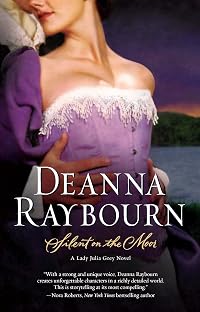
On This Page
Description
Despite his admonitions to stay away, Lady Julia arrives in Yorkshire to find Brisbane as remote and maddeningly attractive as ever. Cloistered together, they share the moldering house with the proud but impoverished remnants of an ancient family - the sort that keeps their bloodline pure and their secrets close. Lady Allenby and her daughters, dependent upon Brisbane and devastated by their fall in society, seem adrift on the moor winds, powerless to change their fortunes. But poison does show more not discriminate between A mystery unfolds from the rotten heart of Grimsgrave, one Lady Julia may have to solve alone, as Brisbane appears inextricably tangled in its heinous twists and turns. But blood will out, and before spring touches the craggy northern landscape, Lady Julia will have uncovered a Gypsy witch, a dark rider and a long-buried legacy of malevolence and evil. show lessTags
Recommendations


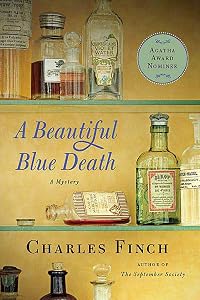

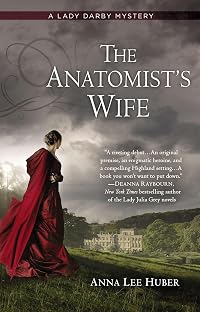


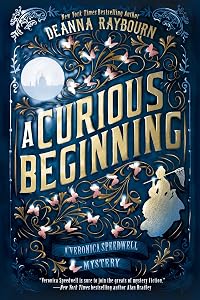
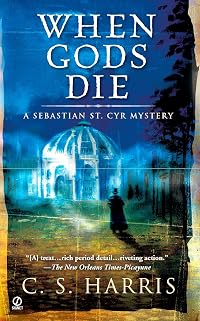



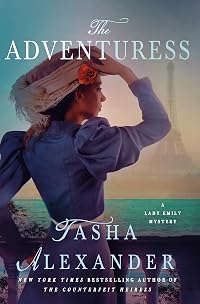
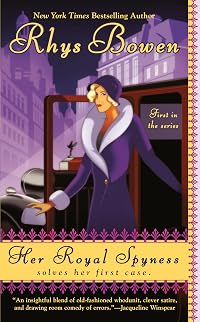
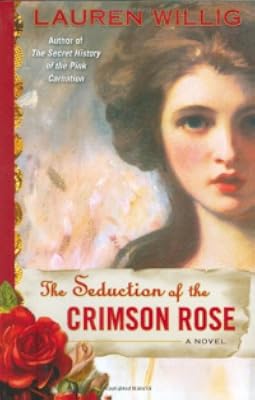
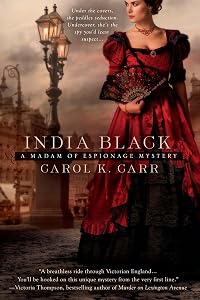

Member Recommendations
spygirl I didn't really enjoy Wuthering Heights, but Silent on the Moor has a similar setting (the windswept Yorkshire moors) and time period, as well as tragedies, family skeletons, and Gypsy connections.
Member Reviews
A subtitle for this third novel in the series should be 'Lady Julia visits Wuthering Heights'; the inspiration is obvious, with joking references to the cinematic/Kate Bush Cathy Earnshaw and even a character called Mrs Earnshaw, but the setting of the Pennine moors is also pure Bronte-by-numbers. Temptuous scenery, looming ancestral piles, and twisted relationships abound. The 'Yorkshire folk' are divided into two camps: earthy, caring villagers and servants (including a Nelly Dean-esque housekeeper, Mrs Butters), who talk with a formulaic but passable brogue (all 'thee' and 'thou'), and the proud, cold and thoroughly deviant lords (and ladies) of the manor. (Deanna Raybourn seemingly couldn't resist inserting a few preachy asides into show more the narrative, condemning the social hierarchy of Victorian England, and using Julia's unconventional background to remove her heroine from the class and standards of the era. A familiar defence of other historical novels, but a shame to read in the work of this otherwise era-appropriate author.)
The mystery itself is a tangled web of incest and power games, neatly resolved with a trite ending for all that requires two chapters of exposition. I also found it a shame that the sexual tension between Lady Julia and Nicholas Brisbane has finally come to its natural conclusion - the opposing forces of passion and propriety in the first two books sustained my interest more than the mystery itself! Although Deanna Raybourn has hinted that there will be further instalments in the series, this seems like the best place to stop.
As always, though, the attention to correct syntax and social etiquette is painstaking (even if the Yorkshire accents did wander over both sides of the Pennines), and the characters are always aware of standards and appropriate behaviour, especially when they are breaking the rules (Julia's unconventional sister). Lady Julia was an intriguing heroine when she was defined in opposition to her eccentric family, embarrassed by their flouting of tradition and position, but she has sadly 'grown' into another March caricature. The narrative remains witty, but the pace has altered from Victorian murder mystery to a 'cosy' detective tale. (Even the covers have been 'repackaged', with a basic 'romance' photograph on the cover, instead of the original artwork. I sent for the MIRA edition instead.)
This is the end of an affair for me - Lady Julia has settled down. show less
The mystery itself is a tangled web of incest and power games, neatly resolved with a trite ending for all that requires two chapters of exposition. I also found it a shame that the sexual tension between Lady Julia and Nicholas Brisbane has finally come to its natural conclusion - the opposing forces of passion and propriety in the first two books sustained my interest more than the mystery itself! Although Deanna Raybourn has hinted that there will be further instalments in the series, this seems like the best place to stop.
As always, though, the attention to correct syntax and social etiquette is painstaking (even if the Yorkshire accents did wander over both sides of the Pennines), and the characters are always aware of standards and appropriate behaviour, especially when they are breaking the rules (Julia's unconventional sister). Lady Julia was an intriguing heroine when she was defined in opposition to her eccentric family, embarrassed by their flouting of tradition and position, but she has sadly 'grown' into another March caricature. The narrative remains witty, but the pace has altered from Victorian murder mystery to a 'cosy' detective tale. (Even the covers have been 'repackaged', with a basic 'romance' photograph on the cover, instead of the original artwork. I sent for the MIRA edition instead.)
This is the end of an affair for me - Lady Julia has settled down. show less
A lovely book, although my thoughts are the opposite of atimco's. The character relations have overtones of "I can fix him!" which is a popular trope but goodness is it exhausting. Though the story and book itself are lovingly and well-writ, I tire of Brinsbane's downsplaining, the way he keeps everything from Lady Grey while pretending to involve her, his "manful suffering" and so forth. His manful-suffering, his keeping things from her, results constantly for others, including Grey, being placed into mortal danger. In future books, he remarks how surprised he is that Grey has a brain or has facilities for reasoning at all.
At the quite end of the book, he somehow "justifies" his treatment of her; there would have been no mystery had show more he communicated.
Everything she does is criticized, and downplayed. I get it. I get it. It's Victorian England and suchlike. Women are useless children to be used as breeding hares and nothing more. She is addressed consistently as a child, spoken over, criticized, and everything about her attempted to be controlled by her male relatives.
Rated for the beautiful wordcraft and writing. I read these books in spite of Brisbane, and not because of him. I admit, I've begun skimming paragraphs where he speaks. I do suggest it. show less
At the quite end of the book, he somehow "justifies" his treatment of her; there would have been no mystery had show more he communicated.
Everything she does is criticized, and downplayed. I get it. I get it. It's Victorian England and suchlike. Women are useless children to be used as breeding hares and nothing more. She is addressed consistently as a child, spoken over, criticized, and everything about her attempted to be controlled by her male relatives.
Rated for the beautiful wordcraft and writing. I read these books in spite of Brisbane, and not because of him. I admit, I've begun skimming paragraphs where he speaks. I do suggest it. show less
Silent on the Moor is the third Lady Julia Grey novel, and unfortunately it does not live up to the quality of its predecessors. There are several reasons for this.
First, the plot just drags. And drags. And drags! Julia invites herself to Brisbane's new home in Yorkshire, and does nothing except catalogue an Egyptian collection and take walks on the moor. When things finally started happening, I was too bored to care. More of the same, more of the same. At least Brisbane didn't bruise Julia again merely by touching her as he has in the first two books. I did find it quite funny that his hands are always so burning hot that Julia can feel their warmth through layers and layers of wool clothing. Every time, without fail! We are veering show more very quickly into the realm of cheap romance paperbacks here...
Second, it seems this book became more of an excuse to preach a social agenda than a story in its own right. I think an author's worldview ought to influence — not dominate — a work, but the balance tipped in this book, making it very preachy indeed. The first two books had these undertones, which was fine because they were undertones. But no reader of fiction likes to be subjected to a social agenda in what is supposed to be, first and foremost, a good story. And nothing kills a story like the conviction that the author is merely using it to advance a cause. The reader feels slightly betrayed; this isn't what I signed up for. I thought you were going to tell me a good story, not take advantage of my interest to give yourself a soapbox!
Third, I think I've finally gotten fed-up with Julia's ridiculous modernity. There is such a fuss made about how she's so modern, so free-thinking, etc... and it's horribly misplaced in a Victorian setting. Julia is again making "mental notes" (which, apart from being a modern phrase anachronistic in Victorian England, is also unforgivably clichéd). The more modern these characters get, the more false they feel. And they got ridiculously modern in this one — so clichéd and blah. I think one of the biggest draws for me in the first book was the complexity of Julia learning to balance her own ideas with the desire to fit in with polite society. That actually felt realistic. But by the end of this book, the characters became so tritely predictable that I simply stopped caring what happened to them. The wedding was such an anticlimax.
Fourth, the cover art for this book is just awful. It looks like something ripped right off a Harlequin romance, and it doesn't match the first two covers (which were gorgeous!) at all. Honestly, I'd be rather embarrassed to have this on my shelf. It looks so decidedly low. It says something about where this series is going, that this is how the publishers decided to market it. Well, you can be sure I'm not going down that path along with these stories. If the publishers have decided that these books are for the cheap romance market, who am I to argue with them?
Fifth, Julia's pets are AGAIN pointless! They do absolutely nothing to advance the plot, and seem to be there just to make Julia "cool" for having unusual animals around. Is it just me, or is that sloppy?
The Shakespeare quotes artfully placed at the beginning of each chapter do not save the story. The discussion questions at the end amused me greatly, for all the wrong reasons. The characters that I enjoyed so much in the first two books fell very flat here. The mystery itself was nothing very original, and it was easy to see where it was going. It's nice to have Julia's and Brisbane's relationship finally resolved, but the book was such a disappointment, I almost wish Raybourn stopped after the second. Though I enjoyed and own the first two, this one I borrowed from the library, and I'm glad I did. I won't be purchasing it. Not recommended. show less
First, the plot just drags. And drags. And drags! Julia invites herself to Brisbane's new home in Yorkshire, and does nothing except catalogue an Egyptian collection and take walks on the moor. When things finally started happening, I was too bored to care. More of the same, more of the same. At least Brisbane didn't bruise Julia again merely by touching her as he has in the first two books. I did find it quite funny that his hands are always so burning hot that Julia can feel their warmth through layers and layers of wool clothing. Every time, without fail! We are veering show more very quickly into the realm of cheap romance paperbacks here...
Second, it seems this book became more of an excuse to preach a social agenda than a story in its own right. I think an author's worldview ought to influence — not dominate — a work, but the balance tipped in this book, making it very preachy indeed. The first two books had these undertones, which was fine because they were undertones. But no reader of fiction likes to be subjected to a social agenda in what is supposed to be, first and foremost, a good story. And nothing kills a story like the conviction that the author is merely using it to advance a cause. The reader feels slightly betrayed; this isn't what I signed up for. I thought you were going to tell me a good story, not take advantage of my interest to give yourself a soapbox!
Third, I think I've finally gotten fed-up with Julia's ridiculous modernity. There is such a fuss made about how she's so modern, so free-thinking, etc... and it's horribly misplaced in a Victorian setting. Julia is again making "mental notes" (which, apart from being a modern phrase anachronistic in Victorian England, is also unforgivably clichéd). The more modern these characters get, the more false they feel. And they got ridiculously modern in this one — so clichéd and blah. I think one of the biggest draws for me in the first book was the complexity of Julia learning to balance her own ideas with the desire to fit in with polite society. That actually felt realistic. But by the end of this book, the characters became so tritely predictable that I simply stopped caring what happened to them. The wedding was such an anticlimax.
Fourth, the cover art for this book is just awful. It looks like something ripped right off a Harlequin romance, and it doesn't match the first two covers (which were gorgeous!) at all. Honestly, I'd be rather embarrassed to have this on my shelf. It looks so decidedly low. It says something about where this series is going, that this is how the publishers decided to market it. Well, you can be sure I'm not going down that path along with these stories. If the publishers have decided that these books are for the cheap romance market, who am I to argue with them?
Fifth, Julia's pets are AGAIN pointless! They do absolutely nothing to advance the plot, and seem to be there just to make Julia "cool" for having unusual animals around. Is it just me, or is that sloppy?
The Shakespeare quotes artfully placed at the beginning of each chapter do not save the story. The discussion questions at the end amused me greatly, for all the wrong reasons. The characters that I enjoyed so much in the first two books fell very flat here. The mystery itself was nothing very original, and it was easy to see where it was going. It's nice to have Julia's and Brisbane's relationship finally resolved, but the book was such a disappointment, I almost wish Raybourn stopped after the second. Though I enjoyed and own the first two, this one I borrowed from the library, and I'm glad I did. I won't be purchasing it. Not recommended. show less
Lady Julia Grey as well as her sister, Portia, and youngest brother, Valerius, are off to the Yorkshire moors where Nicholas Brisbane has acquired the estate of Grimsgrave. Julia is determined to finally have a serious conversation with Brisbane about the status of their relationship. But things at Grimsgrave are in a complete shambles and when ugly events from the past spill over and threaten Julia and Brisbane's future they must once again combine their efforts to uncover the truth.
I'm a fully devoted fan of the series at this point. Julia and Brisbane's developing relationship is as delightful as ever and while the mystery in this entry in the series is quieter, it is well suited to the eerie moors. If you've enjoyed the series thus show more far, you'll definitely want to pick up this one. show less
I'm a fully devoted fan of the series at this point. Julia and Brisbane's developing relationship is as delightful as ever and while the mystery in this entry in the series is quieter, it is well suited to the eerie moors. If you've enjoyed the series thus show more far, you'll definitely want to pick up this one. show less
Nicholas Brisbane has secluded himself in his newly acquired country estate – one that needs a lot of work, and when Lady Julia discovers that he doesn’t want her there she is, of course, determined to go. At this point it’s obvious what follows. Dead bodies, attempts at murder, general March craziness, fun with gypsies, and, of course, a Lady Julia book wouldn’t be a Lady Julia book if she and Brisbane weren’t butting heads.
The third Lady Julia novel, Silent on the Moor has proven to be yet another fantastic read from the pen (or keyboard) of Deanna Raybourn.
Silent on the Moor actually qualifies as my favorite of the first four Lady Julia novels for a few reasons, but the big one – all the answers that are FINALLY, show more GLORIOUSLY supplied regarding Brisbane. Up to virtually the end of Silent on the Moor, Brisbane has been built up as a half-breed, stubborn, talented man who has survived the unbelievable and made himself out of virtually nothing. As I’ve read, question after question about him has bounced through my mind and all those answers I mentioned make it possible to understand Brisbane on a whole new level. His motivations, why he is the way he is and why he makes the decisions he does – it was truly amazing to finally gain more insight than I was working with. It also endears me to his character all the more.
Another major plus, after 1,000-some-odd pages of tension, of dancing around each other like hormone-riddled teenagers who are fumbling to figure things out – well, let’s just say that part of Lady Julia and Brisbane’s relationship gets nipped in the bud and leave it at that.
If you asked me, I would say that each of these books are something more than just historical fiction, or just a mystery to be solved. Silent on the Moor holds true to that and then some. The history and the mystery do intrigue me. I was completely involved in this from the first to the last page and Raybourn certainly kept me guessing. It is more though, it’s a look at human nature, at how we see, feel, and do.
All that being said, there are two things that bummed me out while reading Silent on the Moor, and that would be the sudden disappearance of Monk and Aquinas who are two of my favorite characters and who are only mentioned in passing throughout the entirety of the book. There’s also the curve ball with Jane towards the end, but I’ll get into that whole situation during my review of book four. All in all, none of this took away from my overall enjoyment of the books, it was just sad to not see them in the same capacity as the first two books. While I’m on the subject of minor characters, can I also just say how much I loved Morag’s constantly increasing dedication to Brisbane?
I’ve said it before, and I’m sure I’ll say it again: Deanna Raybourn’s Lady Julia novels are fantastic, and Silent on the Moor is no exception. Still highly recommended. show less
The third Lady Julia novel, Silent on the Moor has proven to be yet another fantastic read from the pen (or keyboard) of Deanna Raybourn.
Silent on the Moor actually qualifies as my favorite of the first four Lady Julia novels for a few reasons, but the big one – all the answers that are FINALLY, show more GLORIOUSLY supplied regarding Brisbane. Up to virtually the end of Silent on the Moor, Brisbane has been built up as a half-breed, stubborn, talented man who has survived the unbelievable and made himself out of virtually nothing. As I’ve read, question after question about him has bounced through my mind and all those answers I mentioned make it possible to understand Brisbane on a whole new level. His motivations, why he is the way he is and why he makes the decisions he does – it was truly amazing to finally gain more insight than I was working with. It also endears me to his character all the more.
Another major plus, after 1,000-some-odd pages of tension, of dancing around each other like hormone-riddled teenagers who are fumbling to figure things out – well, let’s just say that part of Lady Julia and Brisbane’s relationship gets nipped in the bud and leave it at that.
If you asked me, I would say that each of these books are something more than just historical fiction, or just a mystery to be solved. Silent on the Moor holds true to that and then some. The history and the mystery do intrigue me. I was completely involved in this from the first to the last page and Raybourn certainly kept me guessing. It is more though, it’s a look at human nature, at how we see, feel, and do.
All that being said, there are two things that bummed me out while reading Silent on the Moor, and that would be the sudden disappearance of Monk and Aquinas who are two of my favorite characters and who are only mentioned in passing throughout the entirety of the book. There’s also the curve ball with Jane towards the end, but I’ll get into that whole situation during my review of book four. All in all, none of this took away from my overall enjoyment of the books, it was just sad to not see them in the same capacity as the first two books. While I’m on the subject of minor characters, can I also just say how much I loved Morag’s constantly increasing dedication to Brisbane?
I’ve said it before, and I’m sure I’ll say it again: Deanna Raybourn’s Lady Julia novels are fantastic, and Silent on the Moor is no exception. Still highly recommended. show less
Lady Julia Grey has had enough. Despite Brisbane's best efforts to keep her safely out of his path, she has decided to follow her sister Portia to his remote Yorkshire estate, Grimsgrave, on the pretext of helping him to outfit the place. Despite his strong feelings for her (and she for him) Brisbane decidedly does not want Julia to come to his new home but Julia convinces her reluctant family to let her go and force Brisbane to decide once and for all what is to become of their relationship. Upon arriving at the mysterious Grimsgrave, Julia finds things are not as calm as they appeared and she slowly unravel mystery after mystery surrounding the the previous owners of Grimsgrave and their connection to Brisbane. All my favorite show more elements from previous books are once again out in force - gypsies, the quirky Grim, servants who will happily spill gossip for a chance to chat with the lovely Lady Julia, and of course, bodies that keep popping up. Not to mention Julia's frequent interactions with her hilarious family - Julia and Portia's exchanges frequently had me in stitches.This third installment of Raybourn's fantastic series is a real standout. I felt the mystery itself was much more unexpected yet entirely believable and for that reason all the more horrifying. Julia really comes into her own as well. Always outspoken, she finds herself for the first time on equal footing with Brisbane and adeptly holds her own. I loved it.Lady Julia Grey is my hero. Not only is she smart and an extremely good dresser but she just so happens to expertly solve the most puzzling mysteries that normal people would run screaming away from. Her curiosity is one of her most intriguing characteristics - she is logical, methodical and can give one cutting remark. I love her. I want to be her. And I also want Brisbane. And Ms. Raybourne, just so you know, I sleep much better at night just thinking that a Brisbane could possibly be wandering around this earth. Thank you. show less
I’ve been anticipating Silent on the Moor ever since I tore through Silent on the Sanctuary. This time, Lady Julia Grey travels to Yorkshire with her sister Portia, where Brisbane has recently purchased a decrepit mansion on the moor. Living there too are Lady Allenby and her two daughters, the descendents of Saxon kings but living in reduced circumstances after the death of Lady Allenby’s son, Redwall.
I greatly enjoyed this story of poison, romance and revenge, compounded by a number of sinister and rather twisted family secrets. We learn more about Brisbane’s past, and we get to see more of his and Julia’s relationship—never smooth, but they have wonderful chemistry together. Julia’s maid Morag is back, too, still as show more feisty as ever. What I love about Deanna Raybourn’s books is that she’s so good at character and plot development, and Silent on the Moor failed to disappoint me on those points. The title is a misnomer, which I guess in a way is a good thing; this novel is pretty unpredictable. My only problem is that I finished this book so fast. When’s Raybourn’s next book coming out? show less
I greatly enjoyed this story of poison, romance and revenge, compounded by a number of sinister and rather twisted family secrets. We learn more about Brisbane’s past, and we get to see more of his and Julia’s relationship—never smooth, but they have wonderful chemistry together. Julia’s maid Morag is back, too, still as show more feisty as ever. What I love about Deanna Raybourn’s books is that she’s so good at character and plot development, and Silent on the Moor failed to disappoint me on those points. The title is a misnomer, which I guess in a way is a good thing; this novel is pretty unpredictable. My only problem is that I finished this book so fast. When’s Raybourn’s next book coming out? show less
Members
- Recently Added By
Lists

Jean's 12in12 Mystery List TBR
10 works; 1 member

Books Read in 2017
4,249 works; 129 members

Books Read in 2021
5,361 works; 114 members

Books Read in 2014
2,343 works; 86 members
Author Information

31+ Works 17,999 Members
Deanna Raybourn grew up in San Antonio, Texas. At the age of 23 she wrote her first novel. She married her college sweetheart and after the birth of their fist child she left teaching to become a mom and full-time writer. Her debut novel, Silent in the Grave, was published in January 2007. It is the first in the Lady Julia Grey Mystery series. show more Silent in the Grave won the 2008 RITA Award for Novel with Strong Romantic Elements. The Lady Julia Grey series has been nominated for several other awards, including an Agatha, a Daphne du Maurier, a Last Laugh, and two Dilys Winns. Raybourn lives in Virginia with her husband and daughter. (Bowker Author Biography) show less

Deanna Raybourn is a LibraryThing Author, an author who lists their personal library on LibraryThing.
Some Editions
Awards and Honors
Series

Belongs to Publisher Series
Work Relationships
Is contained in
Common Knowledge
- Canonical title
- Silent on the Moor
- Original publication date
- 2009-03-01
- People/Characters
- Lady Julia Grey; Nicholas Brisbane; Lady Portia, Dowager Lady Bettiscombe; Hon. Valerius March; Lord Bellmont Grey
- Important places
- Yorkshire, England, UK
- Dedication
- This book is dedicated to Courtenay James Jones, a far better father than any I could have written.
- First words
- "Julia Grey, I would rather see you hanged than watch any sister of mine go haring off after a man who will not have her," my brother Bellmont raged.
- Last words
- (Click to show. Warning: May contain spoilers.)"That is a tale for another time."
- Publisher's editor
- Gray, Valerie
- Blurbers
- Roberts, Nora
Classifications
Statistics
- Members
- 1,062
- Popularity
- 24,151
- Reviews
- 68
- Rating
- (3.92)
- Languages
- Chinese, English, Italian, Spanish
- Media
- Paper, Audiobook, Ebook
- ISBNs
- 14
- ASINs
- 9